

COPYRIGHT © 2022 COFF International Co., ltd. ALL RIGHTS RESERVED


When you look for a mash tun distillery in 2025, you need to consider important features like material, heating method, and size. Stainless steel resists corrosion and lasts longer, while copper can enhance flavor in some spirits. To help you compare options, check this table of price ranges:
| Type | Price Range |
|---|---|
| Basic single infusion mash tun | $30,000 – $50,000 |
| Upgraded step/decoction mash tun | $40,000 – $60,000 |
| Fully-automated, insulated mash tun | $50,000 – $100,000+ |
Selecting the right mash tun means you match your production needs, budget, and distillery goals.
Choosing the right mash tun size is one of the most important steps for your distillery. You want to make sure the mash tun matches your production needs. If you pick a mash tun that is too small, you might limit your ability to grow. If you choose one that is too large, you could waste energy and resources.
You also need to think about the quality of your product. The clarity of the wort from your mash tun affects the flavor of your spirits. Good mashing conditions help you reach your desired taste and aroma. When you match your mash tun to your production needs, you set your distillery up for success.
Tip: Always plan for some growth. If you expect your distillery to expand, consider a mash tun that can handle a bit more than your current needs.
Before you buy a mash tun, check the space in your distillery. You need enough room for the mash tun and for people to move around it safely. The right layout helps you work faster and keeps your team safe.
Here is a table that shows common space requirements for installing a mash tun:
| Requirement | Specification |
|---|---|
| Footprint | 10-15 square meters for small systems; 50+ for larger systems |
| Height Clearance | At least 2-3 meters above the tallest part of the system |
| Surrounding Space | 1-2 meters clearance around the system for access |
| Ventilation | Proper ventilation to handle heat and steam; space for ducts and fans |
| Integration | Space for connecting pipes, valves, and control cables with other equipment |
You should measure your space before you order a mash tun. Make sure you have enough height and floor space. Leave room for pipes, valves, and cables. Good ventilation is important because the mash tun produces heat and steam. Plan for easy access so you can clean and maintain your equipment.
Every distillery has unique needs. You can customize your mash tun to fit your process and your space. Custom features can improve your workflow and help you make better spirits.
| Feature | Description |
|---|---|
| Tailored Flexibility | Fully customizable with multiple-column options to meet any distillation requirement. |
| Custom Equipment | Flexibility to customize the equipment based on individual requirements, including additional ports, valves, instrumentation, or specialized features. |
| Custom Designs | Custom mash cookers and lauter tun designs starting at 100G systems. |
| Column Options | Multiple column options, including reflux columns, bubble cap columns, or plate columns, for specific distillation needs. |
| Drain Lines | Large drain lines and multiple port and valve configurations. |
| Cooling Mechanisms | Efficient cooling mechanisms to rapidly cool the mash for fermentation. |
| Agitation System | Effective agitation system for thorough mixing and homogenization of grains and water. |
| Sizes and Orientations | Custom sizes and orientations to meet customer needs. |
| Utility Equipment | Turnkey heating and cooling utility equipment. |
| Sanitation Options | Steam sanitation options. |
| Control Options | Intrinsically safe control options. |
| Gaskets and Hardware | All necessary EPDM gaskets and hardware included. |
| Gauges | Includes manual pressure and temperature gauges. |
| Agitator | Low-speed agitator with explosion-proof motor. |
| Safety Systems | Buckeye safety systems for immediate detection and response to hazardous substances like ethanol and carbon dioxide. |
| Automation Systems | Advanced automation systems for precise control over temperature, pressure, and other parameters, enhancing process efficiency. |
Custom mash tuns can include features like integrated agitators and steam jackets. These features help you mix grains and water evenly and heat the mash efficiently. Some mash tuns let you chill the mash in the same vessel, which saves space and time. Automation systems can control temperature and pressure, making your process more consistent.
Note: Custom features in your mash tun can improve your workflow and help you make high-quality spirits. Think about what features will help your distillery run smoothly.
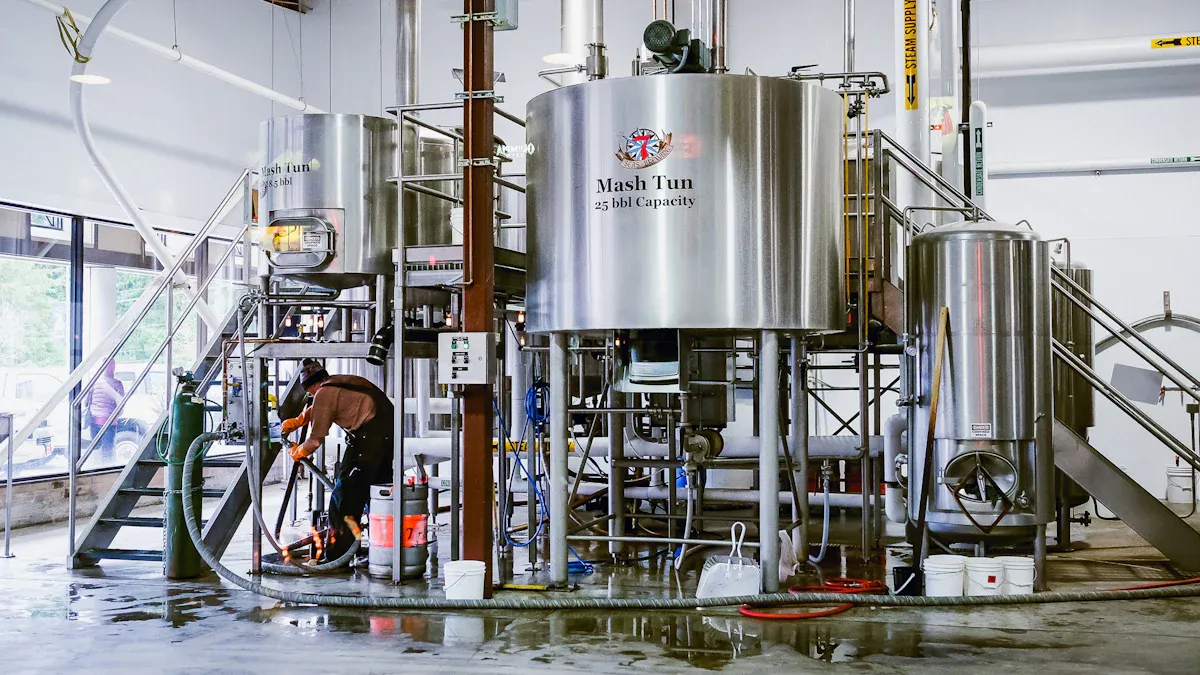
You use a mash tun as the heart of your mashing process. This vessel helps you turn grains into a sweet liquid called wort, which is essential for making spirits. The mash tun distillery relies on this equipment to create the right environment for extracting sugars from grains. You need to understand the main functions of a mash tun to match your production needs.
| Function | Description |
|---|---|
| Mixing grains and water | The mash tun combines grains with water to create a mash, essential for the extraction of sugars. |
| Temperature regulation | It maintains the optimal temperature for enzymatic activity, crucial for converting starches to sugars. |
| Wort extraction | The mash tun facilitates the extraction of wort, which is the liquid containing fermentable sugars. |
| Mixing ingredients | The mash tun creates a porridge-like consistency by mixing malted grains and water. |
| Temperature control | It regulates the mixture’s temperature to ensure proper interaction with yeast during fermentation. |
You see how each function supports the mashing process. The mash tun must mix ingredients well and keep the right temperature. This ensures you get the most sugar from your grains.
The mash tun plays a key role in your distillery. You depend on it for efficient and consistent spirit production. Here are some reasons why the mash tun is so important:
A well-designed mash tun helps you meet your production needs and maintain high quality. You can trust this equipment to support every step of your spirit-making process.
You can find traditional mash tun designs in many older distilleries. These mash tuns have a simple structure and focus on basic mashing process needs. Here are some key features:
You use these mash tuns when you want a classic approach to spirit production. They work well for traditional recipes and smaller batch sizes.
Modern mash tun systems bring new technology to the distillery. These innovations help you save resources and improve efficiency. The table below shows some important features:
| Feature | Description |
|---|---|
| Efficiency | Reduces loss of fermentable sugars to nearly zero, even surpassing 100% efficiency with multi-turn brewing schedules. |
| Resource Savings | Uses 10% less grain and 30% less water compared to traditional methods. |
| Modernization | Uses a squeezing action for liquid separation, making the brewing process faster and easier. |
You benefit from these mash tuns by getting more sugar from your grains and using less water. The improved design also helps you meet your production needs with less waste.
COFF offers mash tun distillery solutions that combine quality, flexibility, and advanced features. You can see how their equipment stands out in the table below:
| Feature | Description |
|---|---|
| High-Quality Construction | Made from durable stainless steel for longevity and easy maintenance. |
| Advanced False Bottom Designs | Enhances separation and cleaning, improving efficiency in sugar extraction. |
| Batch and Continuous Support | Flexibility to choose systems that fit specific distillery needs. |
| Precise Temperature Control | Maintains stable temperatures for better wort clarity and production. |
| Energy Efficiency | Designed to optimize energy use during the distillation process. |
| User-Friendly Interfaces | Simplifies operation, making it accessible for modern distillers. |
You can rely on COFF mash tun distillery equipment to support both batch and continuous operations. The advanced features help you control every step of the mashing process, making it easier to produce high-quality spirits.
When you choose a mash tun, you need to look at the materials and how the vessel is built. Most mash tuns use either plastic or stainless steel. Plastic mash tuns are light and cost less, which makes them good for beginners. However, they do not last as long and do not keep heat well. Stainless steel mash tuns are strong and resist corrosion. They hold heat better and last for many years. If you want reliable equipment for your distillery, stainless steel is the best choice. This material helps you keep your mashing process steady and supports your production needs.
Insulation plays a big role in how well your mash tun works. Good insulation keeps the mash at a stable temperature. This helps you save energy and makes your brewing more efficient. You often see mash tuns with 1-2 inches of stiff foam wrapped in metal sheets. This design keeps heat inside and reduces energy loss.
| Feature | Benefit |
|---|---|
| Superior insulation | Maintains stable mash temperatures |
| Reduces energy use | |
| Enhances brewing efficiency |
Correctly specifying insulation in a brewery is crucial to ensuring that you can precisely control each aspect of the process—leading to an exceptional and consistent final product.
You have several choices for heating your mash tun. Each method has its own strengths.
| Heating Method | Advantages | Disadvantages |
|---|---|---|
| Electric | Low heating loss, easy maintenance | Not ideal for thick mashes, risk of scorching |
| Steam | Even heat, fast temperature changes | Higher cost, needs regular maintenance |
| Oil | Medium cost, easy to clean, no scorching | Oil replacement needed, harder to clean walls |
You should match your heating method to your distillery’s size and your mash tun distillery equipment setup. The right choice helps you keep your mashing process smooth and efficient.
You want your mash tun to last for years and keep your spirits tasting great. Regular cleaning and careful maintenance help you achieve both goals. When you clean your mash tun after every batch, you remove leftover grains and sugars that can spoil your next product. Hot water and a brewery-safe cleaner like PBW work well for this job. After the wash, rinse the mash tun with fresh water to remove any cleaner.
A weekly cleaning routine keeps your mash tun in top shape. You can run a caustic and acid wash cycle through the system. This step removes stubborn buildup and keeps the inside of your mash tun shiny. Monthly, you should check the sensors inside your mash tun. Make sure they read temperatures and levels correctly. If you find any problems, fix them right away.
Every six months, look at the seals and gaskets on your mash tun. Replace any that look worn or cracked. Good seals prevent leaks and keep your mash tun distillery running smoothly. Once a year, drain your mash tun and climb inside for a full inspection. Look for pitting, rust, or wear around welds and joints. If you see any damage, repair it before you use the mash tun again.
Here is a simple table to help you remember the best cleaning and maintenance schedule:
| Activity | Frequency | Procedure |
|---|---|---|
| Interior Wash | Every batch | Hot PBW cycle, fresh water rinse |
| CIP Clean | Weekly | Caustic and acid wash cycle |
| Inspect Sensors | Monthly | Check calibration and function |
| Check/Replace Seals | 6 months | Monitor and replace worn gaskets |
| Full Inspection | Annual | Drain, enter vessel, inspect interior |
| Surface Passivation | As needed | Restore corrosion resistance |
Tip: Always refurbish or replace worn parts like mash rakes and seals around valves. This keeps your mash tun working safely and efficiently.
By following these steps, you protect your equipment and ensure your distillery produces high-quality spirits every time.
You will find several types of agitation systems in a mash tun. Each system helps you mix grains and water to create a uniform mash. The right agitator can improve your process and make your distillery more efficient. Here is a table that shows the main types of agitators you might use in a mash tun:
| Type of Agitator | Description |
|---|---|
| Mechanical Agitators | Use rotating blades or paddles, efficient for large volumes in brewing. |
| Air-driven Agitators | Utilize compressed air for gentle mixing, ideal for sensitive processes. |
| Magnetic Agitators | Use magnetic fields, suitable for small-scale operations with minimal upkeep. |
| Hydraulic Agitators | Employ fluid power, less common but found in specialized systems. |
Mechanical agitators work well for large mash tun systems. Air-driven agitators give you gentle mixing, which is good for delicate recipes. Magnetic agitators suit small mash tun setups and need little maintenance. Hydraulic agitators appear in special mash tun distillery designs.
The design of your agitator affects how much force and speed you use during saccharification. You can adjust the speed with frequency conversion controls. Lower stirring speeds help when you work with thick, high-concentration mashes.
Agitation plays a key role in your mash tun. You need to mix the mash well to get the best results. Here are some ways agitation systems affect your mash tun and your distillery:
When you use the right agitation system in your mash tun, you improve both efficiency and consistency. Your distillery benefits from better sugar extraction and more reliable batches. You can control the process and reach your production goals with the right mash tun distillery equipment.
When you choose a mash tun supplier, you want to know they are reliable. You can look at several factors to judge their reputation. A good supplier uses strong materials like stainless steel and offers mash tun options with good insulation. You should check if the supplier has certifications for their mash tun distillery products. Advanced features such as sensors, rakes, and automation show that the supplier keeps up with modern needs. Fast turnaround time for fabrication and shipping helps you keep your project on schedule. You can also ask for references from other distilleries to see if the supplier has a strong client history. Responsive support and easy access to parts make a big difference if you need help.
| Consideration | Evaluation Aspects |
|---|---|
| Quality & Durability | Stainless steel build, good insulation, certifications |
| Feature Set | Sensors, rakes, and customization options |
| Process Control | Advanced heating and automation |
| Turnaround Time | Fast fabrication and shipping |
| References | Strong client history |
| Service | Responsive support and parts availability |
| Budget | Transparent pricing |
Support and service matter when you buy a mash tun. Leading suppliers offer guaranteed installation. You get clear markings on all mash tun equipment and pipelines. You can use photos, videos, and direct guidance for setup. Many suppliers provide lifetime engineering service. This includes on-site help, AutoCAD drawings, free parts during the warranty, and ongoing technology support. Good documentation makes service easier. You want a supplier who responds quickly and helps you solve problems.
| Type of Support | Description |
|---|---|
| Guaranteed Installation | Marked equipment and pipelines, with support via photos, videos, and direct guidance |
| Lifetime Engineering Service | On-site installation, AutoCAD drawings, free parts replacement during warranty, ongoing tech support |
You want value for your investment in a mash tun. You should look at the supplier’s experience and their focus on mash tun equipment. Check the standards and materials they use. Ask for references from other distilleries to see if they deliver on their promises. Review the warranty and after-sales support. Consider all costs, including installation and operating expenses. When you invest in quality mash tun equipment, you get better mash results and lower repair costs. You also save energy over time. A good supplier can become a long-term partner for your distillery.
When you look for a mash tun supplier, you want someone who understands your needs. COFF stands out as a leader in the mash tun distillery world. You can see their strengths in both their products and their service.
Here is a table that shows what makes COFF unique:
| Feature | Description |
|---|---|
| Product Range | Offers a variety of brewing equipment including oil heated brewhouses and cold water extraction systems. |
| Material Quality | All equipment is made from high-quality stainless steel. |
| Customer Service | Focus on user-friendly designs and professional support. |
| Research and Development | Strong emphasis on customer-oriented R&D to enhance product quality and user experience. |
You get more than just a mash tun when you choose COFF. You find a supplier who puts your distillery first. COFF designs mash tun systems that are easy to use and maintain. Every mash tun uses stainless steel, so you know it will last. You can trust the mash tun to keep your process clean and efficient.
COFF also helps you with every step of your distillery journey. You can reach out for professional help if you have brewing questions. You get access to the latest homebrew mash tun handbook, which guides you through each stage. COFF always listens to your feedback and works to improve their mash tun designs.
COFF’s focus on research and development means you get a mash tun that fits your needs. You can rely on their mash tun distillery equipment for both small and large distillery projects. When you work with COFF, you join a community that values quality and support.
When you plan to buy a mash tun for your distillery, you need to think about the upfront costs. The price depends on the size and type of mash tun you choose. Smaller mash tuns with a 1–5 barrel capacity usually cost between £2,000 and £10,000. If you want a larger or custom mash tun with a 10+ barrel capacity, you may see prices from £10,000 to £50,000 or more. These costs can change based on the features and materials you select.
You have several ways to pay for your mash tun distillery equipment. Many buyers use traditional bank financing. You can apply for SBA loans, term loans, or lines of credit. Some banks offer equipment financing, which helps you spread payments over time. You might also look at alternative financing, such as leasing or sale-leaseback options. Asset-based lending uses your inventory or accounts receivable to secure funds. If you want to grow your distillery quickly, you can seek equity financing from angel investors or venture capital groups.
Tip: Always compare financing options before you choose. Look for terms that fit your budget and your distillery’s growth plans.
You should think beyond the initial price when you buy a mash tun. The long-term value matters for your distillery’s success. A high-quality mash tun helps you save money over time. Stainless steel mash tuns last longer and need less maintenance. Good insulation keeps energy costs low. Efficient heating systems, such as steam or oil, help you control your operating expenses.
Here is a simple table to help you see what affects your long-term costs:
| Factor | Impact on Expenses |
|---|---|
| Material Quality | Lower repair and replacement costs |
| Insulation | Reduced energy bills |
| Heating System | Efficient energy use |
| Maintenance Routine | Fewer breakdowns |
You should choose a mash tun that matches your production needs and fits your budget. When you work with a reliable supplier, you get equipment that supports your distillery for years. Careful planning helps you manage costs and build a strong business.
You start your purchase by reaching out to several suppliers. Ask each supplier for a detailed quote. Make sure you include your mash tun size, heating method, and any custom features you want. When you receive quotes, compare them side by side. Look at what each mash tun includes. Some quotes may cover installation or training, while others may not. Pay attention to delivery times and payment terms. Lower prices can seem attractive, but you should always check what is included. Sometimes, a higher price covers more services or better materials.
Tip: Create a checklist of your must-have mash tun features before you request quotes. This helps you compare offers more easily.
You need to review the technical specifications for each mash tun. This step helps you choose the right mash tun distillery equipment for your needs. Focus on the details that affect your daily work and long-term success. Here is a table to guide you:
| Specification Type | Details |
|---|---|
| Material Durability | Choice of materials affects taste, longevity, and ease of cleaning. |
| Automation Needs | Preference for manual vs. automated systems impacts labor costs. |
| Necessary Certifications | Compliance with ASME, CE, and TTB ensures legal and safe operations. |
Check the material used for the mash tun. Stainless steel lasts longer and cleans easily. Decide if you want a manual or automated mash tun. Automation can lower labor costs and make your process smoother. Always ask for certifications. These show that the mash tun meets safety and legal standards for your distillery.
After you choose your mash tun, plan for delivery and installation. Work with your supplier to schedule a delivery date. Make sure your distillery has enough space for the mash tun. Clear the area and prepare any needed utilities, such as water and power. When the mash tun arrives, inspect it for damage. Follow the supplier’s instructions for installation. Some suppliers offer on-site setup or remote guidance. Test the mash tun before you start full production. Check all controls, heating, and mixing systems. This step helps you avoid problems later and keeps your distillery running smoothly.
Note: Careful setup and testing protect your investment and reduce future costs.
You want your mash tun to work at its best from day one. Follow these steps to set up your mash tun distillery equipment for top performance:
Tip: Careful setup helps you avoid extra costs and supports long-term value for your distillery.
Taking care of your mash tun keeps your distillery running smoothly. You should:
Regular maintenance helps you keep precise temperature control and ensures your mash tun lasts for many years.
You may need help with your mash tun or have questions about the mashing process. A good supplier offers support and resources to guide you. You can reach out for advice on setup, cleaning, or troubleshooting. Many suppliers provide manuals, videos, and direct contact with experts. This support helps you keep your mash tun working well and protects your investment in the distillery. When you choose a supplier with strong support, you gain peace of mind and maintain precise temperature control throughout your operations.
When you choose a mash tun distillery, you set the foundation for your distillery’s success. Remember these key points:
Focus on long-term value and strong support. This approach helps you get the most from your distillery investment.
You use a mash tun to mix grains and water. This process helps you extract sugars for fermentation. Mash tun brewing is the first step in making whisky. Every batch starts here. You need this step for all whisky distillery solutions.
You control batch size to match your whisky production goals. A larger batch lets you make more whisky at once. Smaller batches give you more control over flavor. Batch size also affects your costs. Bigger batches can lower costs per bottle.
You must keep the right temperature during mash tun brewing. This step helps enzymes work well. Good temperature control gives you better sugar extraction in each batch. Consistent temperature helps you make high-quality whisky every time.
You should clean your mash tun after every batch. Cleaning removes leftover grains and sugars. This step keeps your whisky tasting pure. Regular cleaning also lowers maintenance costs and helps your equipment last longer.
You need to consider many costs. Equipment, batch size, energy use, and cleaning all add up. Mash tun brewing efficiency can lower costs. Each batch uses water, grains, and energy. Good distillery solutions help you manage costs and improve whisky quality.