


COPYRIGHT © 2022 COFF International Co., ltd. ALL RIGHTS RESERVED

Menu
Categories
beer tank
beer tank
A beer tank is a stainless steel vessel used throughout the brewing process to ferment, condition, store, or serve beer.
At COFF, we design and manufacture high-quality craft beer tanks built to meet the needs of both small microbreweries and large commercial breweries. With decades of engineering expertise and a deep understanding of craft beer culture, we create beer tanks that reflect precision, safety, and efficiency in every detail.
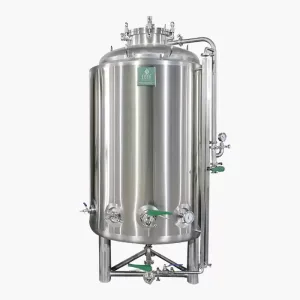
beer tank produced by COFF
why partner with COFF
patented oil-heated brewhouse innovation
We are the founder of the oil-heated brewhouse, a patented technology that delivers higher energy efficiency, stable heat distribution, and exceptional wort protection. Our continuous R&D investment and engineering expertise position us as innovators shaping the future of brewing equipment.
strong U.S. partnership with MoreBeer
Our oil-heated brewhouse has built a strong partnership with MoreBeer, one of the most respected U.S. distributors in the brewing industry. This collaboration expands our international reach, validates our technical capabilities, and demonstrates the high level of trust placed in our products.
certified quality and strict testing
We manufacture all stainless steel beer equipment using 100% certified stainless steel and hold ASME and AS1210 certifications. Every system undergoes full Factory Acceptance Testing and at least two operational tests before shipment, guaranteeing performance, safety, and long-term reliability.
What beer equipment does a brewery need
A modern brewery relies on a complete range of stainless steel tanks to support brewing, fermentation, conditioning, storage, and distillation. At COFF, we manufacture the full series of beer equipment required by breweries of any size, and every system can be fully customized to meet your specific production needs. All welds on our tanks are brushed and polished to enhance durability and protection, ensuring long-term performance in demanding brewing environments.
Explore the details below to help you choose the beer equipment that best fits your brewery.
beer fermenter
A beer fermenter—especially a conical beer fermenter—is the core vessel where wort transforms into beer through controlled fermentation. At COFF, we design stainless steel beer fermenter in a full range of sizes, from compact 1BBL units to large commercial tanks, available in upright or horizontal configurations to match different brewery layouts.

Key structural and performance features:
- Over 20% designed headspace for active fermentation
- Dual or triple dimple jackets for high cooling efficiency
- 80mm polyurethane insulation with 100% TIG welding for temperature stability
- Side or top manway with easy-access knobs
- 60-degree conical bottom for efficient yeast collection
- Polished and passivated interior for enhanced sanitation
Cleaning, control, and safety components:
- Integrated CIP system with rotating spray ball
- Diaphragm-seal pressure gauge and pressure-adjusting apparatus
- Sanitary SS304 hard piping with butterfly valves, relief valve, and sample valve
- RTD-PT100 temperature sensor and liquidometer
- Adjustable leveling pads for stable installation
- Optional wort aeration heat exchanger and optional hop back for advanced brewing needs
beer brite tank
A beer brite tank is the vessel where beer is clarified, carbonated, and prepared for packaging or serving. At COFF, we provide brite tanks from 1BBL to 200BBL in single-layer, jacketed, or stackable designs, with options for vertical or horizontal orientation to fit any brewhouse layout.

Key structural and performance features:
- 20% designed headspace suitable for carbonation and conditioning
- SUS304 interior (3mm) and exterior (2mm)
- Fully welded exterior shell with lifting lugs for secure handling
- Side or top manway door for easy access
- Dual ports for racking and discharge
- Four legs with leveling foot pads for stable installation
Cleaning, control, and safety components:
- CIP arm with spray ball for efficient tank cleaning
- Pressure relief valve (2–3 bar) and vacuum relief system
- Sanitary pressure gauge for accurate pressure monitoring
- Optional upgrades including blow-off pipework, dry hopping port, larger drain ports, and racking arm
beer storage tank
A beer storage tank is designed to hold finished beer safely before packaging, distribution, or serving. At COFF, we build storage tanks in a full range of capacities, ensuring stable temperature control, sanitary protection, and long-term preservation of beer quality for breweries of all sizes.
Key structural and performance features:
- SUS304 stainless steel construction with polished hygienic finish
- Designed headspace to maintain beer stability during storage
- Dimple glycol cooling jackets for consistent temperature control
For other custom designs, please contact us.

beer distiller
A beer distiller is used to transform fermented wash into high-proof spirits through controlled heating and condensation. At COFF, we design distilling equipment for a wide range of spirits—whiskey, vodka, gin, tequila, brandy, rum, fruit spirits, and more—offering flexible configurations for both craft and commercial production.
Key structural and performance features:
- Available capacities from 200L to 10,000L for small-batch or large-scale distillation
- Choice of SS304 stainless steel or red copper construction
- Multiple heating methods: steam, electric, direct fire, bain-marie bath, or oil heating
- Customizable dimensions, voltage (110V–480V), and power options
- Suitable for hotels, restaurants, food & beverage factories, farms, retail, and home craft distilling

Are stainless steel fermenters worth it
Yes! Most modern breweries use stainless steel as the primary material for beer vessels.
At COFF, all stainless steel beer equipment is manufactured using certified SUS304 food-grade stainless steel to ensure safety and consistency in every brewing environment. This metal provides the ideal balance of hygiene, temperature stability, and structural integrity.
corrosion resistance
Stainless steel offers exceptional resistance to rust and chemical reactions, ensuring tanks remain stable and safe even under continuous contact with beer, cleaning agents, and varying temperatures.
hygienic and easy to clean
The smooth, non-porous surface of stainless steel prevents bacterial buildup and makes sanitation simple. This ensures all stainless steel beer equipment maintains strict hygiene standards.
strong structural durability
Food-grade SUS304 stainless steel provides excellent strength and long-term durability. Stainless tanks remain reliable under pressure, temperature changes, and daily operation.
flavor neutrality
Stainless steel does not absorb or release flavors, protecting the purity of every batch. This ensures that beer taste remains clean, stable, and true to the brewer’s intended profile.
Beer Tank Application Scenarios
Stainless steel beer tanks are not limited to traditional brewing. Thanks to their sanitary design, temperature control, and pressure resistance, they are widely applied across multiple industries requiring liquid fermentation, storage, and processing.
Craft Brewing Industry
In craft breweries, beer tanks are primarily used for fermentation, conditioning, and carbonation. Conical fermenters and brite tanks allow brewers to precisely control temperature and pressure, ensuring consistent flavor, aroma, and product quality across batches.
Brewpubs & Hospitality Industry
Restaurants, bars, and brewpubs use beer tanks for on-site brewing and direct serving. Brite tanks enable fresh beer dispensing, improving customer experience while reducing packaging and transportation costs.
Commercial & Industrial Brewing
Large-scale breweries rely on high-capacity beer tanks for continuous production. Automated systems integrated with the tanks allow for efficient fermentation management, quality consistency, and reduced labor costs.
Beverage & Fermented Drinks
Industry Beyond beer, these tanks are widely used for producing kombucha, cider, hard seltzer, and other fermented beverages. Their hygienic stainless steel structure ensures contamination-free processing and consistent product outcomes.
Food Processing Industry
Beer tanks can also be adapted for food-grade liquid storage and fermentation processes, such as sauces, vinegar, or dairy-based fermentation, where strict hygiene and temperature control are required.
Biotechnology & Pharmaceutical Industry
In certain cases, stainless steel tanks with enhanced precision controls are used for microbial fermentation, enzyme production, or other bioprocesses. Their closed-system design supports sterile operations and process stability.
beer tank Manufacturing Process
Material Selection
Only certified food-grade stainless steel (SUS304/316) is used to ensure corrosion resistance, hygiene, and durability.
Plate Cutting & Forming
CNC cutting and rolling machines shape steel plates with high dimensional accuracy, ensuring perfect tank geometry.
TIG Welding & Assembly
All components are welded using TIG welding by certified professionals, ensuring smooth weld seams and structural strength.
Surface treatment
The inner surface is polished to hygiene standards and passivated to enhance corrosion resistance and prevent contamination.
Cooling Jacket & Insulation
Dimple jackets or glycol cooling systems are installed to enable precise temperature control during fermentation.
Testing & Quality Control
Each tank undergoes pressure testing, leak detection, and Factory Acceptance Testing (FAT) to guarantee safety and performance.
Installation Guide for beer tank
Following COFF’s turnkey delivery model, installation is designed to be efficient and reliable:
Site Preparation
Ensure a level foundation with adequate load capacity and space for operation and maintenance.
Tank Positioning
Use lifting lugs or a crane to safely position the storage tank according to the layout plan.
Utility Connections
Connect cooling systems, piping, electrical controls, and drainage to ensure proper functionality.
System Calibration
Test temperature sensors, pressure valves, and control systems to ensure accurate operation.
Cleaning & Sanitization
Perform CIP (Clean-in-Place) procedures before first use to maintain hygiene standards.
Commissioning & Trial Run
Conduct a full system test or pilot batch to verify performance and ensure smooth operation.
custom stainless steel beer tank
At COFF, we offer fully custom stainless steel beer tanks tailored to meet the unique needs of every brewery. Our engineering team works closely with customers to design beer tanks that match specific production goals, space constraints, and workflow requirements.
Key customization features:
- Fully adjustable dimensions, volume, and orientation to fit your brewery layout
- Optional heating or cooling jackets for precise temperature control
- Custom fittings, valves, and ports to support your brewing process
- Interior and exterior surface finishes, including polished or passivated options
- Integrated control systems for monitoring and automation
faq about beer tanks
Is it legal to brew beer at home?
Homebrewing laws vary depending on your country or region. In many places, brewing beer at home for personal use is legal, but restrictions often exist regarding the amount you can produce, age requirements, and whether the beer can be sold or distributed. Always check your local regulations before starting to ensure compliance with legal limits and safety standards.
At COFF, we provide guidance on equipment suitable for both homebrewing and professional-scale breweries, helping you choose the right stainless steel beer equipment for your needs.
How long does beer stay in a beer brite tank?
Beer typically remains in a beer brite tank for 5 to 14 days, depending on the style and carbonation requirements. For example, a lager may need up to two weeks for proper conditioning, while an ale often brightens in about a week.
During this time, COFF brite tanks maintain precise temperature and pressure, allowing CO2 to dissolve evenly and sediment to settle, producing clear, stable beer. Our tanks’ polished stainless steel surfaces and efficient cooling jackets ensure the beer stays fresh and hygienic throughout the process, delivering consistent quality batch after batch.
How long does 5 gallons of beer take to ferment?
Fermenting 5 gallons of beer typically takes 1 to 3 weeks, depending on the beer style, yeast strain, and fermentation conditions. Ales usually finish primary fermentation in 5–7 days, while lagers and stronger beers may take 2–3 weeks to reach full attenuation.
During fermentation, the yeast converts sugars into alcohol and CO2, and maintaining a stable temperature in a properly designed conical beer fermenter helps ensure consistent flavor development. At COFF, our fermenters provide precise temperature control, proper headspace, and hygienic stainless steel surfaces to support reliable fermentation for both small and large batches.
How much beer can a 10 BBL system produce?
A 10 BBL (barrel) brewing system produces approximately 310 gallons (1,170 liters) of beer per batch, since 1 BBL equals 31 gallons. The actual yield depends on factors like boil-off rate, trub loss, and fermentation efficiency.
Using multiple batches per week or a high-efficiency system increases total output. COFF’s brewing systems are designed for optimal yield with precise control over volume, temperature, and fermentation, ensuring consistent production of high-quality beer.