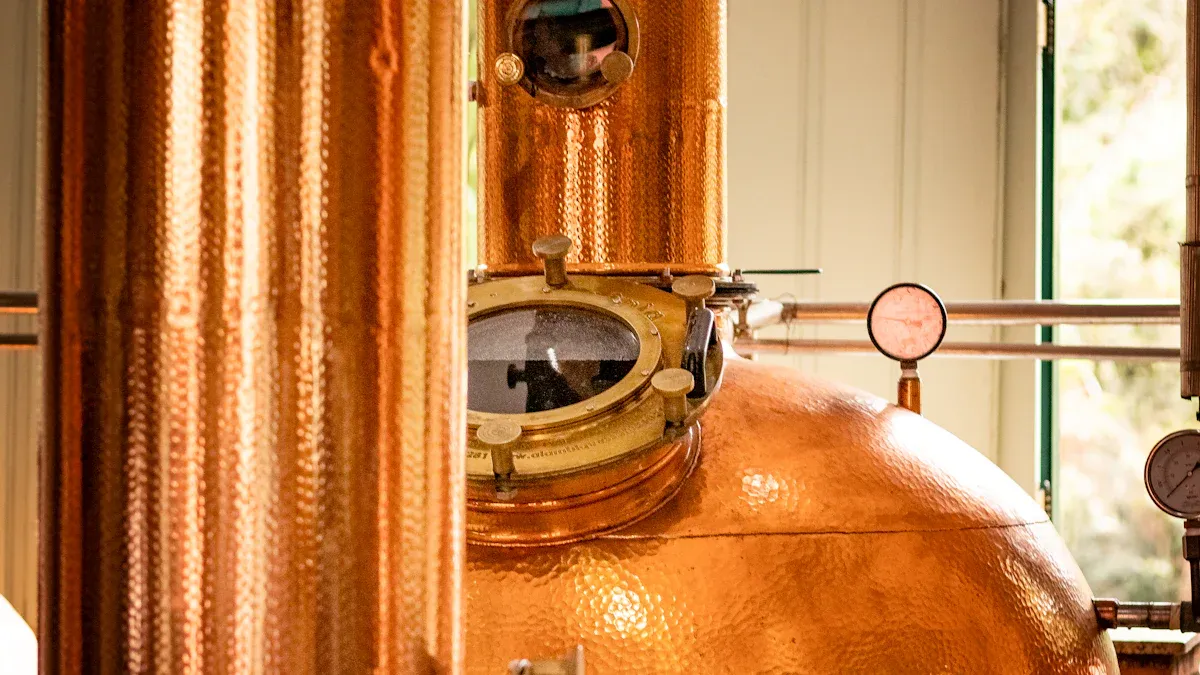
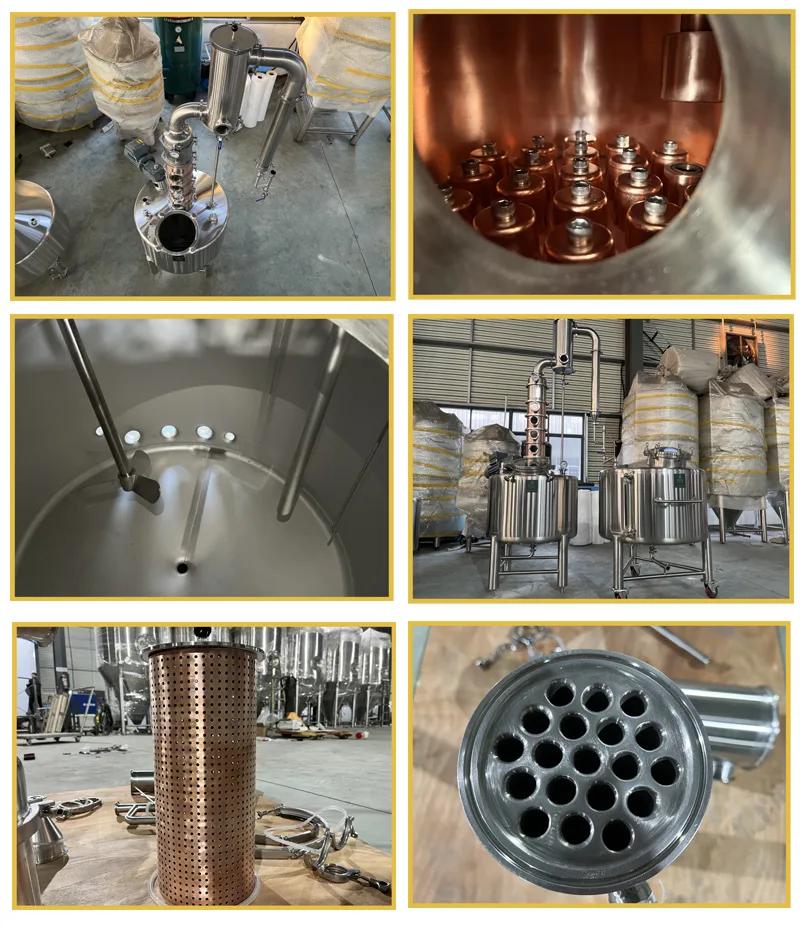
Distillery equipment refers to the complete set of vessels, stills, components, and processing systems used for the separation, purification, and production of alcohols, essential oils, perfumes, bio-based extracts, and other distilled products. It includes tanks, heating systems, condensers, piping, controllers, and various accessories that allow producers to transform raw materials into high-purity final outputs through controlled evaporation and condensation.
As a long-established manufacturer with deep expertise in stainless steel tanks, we at COFF bring our craft brewery engineering background into the distillation industry. Our years of experience designing high-end brewing systems empower us to build durable, sanitary, and efficient distillery equipment for alcohol, oil, fragrance, and chemical applications.
Next, we will provide professional answers to some of the most common questions and topics in distillation.
Our after-sales assurance includes a three-year warranty on stainless steel vessels, full FAT with at least two test runs before delivery, and responsive global support, ensuring customers receive stable operation, reliable maintenance, and long-term protection for distillery system we manufacture.
advanced customization capability
Our customization capability covers heating methods, integrated controls, and certified SUS304 materials, allowing us to tailor every detail to customer requirements while maintaining consistent quality through our large professional workshop and experienced engineering team.
strong international partnerships
Our partnership strength is demonstrated by cooperative networks across 18 countries, a 80% referral rate, and a trusted U.S. collaboration with MoreBeer, enabling us to deliver proven equipment, steady supply, and long-term reliability recognized by distilleries worldwide.
What is the best metal for a distillery equipment?
Two materials dominate the industry: stainless steel and copper. Each offers specific benefits depending on the type of distillation, desired flavor characteristics, and hygiene requirements. Many producers combine both metals to achieve an optimal balance.
stainless steel distillery equipment
Highly resistant to corrosion, ensuring long-term durability and stable performance even in demanding industrial environments.
Superior sanitation properties, making it ideal for food-grade, pharmaceutical, and high-purity alcohol applications.
Easy to maintain and clean, reducing production downtime and long-term operational costs.
Cost-effective for large-scale systems while maintaining structural strength and reliability.
Compatible with high-pressure and high-temperature processes, supporting diverse heating methods and efficient production.
copper distillery equipment
Excellent at removing sulfur compounds, producing cleaner, smoother, and more aromatic spirits.
Provides superior thermal conductivity, enabling faster and more even heat distribution during distillation.
Enhances flavor development in spirits like whiskey, gin, brandy, and rum through catalytic reactions.
Traditional appearance and craftsmanship appeal to artisanal and heritage-focused distilleries.
Naturally inhibits bacterial growth, supporting exceptional cleanliness and safety during spirit production processes.
how to choose the right metal distillation equipment
stainless steel distillery equipment
Stainless steel distillation equipment is ideal for high-purity alcohol (vodka, neutral spirits), botanical extracts, essential oils, medicinal liquids, and industrial-grade distillates. Its stability, cleanliness, and durability make it the preferred material for large-scale or multi-purpose distillation.
copper distillery equipment
Copper distillation equipment is best suited for flavorful spirits such as whiskey, brandy, and gin, where the removal of sulfides and flavor refinement are crucial to the final product. Copper’s thermal conductivity helps achieve a precise, craft-focused distillation process.
Many modern distillation equipment manufacturers use hybrid distillation equipment, combining stainless steel and copper to leverage the advantages of both materials. For example:
A stainless steel boiler paired with a copper distillation column can improve efficiency while enhancing the aroma of spirits.
Craft whiskey producers often use hybrid stills with a stainless steel body and a copper still head to balance flavor development and ease of maintenance.
Essential oil distillers may choose a stainless steel container with a copper botanical basket to capture aromatic compounds while maintaining cleanliness and hygiene.
common types of distillery still
Distillery stills come in several forms, each serving different production styles, batch sizes, and flavor goals. As a manufacturer of diverse distillation systems, we design stills that fit both small craft operations and large industrial facilities.
pot stills
Pot stills are the most traditional type of still. They operate in batches and are ideal for producing flavorful spirits such as whiskey, rum, and brandy. Their simple structure allows for the retention of rich flavor compounds and unique aromas. Many artisanal distillers prefer pot stills.
Column stills (or continuous stills) are designed for increased efficiency and higher production volumes. They allow for continuous distillation, producing high-purity alcohol suitable for vodka, neutral spirits, and industrial applications. They are a common choice for commercial production.
Hybrid stills offer flexible reflux control and customizable purity levels, allowing for both flavorful batch distillation and high-purity continuous distillation. This versatility makes hybrid stills popular in craft distilleries producing a variety of products.
Customization is essential in the distillation industry. As COFF, we provide tailored distillery still configurations to meet different technical, aesthetic, and operational requirements. Our custom options cover:
Dimensions & capacity: from small pilot stills to large-scale commercial vessels.
Structural design: choices between vertical still, horizontal configurations, modular frames, or space-saving arrangements.
Heating methods: electric heating, direct fire, our patented oil-heated systems, and steam still solutions.
Material combinations: all-stainless, all-copper, or hybrid designs with copper helmets and stainless steel bodies.
Jacketed construction: fully jacketed still designs for steam, glycol, or thermal oil circulation.
Control systems: basic manual controls or advanced PLC interfaces with automated temperature and pressure monitoring.
* For more customized requirements, please contact us for a one-on-one solution consultation!
Industrial applications of distillery equipment
Modern industrial distillery equipment plays an important role across multiple sectors.
alcohol distillery equipment
When producing alcoholic spirits, precise control of temperature, pressure, and reflux is essential for consistent results. Our alcohol distillery equipment prioritizes stable heating and maintains high-quality output for vodka, whiskey, gin, rum, and other crafted spirits with reliability.
oil distillery equipment
For essential oils and plant extracts, gentle and even heating is crucial for preserving delicate compounds. Our steam distillers and jacketed stills provide stable temperature control, minimizing charring or chemical degradation and ensuring consistently high-quality aromatic yields.
perfume distillery equipment
Perfume production demands extremely high purity and precision in component separation. Our distillery equipment supports low-temperature distillation and is equipped with a precise pressure control system, ensuring that aromatic compounds are fully preserved.
distillation tank Installation, Commissioning & Support
Pre-Installation Planning and Site Requirements
Proper site preparation ensures smooth installation. Facilities must provide water, steam, electricity, drainage, and ventilation. Adequate space for operation and maintenance is essential. Good planning reduces delays, lowers costs, and ensures stable performance from the start.
Step-by-Step Equipment Installation Process
Installation includes positioning equipment, connecting pipelines, wiring electrical systems, and integrating controls. Accurate alignment and sealing prevent leaks and ensure safety. A structured process improves efficiency and reduces errors, helping the system operate reliably after setup.
Commissioning and Performance Testing
Commissioning involves trial runs, system checks, and calibration of temperature and pressure. Performance testing ensures equipment meets production requirements. Early issue detection reduces downtime and ensures consistent output, making this step critical before full operation.
Operator Training and Documentation
Training helps operators run equipment safely and efficiently. It covers operation, maintenance, and troubleshooting. Clear manuals and SOPs support daily work. Skilled operators reduce errors, improve productivity, and extend equipment lifespan.
After-Sales Technical Support and Remote Assistance
After-sales support includes troubleshooting, spare parts supply, and technical guidance. Remote assistance enables fast problem resolution. Strong support minimizes downtime, ensures continuous production, and improves long-term equipment performance.
Common Installation Challenges and Solutions
Common issues include misalignment, utility mismatches, and limited space. Proper planning and flexible adjustments can solve these problems. Experienced support helps ensure smooth installation and reliable system operation.
distillation tank Maintenance & Cleaning Optimization
CIP (Clean-in-Place) Systems and Automation
CIP systems automate cleaning by circulating solutions through equipment. They remove residues efficiently without disassembly. This improves hygiene, reduces labor, and ensures consistent cleaning standards in distillery operations.
Daily, Weekly, and Preventive Maintenance Plans
Regular maintenance includes daily inspections and scheduled checks. Preventive maintenance identifies issues early. This approach reduces downtime, lowers repair costs, and ensures stable equipment performance.
Cleaning Standards for Food-Grade and Alcohol Production
Strict cleaning standards ensure product safety and quality. Equipment must meet food-grade hygiene requirements. Proper sanitation prevents contamination and maintains consistent production quality.
Troubleshooting Common Equipment Issues
Common issues include clogging, leaks, scaling, and temperature instability. Quick identification and resolution are essential. Regular monitoring helps prevent disruptions and maintain efficiency.
Spare Parts Management and Replacement Cycles
Managing spare parts ensures key components are available. Regular replacement of wear parts prevents failures. Organized inventory reduces downtime and supports efficient maintenance.
Extending Equipment Lifespan Through Proper Maintenance
Routine cleaning, proper use, and timely repairs extend equipment life. Following maintenance guidelines reduces wear and improves efficiency. This ensures long-term reliability and better return on investment.
faq about distillation tank
How much will a 30 gallon still make?
The output of a 30-gallon still depends on the wash composition, the desired purity, and the number of distillation passes. In general, a 30-gallon charge might yield around 3–6 gallons of distilled spirit per run at typical strengths. For essential oils, yield varies significantly based on the biomass type.
Our engineering team helps customers calculate accurate production capacity based on their specific materials and goals.
Is it legal to own a still in the US?
Yes—but it depends on the type of still and its intended use. Owning a still is legal in the U.S., but distilling alcoholic beverages at home for consumption without a federal permit is illegal, while using a still for essential oils, water, or fuel is generally permitted.
Here’s a detailed breakdown for the United States:
For alcohol production (distilling spirits): Illegal without a federal permit. The Alcohol and Tobacco Tax and Trade Bureau (TTB) strictly regulates distillation of spirits. You must obtain a federal permit, and many states also require additional licenses. Owning a still for producing spirits without the proper federal and state permits can result in fines, seizure of equipment, and criminal penalties.
For non-alcohol purposes: It is legal to own a still for purposes such as producing essential oils, water distillation, or fuel alcohol (like ethanol for lab or industrial use) without a TTB permit. Still use must comply with local zoning laws and safety regulations, especially regarding flammable liquids or pressurized systems.
A fermenter is the vessel where yeast converts sugars in wort into alcohol and carbon dioxide during fermentation. A brite tank, also called a bright...
Bright beer tanks (also called brite tanks) are the final conditioning vessels in the brewing process, turning freshly fermented beer into clear, carbonated, packaging-ready product....
No, milk does not normally cause a harmful chemical reaction with properly made food-grade stainless steel. Grades such as 304 and 316 are widely used...