As COFF, we manufacture high-quality stainless steel mixing tanks designed for precise, hygienic, and reliable industrial processing. Our mixing tanks are widely used across food, beverage, chemical, cosmetic, pharmaceutical, and fine chemical industries, supporting customers in more than 18 countries.
A mixing tank is a stainless steel vessel engineered for blending, dispersing, dissolving, emulsifying, or homogenizing materials. It typically includes an agitator system, sanitary fittings, and—depending on the process—heating or cooling jackets, insulation, and automation controls. Mixing tanks are essential for ensuring product consistency, improving reaction efficiency, and supporting stable, repeatable production across various industries.
Through customized agitator designs, jacket configurations, control interfaces, and sanitary finishes, we ensure each tank meets the specific requirements of the customer’s process—enhancing efficiency, consistency, and production quality.
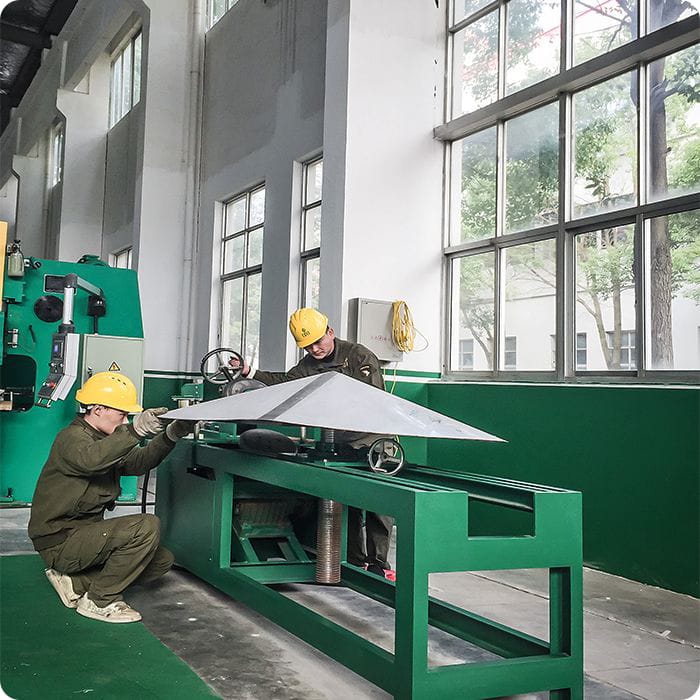
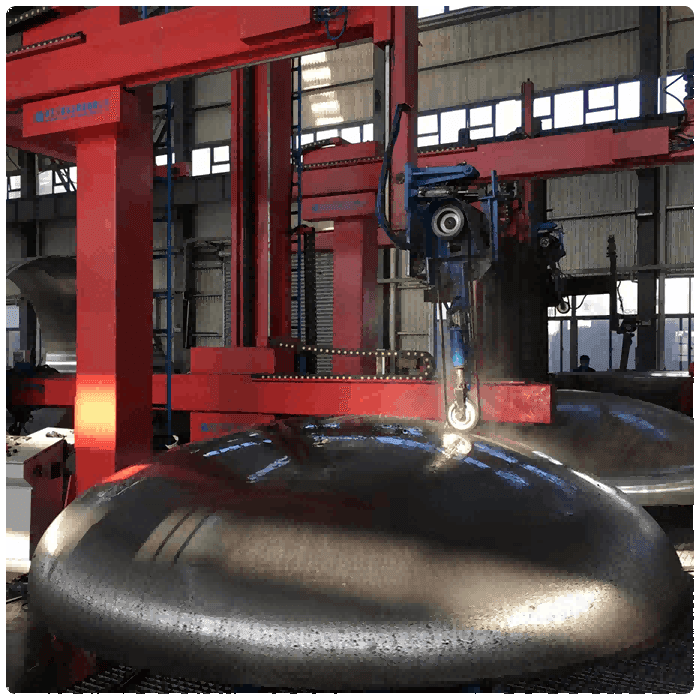
COFF’s mixing tanks are built by senior engineers with 15+ years of industry experience and ASME-certified welders. Our 100% SUS304 stainless steel fabrication, double inspection process, and full FAT testing ensure durability, precision, and stable performance in demanding production environments.
global credibility and customer trust
COFF’s equipment operates reliably in 18 countries, supported by 80% referral-based customers and over 90% long-term partnerships. Consistent quality, responsive service, and certified production standards have earned us strong recognition in the U.S., Canada, the UK, Japan, and other key markets.
innovation product development
COFF leads innovation with our patented oil-heated systems, developed across four generations since 2017. This technology reduces energy consumption and enhances heat uniformity, delivering measurable efficiency gains and product quality improvements for breweries and industrial users worldwide.
key features of mixing tank
Efficient and customizable agitation systems
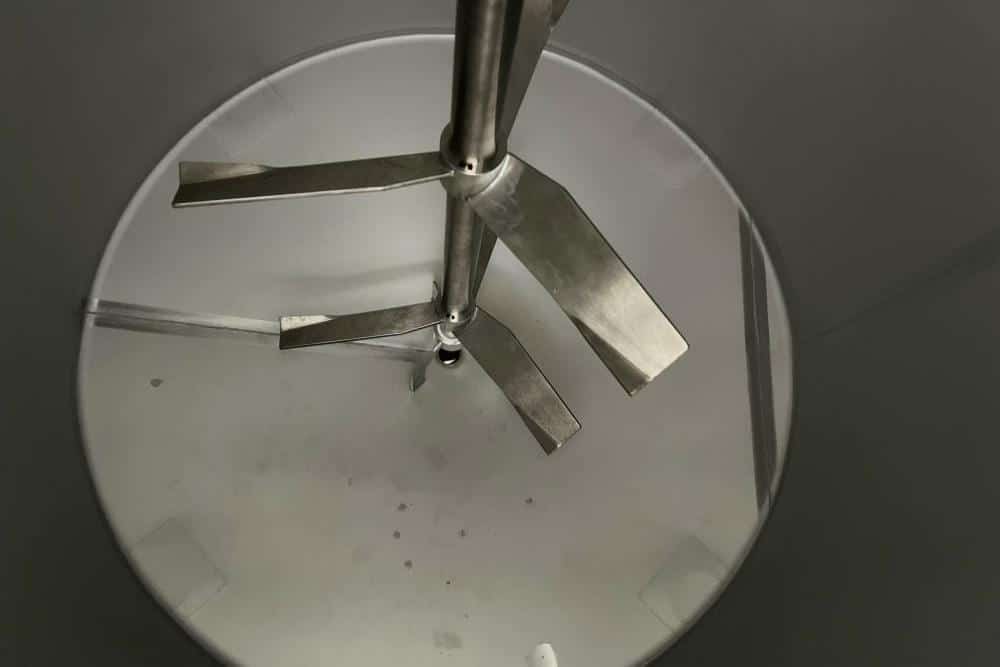
Each tank integrates a tailored agitator solution, including paddle, anchor, or high-shear options, matched to material viscosity.
Optional heating and cooling jackets
Our tanks support double-jacket designs for precise temperature control using thermal oil, steam, or glycol. This feature supports heating, cooling, or pasteurization processes.
Integrated control and safety systems
The tanks include automated control panels with adjustable speed, temperature monitoring, and overload protection.
Mobility and compact structural
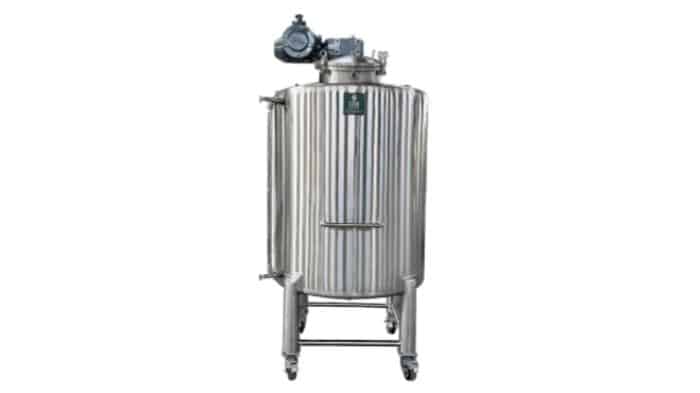
Our mixing tanks can be equipped with reinforced swivel casters and a space-saving vertical or horizontal layout, enabling easy relocation, flexible workshop arrangement.
custom designs of stainless steel mixing tank
Different industries and materials require different mixing methods. For this reason, COFF provides fully customized stainless steel mixing tanks tailored to each customer’s production environment, formulation characteristics, and process requirements.
mixing tank with agitator
A mixing tank with agitator improves mixing efficiency, enhances product consistency, reduces processing time, and supports stable performance across liquids, semi-solids, and powders.
Our agitator mixing tank can be equipped with various agitators depending on material viscosity, flow requirements, and mixing objectives. Available options include:
Propeller agitator for low-viscosity liquids
Paddle agitator for medium-viscosity blending
Turbine agitator for strong turbulence
Anchor agitator for highly viscous materials
High-shear mixer for emulsification and dispersion
Dual or triple agitator systems for complex formulations
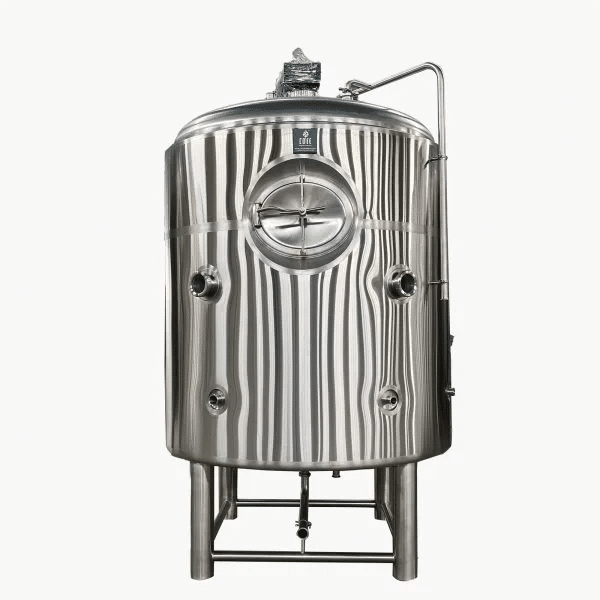
A single layer mixing tank is an economical solution for product formulations that do not require temperature control.
This type of tank is widely used for dissolving powders, simple blending, and general liquid preparation. Although the design is simple, we ensure food-grade welding, hygienic fittings, smooth internal polishing, and durable structural strength.
For products requiring heating or cooling, COFF manufactures double-jacketed mixing tanks. These tanks can be equipped with thermal oil, steam, hot water, or glycol cooling systems.
Steam heating Steam heating is suitable for large-scale or high-temperature processes that require fast heating speed and strong thermal power. It is commonly used in food, chemical, and pharmaceutical.
Electric heating Electric heating is ideal for small to medium production spaces that need simple installation and stable temperature control. It offers easily adjustable heat without requiring boilers or external steam systems.
Thermal oil heating Oil-heated is suitable for processes requiring gentle, uniform, and scorch-free heating. It maintains stable temperatures, making it ideal for sensitive materials such as sauces, creams, or specialty liquids.
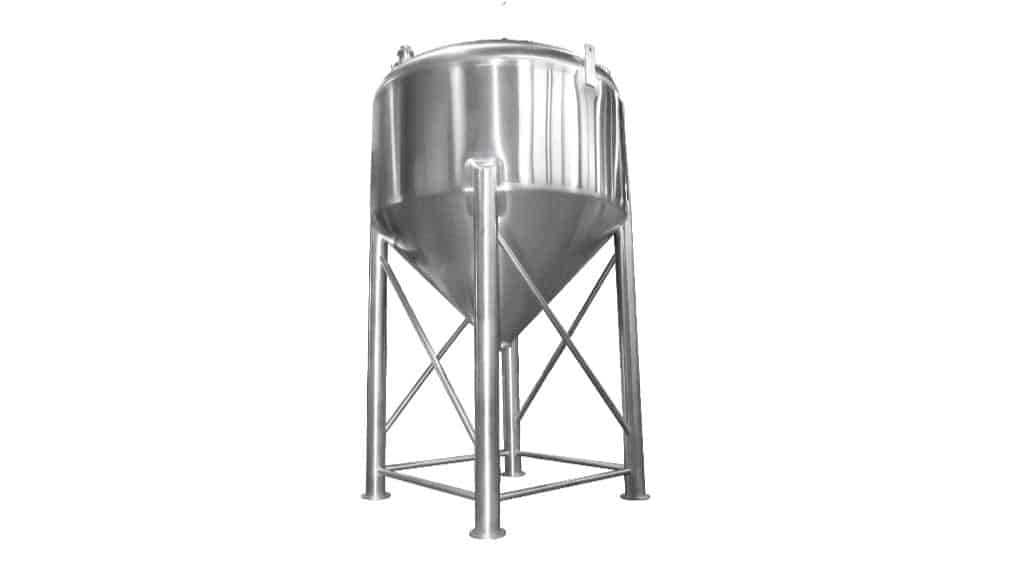
A conical bottom mixing tank provides superior drainage, reduces product residue, and supports faster cleaning. This design is ideal for high-viscosity materials or applications where complete discharge is critical. It is widely used in food, cosmetic, and specialty chemical production.
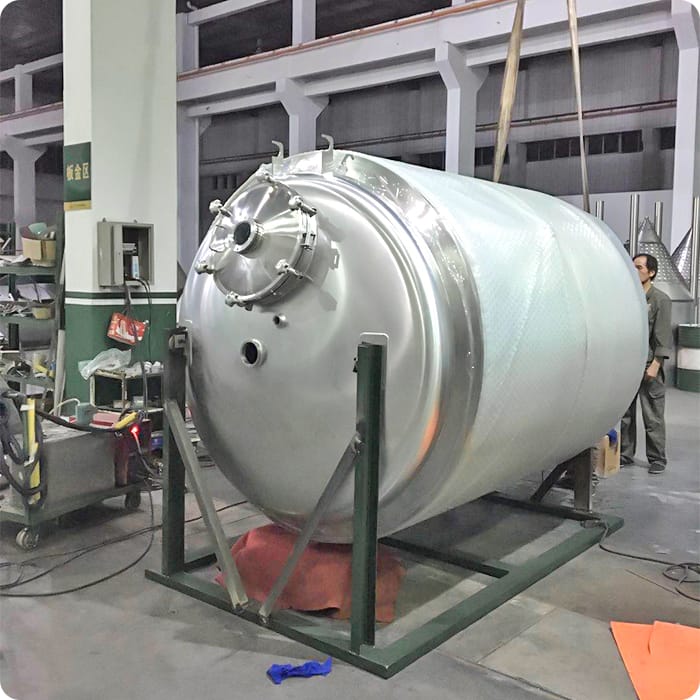
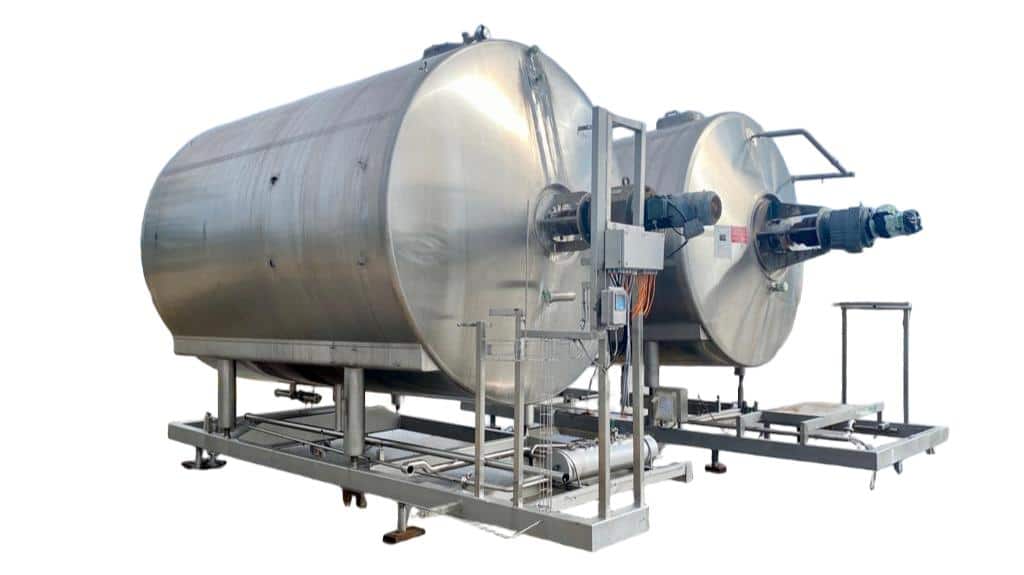
Horizontal mixing tanks are suitable for large batches, powder-liquid mixing, and high-viscosity formulations. Their horizontal orientation creates a tumbling flow that enhances blending consistency, especially when gentle mixing is required or when the production facility has height limitations.
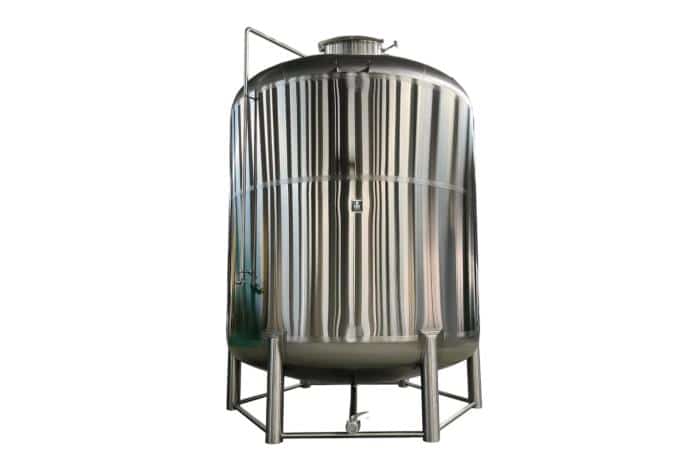
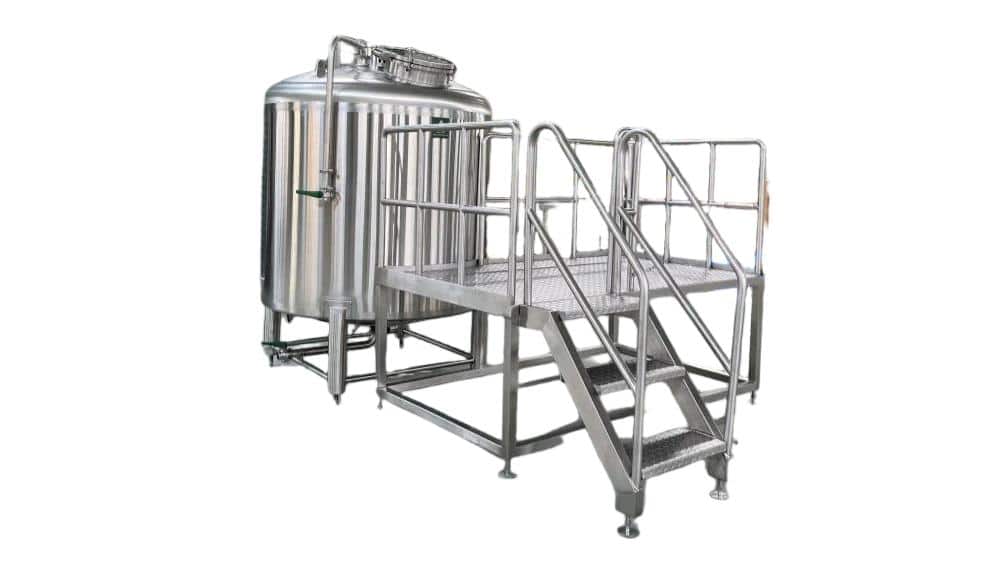
Vertical mixing tanks are the most commonly used type due to their efficient footprint and strong axial-radial flow pattern. COFF manufactures vertical tanks in sizes ranging from small laboratory volumes to large industrial vessels exceeding several thousand liters. These tanks integrate easily into existing production lines and deliver highly efficient mixing performance.
What is the difference between vertical and horizontal mixing tank
Our ss storage tanks are engineered to meet the demanding requirements of liquid, semi-liquid, and powder storage across multiple industries. Key features include:
Structure: Vertical mixing tanks are positioned vertically, while horizontal mixing tanks are positioned horizontally.
Flow pattern: Vertical mixing tanks generate strong axial flow, suitable for handling liquids; horizontal tanks generate a tumbling effect, ideal for handling powders and viscous materials.
Installation space: Vertical mixing tanks save floor space; horizontal mixing tanks require a larger footprint but are easier to maintain.
Drainage: Vertical conical mixing tanks have excellent drainage performance; horizontal mixing tanks may require customized discharge solutions.
Batch size: For very large capacities or processes requiring gentle mixing, horizontal mixing tanks may be more advantageous.
applications of stainless mixing tank
COFF stainless mixing tanks are widely used across multiple production industries. Below are the main application categories.
chemical
chemical mixing tank
Chemical mixing tank often requires stable heating, cooling, and strong corrosion resistance. A double jacketed mixing tank with agitator is most suitable, providing precise temperature control and uniform blending for chemical reactions, emulsification, or dispersion.
Detergent mixing tanks typically require the dissolution of surfactants and viscosity adjustment. Vertical mixing tanks equipped with agitators are ideal for this purpose, as they can effectively stir viscous liquids and ensure a uniform and consistent product texture during mixing and homogenization.
Glue mixing tank require stable stirring and strict temperature control to prevent premature curing. It is recommended to use a double jacketed mixing tank with thermal oil heating or a conical mixing tank to improve heating uniformity and control the discharge of viscous materials.
Powder mixing tanks are used to disperse powders into liquids, preventing clumping and ensuring rapid and uniform dissolution. For this application, it is recommended to use a high-shear mixing tank or a vertical mixing tank with an agitator to generate a strong vortex effect, achieving thorough mixing of the powder and liquid.
Perfume mixing tanks are capable of precisely blending fragrances, alcohol, and additives while ensuring product clarity and purity. Single layer or horizontal mixing tanks are ideal for this process, providing low-shear agitation and smooth mixing effects, thereby maintaining fragrance stability and product transparency.
Jam processing requires heating, concentration, and gentle stirring to preserve flavor and prevent scorching. A double-jacketed mixing tank with a scraper-type agitator is the best choice. It ensures even heat distribution and thorough mixing of high-viscosity fruit mixtures.
Juice mixing tanks are designed for hygienic mixing, dilution, and dissolution of ingredients. For this application, either single layer vertical mixing tanks or agitator mixing tanks can be used, both providing gentle mixing, easy cleaning, and efficient preparation of juices and concentrated beverages.
Honey mixing tanks are designed for gentle mixing and mild heating of high-viscosity honey, aiming to preserve its texture and fluidity. The best option is a double-jacketed conical mixing tank, which provides low-temperature heating, smooth discharge, and uniform mixing without compromising honey quality.
In industries where product safety is critical, cleaning and hygiene standards are often the deciding factors when selecting a mixing tank. A well-designed stainless steel mixing tank not only improves efficiency but also ensures your production meets strict regulatory and quality requirements.
Our mixing tanks are built with smooth, polished internal surfaces that minimize residue buildup and reduce the risk of contamination. This design makes cleaning faster, more effective, and more consistent between production cycles.
To further improve hygiene, we offer integrated CIP (Clean-in-Place) systems that allow automatic cleaning without disassembly. This significantly reduces downtime, labor costs, and human error, while ensuring every part of the tank is thoroughly cleaned.
Sanitary design details also play a crucial role. Features such as seamless welding, optimized drainage angles, and minimized dead zones prevent material accumulation and bacterial growth. These elements are essential for maintaining product purity, especially in high-standard industries.
By investing in a mixing tank designed for hygiene, you not only protect your product quality but also strengthen your compliance with industry standards and customer expectations—giving your business a clear competitive advantage.
Mixing Tanks Installation & Layout Considerations
Proper installation plays a key role in the performance and longevity of a mixing tank. Factors such as available space, ceiling height, and floor load capacity should be evaluated before installation. Vertical tanks are ideal for limited floor space, while horizontal designs suit low-clearance environments.
Adequate space should also be reserved for maintenance, operation, and agitator access. In addition, pipeline connections, electrical systems, and control panels must be carefully planned to ensure smooth integration into your production line. A well-planned layout reduces downtime and improves overall efficiency.
Mixing Tank Maintenance & Service Life
Regular maintenance is essential to keep your mixing tank operating efficiently and extend its service life. Routine inspections of agitators, seals, and motors help prevent unexpected failures and costly downtime.
Cleaning after each production cycle, along with periodic checks for wear, corrosion, or residue buildup, ensures consistent performance. High-quality stainless steel tanks are designed for long-term use, and with proper maintenance, they can deliver reliable operation for many years, maximizing your return on investment.
faq about mixing tanks
How to size a mixing tank?
The selection of a mixing tank requires careful consideration of batch capacity, tank geometry, and agitator design to ensure efficient and uniform mixing. This process can be divided into three main steps:
1. Determining Tank Volume The tank volume depends on the production output and batch size. Accurately calculating the volume ensures that the tank meets process requirements, avoiding undersized or oversized tanks.
2. Determining Tank Geometry – For standard applications, a height-to-diameter ratio of approximately 1:1 is usually the most economical choice. – The ratio of liquid level height to tank diameter should ideally be 0.8–1:1, avoiding ratios below 0.6. – Installing baffles in a cylindrical tank prevents vortex formation and promotes thorough mixing. Baffle width is typically 1/12 of the tank diameter, installed approximately one-third of the baffle width away from the tank wall and a few inches above the tank bottom.
3. Determining Impeller and Agitator Size – The ratio of impeller diameter to tank diameter (D/T ratio) is crucial for effective mixing. For most applications, a ratio of 1/3 to 1/2 (0.25–0.5) works best. – Low-viscosity liquids require a ratio of approximately 0.25, while high-viscosity materials require a larger ratio. – The impeller installation position should consider the tank geometry and baffle placement, generally positioned slightly off-center vertically. – Determining agitator power: Calculated based on batch capacity, fluid viscosity, and required mixing time.
What is the ratio for mixing tanks?
Common design ratios include:
Tank Height : Diameter = 1:1 to 1:1.3 Impeller Diameter : Tank Diameter = 1:3 to 1:5 Baffle Width : Tank Diameter ≈ 1:12
These ratios create stable flow patterns and efficient mixing. COFF adjusts them based on product viscosity, shear sensitivity, and process goals.
A fermenter is the vessel where yeast converts sugars in wort into alcohol and carbon dioxide during fermentation. A brite tank, also called a bright...
Bright beer tanks (also called brite tanks) are the final conditioning vessels in the brewing process, turning freshly fermented beer into clear, carbonated, packaging-ready product....
No, milk does not normally cause a harmful chemical reaction with properly made food-grade stainless steel. Grades such as 304 and 316 are widely used...