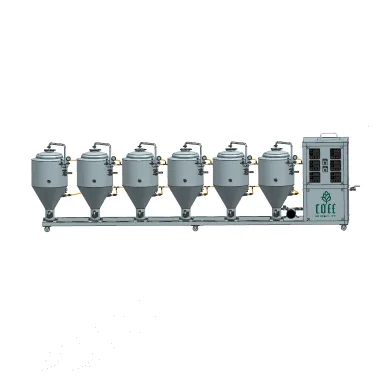
A fermentation tank is a specialized vessel designed to provide a controlled environment for microbial activity during the fermentation process. Whether used for beer, wine, dairy, spirits, fine chemicals, or pharmaceuticals, the purpose remains the same: to create a stable, sanitary, and efficient space where yeast or bacteria can transform raw materials into finished products.
As COFF, we are not only deeply familiar with every technical detail behind a fermentation tank—we are also a global manufacturer recognized for producing world-class stainless steel tanks. With decades of engineering expertise, a large-scale professional workshop, and a passion for brewing culture, we design and build fermentation tanks that meet the functional, artistic, and durability demands of modern craft production.
Next, we will provide professional answers and insights into the most common topics about fermentation tanks.
We leverage decades of professional engineering experience, including a team of top-level designers with more than 15 years in the craft industry. Our technical strength ensures every fermentation tank meets high international standards.
global reputation and partnerships
We supply stainless steel fermentation systems to over 18 countries and maintain strong partnerships, including our recognized collaboration with MoreBeer in the U.S. Our consistent quality and service result in exceptional customer loyalty.
certified quality
Our fermentation tanks are built from 100% certified stainless steel and comply with ASME and AS1210 standards. Each vessel undergoes thorough inspection, FAT testing, and multiple operational trials, ensuring dependable performance from fabrication through final delivery.
common stainless steel fermenter types
Stainless steel fermenters come in various shapes and configurations, each type offering unique advantages depending on the intended product and process. Below are the most common types we design and manufacture. If you have other custom requirements, please contact us!
conical fermenter
The conical fermenter is the most popular style in craft brewing. Its cone-shaped bottom allows yeast and sediment to settle neatly, making it easy to harvest or remove solids. This design enhances clarity, improves sanitation, and enables multi-stage fermentation in the same vessel.
Cylindrical fermenters offer simplicity and uniformity. Their straight-wall design promotes consistent temperature control and is often preferred in industries like dairy, kombucha, and chemical production. They are ideal for processes that do not require yeast collection.
A square fermenter is designed for facilities where space efficiency is essential. Its compact, easy-to-arrange geometry allows seamless integration into tight layouts while still providing stable fermentation performance, making it ideal for food, beverage, or small-scale industrial production environments.
A horizontal fermenter offers greater surface-to-volume contact, allowing yeast to work more evenly during fermentation. This design is especially favored in lager production, where extended maturation benefits from improved yeast interaction, resulting in cleaner profiles.
Variable capacity fermenters include an adjustable floating lid, making them suitable for flexible batch sizes. Wineries often rely on this type to accommodate seasonal production volume changes while maintaining a sealed environment.
Stainless steel fermenters excel in hygiene, durability, performance, and long-term reliability. For any brewery, winery, or fermentation facility seeking stable production, stainless steel fermenters offer a higher return on investment compared to tanks made of other materials.
superior sanitation
Stainless steel fermenters have a smooth, non-porous interior surface, preventing residue buildup and making cleaning more efficient. Plastic fermenters are prone to scratching, and glass fermenters are difficult to thoroughly sanitize.
durability and longevity
Stainless steel fermenters maintain their structural integrity under high temperatures, high pressure, and frequent cleaning. Plastic fermenters degrade over time, and glass containers are susceptible to cracking or shattering.
oxygen and light barrier
Stainless steel completely blocks the ingress of oxygen and light, both of which can affect flavor and reduce stability. Glass is completely transparent to light, and plastic may be slightly permeable to oxygen.
easy of use
Stainless steel fermenters integrate features such as sampling valves, thermometer wells, CIP systems, and pressure-resistant fittings, simplifying operation. Glass are heavy and fragile, and plastic offer fewer connection options.
SS fermentation tanks temperature control
why temperature control is important
For ss fermentation tanks, temperature stability determines the efficiency of yeast converting sugars, the purity or complexity of the final flavor, and whether unnecessary byproducts will be produced. The excellent thermal conductivity of stainless steel allows for precise heating and cooling control, making it the material of choice for professional breweries, wineries, and food producers.
recommended products for temperature controlled tanks
COFF offer a range of specialized tank designs to achieve accurate and consistent thermal management.
jacketed fermenter
Jacketed fermenter is equipped with an external cooling or heating jacket, allowing for precise temperature control through circulating glycol or warm water. This design is widely used in breweries, wineries, and dairy plants, where stable and responsive temperature regulation is crucial for achieving high-quality fermentation results.
Insulated fermenter minimizes unnecessary heat transfer and maintain a stable internal temperature while reducing energy consumption. They are ideal for breweries in warmer climates, wine production requiring long fermentation periods, and production facilities needing stable conditions for delicate products that benefit from a slow, controlled fermentation environment.
Heating fermenters utilize integrated heating elements or a thermal oil system to raise and maintain temperatures as needed. They are commonly used in distilleries, laboratories, and fermentation processes involving thermophilic microorganisms that require precise temperature increases to ensure proper activity and predictable production results.
Cooling fermenter employs a glycol-based system to effectively lower and stabilize fermentation temperatures. This type of tank is essential for lager breweries, low-temperature wine fermentation, dairy cultures, and any operation requiring rapid cooling or low-temperature control to maintain product quality and microbial stability throughout the fermentation process.
How to Choose the Right Fermentation Tank for Your Production
Selecting the right fermentation tank is critical for ensuring product consistency, process efficiency, and long-term operational reliability. A well-designed tank should match your production scale, process requirements, and industry standards—whether for food, beverage, pharmaceutical, or biochemical applications.
Key Technical Parameters Buyers Should Evaluate
Material grade: Food-grade stainless steel (e.g., SS304/SS316) ensures corrosion resistance and hygiene
Surface finish: Polished interiors reduce contamination risk and improve cleanability
Temperature control: Jacketed designs for precise heating/cooling
Pressure rating: Essential for pressurized fermentation processes
Agitation system: Proper mixing improves mass and heat transfer
Matching Tank Capacity with Production Scale
Calculating batch volume and fermentation cycle time
Considering peak production demand
Allowing 10–20% headspace for foaming and gas expansion
Planning modular expansion for scalability
Common Mistakes When Selecting Fermentation Equipment
Underestimating cleaning and maintenance requirements
Maintenance Strategy & Equipment Lifespan
A well-planned maintenance strategy is essential to ensure stable fermentation performance, reduce unexpected downtime, and maximize the return on investment. High-quality stainless steel tanks, such as those produced by COFF, are designed for durability—but their lifespan still depends heavily on proper care and operation.
Routine Inspection Checklist
Regular inspections help detect minor issues before they become major failures. A standard checklist should include:
Visual inspection of weld seams and internal surfaces
Checking valves, clamps, and gaskets for leaks or wear
Monitoring temperature and pressure sensors for accuracy
Inspecting agitator operation and abnormal noise
Verifying insulation and jacket performance
Establishing a weekly and monthly inspection schedule ensures consistent equipment reliability.
Common Wear Parts and Replacement Cycles
Certain components experience natural wear over time and should be replaced periodically:
Seals and gaskets: typically every 6–12 months depending on usage
Mechanical seals and bearings: subject to rotational wear in agitators
Valves and fittings: especially in high-frequency operation systems
Using standardized, high-quality components helps maintain system performance and simplifies maintenance.
Extending Tank Service Life
To maximize the lifespan of fermentation equipment:
Follow proper CIP cleaning procedures to prevent residue buildup
Avoid corrosive chemicals incompatible with stainless steel
Maintain stable operating pressure and temperature conditions
Train operators on correct usage and handling procedures
Implement preventive maintenance rather than reactive repairs
With proper maintenance, stainless steel fermentation tanks can deliver reliable performance for many years.
Hygienic Design & CIP Cleaning Efficiency
Hygienic design is a critical factor in fermentation systems, especially in food, beverage, and pharmaceutical industries. Efficient cleaning not only ensures product safety but also improves operational efficiency and reduces contamination risks.
Hygienic Tank Design Principles
Modern fermentation tanks from COFF are engineered to meet strict hygiene standards, including:
Smooth internal surfaces with low roughness (Ra ≤ 0.8 μm)
Dead-angle-free design to prevent residue accumulation
Sanitary welding and polished joints
Sloped bottoms for complete drainage
Use of food-grade stainless steel (SS304/SS316)
These design features minimize contamination risk and simplify cleaning.
CIP (Clean-in-Place) System Optimization
CIP systems allow automated cleaning without disassembling equipment, significantly improving efficiency. Key factors include:
Proper spray ball or rotary jet head coverage
Optimized flow rate, pressure, and temperature
Correct selection of cleaning agents (alkaline, acid, sanitizers)
Defined cleaning cycles (pre-rinse, wash, rinse, sterilization)
Well-designed CIP systems reduce water, chemical, and labor consumption while ensuring consistent hygiene.
Improving Cleaning Efficiency & Reducing Downtime
To enhance CIP performance and minimize production interruptions:
Validate cleaning cycles regularly to ensure effectiveness
Use automated control systems for repeatable cleaning processes
Monitor key parameters such as conductivity and temperature
Schedule cleaning during planned production gaps
Maintain CIP components (pumps, spray devices) in optimal condition
Efficient hygienic design combined with optimized CIP processes helps manufacturers achieve higher productivity, consistent product quality, and compliance with industry regulations.
Ready to simplify your custom processing?
place your order
Submit your tank requirements, and we will provide a detailed quote for your review and modification as needed. Once the quote is confirmed, we will develop a customized solution that meets your specifications.
provide design solutions
Please share your design concepts or specific requirements. We will make modifications based on your feedback. After final approval of the design, production will be arranged at our factory.
manufacturing process
Your tank will be manufactured using advanced welding techniques and high-quality stainless steel. Each unit undergoes rigorous quality checks to ensure its durability, hygiene, and long-term stable performance.
delivery and support
We will provide a complete user manual and maintenance instructions along with the tank. COFF offers a three-year warranty on functionality and surface treatment, ensuring your lasting satisfaction.
faq about fermentation tanks
What is the difference between closed and open top fermenter?
The main differences lie in oxygen exposure, sanitation control, and the ability to physically interact with the fermenting medium, making each type suitable for different production goals.
A closed top fermenter is a sealed vessel designed to maintain controlled pressure, sanitation, and protection from airborne contaminants. This style allows brewers and producers to manage fermentation conditions precisely, including regulating temperature, capturing CO₂, and preventing unwanted microorganisms from entering the tank. Closed systems are widely used in beer brewing, cider production, kombucha, dairy cultures.
In contrast, an open top fermenter features an exposed surface that allows oxygen contact and easy manual access to the fermenting material. This design is particularly popular in winemaking—especially for reds—because it enables punchdowns, cap management, and natural micro-oxygenation. Open top fermenters are also used in certain traditional or spontaneous fermentation styles where wild yeast interaction is desired.
When to dump yeast from a conical fermentation tank?
Yeast is typically removed from conical fermenters only after most fermentation activity has slowed down and the initial sediment has settled to the bottom conical section.
Brewers usually wait until the specific gravity reading stabilizes, indicating that the beer has reached its final fermentation level, before collecting the yeast for re-pitching.
For most ales, the yeast is removed between the third and fifth day; lagers, due to their lower fermentation temperatures and slower fermentation kinetics, usually require a longer time.
How to transfer wort from kettle to fermentation vessels?
First, thoroughly sanitize all hoses, valves, and fermentation vessels to prevent contamination. After boiling, rapidly cool the wort using a chiller to reach a yeast-friendly temperature.
Prepare the fermentation vessels by ensuring it is clean, sanitized, and ready with proper fittings. Transfer the wort gently, using gravity or a food-grade pump, to avoid excessive oxygen exposure that could lead to off-flavors. For large or high-gravity batches, consider sterile aeration to supply oxygen for healthy yeast growth.
Finally, verify the temperature and volume in the fermentation vessel before pitching yeast. Following these steps ensures the wort is clean, properly cooled, and ready for efficient fermentation, resulting in consistent flavor, clarity, and overall beer quality.
A fermenter is the vessel where yeast converts sugars in wort into alcohol and carbon dioxide during fermentation. A brite tank, also called a bright...
Bright beer tanks (also called brite tanks) are the final conditioning vessels in the brewing process, turning freshly fermented beer into clear, carbonated, packaging-ready product....
No, milk does not normally cause a harmful chemical reaction with properly made food-grade stainless steel. Grades such as 304 and 316 are widely used...