


COPYRIGHT © 2022 COFF International Co., ltd. ALL RIGHTS RESERVED


Choosing the right mash tun distillery equipment can shape your distillery’s future. The global distillery equipment market reached $10.7 billion in 2024 and continues to grow. Before you buy, check for common mistakes. Many buyers ignore cleaning needs, pick the wrong materials, or forget about automation. Some do not plan for expansion. You should review your mash process, measure your space, and set clear goals before making a decision.
You need to set clear production goals before you choose mash tun distillery equipment. Your goals shape every decision you make. The craft spirits market is growing fast, with a 25.7% annual growth rate. This means you must plan for competitive production capabilities.
| Factor | Insight |
|---|---|
| Market Growth | Craft spirits are growing at an annual rate of 25.7%, indicating a need for competitive production capabilities. |
You should align your production plant with your business strategy. Set realistic and clear production goals. Think about wellness-driven choices and premiumization trends. These trends will shape your brand and your mash tun distillery in 2025.
Your production needs will guide your equipment selection. Consider these points:
Tip: Write down your production needs and review them with your team. This step helps you avoid costly mistakes later.
You must calculate the right mash tun capacity for your distillery. Start by looking at your batch size and how often you plan to run your mash process. Use industry formulas to help you:
Capacity needs change based on your distillery size. Here is a table to help you compare:
| Distillery Size | Maximum Individual Still Capacity | Aggregate Maximum Still Capacity | Maximum Allowable Quantity per Control Area | Aggregate Maximum Allowable Quantity |
|---|---|---|---|---|
| Small distillery | 125 gallons (473 L) | 250 gallons (946 L) | 750 gallons (2839 L) | 1,500 gallons (5678 L) |
| Medium distillery | 750 gallons (2839 L) | 1,500 gallons (5678 L) | 2,000 gallons (7570 L) | 6,000 gallons (22 710 L) |
| Large distillery | 2,000 gallons (7570 L) | 8,000 gallons (30 280 L) | 4,000 gallons (15 140 L) | 20,000 gallons (75 700 L) |
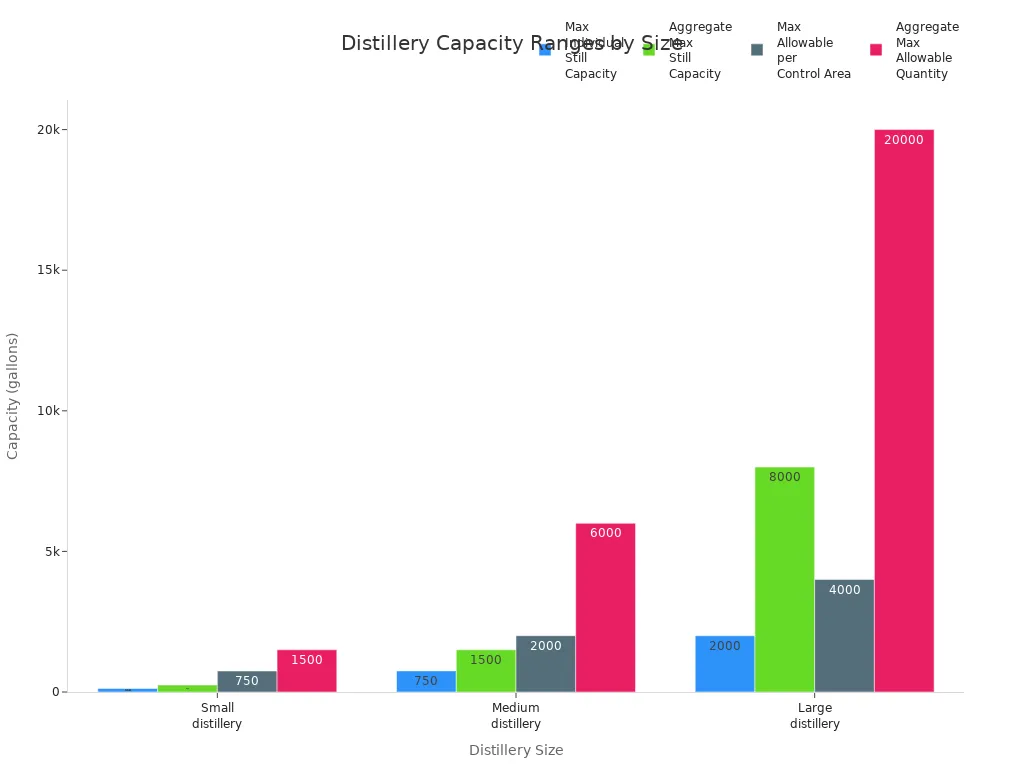
You should match your mash tun size to your production needs. If you plan to expand, choose a mash tun distillery system that can grow with you.
You need to check your available space before you install mash tun equipment. Good layout planning helps your team work safely and efficiently. Place your mash tun near the hot liquor tank to reduce movement. Make sure you have clear pathways for cleaning and maintenance.
| Consideration | Explanation |
|---|---|
| Workflow Efficiency | Arrange equipment to minimize unnecessary movement, such as placing the mash tun near the hot liquor tank. |
| Sanitation and Safety | Ensure easy access for cleaning and maintenance, with clear pathways to prevent accidents. |
| Ventilation and Drainage | Implement proper ventilation to remove steam and odors, and adequate drainage to handle spills. |
| Future Expansion | Design the layout with space for additional equipment as the business grows. |
You also need to know the minimum space requirements for each type of mash tun equipment. Here is a quick guide:
| Equipment Type | Volume (hL) |
|---|---|
| Mashing Pot | 6 – 8 |
| Wort Boiling Pot | 8 – 9 |
| Gelatinization Pot | 4 – 5 |
| Filter Tank | 6 – 8 |
| Temporary Storage Tank | 3 – 4 |
Note: Always leave extra space for future upgrades and easy access to all sides of your mash tun.
You need to set a realistic budget before you buy mash tun equipment for your distillery. Budget planning helps you avoid surprises and keeps your project on track. Start by looking at the average costs for mash tun equipment in 2025. Prices range from $15,000 to $100,000. The price depends on the size of the mash tun, which can hold between 500 and 5,000 gallons.
When you plan your budget, remember that the mash tun is only one part of your total equipment needs. You also need to think about other expenses. Here is a table to help you see the main costs:
| Expense Component | Estimated Cost | Notes |
|---|---|---|
| Stills, Fermenters & Mash Tuns | $200,000 – $500,000 | Essential machinery with options for new or used purchases, impacting production scale and quality. |
You can use several strategies to manage your budget and get the most value from your mash tun distillery equipment:
You should always include installation, shipping, and setup costs in your budget planning. These costs can add up quickly. Make sure you have enough funds for regular maintenance and possible upgrades. If you want to save money, you can look for energy-efficient mash tun systems. These systems lower your operating costs over time.
Think about the future when you set your budget. If you plan to grow your distillery, choose mash tun equipment that can scale with your needs. This way, you will not need to replace your mash tun as your production increases.
Tip: Write down all your expected costs before you make a purchase. This step helps you avoid overspending and keeps your distillery project on schedule.
A mash tun is a key piece of equipment in every distillery. You use it to mix hot water with milled grains, starting the process that turns starch into sugar. This step is vital for making spirits like whisky and other distilled drinks.
A mash tun typically includes: a false bottom for separating solids from liquid, insulated walls for temperature control, and a drain valve for transferring wort. These features are critical for ensuring the efficiency and effectiveness of the mashing process.
You add hot water to the grains in the mash tun. Natural enzymes in the malted barley break down the starches into fermentable sugars. The sugary liquid, called wort, drains through a filter at the bottom.
| Component/Function | Description |
|---|---|
| Conversion Process | Converts starch to sugar, essential for alcohol production. |
| Wort Separation | Separates sugary liquid from grain solids using a false bottom. |
| Temperature Control | Maintains optimal temperature for enzyme activity. |
In the mashing process, you hold the mixture in the mash tun for a set time. This ensures complete conversion of starches to sugars, which is essential for fermentation.
Choosing the right mash tun distillery equipment shapes your final product. The mash tun affects both the quality and efficiency of your operation. You want to match your equipment to your production needs for the best results.
A mash tun is a device used for collecting fermentable sugars from grains in the mashing process. The grains are mixed with water at precise temperatures to form a mash, catalyzing enzymes that convert starches into fermentable sugars.
The right mash tun helps you control temperature and extract more sugar from the grains. This leads to better flavors and higher yields. If you choose the wrong equipment, you may face problems like inefficiency, higher costs, or trouble meeting your goals.
| Risks Associated with Wrong Mash Tun Selection | Description |
|---|---|
| Inefficiency | Poor performance in production due to inadequate equipment choice. |
| Increased Costs | Higher operational costs resulting from inefficiencies. |
| Operational Challenges | Difficulties in meeting production goals and managing workflow. |
You should always consider your distillery’s size, workflow, and future plans when selecting mash tun equipment. This careful planning ensures your mash tun distillery runs smoothly and produces high-quality spirits.
You will find traditional lauter tuns in many mash tun distillery setups. This mash tun separates the liquid wort from the solid grain after mashing. You use a false bottom with small holes to keep the grain in place while letting the wort flow through. Rakes help move the grain and improve separation. The sparge arm sprinkles hot water over the grain bed, rinsing out extra sugars. A drain collects the wort for the next step.
| Feature | Description |
|---|---|
| False Bottom | Small holes allow wort to pass but keep grain in place. |
| Rakes | Move grain for better separation. |
| Sparge Arm | Sprinkles hot water to rinse sugars from grain. |
| Drain | Collects wort for the next brewing stage. |
You mix malted grains with water in this mash tun. Heating activates enzymes that turn starch into sugar. The false bottom or filter system separates the liquid wort from the solid grain. This step, called lautering, helps you get clear wort for your distillery.
Tip: Clear wort leads to better extraction and consistent results in your mash tun distillery.
Infusion mash tuns use a mash rake to stir the mash. This keeps the temperature even throughout the mash tun. You often use steam for heating, which prevents scorching and keeps the mash at the right temperature. Good insulation lets you hold the mash at rest temperatures for up to an hour. Some infusion mash tuns change temperature by adding hot water. Others use a single-step infusion.
| Advantage | Description |
|---|---|
| Low energy consumption | Infusion mashing uses less energy than other methods. |
| Ease of operation | The mash tun is easy to use and manage. |
| Suitable for lighter styles | Good for making pale beers and lighter spirits. |
| Disadvantage | Description |
|---|---|
| Cleaning challenges | Cleaning is hard if you wait too long after use. |
| Space requirements | The mash tun may be too big for small setups. |
You should clean this mash tun right after use. If you wait, sticky residues can make cleaning difficult.
Mash conversion vessels offer advanced features for your distillery. You use stainless steel construction with a heating jacket and a multi-speed mixer. You mix grist and liquor to reduce clumping and limit oxygen uptake. Special paddles help with mixing. The liquor-to-grist ratio is higher than in other mash tun types, which helps you recover more extract and lowers viscosity.
| Characteristic | Description |
|---|---|
| Construction | Stainless steel with heating jacket and mixer. |
| Mixing Process | Special paddles mix grist and liquor to prevent clumping. |
| Liquor-to-Grist Ratio | Higher ratio improves extract recovery. |
| Temperature Control | Automated sensors keep mash at the right temperature. |
| Mashing Steps | Multiple temperature steps optimize starch conversion. |
| Automation | Timers and probes help you repeat the process for every batch. |
You can set multiple temperature steps in this mash tun. Automation helps you keep the mash process consistent. Sensors and timers make sure you get the same results every time.
Note: Mash conversion vessels help you control every part of the mash process, which leads to better wort quality for your distillery.
You want your mash tun distillery to run smoothly and produce high-quality spirits. COFF Mash Tuns offer advanced solutions for your distillery. You get equipment designed for efficiency, durability, and easy operation. COFF uses stainless steel and copper to build mash tun equipment that lasts for years. You can choose oil-heated systems, which help you control mash temperature with precision.
COFF Mash Tuns include features that support your mash process. You find insulated walls that keep heat inside the mash tun. You use automated controls to set and monitor mash temperatures. You get easy access for cleaning, which saves you time and effort. The mixing system helps you blend grains and water evenly, so your mash reaches the right consistency.
Tip: You can ask COFF for custom mash tun equipment to fit your distillery’s space and production goals.
COFF designs mash tun equipment for breweries and distilleries around the world. You benefit from their experience in craft beer and spirits production. You can rely on their support for installation and maintenance. Many distilleries choose COFF Mash Tuns because they combine technology with craftsmanship.
You need to compare mash tun equipment types before you decide. Each type has strengths and weaknesses for your mash process.
| Mash Tun Type | Pros | Cons |
|---|---|---|
| Traditional Lauter Tun | Clear wort, good separation, reliable | Needs more space, manual operation |
| Infusion Mash Tun | Simple, energy efficient, easy to use | Harder to clean, less control |
| Mash Conversion Vessel | Precise control, automated, high yield | Higher cost, complex setup |
| COFF Mash Tun | Durable, customizable, advanced controls | Initial investment may be higher |
Note: You should match your mash tun equipment to your production needs and budget.
When you choose mash tun equipment, you need to look at the materials. Stainless steel and copper are the most common choices. Stainless steel stands out for its strength and long life. It does not rust, so your mash tun stays clean and safe. You can clean stainless steel easily, which helps you keep your mash process sanitary. Copper also works well, especially for certain spirits, but it needs more care.
Here is a table to help you compare:
| Material | Durability | Heat Retention | Cleaning Ease | Odor Retention |
|---|---|---|---|---|
| Plastic | Less durable | Less effective | Moderate | Retains odors |
| Stainless Steel | Highly durable | Excellent | Easy | Does not retain |
The right material makes your mash tun equipment last longer and keeps your mash quality high.
Insulation is important for your mash tun. Good insulation keeps the mash at a steady temperature. If your mash tun loses heat, your mash process can slow down or stop. Tests show that mash tuns with insulation lose less heat. For example, Reflectix and sleeping bag insulation kept the mash temperature almost the same for 15 minutes. Without insulation, the mash tun lost heat quickly.
You should always check the insulation on your mash tun equipment before you buy.
You have three main ways to heat your mash tun: direct fire, steam, and electric. Each method has its own benefits.
You should pick the heating method that matches your mash process and the size of your equipment.
Tip: The right heating method helps you control your mash and get the best results from your mash tun equipment.
You need a good agitation and mixing system in your mash tun. This system helps you get the best results from your mash. When you use a mash agitator, you keep the temperature even throughout the mash tun. This means every part of your mash gets the same heat. You also help the enzymes reach all the starches in the mash. This makes starch conversion more efficient.
If you want high-quality spirits, you must keep your mash consistent. Agitation in your mash tun helps you avoid problems like clumping or burning. You get a better yield from your mash, and your equipment works more efficiently. Good mixing is key for every distillery that wants to make top products.
Tip: Always check that your mash tun equipment has a strong agitator and mixing system. This will help you keep your mash process smooth and reliable.
You must keep your mash tun clean to make great spirits. Regular cleaning stops residue from building up inside your equipment. If you leave protein or sugar in the mash tun, it can stick to the screens and make cleaning harder. Many mash tuns have spray nozzles, but sometimes you need to scrub the bottom by hand.
Here are some best practices for cleaning your mash tun equipment:
You should always make sure your mash tun equipment allows easy access for cleaning and maintenance. This helps you save time and keeps your mash process safe and sanitary.
Modern mash tun equipment often comes with automation features. These features help you control your mash process with more precision. You can use sensors and controllers to keep the mash at the right temperature. Automated pumps and valves move liquids without much manual work. This reduces the risk of contamination.
| Automation Feature | Description |
|---|---|
| Temperature Control | Automated systems use sensors and controllers to maintain optimal temperatures during mashing. |
| Liquid Transfer | Automated pumps and valves reduce manual labor and minimize contamination risks. |
| Recipe Management | Systems can store and execute brewing recipes for consistent results. |
Automation lets you monitor your mash process in real time. You can collect data and make changes quickly if needed. Some mash tun equipment even allows you to control the process remotely. This saves you time and helps you avoid mistakes. You also lower your costs by making your mash process more efficient.
Note: When you choose mash tun equipment, look for automation options that match your production needs. This will help you get the most out of your mash and keep your distillery running smoothly.
When you look for a mash tun distillery supplier, you want to choose a company with a strong track record. Start by checking how long the manufacturer has been in business and how many distilleries they have helped build. Ask if they focus on mash tun equipment or offer full turnkey solutions. You should also find out what batch sizes and mash throughputs they support. Reliable suppliers handle design, engineering, and documentation for your mash tun.
Here is a table to help you compare manufacturers:
| Criteria | Questions to Ask |
|---|---|
| Experience | How many years in business? How many projects? |
| Specialization | Do they focus on mash tun equipment? |
| Scale | What batch sizes can they support? |
| Standards | Are vessels certified and meet sanitary codes? |
| Materials | What grades of stainless steel do they use? |
| Construction | What are their welding and finishing standards? |
| References | Can they provide referrals from other distilleries? |
| Services | Do they offer installation and training? |
You should also check if the supplier offers quick fabrication and shipping times. Ask about their support team and parts availability. Good references from other distilleries show proven experience.
You invest a lot in mash tun equipment, so you need strong warranty and after-sales support. Always check the warranty terms before you buy. Ask what kind of service the supplier provides after you receive your mash tun. Good suppliers offer training, help with installation, and ongoing support. This protects your investment and keeps your mash process running smoothly.
A reliable supplier will help you solve problems quickly. This support is important for every distillery that wants to keep its mash tun equipment in top shape.
Every distillery has unique needs for mash tun equipment. You may want to customize vessel size, heating system, or insulation. Many suppliers offer options like different grades of stainless steel, special rakes, or digital temperature sensors. You can also upgrade insulation for better mash heat retention or add custom valves and fittings for easier operation.
| Feature | Options Available | Considerations |
|---|---|---|
| Vessel Material | 304 or 316 stainless steel | 316 offers more durability and sanitation |
| Heating System | Direct or indirect steam | Choose based on your mash process |
| Insulation | 1″ standard or 2-4″ upgraded | More insulation keeps mash temperature stable |
| Agitation | Automatic rakes or manual paddles | Match to your mash tun size and shape |
| Temperature Sensors | Analog or digital | Digital gives more control over mash |
| Custom Fabrications | Valves, fittings, sight glasses | Pick features that make mash easier to manage |
Tip: Talk to your supplier about your mash process and future plans. Custom options help your mash tun distillery grow and adapt over time.
When you look at mash tun equipment, you need to think about more than just the price tag. Upfront costs can seem high, but long-term value matters most. A quality mash tun gives you better mash results and lasts longer. You save money on repairs and replacements. If you choose equipment that matches your production needs, you get more value from every batch. Some mash tuns use less energy, which lowers your costs over time. You also get better mash consistency, which helps your distillery grow.
Tip: Write down all the features you want. Compare them to the value each mash tun brings to your process.
You do not always need to pay for mash tun equipment all at once. Many suppliers offer financing or leasing. Financing lets you spread out the costs over time. Leasing gives you access to new mash equipment without a big upfront payment. This helps you manage your budget and keep cash for other needs. You can upgrade your mash tun when your production needs change. Ask your supplier about flexible payment plans. This way, you get the value you need without straining your budget.
You must plan for installation and operating costs before you buy mash tun equipment. Installation costs include shipping, setup, and training. Operating costs cover energy, water, and cleaning supplies. Some mash tuns need less energy or water, which adds value by saving you money. Easy-to-clean equipment lowers your labor costs. Use this table to compare costs:
| Cost Type | What to Consider |
|---|---|
| Installation | Shipping, setup, staff training |
| Operating | Energy, water, cleaning, repairs |
You get the best value when you choose mash tun equipment that fits your production needs and keeps costs low. Always review the total costs, not just the purchase price.
You start your mash tun distillery purchase by reaching out to each supplier for quotes. Give clear details about your mash tun needs. Include your desired mash capacity, preferred heating method, and any special features you want in the equipment. Ask the supplier to break down all costs. This should cover the mash tun, installation, shipping, and any extra equipment. Request a timeline for delivery. Compare the proposals side by side. Look for differences in materials, automation, and support. A table can help you organize your options:
| Supplier | Mash Tun Features | Total Costs | Delivery Time | Support Offered |
|---|---|---|---|---|
Tip: Always ask questions if you see unclear items in a proposal.
After you choose a supplier, you review the contract. Read every section carefully. Check that the contract lists all mash tun equipment and services you discussed. Make sure the payment schedule matches your budget. Look for warranty details and what happens if there are delays. If you see extra costs, ask for an explanation. You want to know your rights if the mash tun does not meet your needs. Do not sign until you understand every part.
You plan for delivery once you sign the contract. Confirm the delivery date with your supplier. Prepare your distillery for the new mash tun. Clear the space and check that your facility meets all equipment requirements. Arrange for any needed utilities, such as water and power. Schedule staff to help with installation. Review the installation plan with the supplier. Make sure you know who will handle setup and testing. Keep a checklist to track each step. This helps you avoid delays and extra costs.
Note: Careful planning ensures your mash tun equipment arrives safely and works as expected.
You need to get your facility ready before your new mash tun arrives. Start by measuring the space where you plan to install the equipment. Make sure the floor can support the weight of the mash tun when it is full. Check that you have enough room for staff to move around the equipment safely. You should also confirm that your water, power, and drainage systems meet the requirements for your mash tun distillery. Good lighting and ventilation help your team work better and keep the area safe. If you plan for future growth, leave extra space for more equipment.
Your staff must know how to use the mash tun and keep the process safe. Begin with a walkthrough of the equipment. Show your team how to load grains, add water, and start the mash. Teach them how to use the control panel and monitor temperatures. Safety comes first. Remind everyone to wear gloves and eye protection when working with hot mash or cleaning chemicals. Use signs to mark hot surfaces and moving parts. You can create a checklist for daily operation steps. This helps your team avoid mistakes and keeps your distillery running smoothly.
Tip: Hold regular training sessions to keep everyone up to date on best practices.
You need a plan to keep your mash tun in top shape. Make a maintenance schedule and stick to it. Clean the equipment after every batch to prevent buildup inside the mash tun. Inspect all parts, such as valves and seals, for signs of wear. Lubricate moving parts as needed. Keep a logbook to track each cleaning and repair. This helps you spot problems early and avoid costly breakdowns. If your equipment has automated features, check the sensors and controls often. Regular maintenance keeps your mash process efficient and extends the life of your mash tun.
| Maintenance Task | Frequency | Notes |
|---|---|---|
| Cleaning | After every batch | Prevents residue buildup |
| Inspection | Weekly | Check for leaks or damage |
| Lubrication | Monthly | For moving parts |
| Sensor Check | Monthly | Ensure accurate readings |
Note: Good maintenance protects your investment and supports consistent mash quality.
You can make a smart choice for your distillery by following a clear plan. Always review your mash tun needs, compare equipment options, and check your space. Use this quick checklist to guide your purchase:
Remember: Careful planning helps you get the best mash results and keeps your equipment running smoothly.
You should choose a mash tun that matches your batch size and production goals. For most small distilleries, a mash tun with a 500–1,000 gallon capacity works well. Always plan for future growth.
You should clean your mash tun after every batch. This keeps your equipment in good shape and helps you make high-quality spirits. Use hot water and the right cleaning agents for best results.
Yes, many mash tuns allow upgrades. You can add features like better insulation, new sensors, or automation controls. Ask your supplier about upgrade options before you buy.
Stainless steel is the best choice for most distilleries. It resists rust, cleans easily, and lasts a long time. Copper works well for some spirits but needs more care.
Automation helps you control temperature and mixing. It makes your process easier and more consistent. If you want to save time and reduce errors, choose a mash tun with automation features.