



COPYRIGHT © 2022 COFF International Co., ltd. ALL RIGHTS RESERVED

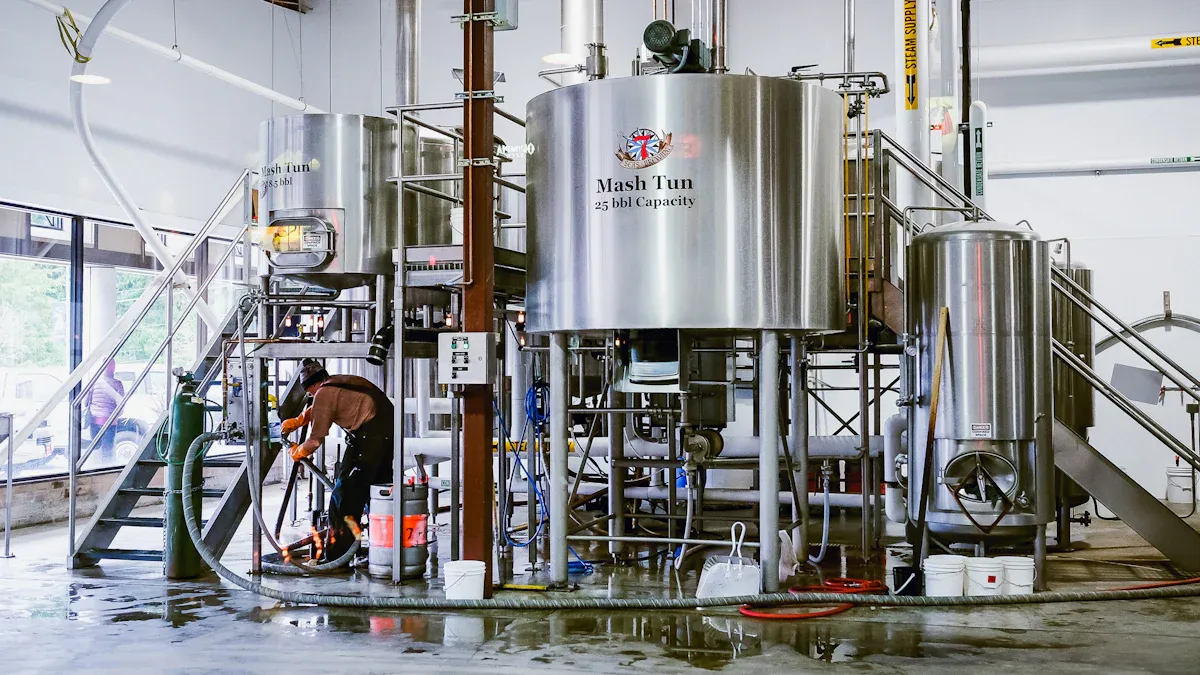
Selecting the right mash tun distillery shapes your success from the start. You want to match your mash tun to your production goals and available space. Many people make mistakes such as picking the wrong size or not checking their distillery layout. These errors can limit growth or cause wasted money.
You need to estimate how much spirit you want to produce each year. This step helps you choose the right mash tun for your distillery. Start by looking at your production needs and goals. Use tools and formulas to guide your decision.
Production capacity connects directly to your annual output. Equipment size depends on your product and available labor. Continuous stills need less space than batch stills for the same output. Running hours and staff numbers also affect how much you can produce.
Tip: Always plan for future growth. If you expect your distillery to expand, choose a mash tun distillery that can handle increased production needs.
Batch size and frequency shape your workflow and inventory. You must balance your production needs with your mash tun brewing goals. Several factors influence your choices.
| Factor | Description |
|---|---|
| Setup Costs | Time and resources needed to prepare equipment and change tooling. |
| Holding Costs | Storage expenses, insurance, deterioration, and opportunity cost of capital tied up in inventory. |
| Demand Patterns | Variability in customer demand that affects how much product is needed. |
| Production Capacity | The maximum output that can be achieved with the available resources. |
| Quality Considerations | Standards that must be met to ensure product consistency and safety. |
Other important points include:
Equipment efficiency plays a key role. Your mash tun must operate within certain parameters, such as minimum liquid levels for proper heat exchange and optimal loading for consistent extraction. Knowing these limits helps you avoid quality problems and maximize your mash tun’s performance.
Recommended batch sizes differ by distillery type:
| Type of Distillery | Batch Size (L) | Focus |
|---|---|---|
| Craft Distilleries | 200–500 | Unique, small-batch spirits |
| Commercial/Industrial Distilleries | 1,000–10,000 or more | Higher throughput to meet demand |
Your distillery’s space and layout affect safety, workflow, and efficiency. You must organize your mash tun and other equipment in a logical order. This arrangement helps you avoid bottlenecks and unnecessary movement.
1. Receiving 2. Milling 3. Mash 4. Fermentation 5. Distilling 6. Bottling/Barreling/Bulk Storage 7. Shipping
Arrange your mash tun distillery equipment to follow this sequence. Place workspaces and machines so operators move less and work faster. This setup reduces hazards and keeps your mashing process smooth.
Note: Strategic placement of your mash tun and related equipment ensures you get the most out of your distillery. Good layout supports efficient production and easy cleaning.
You play a key part in the distillation process when you use a mash tun. The mash tun distillery relies on this vessel to mix grains with water. This step is vital for making high-quality spirits. You add grains such as barley or wheat to the mash tun. Water at specific temperatures helps enzymes break down starches into fermentable sugars. This mashing process creates a sugary liquid called wort. You use this wort in fermentation to produce alcohol. The mash tun in whisky production works the same way. You need to control temperature and timing to get the best results. The mash tun brewing step sets the foundation for your final product.
You influence spirit quality and yield by managing your mash tun well. The clarity of the wort matters.
The clarity of the wort is crucial as clear worts are preferred to avoid excessive nutrient for yeast metabolism, which can affect the spirit’s flavor profile. Additionally, the presence of lipids in cloudy wort has been linked to the nutty aroma in spirits, indicating that mashing conditions directly influence the sensory characteristics of the final product.
You should keep the mashing temperature around 63°C.
The optimal mashing temperature of around 63°C enhances the activity of alpha and beta amylases, which are essential for breaking down starches into fermentable sugars, thereby improving the yield of the spirit.
You also need to watch for bacteria in unboiled worts.
While yield is a primary focus, the remaining bacterial presence from unboiled worts can have a major impact on the quality of the spirit during fermentation.
You see how your choices in the mash tun affect every step. You can improve efficiency and flavor by controlling temperature, clarity, and cleanliness. Your distillery benefits from careful attention to these details. You set the stage for high-quality spirits with every batch.

You can choose between traditional and modern mash tun types for your distillery. Each design offers unique benefits. Traditional mash tuns use simple infusion methods. These systems often have lower extract yields and less flexibility. Modern mash tun designs use advanced mash mixers and lauter tuns. You gain better extract yield and more control over the mashing process.
Modern mash tun components help you achieve higher efficiency and better results in your distillery.
You must select the right material for your mash tun. The two most common choices are stainless steel and copper. Each material affects your process in different ways.
| Material | Advantages | Disadvantages |
|---|---|---|
| Stainless Steel | Less expensive, very durable, easy to clean | Lower heat transfer, harder to control during use |
| Copper | Excellent heat conductor, removes sulfides, improves taste | Softer, needs more maintenance, can develop Verdigris |
Stainless steel mash tuns last longer and clean easily. Copper mash tuns heat quickly and improve spirit flavor. You should weigh these factors when choosing mash tun types for your distillery.
You need to keep your mash tun at the right temperature for the best results. Good insulation reduces heat loss and saves energy. Different insulation methods offer different levels of performance.
| Insulation Method | Temperature Drop (°F) | Performance Ranking |
|---|---|---|
| No Insulation | Highest | Worst |
| Cotton Enhanced | Moderate | Better |
| 3 Layers of Reflectix | Low | Among Best |
| Sleeping Bag | Lowest | Best |
| Reflectix Dome | Best | Best |
Using a sleeping bag or Reflectix dome gives you the best insulation for your mash tun. You keep more heat inside and use less energy.
You should also consider the heating method. Some mash tuns use direct fire, steam, or oil heating. Each method affects how evenly you heat your mash and how much energy you use. The right choice helps you control your mash tun and improve your distillery’s efficiency.
You want your mash tun to deliver consistent results every time. Agitation and mixing features play a big role in achieving uniform mash consistency. When you select mash tun types, you should look for systems that keep grains suspended and distribute heat evenly.
Agitation systems help you avoid problems like settling and clumping. These issues can lead to uneven starch conversion and poor sugar extraction. You need mixing features that maintain grain suspension and promote efficient enzyme activity.
Here are some benefits of effective agitation and mixing:
You can choose from several mixing technologies. Each method offers unique advantages for your distillery:
Tip: Select agitation and mixing features that match your production scale and desired spirit quality. Proper mixing ensures you get the most from your mash tun and maintain high standards in every batch.
You improve your distillery’s workflow and product quality by choosing the right agitation system. Consistent mixing supports better extraction, uniform heating, and reliable results.
You need precise temperature control to get the best results from your mash tun. This feature helps you keep the mash at the right temperature for enzyme activity and sugar conversion. Many commercial mash tun types use advanced systems to maintain steady heat. Some popular options include:
These systems help you avoid temperature swings that can affect your final product. When you choose mash tun components, look for options that offer precise temperature control. This will help you achieve consistent flavor and quality in every batch.
Tip: Consistent temperature means better enzyme activity and higher yields. You can rely on precise temperature control to reach your brewing goals.
Easy cleaning and maintenance access keep your mash tun running smoothly. You want a design that lets you reach all parts of the vessel. This helps you remove buildup and prevent contamination. Good access also lowers your long-term costs and keeps your equipment in top shape.
| Benefit | Description |
|---|---|
| Clear Pathways | Easy movement for cleaning and maintenance reduces accident risk. |
| Extended Equipment Lifespan | Regular cleaning prevents buildup and wear, saving money over time. |
| Cost Savings | Water-saving equipment and smart cleaning routines lower operational costs. |
You should plan your layout so you can clean and maintain your mash tun without trouble. This step protects your investment and supports safe, efficient operations.
Automation and monitoring make your mash tun easier to use and more reliable. You can choose from basic manual controls to fully automatic systems. Here are some common options:
| Automation Option | Description |
|---|---|
| In-Line ABV Sensor | Measures alcohol content in real time using fiber-optics. |
| Temperature-Based ABV Sensor | Uses temperature and pressure to estimate alcohol content. |
| Cooling Water Flow Control | Adjusts cooling water flow, either manually or automatically. |
| Proportional Steam Valves | Controls steam input for precise heating. |
| Wi-Fi Module | Lets you monitor and log data remotely. |
| Data Logging | Tracks key parameters for quality control and analysis. |
You can also find mash tun types with semi-automatic features like PID controllers and electric valves. Fully automatic systems use PLCs and touchscreen controls for recipe programming and SCADA integration. Automation improves consistency, reduces errors, and boosts safety with alarms and remote access.
Note: Automation helps you save time and ensures each batch meets your standards. You can monitor your mash tun from anywhere and make quick adjustments as needed.
You must pay close attention to safety when you operate a mash tun distillery. Safety features protect you, your team, and your equipment. Regulatory agencies require several important measures to keep everyone safe.
Always wear protective clothing, safety shoes, bump caps, gloves, eyewear, and face masks when cleaning the mash tun. Caustic solutions can harm your skin and eyes. If you spill anything, restrict access to the area until you clean it up. This step keeps your team safe.
You should also follow these steps to improve safety:
| Safety Feature | Purpose |
|---|---|
| PPE | Protects against burns and chemicals |
| Ventilation | Removes harmful vapors and dust |
| Fall Protection | Prevents injuries from falls |
| Emergency Plans | Prepares for accidents and quick response |
Safety features help you create a secure workplace. You reduce risks and follow regulations. Your team stays healthy, and your distillery runs smoothly.
When you choose a supplier for your distillery, you want to look at more than just the price. You should check the reputation and support that mash tun manufacturers offer. Reliable manufacturers help you avoid problems and keep your equipment running well. Use the table below to compare important factors:
| Consideration | Evaluation Aspects |
|---|---|
| Quality & Durability | Stainless steel build, good insulation, certifications |
| Feature Set | Sensors, rakes, and customization options |
| Process Control | Advanced heating and automation |
| Turnaround Time | Fast fabrication and shipping |
| References | Strong client history |
| Service | Responsive support and parts availability |
| Budget | Transparent pricing |
You should ask about service and parts availability. Fast support helps you solve issues quickly. Good references show that the supplier has helped other distilleries succeed.
You need to compare product specifications before you buy. Each supplier offers different features. For example, COFF provides high-quality stainless steel vessels and advanced heating options. Look at the tables below to see how leading mash tun manufacturers design their equipment:
| Feature | Bräu Supply Mash Tun |
|---|---|
| Volume | 10 gal (38 L) |
| Steel | 304 stainless, thick-wall construction |
| Base | Tri-clad; induction, gas, and electric compatible |
| Finish | Polished exterior, brushed interior |
| Handles | Silicone grips for safe lifting |
| Feature | Portland Kettle Works Mash Tun |
|---|---|
| Capacities | 2, 3.5, 5, 7, 10, 15, 20, and 30 bbl |
| Steel | 100% 304 food-grade stainless steel |
| False Bottom | High-performance, trapezoidal V-wire |
| Insulation | 2”/5 cm of fire-rated fiber insulation |
| Feature | SS Brewtech InfuSsion Mash Tun |
|---|---|
| Construction | 304 Stainless Steel |
| Insulation | 1” thick insulated side walls and lid |
| Drain Design | 5° sloped floor with center drain |
| Valve | 1.5″ TC Pure Flow Valve |
You should match the specifications to your distillery’s needs. Look for features like insulation, heating methods, and safety options.
Customization lets you create a mash tun that fits your distillery. You can choose the height, diameter, heating method, insulation, and mixing features. The table below shows common customization choices:
| Element | Customization Choices |
|---|---|
| Height/Diameter | Dimensioning for brewhouse space and grain bill sizes |
| Heating Method | Direct steam, steam jackets, coils, electric |
| Insulation | Enhanced panels, double wall vacuum, modular upgrades |
| Agitation | Custom rake designs, variable speed, helical mixing |
| Flow Control | Extra valves, sampling ports, higher capacity pumps |
| Materials | Exotic alloys, specialized coatings, custom finishing |
| Automation | Tailored PLC recipes, remote monitoring |
| Additional Options | Wort aeration stone, whirlpool inlet, heat exchanger |
Lead times can affect your project schedule. Most manufacturers offer lead times between 10 and 16 weeks for a 10 BBL mash tun. You can see the trend in the chart below:

You should plan ahead and talk with your supplier about customization and delivery dates. This step helps you avoid delays and keeps your distillery project on track.
When you buy a mash tun for your distillery, you should check the warranty and after-sales service offered by each supplier. These services protect your investment and help you solve problems quickly. Mash tun manufacturers often provide different warranty periods and support options. You need to compare these details before you make a decision.
Here is a table showing standard warranty durations from some manufacturers:
| Warranty Duration | Description |
|---|---|
| 2 years | Standard warranty for products from Ace Stills |
| 1 year | Standard warranty on all equipment from Liquor Equipment |
| 1 year | Warranty for main parts from Bobend Distillers |
You should ask your supplier about extended warranty plans. Some manufacturers offer extra coverage for an added fee. This option gives you peace of mind and protects your mash tun for a longer time.
After-sales service is just as important as the warranty. Good suppliers help you keep your equipment running smoothly. You can expect the following support from leading manufacturers:
You should choose a supplier that responds quickly and provides reliable support. Fast help reduces downtime and keeps your distillery productive. When you compare mash tun manufacturers, look for those with strong after-sales service and clear warranty terms.
Tip: Always read the warranty policy before you buy. Ask your supplier about what is covered and how to get help if you need it.
A good warranty and strong after-sales service show that manufacturers care about your success. You get better value and long-term support for your distillery.
You need to understand the price range for mash tun equipment before you make a purchase. The cost depends on the size, features, and level of automation. If you look at a 15 bbl mash tun, you see prices vary based on the design and technology. Basic single infusion mash tuns cost less, while fully-automated and insulated models cost more. Here is a table that shows typical price ranges:
| Type | Price Range |
|---|---|
| Basic single infusion mash tun | $30,000 – $50,000 |
| Upgraded step/decoction mash capability | $40,000 – $60,000 |
| Fully-automated, insulated mash tun | $50,000 – $100,000+ |
You should compare options from mash tun manufacturers and suppliers. This step helps you find the right mash tun distillery equipment for your budget and production goals.
You must plan for installation and operating costs when setting up your distillery. These costs include equipment, utilities, and labor. The size of your mash tun and other equipment affects your total expenses. For a 15 bbl mash tun, installation costs can be significant, especially if you choose advanced features. The table below shows typical costs for different distillery sizes:
| Equipment Type | Small Distillery Cost | Medium Distillery Cost | Large Distillery Cost |
|---|---|---|---|
| Mash tun | $5,000 – $20,000 | $50,000 – $200,000 | $20,000 – $100,000 |
| Boiling pot | $3,000 – $15,000 | $30,000 – $150,000 | $15,000 – $80,000 |
| Fermentation tank | $400 – $2,500 | $4,000 – $25,000 | $25,000 – $150,000 |
| Cooling system | $2,000 – $10,000 | $15,000 – $70,000 | $10,000 – $50,000 |
| Packaging equipment | $5,000 – $30,000 | $5,000 – $20,000 | $200,000 – $1,500,000 |
| Total cost | $20,000 – $100,000 | $200,000 – $1,000,000 | $1,000,000 – $10,000,000+ |
You should talk with your supplier about installation services and ongoing support. Manufacturers often provide guidance to help you manage operating costs and keep your mash tun running efficiently.
You want to balance value with upfront mash tun cost. A higher initial investment in a 15 bbl mash tun can lead to better efficiency and lower maintenance expenses. You should look at long-term benefits, such as energy savings, durability, and ease of cleaning. Suppliers and manufacturers offer different warranty and service packages. These options help you protect your investment and reduce downtime.
Tip: Choose a mash tun distillery solution that fits your budget and supports your growth. Consider future expansion and the total value, not just the purchase price.
You make a smart decision when you compare features, costs, and support from mash tun manufacturers and suppliers. This approach helps you build a successful distillery with reliable equipment.
You start your journey by approving your quote with the chosen manufacturers. Confirm the delivery timeline so you know when your 15 bbl mash tun will arrive. Discuss shipping options and expected arrival dates with your supplier. Prepare your distillery by clearing space and arranging for unloading. Check the delivery schedule and shipping method to avoid surprises. Review all paperwork before the equipment arrives. Receive updates and support from the customer service team until your mash tun is ready for use.
You need to evaluate the size of your space and decide if you will build new or remodel an existing structure for your 15 bbl mash tun. Submit your plans to local authorities to meet building codes and regulations. Make sure you have enough water, gas, and electricity for your distillery. Consider ongoing utility costs. Use proper piping materials, such as schedule 40 for steam boiler piping, and follow ANSI standards. Install explosion-proof switches and thermal protection for motors in high-ABV areas to keep your mash tun installation safe.
Tip: Careful site preparation helps you avoid delays and ensures smooth installation.
You benefit from working with professionals who understand TTB and state ABC regulations. Local zoning approval is important for your distillery project. Coordinate specialized trades and manage complex equipment installations. Schedule work around equipment delivery for your 15 bbl mash tun. Choose a durable steel boiler instead of cast iron. Contact local licensing and inspection offices early. Plan the boiler room for easy access and inspections. Test and adjust boiler water chemistry regularly. Make sure the technician can check and adjust combustion settings. Experience in distillery construction and food-grade standards helps your project succeed. Industrial construction skills are essential for larger installations.
Note: Professional installation ensures your mash tun operates safely and efficiently.
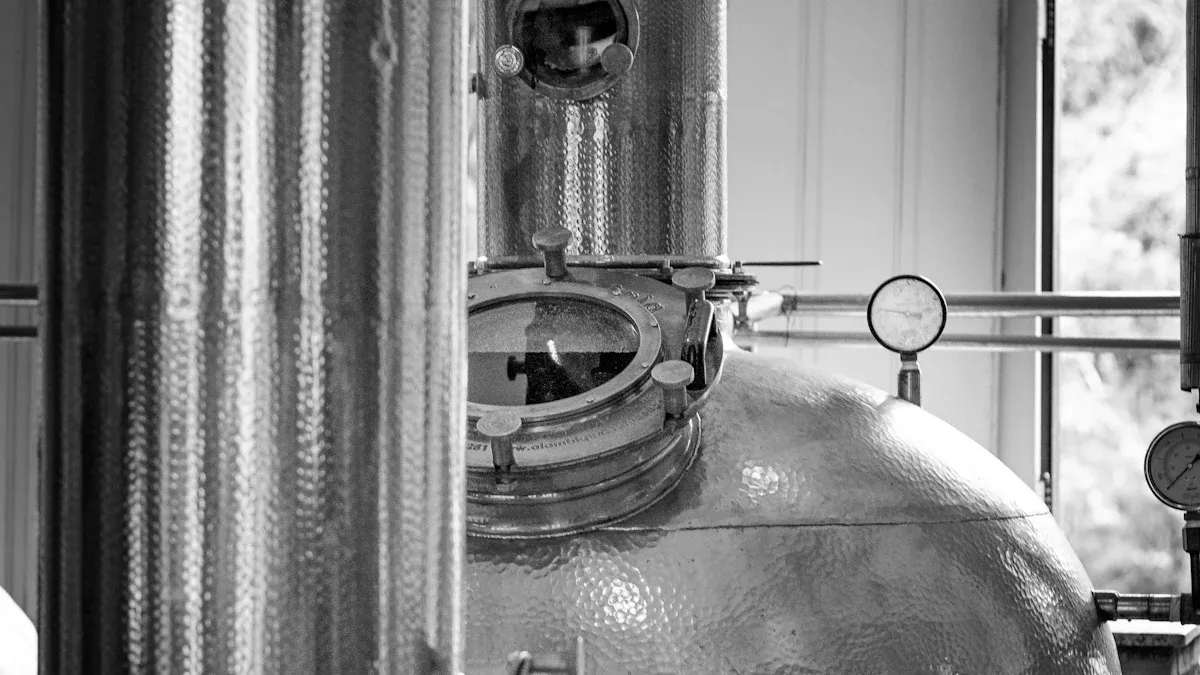
You extend the life of your mash tun by following a regular cleaning routine. Start by draining any leftover wort or ingredients from your equipment. Rinse all surfaces with warm water to remove loose debris. Fill your mash tun, lauter tun, and kettle with a caustic cleaning solution. Let it circulate for the recommended time. Use brushes to scrub the interior, focusing on spots with visible residue. Rinse everything with hot water to clear away any remaining cleaner. Apply an acid-based cleaner to remove beer stone and mineral buildup. Follow the manufacturer’s guidelines for contact time. Rinse again to eliminate acidic residues. Use a food-safe sanitizer on all surfaces and let them air dry. Inspect your mash tun for missed residue or buildup. Repeat cleaning steps if needed. This routine helps your distillery maintain high standards and keeps your 15 bbl mash tun in top condition.
You reduce downtime and protect your mash tun by practicing preventive maintenance. Routine checks help you spot issues before they become serious. Use data-driven decision-making to schedule maintenance based on actual performance. Early detection of problems allows you to act quickly. Prioritize tasks so critical equipment receives attention first. Machine learning protocols can predict maintenance needs using historical data. The table below shows effective practices and their benefits:
| Preventive Maintenance Practice | Benefit |
|---|---|
| Routine Maintenance | Identifies issues early, reducing downtime |
| Data-Driven Decision-Making | Schedules maintenance based on real performance |
| Visibility into Performance Issues | Detects failures before they happen |
| Prioritizing Maintenance Tasks | Focuses on critical equipment, minimizing risk |
| Machine Learning Protocols | Optimizes schedules using historical data |
You keep your 15 bbl mash tun running smoothly and control mash tun cost by following these steps.
You may face common problems during the mashing process. If you notice inconsistent temperatures, check your heating system and insulation. Uneven mixing can lead to poor sugar extraction. Inspect agitation systems and clean any blocked parts. If you see mineral buildup, use acid-based cleaners as part of your routine. Leaks or pressure drops often come from worn seals or gaskets. Replace these parts promptly. Regular inspection helps you catch issues early. You keep your distillery productive and your mash tun reliable by troubleshooting quickly. Your 15 bbl mash tun will last longer with proper care.
You can choose the right mash tun distillery by following a clear process. First, match your mash tun to your production goals and space. Next, compare features and support from different suppliers. Always check for quality and long-term value.
Tip: Ask questions about warranty and after-sales service before you buy. This step helps you protect your distillery investment.
You should choose a mash tun that matches your expected batch size and production goals. For small craft distilleries, a mash tun between 200 and 500 liters works well. Always plan for future growth.
You can clean your mash tun by draining all liquids, rinsing with warm water, circulating a caustic solution, scrubbing surfaces, and finishing with a sanitizer. Regular cleaning keeps your equipment safe and extends its lifespan.
Stainless steel offers durability and easy cleaning. Copper provides excellent heat transfer and can improve spirit flavor. You should select the material based on your budget, maintenance needs, and desired product quality.
Temperature control helps you optimize enzyme activity during mashing. Consistent temperatures lead to better sugar conversion and higher spirit yield. You maintain product quality by using reliable temperature control systems.
You should look at product specifications, warranty terms, customization options, and after-sales support. Reliable suppliers provide clear information and help you choose equipment that fits your distillery’s needs.