


COPYRIGHT © 2022 COFF International Co., ltd. ALL RIGHTS RESERVED


You face many choices when selecting cannabis extraction equipment for cbd and hemp products. MMJ oil extractor, CO2, and ethanol machines all show big differences in cannabis extraction equipment cost, yield, and purity. The global market for these machines reached $8,497.5 million in 2023, with CO2 extraction holding the top share and ethanol growing the fastest. Health and safety matter for every operation. The table below shows how average equipment costs and oil purity compare:
| Extraction Method | Average Equipment Cost | Yield | Purity |
|---|---|---|---|
| CO2 | $100,000 – $800,000+ | High | High |
| Ethanol | $20,000 – $500,000+ | High | Moderate (may require purification) |
You must consider yield, purity, health standards, and operational demands to find the best fit for your cbd and hemp business.
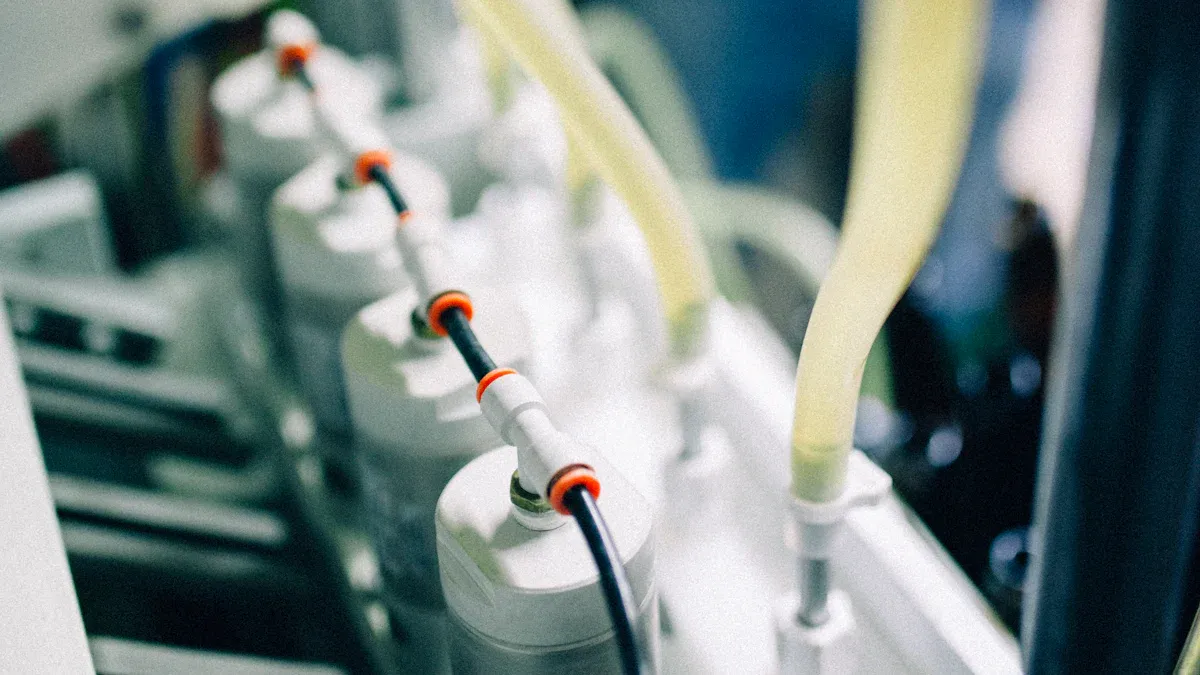
Cannabis extraction machines use different methods to separate valuable compounds from cannabis plants. You see several main methods in the industry. Each method has unique features and levels of popularity.
Here is a table showing how common each method is and what makes it different:
| Extraction Method | Characteristics | Prevalence |
|---|---|---|
| Volatile Solvents | Utilizes ethanol, propane, or butane; high efficiency but can be hazardous. | Common |
| Supercritical CO2 (SC-CO2) | Known for its efficiency and safety; widely used in the industry. | Increasingly prevalent |
| Solventless Extraction | High yield and feasibility; requires more research. | Less common |
| Hydrodynamic Extraction | Emerging method; potential for high yield. | Needs further investigation |
You use an mmj oil extractor to process cannabis and hemp for CBD products. This machine relies on advanced methods to pull cannabinoids and terpenes from plant material. The extraction process often uses gentle heat and pressure, which helps preserve delicate compounds. You can achieve high purity and consistent results with this technology. MMJ oil extractors suit businesses that want reliable cannabis processing and quality oil.
CO2 cannabis extraction machines use supercritical CO2 as a solvent. You control temperature and pressure to target specific compounds. This method stands out for safety and efficiency. You avoid fire hazards because CO2 is inert. The extraction process gives you high cannabinoid recovery rates, often between 85% and 95%. Many companies choose CO2 equipment for its clean operation and ability to produce pure extracts.
Ethanol cannabis extraction machines use ethanol as the main solvent. You find this method common in the industry because it works quickly and handles large volumes. Ethanol extraction offers high efficiency, but you must manage solvent recovery and hazardous waste. You can recover most of the ethanol, but operating costs may rise. The method provides moderate purity and may need extra steps for refinement. Ethanol machines fit businesses that want fast cannabis processing and high throughput.
Tip: Solvent extraction remains the most common method for cannabis plants. Solventless and hydrodynamic methods show promise but need more research.
When you look for a reliable cannabis extraction solution, the COFF Extraction System stands out. COFF, known for its high-quality stainless steel equipment, brings advanced technology to cannabis oil extraction. You get a system designed for efficiency, safety, and consistent results.
COFF uses oil-heated vessels. This technology gives you precise temperature control during extraction. You can protect delicate cannabinoids and terpenes. Your oil will have high purity and strong flavor. The system supports both small and large-scale operations. You can scale your business as you grow.
Note: COFF’s focus on customer needs means you get equipment that matches your production goals.
Key Features of the COFF Extraction System:
| Feature | Benefit for You |
|---|---|
| Oil-Heated Vessels | Better control and consistency |
| Stainless Steel Build | Long life and easy maintenance |
| Modular System | Easy to expand or upgrade |
| User-Friendly Controls | Simple operation and training |
You also get strong support from the COFF team. They help you with installation, training, and ongoing service. Many customers around the world trust COFF for their extraction needs.
If you want a system that delivers quality, safety, and flexibility, the COFF Extraction System gives you a smart choice for your cannabis business.
You want to understand cannabis extraction equipment cost before you invest in your cbd or hemp business. The price of cannabis extraction equipment varies by method and production scale. MMJ oil extractor, CO2, and ethanol machines each have unique pricing structures. You see ethanol extraction equipment as the most budget-friendly option. This method suits startups and small-scale cannabis processing. CO2 extraction equipment costs more because of advanced technology and high-pressure capabilities. You pay a premium for efficiency and purity. MMJ oil extractor systems offer flexible pricing, depending on size and features.
Tip: Comparing equipment costs helps you plan your investment and match your business goals.
Here is a table showing typical cannabis extraction equipment cost ranges:
| Extraction Equipment | Cost Range |
|---|---|
| Ethanol Extraction | $20,000 – $500,000+ |
| CO2 Extraction | $100,000 – $800,000+ |
You notice that CO2 extraction systems require a higher initial investment. These machines use advanced pressure technology, which increases cannabis extraction equipment pricing. Ethanol extraction equipment gives you a lower entry point, making it accessible for new cbd and hemp businesses. Hydrocarbon systems also offer affordable options, but you must consider extra safety measures.
When you compare cannabis extraction equipment cost, you see that each method fits different business sizes and goals. You should consider both initial investment and long-term cost-efficiency.
Throughput measures how much cbd or hemp material you can process in a given time. Efficiency shows how well your cannabis extraction equipment converts raw material into valuable oil. You want high throughput and efficiency to maximize your return.
Here is a table showing throughput rates for popular cannabis extraction equipment:
| System | Throughput Rate (pounds per hour) |
|---|---|
| Larger Commercial Extractors | 120 – 160 |
| Evolved EV-M | 60 – 90 |
| Delta Separations CUP-15 | 8 – 14 (per batch) / 300 (per 8 hours) |
| Delta Separations CUP-30 | 25 – 30 (per batch) / 600 (per 8 hours) |
| Root Sciences EFR | 30 – 60 |
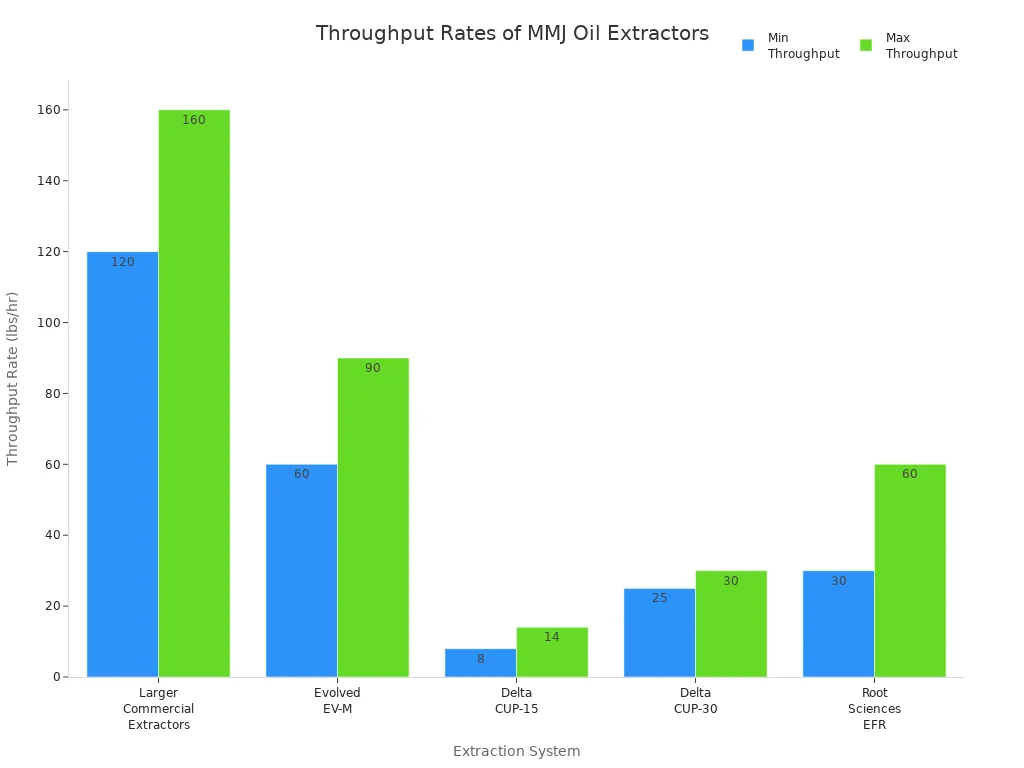
You see that larger commercial extractors handle the most material per hour. MMJ oil extractor systems like Evolved EV-M and Root Sciences EFR offer strong throughput for mid-sized operations. Ethanol extraction machines such as Delta Separations CUP-15 and CUP-30 process batches quickly, making them efficient for high-volume cbd and hemp production.
Efficiency also depends on the extraction process. CO2 extraction equipment achieves cannabinoid recovery rates between 85% and 95%. Ethanol extraction equipment recovers 50% to 80% of cannabinoids. CO2 systems work slower but deliver higher purity and efficiency. Ethanol systems process material faster, which helps you meet demand in busy cannabis processing environments.
Note: You should balance throughput and efficiency when choosing cannabis extraction equipment. High throughput boosts production, but efficiency ensures you get the most oil from every batch.
Yield tells you how much oil you get from your cbd or hemp material. Purity measures the quality of the oil after extraction. You want high yield and purity to produce top-grade products.
Here is a table showing average yield percentages for different cannabis extraction equipment:
| Extraction Method | Average Yield Percentage |
|---|---|
| CO2 | 70-80% |
CO2 extraction equipment stands out for high yield and oil purity. You often see oil purity levels that meet strict industry standards. Ethanol extraction equipment provides moderate yield and purity. You may need extra steps to refine the oil after the extraction process.
You should consider both yield and purity when you compare cannabis extraction equipment cost. High yield and purity increase your product value and help you meet cbd market demands.
Tip: Focus on methods that deliver consistent yield and purity. This approach supports long-term growth and customer satisfaction.
Terpenes give cannabis its unique aroma and flavor. You want to keep as many terpenes as possible in your final oil. Terpenes also play a role in the effects of cannabis products. When you choose an extraction method, you need to think about how well it preserves these delicate compounds.
Terpenes have low boiling points. They can easily evaporate or break down if you use too much heat, pressure, or agitation. If you lose terpenes during extraction, your oil may lose its natural scent and taste. You may also change the way your product feels to users.
Tip: Fine-tune your extraction process to protect terpenes. Small changes in temperature or pressure can make a big difference.
Each extraction method treats terpenes differently. You should know how your choice impacts the final product.
| Extraction Method | Terpene Preservation | Key Factors Affecting Terpenes |
|---|---|---|
| CO2 | High (if tuned well) | Pressure, temperature, extraction time |
| Ethanol | Moderate | Solvent strength, temperature |
| Oil-Heated (COFF) | High | Precise temperature control, gentle heat |
CO2 Extraction:
You can preserve many terpenes with CO2 extraction if you use the right settings. Lower pressure and temperature help keep terpenes safe. High pressure can damage terpene structure and reduce aroma.
Ethanol Extraction:
Ethanol works fast but can strip away some terpenes. You may need to refine your process to keep more flavor and scent.
Oil-Heated Extraction (COFF):
You get precise temperature control with oil-heated systems. This helps you avoid burning or losing terpenes. Gentle heat protects both aroma and flavor.
You want your oil to stand out in the market. Products with rich terpene profiles attract more customers. Terpenes also work with cannabinoids to create the “entourage effect,” which can enhance the benefits of your oil.
Note: The right extraction method helps you deliver a better experience to your customers.
You can improve terpene retention by adjusting your process. Modern extraction systems, like those with oil-heated vessels, give you more control. This means you can produce oils with strong, natural flavors and aromas.
When you plan your cannabis extraction facility, you need to look at the full cost of cannabis extraction equipment. The price for equipment can range from $5,000 for basic ethanol systems to millions of dollars for advanced CO2 extraction machines. You must also think about installation. Setting up temperature control units helps you keep your process stable and safe. You may need special electrical work or plumbing for your cannabis extraction equipment. These steps add to your total investment. Careful planning can lead to big savings over time.
You want your cannabis extraction facility to run smoothly. Regular maintenance keeps your cannabis extraction equipment working well. You should check temperature control units often. Clean them and replace worn parts when needed. If you ignore repairs, you risk downtime and lost savings. Some systems need more care than others. Oil-heated vessels and stainless steel parts last longer with proper upkeep. You can avoid costly breakdowns by following a maintenance schedule.
Running a cannabis extraction facility means you must follow strict rules. You pay licensing and permit fees every year. These costs usually fall between $5,000 and $50,000. You need to keep your cannabis extraction equipment up to code. Local laws may require special temperature control units or safety features. CO2 extraction apparatus can cost from $100,000 to millions of dollars. Ethanol extraction apparatus starts at $5,000 and goes up. Staying compliant protects your business and helps you avoid fines. Good planning can help you find savings in your cannabis extraction equipment cost.
Tip: Review your local regulations before you buy new equipment. This step helps you avoid surprises and control your budget.
| Cost Type | Typical Range |
|---|---|
| Equipment Purchase | $5,000 – millions |
| Licensing & Permits | $5,000 – $50,000 annually |
| Installation | Varies by facility size |
You want to get the most cbd oil from your hemp material. Extraction yield shows how much oil you collect from each batch. Consistency means you get similar results every time you run the extraction process. Different machines give you different results.
Cold ethanol extraction at very low temperatures, like −20 °C and −40 °C, can keep terpene levels steady. However, the oil yield from cold ethanol extraction can vary. This means you may see changes in how much cbd oil you get from each batch. Consistent cannabinoid recovery helps you plan your production and meet market demand.
You need high purity in your cbd and hemp oils to make quality products. The extraction process, solvent, and temperature all affect purity and quality. You can see the main factors in the table below:
| Factor | Description |
|---|---|
| Solvent | The solvent you choose changes how well you keep terpenes and cannabinoids in your oil. |
| Temperature | The right temperature helps you get better oil and keeps the extraction process efficient. |
| Post-extraction methods | Steps after extraction, like removing unwanted molecules, improve purity and quality. |
CO2 extraction stands out for its precision and purity. Ethanol extraction is cost-effective, but it can pull in unwanted polar molecules, such as chlorophyll. This can lower the purity of your cbd oil. Using water, carbon dioxide, or ethanol may also increase fat content and reduce terpenes in the final product. You should always check your oil for purity before selling it.
Terpenes give your cbd and hemp oils their unique smell and taste. You want to keep as many terpenes as possible during the extraction process. Ethanol extraction is known for keeping more flavor and terpenes in your oil. CO2 extraction can also protect terpenes, but you must control the heat carefully. Too much heat can break down terpenes and change the oil’s quality. When you use the right settings, you get cbd oil with strong aroma and high purity.
When you choose cannabis extraction equipment, you need to decide between batch and continuous operation. Each method changes how you run your facility and how much product you make.
Batch operation means you process one batch at a time. You load the material, run the extraction, and then clean the system before starting again. This method gives you control over each batch. You can adjust settings for different strains or products. Batch systems work well for small businesses or specialty products. You may need more workers to handle loading, unloading, and cleaning. Processing time can stretch over several days, especially with traditional systems.
Continuous operation lets you feed material into the system without stopping. The equipment extracts oil as the plant material moves through. You get a steady flow of product. Continuous systems suit larger businesses that want high output and efficiency. You need fewer workers because the system runs automatically. You save time and money on labor and utilities.
Continuous extraction systems like PURE5™ use much less energy. You only need 2-3 kW/hour, while CO2 and ethanol systems use 10-20 kW/hour. This saves you $25,000 to $50,000 each year on utility bills for medium-scale operations.
You also see big savings in labor. Continuous systems need just one operator. Batch systems often need three or four people. You can cut labor costs by 60-70%. Processing time drops from days to just a few hours. PURE5™ systems finish in 2-3 hours, while batch methods may take 5-7 days.
| Operation Type | Labor Needed | Processing Time | Energy Use (kW/hour) |
|---|---|---|---|
| Batch | 3-4 people | 5-7 days | 10-20 |
| Continuous (PURE5™) | 1 person | 2-3 hours | 2-3 |
You should match your choice to your business goals. Batch operation gives you flexibility. Continuous operation gives you speed and savings. Both methods help you produce quality cannabis oil, but continuous systems offer more efficiency for growing businesses.
You must protect your team when working with cannabis extraction equipment. Each method brings unique risks to your cbd facility. Hydrocarbon extraction can cause fires or explosions because butane is highly flammable. CO2 machines run at high pressure, and a leak can lead to carbon monoxide poisoning. Ethanol extraction also poses fire hazards if vapors escape into the air. You should follow these steps to keep everyone safe:
You help maintain health and safety by following these guidelines. Safe practices reduce accidents and protect your cbd products from contamination, including unwanted chemical residues in cbd oil.
You need to meet strict rules to operate cannabis extraction equipment. Both the United States and Canada have codes that focus on health, fire safety, and electrical standards. These rules help you avoid fines and keep your cbd business running smoothly.
| Country | Applicable Codes and Standards |
|---|---|
| Canada | CSA C22.1, Canadian Electrical Code, Part 1; ULC-S4400, Premises, Buildings and Equipment for Cannabis; National Fire Code of Canada; CSA B149.1, Natural Gas and Propane Installation Code |
| U.S. | NFPA 70, National Electrical Code; International Fire Code; NFPA 1, Fire Code; NFPA 55, Compressed Gases and Cryogenic Fluids Code; NFPA 58, Liquefied Petroleum Gas Code |
You must check your local laws before installing new equipment. Following these standards helps you protect worker health and prevent chemical residues in cbd oil.
You want your cbd extraction process to support health and the environment. CO2 extraction stands out as a green solution. You use a natural, recyclable gas that does not harm the environment. The process allows you to recapture and reuse CO2, which lowers waste and energy costs. Ethanol extraction creates more waste and uses more resources. You may see higher costs and less terpene preservation with ethanol. Choosing CO2 extraction helps you produce high-quality cbd oil while reducing your impact on the planet.
Tip: Eco-friendly equipment supports both your business and community health.
You face hidden costs when you manage solvents and waste in cannabis extraction. Ethanol extraction systems often lose solvent because the spent biomass absorbs ethanol. For every 1000 lbs of biomass, you can lose about 1000 lbs of ethanol. This loss affects your business economics and reduces your savings. You must also handle hazardous waste, since spent biomass contains high levels of residual solvent. Many companies use screw presses or centrifuges to lower solvent content, but these tools do not remove all hazards or disposal problems. If you choose thermal dryers, you pay more upfront compared to other equipment. Ethanol is taxed in the USA, and you must prove its use in industrial processes. This rule adds complexity and cost to your operation. Careful planning helps you control these expenses and improve your extraction process.
You want your extraction equipment to run smoothly. Ethanol extraction systems need regular maintenance, which can lead to downtime. If you train your technicians well and get strong after-sales support, you can cut downtime by up to 40%. Reliable equipment means fewer interruptions and more savings over time. You should also watch ethanol consumption rates and energy use per cycle. These factors affect how often you need repairs and how much you spend on operations. Choosing equipment with a good track record helps you keep your facility running and avoid costly delays.
You must train your staff to operate extraction equipment safely and efficiently. Each system has unique controls and safety steps. Well-trained workers help you avoid mistakes and keep your extraction process consistent. You may need to hire extra staff for batch operations or complex systems. Investing in training brings long-term savings by reducing accidents and improving productivity. You should create clear procedures and offer ongoing education to keep your team ready for any challenge.
Tip: Strong training programs protect your business and support steady growth.
You need to match cannabis extraction equipment to your business size and production scale. Small hemp startups often choose compact systems with basic automation. Large cannabis processing facilities benefit from advanced automation and modular designs. These features help you expand capacity as demand grows. You must also meet compliance standards for your region. Custom layouts can maximize space and prepare your facility for future growth.
| Key Factors | Description |
|---|---|
| Automation | Advanced automation features reduce labor intensity and downtime. |
| Scalability | Modular equipment allows you to expand as your business grows. |
| Compliance | Equipment must meet regulatory standards for your operation size. |
You must decide what matters most for your hemp business. Some methods focus on high yield, while others deliver greater purity. MMJ oil extractor systems offer consistent cannabinoid recovery and quality. If you want lower costs, ethanol extraction may seem attractive. However, alcohol extraction can leave many cannabinoids in the plant, reducing your total yield. Your goals for potency and product type guide your choice. High-quality cannabis extraction equipment uses durable materials and advanced engineering. This ensures safety and strong results.
You want equipment that delivers value over time. Initial costs for cannabis extraction equipment vary by method. Ethanol systems cost less upfront, but may offer lower revenue potential. CO2 systems require a higher investment, but save more each year and generate higher returns.
| Extraction Method | Initial Equipment Cost | Operating Cost (Annual) | Revenue Potential | Savings per Year |
|---|---|---|---|---|
| Ethanol | $2 million | $12,696.66 | Lower | N/A |
| CO2 | $4 million | $2,328.19 | Higher | $702,000 |
MMJ oil extractor systems help you balance cost, yield, and purity. You should consider long-term savings, operating costs, and the ability to scale your cannabis processing operation. Choosing the right equipment supports growth and maximizes your return on investment.
You see clear differences in cannabis extraction equipment.
| Factor | Why It Matters |
|---|---|
| Production Goals | Match equipment to your needs |
| Safety Standards | Protect your team |
| Budget | Plan for long-term growth |
Choose machines that fit your scale, offer customization, and provide strong support for operators. Balancing cost, efficiency, and compliance helps your business succeed.
You use CO2 machines for high purity and safety. Ethanol machines work faster and cost less. CO2 systems need more investment. Ethanol systems suit small businesses. Both methods help you make CBD oil.
You match equipment to your production size and goals. Small operations need compact systems. Large facilities use advanced, scalable machines. You check yield, purity, and compliance before you decide.
You keep your team safe by following training and safety rules. CO2 systems avoid fire risks. Ethanol and hydrocarbon machines need extra care. You use proper ventilation and regular maintenance to protect everyone.
You control purity by choosing the right solvent and temperature. CO2 extraction gives you cleaner oil. Ethanol may pull in unwanted compounds. You use post-extraction steps to improve quality.