


COPYRIGHT © 2022 COFF International Co., ltd. ALL RIGHTS RESERVED


Stainless steel storage tanks typically have a service life of 15 to 50 years, and under ideal conditions, some tanks can last up to 100 years. The lifespan of a tank is influenced by various factors, such as material grade, environment, and maintenance levels. Certified SUS304 stainless steel is renowned for its high strength and long service life. COFF tanks are manufactured using this premium steel and meet international standards. The table below illustrates how SUS304 stainless steel extends the service life of tanks and optimizes their performance.
| Property | Value |
|---|---|
| Tensile Strength | 515 – 750 MPa |
| Corrosion Resistance | Excellent |
| Durability and Longevity | Long service life |
| Sustainability | 100% recyclable |
Stainless steel tanks made with high-quality materials have a longer lifespan. The grade of stainless steel determines the tank’s rust resistance and strength. SUS304 stainless steel is commonly used for water and chemical storage, offering excellent rust resistance and a long service life. COFF tanks are made of certified SUS304 stainless steel, conforming to standards such as ASME and AS1210. These standards ensure reliable manufacturing quality and compliance with safety inspections. This means the tanks can operate safely and reliably for extended periods.
The table below shows the rust resistance and application areas of different grades of stainless steel:
| Grade | PREN Range | Application Notes |
|---|---|---|
| 304 | 18–20 | Basic corrosion resistance; not suitable for high-chloride environments |
| 316L | 23–25 | Suitable for food-grade and light chemical storage; chloride resistant |
| 2205 | 35–38 | Suitable for brine, seawater, and corrosive chemicals |
| 2507 | 42–45+ | Suitable for extreme environments: offshore operations, seawater desalination |
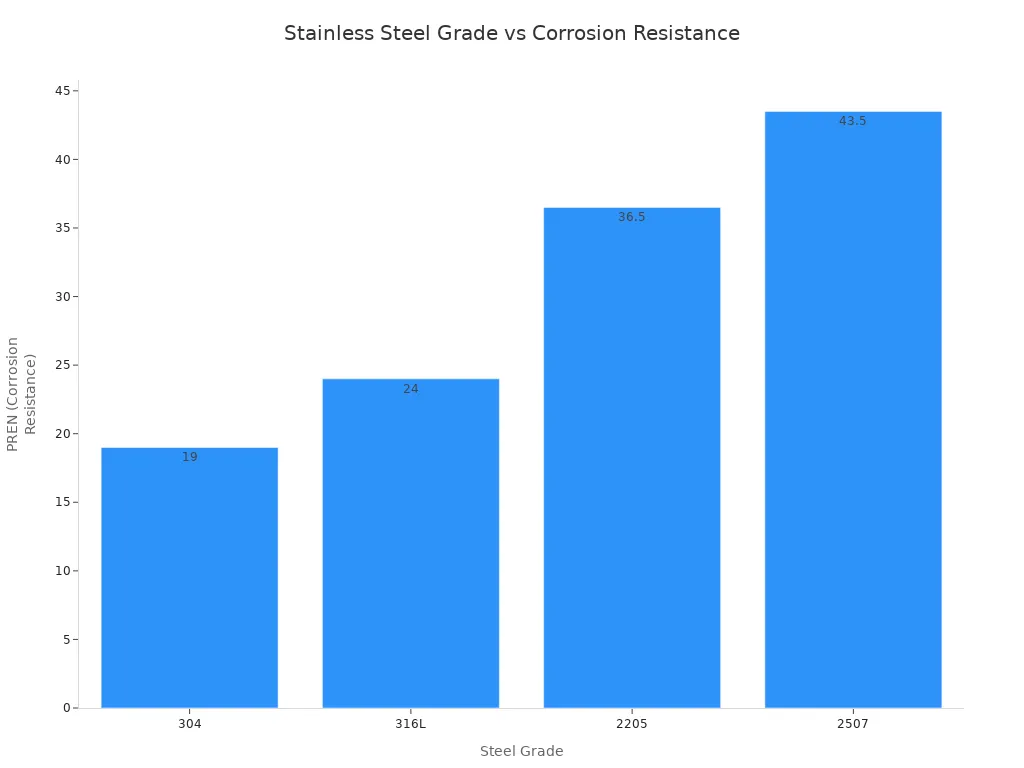
Tanks made with higher grades (e.g., 316L or duplex stainless steel) offer stronger rust resistance. They have a longer service life in harsh environments (e.g., chemical storage or high-salinity environments).
The environment in which a tank is used affects its service life. Humidity, high temperatures, and chemicals accelerate rusting. Stainless steel tanks perform best in clean, dry environments. Moist or salty air exacerbates corrosion, especially when the tank’s protective coating is weakened.
| Material | Performance in Humidity | Maintenance Needs |
|---|---|---|
| Stainless Steel | High corrosion resistance | Low maintenance |
| Carbon Steel | Poor corrosion resistance, easily corroded | High maintenance, requires regular upkeep |
High temperatures can cause the tank to expand and change shape or color. Prolonged exposure to sunlight can cause the tank to lose its luster. The water tank needs to withstand changes in temperature and humidity. COFF uses a special tank manufacturing process that ensures its robustness and durability in various environments.
The contents of a water tank affect its rusting rate and lifespan. Stainless steel tanks contain chromium, which forms a protective film that prevents rust and damage. This protective film works even against corrosive substances such as acids or salt water.
Water tanks used for storing water, chemicals, or food require the appropriate stainless steel grade based on the contents. Choosing the right grade prevents rapid rusting and extends the tank’s lifespan.
Proper maintenance ensures good tank operation and extends its lifespan. Cleaning removes dirt and prevents bacterial growth. Regular tank inspections help detect leaks or rust early. Passivation strengthens the tank’s protective film. Lubricating moving parts prevents wear.
Tip: Clean the tank regularly with mild detergents. Avoid using strong chemicals that may damage the tank. Experts recommend the following measures for stainless steel storage tanks:
Experts recommend the following measures for stainless steel storage tanks:
COFF tanks are meticulously manufactured and quality-tested. Each tank undergoes water and air testing to ensure its robustness and excellent sealing. These procedures and certifications ensure the tanks can be used for long-term storage of water and chemicals.

Corrosion is an early sign of aging in stainless steel tanks. Maintenance personnel may see rust spots, paint blistering, or worn areas on the tank. These signs indicate a decline in the strength of the protective coating. Many factors can lead to corrosion. Chloride ions and strong chemicals in the air can damage the tank surface. Poor welding or damage can expose metal, accelerating corrosion. Using the wrong cleaning agents or insufficient cleaning frequency can also increase the likelihood of rust. Tanks made with low-grade or imitation stainless steel are more prone to rust. Sludge at the bottom of the tank may indicate internal rust, affecting the tank’s performance.
Tip: Clean and inspect the tank regularly to prevent corrosion and maintain its good condition.
As tanks age, leaks and other problems may occur. Oil stains or droplets near the tank may indicate a leak. Inspectors will check for bent panels, strong welds, and problems with the tank top. Corrosion can worsen and form small holes inside or outside the tank. Weak points at panel joints can lead to leaks. Cracks in concrete tanks also indicate aging. These problems can all render the tank unsafe and unable to continue holding liquids.
Common Structural Issues Table
| Issue | Description |
|---|---|
| Panel Deformation | Tank Bending or Deformation |
| Reduced Weld Strength | Decreased Joint Strength |
| Tank Top Support Problems | Tank Top May Sink or Crack |
| Pitting Corrosion | Pinholes Caused by Corrosion |
Aged stainless steel storage tanks may experience a decline in performance or safety. Inspections may reveal scratches, dents, and other signs of damage. Over time, corrosion, wear, and cracks may appear. Inspectors will examine these issues to understand their impact on the tank’s lifespan. Experts recommend using special testing methods that will not damage the tank when it is more than halfway through its lifespan. The Residual Strength Factor (RSF) helps assess the strength of damaged components. This value compares the strength of a damaged component to the strength of an intact component. If the strength of a damaged component is too low, the tank may be unsafe.
Note: Regular tank inspections help detect problems early and ensure safe use.

The manufacturer recommends cleaning the storage tank in the following steps. First, workers must ensure the tank is emptied and safe. They rinse the inside of the tank with warm water to remove dirt. Appropriate cleaning agents should be used for different types of residue. Spray balls can clean stubborn stains, while brushes are used for manual scrubbing. After cleaning, workers rinse the tank to remove all soap residue.
Tip: Cleaning along the grain of the steel better protects the coating and removes dirt.
Special coatings and linings help prevent chemical corrosion. Tests show that ChemLine® coatings form a robust protective layer. These coatings block a variety of chemicals, ensuring the safety of the substances inside the tank. In some areas, ChemLine® coatings can protect tanks from strong acids for years. Using these coatings helps prevent rust and ensures the safety of the storage tank. The appropriate coating depends on the substances used inside the tank. Following the manufacturer’s coating application and maintenance guidelines can extend the tank’s lifespan.
Professional maintenance helps storage tanks maintain good operating condition for many years. Experts regularly inspect the tanks to detect rust or damage early. They use proper cleaning methods to prevent dirt buildup. The coating protects the steel from harsh environments. The team thoroughly rinses the tanks and cleans them along the grain. Each tank undergoes a final inspection before shipment to ensure it is in good condition.
| Process | Description |
|---|---|
| Steel Plate Cutting and Forming | CNC machine tools cut steel plates to the required dimensions. |
| Argon Arc Welding and Assembly | Trained welders assemble the parts and inspect the weld quality. |
| Surface Polishing and Passivation | The surface is polished and passivated to prevent rust. |
| Pressure and leak testing | The tank’s strength and leakage status are checked. |
| Final inspection and certification | Each tank undergoes welding quality and precision checks. |
Note: Choosing tanks that are easy to clean and inspect simplifies maintenance and extends their lifespan.
Some damage to stainless steel tanks is irreparable. Deep corrosion weakens the metal. Tool scratches damage the tank surface. Improper cleaning leaves marks or pinholes. Vandalism in unattended locations can also cause damage. These problems mean the tank may not be safe to hold liquids. Owners should look for these signs during inspections. If the damage is too severe, the safest course of action is to replace the tank.
Common causes of irreparable damage include:
Safety is paramount when using stainless steel tanks. A leaking tank or one that appears to pose a safety hazard can be extremely dangerous. Inspectors will check for cracks, bulges, or loose welds. If these problems are found, the tank may rupture during use. Industry standards help owners understand when tank replacement is necessary. API 653 applies to large tanks, and STI SP001 applies to small tanks. These standards help ensure personnel safety.
Tip: Regularly inspect tanks to identify potential safety hazards early and prevent accidents.
Every storage tank has a defined service life. Manufacturers determine this lifespan based on the steel, design, and usage. As storage tanks age, performance may decline, and leaks or deteriorating water quality may occur more frequently. Users should follow the manufacturer’s instructions and industry standards. Timely replacement of the storage tank ensures product safety and guarantees normal operation.
| Reason for Replacement | Description |
|---|---|
| Irreparable damage | Severe corrosion, severe scratches, or vandalism |
| Safety hazard | Leaks, cracks, or insufficient weld strength |
| Service life reached | Reached the manufacturer’s recommended service life limit |
The service life of stainless steel storage tanks is typically 15 to 50 years. The length of the service life depends on the grade of stainless steel, the storage location, and the user’s maintenance practices. Using certified steel and regularly inspecting the tank helps maintain its safety and strength. High-quality stainless steel, such as 304 and 316, can extend the tank’s service life and enhance its rust resistance. People should look for signs of aging in the tank and replace it when necessary. Choosing a tank from a trustworthy company like COFF means it will last a long time.
Most stainless steel water tanks have a lifespan between 15 and 50 years. With proper maintenance and use in a safe environment, some tanks can even last up to 100 years.
High-quality steel, regular cleaning, and proper inspection help extend the lifespan of the water tank. Certified stainless steel and strong welds also protect the tank from damage.
Yes. Stainless steel water tanks keep water clean and safe. This steel is rust-resistant and will not alter the taste or odor of the water.
Experts recommend inspecting the tank at least once a year. Inspections help detect rust, leaks, or other problems early.