Milk tanks are foundational equipment across the entire dairy supply chain, from on-farm raw milk collection to industrial processing and end distribution. Each type is purpose-engineered for a specific production stage, with dedicated features for cooling, storage, processing or transport to preserve milk freshness, uphold food safety and meet strict regulatory standards.
Key Takeaways
Milk tanks are categorized by production stage: cooling, storage, pasteurization, specialized processing, transport and blending vessels, each serving a non-interchangeable role.
Bulk milk cooling tanks are the most critical piece of equipment for dairy farms, as they rapidly chill raw milk to 4°C or below within 2 hours to halt bacterial growth.
Vertical silo tanks deliver high-capacity storage with a minimal floor footprint, while horizontal tanks offer faster cooling and easier access for on-farm use.
All food-grade milk tanks use 304 or 316L stainless steel interiors with smooth finishes, which prevent bacteria buildup and support efficient clean-in-place sanitization.
Matching the right tank type, capacity and configuration to your operation ensures regulatory compliance, preserves milk quality and supports scalable dairy production.
Common Types of Milk Tanks
Bulk Milk Cooling Tanks
The first and most essential tank for any dairy farm, cooling tanks are designed to quickly bring fresh raw milk down from cow body temperature (~35°C / 95°F) to a safe 1–4°C (34–39°F) within 2 hours of milking, as required by most global dairy safety regulations. This rapid cooldown stops microbial growth, preserves natural flavor and extends shelf life until pickup.
Core features: Built-in refrigeration compressors, continuous temperature monitoring and gentle automatic agitation for uniform cooling.
Common configurations:
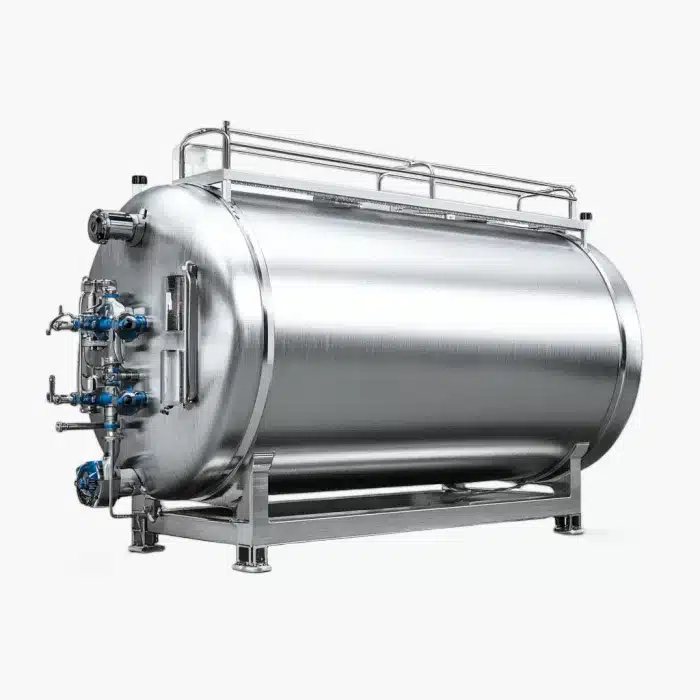
Horizontal tanks: Wider surface area for faster, more even heat exchange; ideal for facilities with ample floor space and low ceiling height.
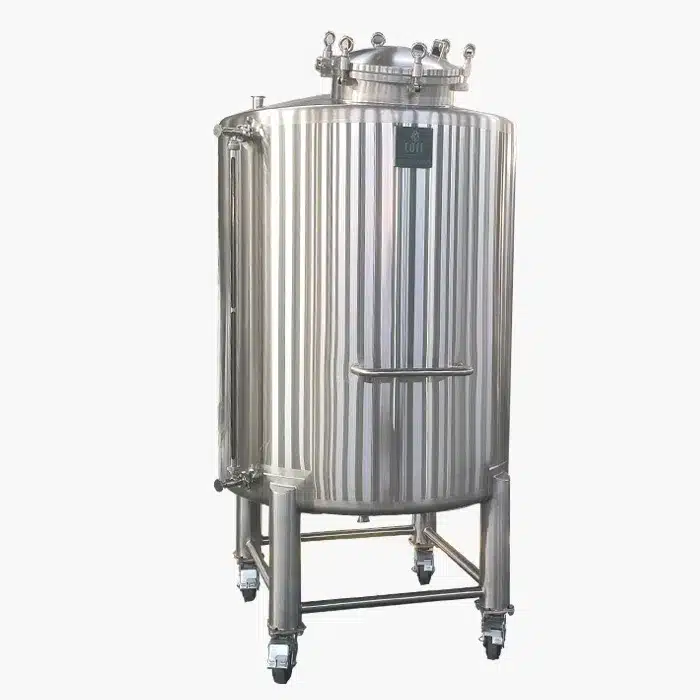
Vertical tanks: Space-saving cylindrical design with a smaller footprint; best for small farms, indoor milking parlors and space-constrained sites.
Milk Storage Tanks & Silos
Once chilled, milk is held in insulated storage tanks until processing or transport. These tanks prioritize temperature retention over active cooling, with thick foam insulation to minimize temperature fluctuation. Many include mild cooling jackets to offset ambient heat gain.
Standard indoor storage tanks: Available in horizontal or vertical designs with easy-access hatches for inspection. High-efficiency insulation limits temperature rise to less than 1°C over a 24-hour period.
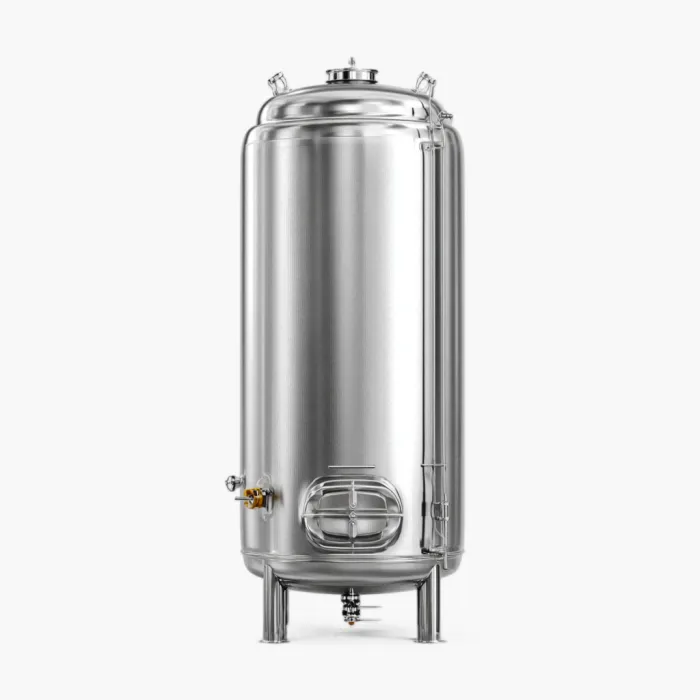
Outdoor silo tanks: Tall, weatherproof vertical vessels for large-scale dairies and processing plants, with capacities up to tens of thousands of liters. They free up valuable indoor processing space while maintaining stable cold storage.
Pasteurization Tanks
Pasteurization tanks are designed for retail liquid milk and dairy processing plants. They heat milk to a precisely controlled temperature to eliminate pathogens while preserving nutrients and flavor.
Supported methods: Accommodate both HTST (High-Temperature Short-Time) and LTLT (Low-Temperature Long-Time) pasteurization processes.
Core features: Uniform heating jackets, slow-speed agitators to eliminate cold spots, and digital temperature controls for accurate, repeatable results.
Compliance: Built to support HACCP and ISO 22000 food safety management systems.
Coagulation Tanks (Cheese Vats)
Specialized processing vessels for cheese production, where milk is transformed into curds and whey via starter cultures and rennet. Precise temperature and agitation control directly impact final cheese yield, texture and flavor.
Core features: Gentle variable-speed agitation to avoid breaking fragile curd matrices, precise temperature holding for enzymatic activity, and easy discharge for curd separation.
Benefit: Consistent environmental control reduces fat and protein loss in whey, improving final product yield and quality.
Milk Transport Tanks (Tankers)
Mobile insulated stainless steel vessels that maintain the cold chain between farms and processing plants. They are engineered for road durability while preserving stable milk temperatures during transit.
Construction: Multi-layer design with stainless steel interior and exterior, plus thick polyurethane foam insulation for thermal retention. Long-haul models often include integrated engine-driven cooling systems.
Hygiene & traceability: Sloped bottoms for full drainage, CIP (Clean-in-Place) spray systems for sanitization between loads, and compartmentalized designs to keep milk from multiple farms separate for batch traceability.
Mixing & Processing Tanks
Used in the final stages of dairy manufacturing to blend standardized milk with added ingredients for value-added products like flavored milk, drinkable yogurt, ice cream mix and cultured dairy.
Core features: High-torque pitched-blade agitators for homogeneous blending without excess foaming, integrated heating/cooling jackets for temperature control during mixing or fermentation.
Customization: Adjustable port layouts, CIP spray balls and baffle designs to match specific recipe viscosities and production volumes.
How to Choose the Right Milk Tank
Selecting the correct tank involves balancing current operational needs with future growth projections. Focus on these core decision factors:
Capacity sizing: Size for peak production (such as spring flush) rather than average output, with a 20–30% buffer for herd growth or collection delays.
Material & finish: Require food-grade 304 stainless steel for general cooling and storage; upgrade to 316L for acidic dairy products or high-chloride processing environments.
Facility constraints: Vertical tanks save floor space but need sufficient ceiling clearance; horizontal tanks work better for low-ceiling barns.
Regulatory compliance: Verify alignment with regional standards (3-A Sanitary Standards in the US, EN 13732 in Europe).
Reputable milk tank manufacturers such as COFF provide custom milk tanks tailored to different farm and processing plant sizes, workflows, and regulatory requirements.
Basic Maintenance to Extend Milk Tank Lifespan
With proper care, food-grade stainless steel milk tanks can last 30+ years. Follow these core practices:
Clean immediately after emptying with a warm rinse → alkaline detergent wash → acid rinse cycle to prevent milkstone buildup.
Inspect gaskets, shaft seals and drain valves monthly for wear to maintain a tight, sanitary seal.
Clean condenser coils monthly to preserve cooling efficiency.
Never use chlorine-based cleaners or abrasive tools on stainless steel surfaces, as these damage the protective corrosion-resistant layer.
Conclusion
From on-farm cooling to industrial processing and transport, each type of milk tank serves a dedicated, non-interchangeable role in preserving milk quality and upholding food safety. Matching the right tank type, capacity and configuration to your operation ensures regulatory compliance, efficient daily workflow and long-term equipment value.
Investing in food-grade stainless steel tanks from a trusted manufacturer, paired with consistent daily cleaning and routine maintenance, will deliver reliable performance and support safe, profitable dairy production for decades.
FAQ
Which type of milk tank is most important for a small dairy farm?
A bulk milk cooling tank is the most essential piece of equipment for small farms. It rapidly chills fresh raw milk to food-safe temperatures within the required timeframe, preventing bacterial growth and preserving milk quality until collection.
What is the difference between horizontal and vertical milk tanks?
Horizontal tanks have a wider surface area for faster cooling and easier access for maintenance, but require more floor space. Vertical tanks including silos take up far less floor area, making them ideal for small sites and high-capacity industrial storage.
How fast must raw milk be cooled after milking?
Most global dairy safety standards require raw milk to be cooled from body temperature to 4°C (39°F) or below within 2 hours of milking to limit bacterial growth and preserve quality.
What is the difference between a milk storage tank and a transport tanker?
A storage tank is a stationary vessel for on-site cold holding of milk. A transport tanker is a mobile, road-rated insulated tank designed to maintain the cold chain during transit between farms and processing facilities.
What grade of stainless steel is used for milk tanks?
304 stainless steel is the industry standard for most cooling and storage applications, offering excellent hygiene and corrosion resistance. 316L stainless steel is used for processing tanks handling acidic dairy products or high-chloride environments.