


COPYRIGHT © 2022 COFF International Co., ltd. ALL RIGHTS RESERVED


Your oil heated brewhouse requires consistent care. Good maintenance rests on four pillars: safety, efficiency, longevity, and quality. This routine helps you manage your equipment. You will perform daily, weekly, monthly, and annual tasks. Safety is your top priority. Always know your emergency procedures. This ensures a secure brewhouse environment. Proper care maintains your equipment’s performance and correct temperature. Keep your brewhouse running smoothly.
Safety First: Before any maintenance, ensure you have the essential tools. This includes heat-resistant gloves, safety glasses, and a calibrated thermometer for accurate temperature checks. Your safety and the safety of your team are paramount.
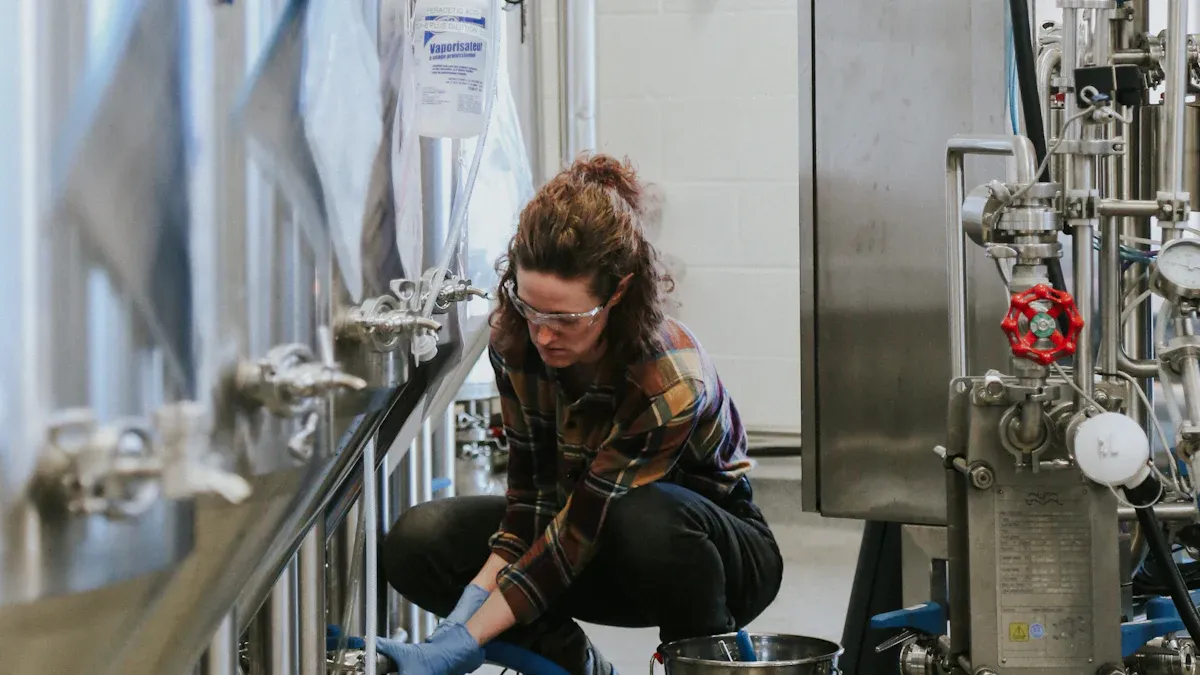
Your daily routine is the foundation of a healthy oil heated brewhouse. These quick checks ensure safety and consistency for every batch you brew. This simple maintenance habit protects your equipment and your beer’s quality.
Start each brew day with thorough visual inspections. This simple step helps you spot potential issues before they become major problems. Your brewhouse equipment needs this attention. Look over the entire system for anything out of place.
This quick scan is a critical part of your daily oil furnace maintenance.
Next, you will check the burner. The flame tells you a story about your system’s health. A proper flame ensures you reach the correct mash temperature efficiently. Turn on the burner and observe the flame for a moment. A healthy flame is a key safety indicator.
| Flame Characteristic | Healthy Flame | Potential Issue |
|---|---|---|
| Color | Bright yellow with an orange glow | Dark spots or an uneven red color |
| Shape | Strong, steady, and uniform | Weak, lazy, or sputtering |
| Efficiency | Heats the burner throat evenly | Creates soot or uneven heating |
An incorrect flame can signal poor combustion. These daily checks help you maintain peak performance.
Your brewhouse relies on thermal fluid to transfer heat. Running the system with low fluid is a critical error. It can cause serious damage to your equipment.
Critical Alert: Low thermal fluid can cause your pump to fail. Contamination from water or other liquids can also lead to pressure spikes and system damage. Always verify the fluid level in the expansion tank before starting your heating cycle.
This quick check protects the heart of your heating system and ensures a safe, predictable brew day.
A clean brewhouse is a safe brewhouse. Your post-brew cleanup is just as important as your pre-brew checks. This cleaning routine is a vital part of your daily maintenance. It ensures your equipment is ready for the next batch and keeps your workspace safe. A tidy area around your heating unit reduces fire risks and makes spotting leaks or other issues easier.
Your end-of-day process should include these simple steps:
Pro Tip: Use a dedicated, color-coded set of cleaning tools for the area around your oil heater. This practice prevents cross-contamination with food-contact surfaces in your brewhouse.
This final cleaning step completes your brew day. It prepares your system for a smooth start tomorrow.
Your weekly maintenance routine goes deeper than daily checks. These tasks focus on the core components of your oil heated brewhouse. This regular attention prevents small issues from becoming costly repairs and ensures your equipment operates at peak performance.
A clean burner is essential for efficient combustion and consistent heating. Each week, you should inspect the burner assembly for any soot buildup or debris. A light brushing can remove surface grime. However, you must handle the nozzle with special care.
Expert Tip: Cleaning a nozzle is a difficult task. For lower flow rates, it is nearly impossible to ensure a thorough cleaning of the internal slots without a microscope. Tampering with the nozzle can also void your warranty. Annual nozzle replacement is the most effective approach for your oil furnace maintenance.
This simple replacement ensures your fuel atomizes correctly, saving you fuel and headaches.
Your weekly routine must include detailed inspections for leaks around pipes, pumps, and vessel connections. A small drip can indicate a bigger problem with your brewhouse seals. Pressure is a key indicator of system health and safety.
Critical Safety Alert: Pressure over 30 PSI is a major warning sign of potential seal failure. This condition can lead to significant equipment damage if not addressed immediately.
Common causes of seal failure include:
These weekly checks help you protect your brewhouse investment.
The control panel is the brain of your brewhouse heating system. You need to verify its proper function to guarantee accurate and safe operation. These quick checks ensure your automation and safety systems are reliable.
This simple cleaning and function test maintains the reliability of your entire system.
Proper ventilation is a non-negotiable part of a safe brewhouse. Your weekly maintenance routine must include a careful inspection of the exhaust flue and venting system. This system carries harmful combustion byproducts away from your workspace. A blockage or leak here poses a serious threat.
Your weekly check should be thorough. Look for any signs of trouble that could compromise your system’s safety and performance.
Critical Safety Warning: The Dangers of a Blocked Flue ⚠️
A blocked or damaged exhaust flue is a life-threatening hazard. It can force colorless, odorless carbon monoxide gas back into your brewhouse. This toxic gas can cause severe health issues, including headaches, dizziness, and even death at high concentrations. A blocked flue also traps intense heat, creating a serious fire risk and potentially damaging your equipment.
Proper ventilation ensures your heating system runs efficiently. A compromised exhaust forces the furnace to work harder and burn more fuel. This simple inspection protects your team, your equipment, and your brewery’s bottom line.
Your monthly maintenance routine involves a deeper analysis of your system’s core components. These checks are crucial for the long-term health and safety of your oil heated brewhouse. This proactive approach protects your equipment from premature failure and ensures operational reliability.
The thermal fluid is the lifeblood of your heating system. Each month, you should perform a basic health check. A visual inspection and simple analysis can reveal early signs of degradation.
Fluid Degradation Warning: Degraded fluid loses its ability to transfer heat efficiently. It can produce sludge that clogs pipes and damages your equipment.
Look for these warning signs:
This monthly habit of checking for water and contaminants helps you decide if a full fluid analysis is needed. Catching these issues early is a key part of your oil furnace maintenance.
Your brewhouse safety systems are your last line of defense against equipment damage. Monthly testing ensures they will work when you need them most. This includes testing emergency shutoff systems and verifying limit switches. The high-temperature limit switch prevents your equipment from overheating.
You can perform a basic test on this switch.
This simple testing confirms a critical safety feature is functional.
The circulation pump is the heart of your heating system. Your monthly checks should include listening for and looking for signs of wear. Problems with the pump can affect your brewhouse heating performance and temperature control.
Listen for unusual noises like grinding or whining, which can signal bearing failure or contamination. Visually inspect the pump for:
These regular checks help you identify pump issues before they cause a full system shutdown.
Your heat exchanger is vital for controlling wort temperature. Monthly detailed cleaning is essential for efficiency and beer quality. Over time, proteins and minerals build up inside the plates. This buildup, known as beer stone, forces your heating system to work harder and can affect your beer’s final flavor. This is one of your most important monthly checks.
A thorough Clean-In-Place (CIP) cycle is the best way to handle this task. You might think you need harsh caustic chemicals for this job. However, modern non-caustic cleaners are just as effective, or even better, at removing organic residue and beer stone. These advanced cleaners use chelating agents to dissolve mineral deposits, making them a powerful, all-in-one solution for your brewhouse. This makes the cleaning process safer for both you and your equipment.
These powerful, non-corrosive agents are effective because they contain a blend of active ingredients. They are safe for stainless steel and other materials in your brewhouse. The key components often include:
Pro Tip: Always follow the chemical manufacturer’s instructions for temperature and contact time. Running a full CIP cycle ensures every plate in your heat exchanger is spotless. This regular maintenance step protects your investment and guarantees consistent results in every batch.
Your daily, weekly, and monthly checks are vital. However, your annual servicing is the cornerstone of long-term brewhouse health. This deep dive into your system ensures safety, efficiency, and longevity. The importance of annual servicing cannot be overstated for protecting your investment.
You should schedule professional oil furnace maintenance once a year. A qualified technician provides a level of inspection and service that goes beyond routine checks. When you choose a service provider, look for a comprehensive service agreement. A good contract ensures your equipment receives expert care.
What to Expect from a Quality Service Plan:
- Customized maintenance concepts that fit your brewhouse needs and budget.
- Training for your team to ensure stable product quality.
- Guarantees on parts like stainless vessels and pressure vessels.
- Repair or replacement of faulty equipment covered by the provider.
This professional servicing is a critical part of your overall oil furnace maintenance plan.
Your annual oil furnace service should include a comprehensive thermal fluid analysis. You send a fluid sample to a lab for this process. The lab performs a detailed analysis to check the fluid’s health. This test is more advanced than your monthly visual check. It measures key metrics like flash points to assess fire safety risks. The analysis also identifies the level of contamination from oxidation or other contaminants. This information tells you if your fluid can still transfer heat effectively.
The results of the fluid analysis will determine the next step. If the fluid shows significant degradation or contamination, you will need a full system flush and cleaning. This process removes all the old, tired fluid from your oil heated brewhouse. The cleaning also purges any sludge or buildup from the pipes and components. A technician then refills the system with new, high-quality thermal fluid. This complete flush and refill restores your heating system’s performance and safety. It is the ultimate reset for your equipment, preparing your brewhouse for another year of reliable brewing.
Your annual servicing must include combustion and efficiency testing. This check measures how well your burner converts fuel into heat. Better efficiency saves you money on fuel and reduces wear on your equipment. A professional service uses a flue gas analyzer to perform this analysis. The tool measures gases in your exhaust to check the combustion quality. This process ensures your ventilation system is performing correctly.
Expert Insight: A technician measures the exhaust gases to determine how completely the fuel is burned. This testing is crucial for optimizing your burner performance.
A well-maintained brewhouse operates at a high efficiency level. Regular cleaning and proper ventilation are key to achieving top performance.
| Maintenance Status | Typical Efficiency |
|---|---|
| Regularly Maintained (Best) | 88% – 92% |
| Needs Service | Below 85% |
This annual check is a vital service for your brewhouse.
The pressure relief valve is one of the most important safety devices on your brewhouse. Its job is to release excess pressure to prevent a catastrophic failure. Your annual service must include professional certification of this valve. ⚙️
A certified technician will perform this testing. They verify that the valve opens at the exact pressure rating set by the manufacturer. This certification is not a DIY task. It requires specialized equipment and knowledge to ensure it is done correctly. Keeping the area around the valve clear with routine cleaning is also important for accessibility and function. This essential service confirms a critical safety feature is working perfectly, protecting your team and your investment.
You can improve your oil heated brewhouse performance with a few key practices. These steps boost efficiency, save fuel, and protect your equipment. Better efficiency means lower operating costs and more consistent beer.
Accurate temperature readings are essential for quality brewing. Your temperature probes need regular calibration to ensure they are correct. You can perform this testing yourself with a simple ice bath. This process provides a reliable 0°C reference point.
If the reading is off, you can adjust the offset in your control panel. This simple check guarantees your mash and boil temperatures are always precise. Proper temperature control is a matter of both quality and safety.
Your brewhouse loses a significant amount of heat through uninsulated pipes and vessels. This heat loss forces your system to burn more fuel. You should inspect all hot liquor tank and mash tun insulation for gaps or damage. Proper insulation keeps heat where it belongs, reducing the workload on your equipment. This simple step is a core part of good oil furnace maintenance. Regular cleaning of the burner also improves efficiency. A clean burner produces a hotter, more efficient blue flame, while a dirty one creates a wasteful yellow flame.
You should track your fuel use for every brew day. This monitoring helps you establish a baseline for your brewhouse. A logbook or spreadsheet is perfect for this task. Record the amount of fuel used and the total heating time for each batch.
Efficiency Tip: A sudden increase in fuel use often signals a problem. This could be due to poor insulation, a dirty burner needing cleaning, or degraded thermal fluid.
This data analysis helps you spot gradual decreases in performance. Early detection through consistent monitoring allows you to address issues before they become expensive repairs. This practice ensures the long-term safety and reliability of your system.
Over time, you may find that certain parts of your system wear out or become outdated. Upgrading components is a smart way to boost your brewhouse efficiency and reliability. When you choose to upgrade, using parts from the original manufacturer is the best decision for your equipment. As the founder of the oil heated brewhouse, COFF provides high-quality parts designed specifically for your system. This ensures perfect compatibility and maintains the integrity of your entire setup.
Consider upgrading key components to enhance performance and simplify your maintenance routines. These upgrades can make a significant difference in your daily operations.
Investing in genuine COFF parts for your equipment is an investment in quality. You get components engineered to work seamlessly with your existing brewhouse. This avoids compatibility issues and ensures your system runs as the designers intended.
Upgrading also impacts your cleaning procedures. Modern components are often designed for easier access and more effective cleaning, saving you time and effort. This focus on continuous improvement keeps your equipment at the forefront of brewing technology.
Your maintenance routines handle many tasks. However, some problems require an expert for your safety and to prevent costly damage to your equipment. Knowing when to stop and call for professional servicing is a critical skill. These situations are an emergency and need immediate attention.
If your burner struggles to light or the flame sputters out, do not keep trying to restart it. This is a major safety concern. You should call for professional oil furnace service immediately. An expert can diagnose the root cause, which could be one of many issues.
Attempting to fix these yourself can be dangerous. A professional has the tools and knowledge for proper oil furnace maintenance.
You track your brewhouse performance with every batch. If you notice it takes much longer to reach your target temperature, this signals a problem. A slow heat-up time means your oil heated brewhouse is losing efficiency. This drop in performance wastes fuel and puts extra strain on your equipment. While you can check for simple issues, a significant change requires professional oil furnace service. An expert can test your system’s efficiency and find the hidden cause.
Your brewhouse should run with a consistent, familiar sound. If you hear new or strange noises, shut the system down. A rattling sound from your pump, like gravel or marbles rattling in a can, is a serious emergency. This noise, called cavitation, means vapor bubbles are collapsing inside the pump.
Critical Alert 🚨: Cavitation can quickly destroy your pump’s internal components. Continuing to run the equipment will lead to catastrophic failure.
This is a clear sign to call for professional service. An expert needs to inspect the system to prevent permanent damage. This level of care ensures the long-term performance and safety of your brewhouse.
Your control panel is the command center of your brewhouse. It displays error codes to warn you about problems. You should always check your equipment manual first to understand a code. However, a code that appears repeatedly is a red flag. This signals a deeper issue that your routine checks might miss.
Recurring errors, especially those related to ignition or temperature, demand professional attention. These are not minor glitches. They can affect your beer quality and overall system performance. A professional has the diagnostic tools to find the source of the problem. Common issues include:
Important Note: Ignoring recurring error codes is a risk to your equipment and your safety. Call for professional service to correctly diagnose and fix the problem. This ensures your brewhouse operates reliably.
You find a puddle of oil under your heating system. This situation is a serious emergency. A visible fluid leak is one of the most dangerous problems you can face. The fluid is flammable, creating a major fire hazard that compromises the safety of your entire facility. Do not attempt to fix this yourself.
A leak also means your system is losing fluid. Low fluid levels will cause your heating temperature to drop. It can also lead to pump failure and expensive damage. Leaks can be caused by:
This is an emergency that requires immediate professional oil furnace maintenance. An expert can safely handle the fluid, identify the leak’s source, and check for contamination from other contaminants. Proper oil furnace maintenance and prompt service are essential for a secure and functional system.
Your proactive maintenance is a smart investment in your brewery’s future. A well-kept brewhouse prioritizes safety and reliability. This checklist provides a clear maintenance routine.
You should integrate this routine, including all cleaning tasks, into your daily operations. Consistent cleaning and care guarantee brewhouse safety. This approach protects your equipment and ensures the highest safety for your team. Your brewhouse will thank you with excellent beer.
You must check the thermal fluid level in the expansion tank every day. Running the system with low fluid can cause severe pump damage. This simple step protects the heart of your heating system and ensures a safe brew day.
You should replace the burner nozzle annually. Cleaning a nozzle is very difficult and can damage it. A new nozzle ensures your fuel atomizes correctly. This practice improves combustion efficiency and system reliability for your oil furnace maintenance.
No, hot water alone cannot remove beer stone and protein buildup. You need to run a full Clean-In-Place (CIP) cycle. Use a proper non-caustic cleaner to dissolve residue. This keeps your heat exchanger efficient and your beer quality high.
Slow heating often points to an efficiency problem. Your burner may need cleaning, or your thermal fluid could be degraded. You should also check your pipe insulation. If the problem persists, call a professional for a full system inspection.