



COPYRIGHT © 2022 COFF International Co., ltd. ALL RIGHTS RESERVED


You ensure peak performance and safety for your oil heated brewhouse with four pillars of care. These include regular inspections, deep cleaning, safety system checks, and professional servicing.
Consistent preventative maintenance is your best defense against unexpected downtime and expensive repairs.
Following a structured plan protects your investment. It also guarantees the quality of every batch you brew. This approach keeps your equipment running smoothly for years.

Consistent, hands-on care is the foundation of a reliable brewhouse. You can prevent most common issues by creating a routine DIY maintenance schedule. This checklist breaks down your tasks into daily, weekly, and monthly actions, making it easy to stay on top of your equipment’s health.
Start each brew day with a quick walk-around. This five-minute check helps you spot problems before they escalate.
Once a week, dedicate a little more time to a few key system functions. These checks ensure your components are moving freely and sealing properly.
You should inspect all accessible gaskets for tears, holes, or discoloration. A compromised gasket can lead to leaks and pressure loss. For your valves, perform a hands-on check to verify their function.
Your thermal fluid and burner flame are the heart of your heating system. A monthly analysis keeps them in peak condition, ensuring efficiency and safety.
Note: Always wear appropriate personal protective equipment (PPE), including heat-resistant gloves and safety glasses, when working with hot fluid.
Regularly testing your thermal fluid is the best way to detect degradation from heat, oxidation, or contamination.
The color and shape of your burner flame tell you a lot about its combustion efficiency. A quick visual check can help you identify potential issues.
| Flame Characteristic | Blue Flame | Yellow Flame |
|---|---|---|
| Combustion Efficiency | Complete combustion | Incomplete combustion |
| Temperature | Hotter flame | Cooler flame |
| Soot Production | Little to no soot | Produces soot (carbon particles) |
| Carbon Monoxide (CO) | Minimal CO production | Higher CO production |
| Appearance | Steady, well-defined flame | Flickering, lazy, or elongated flame |
| Safety | Safer, indicates proper combustion | Less safe due to higher CO |
| Common Causes | N/A | Clogged burner, dirty parts, improper air-to-fuel mix |
If you see a lazy, yellow flame, it is a clear sign that your burner needs cleaning or adjustment to prevent wasted fuel and unsafe conditions.
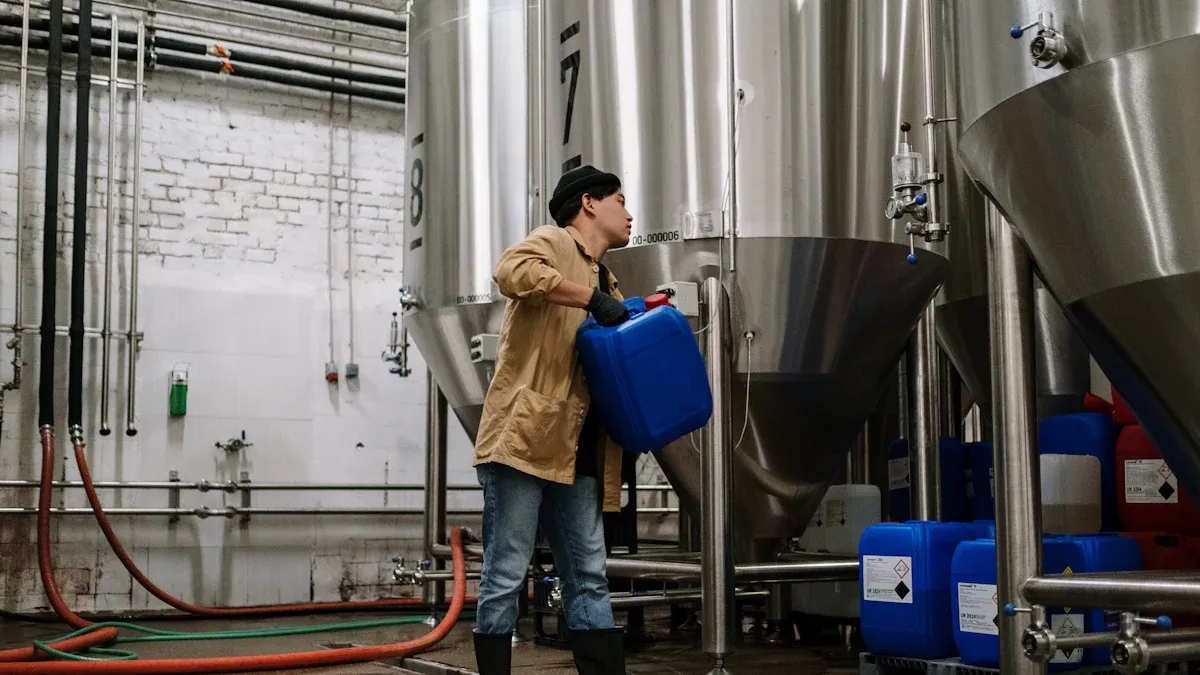
Routine checks are great, but a periodic deep clean is essential for long-term performance. A thorough approach to cleaning the brewhouse removes stubborn buildup that daily wipe-downs miss. This ensures efficiency, safety, and beer quality. Before starting any deep cleaning, always prioritize safety.
Safety First! 🛡️
Always wear proper personal protective equipment (PPE). This includes heat-resistant and chemically resistant gloves, safety glasses, and clothing that covers your skin. When working with hot liquids, ensure your equipment is stable and on a level surface. For electrical safety, verify your vessels are properly earthed and keep all electrical components away from liquids.
Your heat exchanger is critical for rapidly cooling wort, but it can also trap organic matter. A proper Clean-in-Place (CIP) procedure keeps it sanitary and efficient. You should leave the heat exchanger packed with sanitizer between uses to prevent bacterial growth.
Here is a reliable cleaning process for your heat exchanger:
The combustion chamber is where the heat generation happens. Soot and carbon buildup here can drastically reduce your heater’s efficiency and create safety hazards. You should inspect and clean this area at least twice a year.
You can use several methods for this cleaning process:
Important: Never use bleach on your stainless steel components. The chlorine will cause corrosion and pitting, permanently damaging the metal.
The burner nozzle atomizes fuel for efficient combustion. A dirty or damaged nozzle wastes fuel and produces a poor flame. While a thorough cleaning is possible, most service professionals recommend replacing the nozzle annually for the best results. Tampering with or disassembling a nozzle often voids the manufacturer’s warranty.
If you need to inspect or clean your nozzle, follow these best practices:
| Do 👍 | Don’t 👎 |
|---|---|
| Handle the nozzle by its hex flats. | Touch the orifice or filter screen. |
| Use clean tools for installation. | Use a wire or pin to clean the orifice. |
| Flush the fuel line before installing a new nozzle. | Overtighten the brass fittings. |
| Check electrode alignment with a gauge. | Blow into the nozzle with your mouth. |
These careful cleaning processes ensure your oil-heated brewhouse remains a reliable and efficient workhorse for your brewery.
Over time, your thermal fluid degrades and collects contaminants. This buildup can cause blockages and create cold spots in your system, hurting your heating efficiency. A complete system flush removes old fluid, sludge, and carbon deposits. This restores your brewhouse’s performance and extends its lifespan.
You should perform a full flush every 3 to 5 years, or sooner if you notice problems. Pay attention to these warning signs that indicate your system needs a flush and fluid replacement:
This cleaning process requires careful attention to detail. Always consult your manufacturer’s manual for specific instructions related to your equipment.
Safety Alert! ⚠️
This procedure involves hot fluids and potentially hazardous cleaning agents. You must wear appropriate PPE, including heat-resistant gloves, chemical-resistant clothing, and safety glasses. Ensure proper ventilation in your workspace.
A safe brewhouse is a productive brewhouse. You protect your team and your business by making safety a core part of your maintenance routine. This means regularly checking critical safety systems and ensuring you meet regulatory standards like those from OSHA.
Your pressure relief valves (PRVs) are your tank’s most important safety feature. They prevent catastrophic over-pressurization or collapse. You can perform a simple manual test to ensure they work correctly.
If only a trickle comes out or nothing happens, the valve may be blocked. Operating the lever a few times might clear minor debris. If it still fails, you must replace the valve immediately.
Pro Tip: Fermentation residue and mineral buildup are common causes of PRV failure. Regular testing helps keep these crucial components operational.
Your emergency systems must work perfectly when you need them most. This involves more than just the equipment itself; it includes your team’s readiness. You must create and test your emergency procedures to comply with safety regulations.
Your safety program should include clear plans for:
Regularly walk through these procedures with your staff. Everyone should know exactly what to do in an emergency.
Poor ventilation can lead to a silent and serious danger. Your brewhouse produces two invisible gases you must manage:
Safety Alert! ⚠️
Both gases are colorless and odorless. High concentrations can cause dizziness, confusion, and even unconsciousness. Because CO2 is heavier than air, it can settle in low-lying areas like cellars.
You should regularly inspect your ventilation system to ensure proper airflow. Check that fans are clean and functional. Consider installing CO and CO2 monitors with alarms to provide an immediate warning if gas levels become unsafe.
Water is a hidden enemy to your oil-heated system. It can enter your fuel supply or thermal fluid through condensation or improper storage. This contamination leads to rust, poor combustion, and even serious damage to your pump and heater. You can protect your equipment by regularly checking for water and other contaminants.
There are several simple methods you can use to detect water before it causes a problem. These checks give you a clear picture of your fuel and fluid health.
Watch for Warning Signs During Operation ⚙️
Your system can also tell you when something is wrong. Pay attention to your pump’s pressure gauge after the heater reaches about 220°F (104°C). A sudden drop in pressure often means water is flashing to steam. You might also notice the pump pressure fluctuating, which can indicate smaller amounts of water causing cavitation.
An efficient brewhouse saves you money on fuel and helps you produce consistent, high-quality beer. You can boost the performance of your oil heated brewhouse with a few key optimizations. These simple strategies reduce energy waste and ensure your equipment runs at its best.
Your brewhouse loses a significant amount of heat through uninsulated pipes and tanks. This forces your heater to work harder, wasting fuel and money. You can easily prevent this by properly insulating all hot surfaces.
Consider using these effective insulation materials:
Fire Safety Tip 🔥
When choosing insulation for hot oil systems, you should check its flame and smoke rating. Look for materials with a rating of 25/50 (flame/smoke) or better to reduce fire liability.
Accurate temperature readings are essential for hitting your mash, lauter, and boil targets. If your sensors are off, your beer quality will suffer. You should have your temperature sensors (RTDs) checked for accuracy at least once a year.
The most reliable calibration method involves comparing your sensor against a certified, high-accuracy reference sensor. This test is typically performed by a qualified technician who uses specialized tools like a precision temperature bath. If the test shows your sensor’s readings are outside the acceptable range, you must replace it to guarantee process control.
Tracking your fuel usage is a simple way to monitor your system’s health. A sudden increase in consumption is often the first sign of a problem.
You should create a log to record how much fuel you use for each brew cycle. If you notice that it takes more fuel or longer to reach your target temperatures, it could indicate an issue. This change might point to failing insulation, a dirty burner, or degraded thermal fluid. By monitoring consumption, you can catch problems early before they lead to costly repairs for your oil heated brewhouse.
You should create a log to record how much fuel you use for each brew cycle.If you notice that it tankes more fuel ro longer to reach your targtet
Your brewhouse motors and pumps work hard to move hot liquids. Proper lubrication reduces friction and prevents premature wear on these moving parts. You ensure your equipment runs smoothly and quietly by following a simple lubrication schedule. This small step protects your motors from seizing up and causing unexpected downtime.
For many common pumps, like those from March, a standard oil is all you need. You should use an SAE 20 weight non-detergent oil for this task. The manufacturer often suggests oiling the motor once a year. You can apply 4 or 5 drops to each bearing at the start of the heating season. If you brew less frequently, 2 or 3 drops every year or two is usually enough to keep things running well.
Some systems operate under more extreme conditions and require heavy-duty grease. For high-temperature applications, you should look for lubricants designed to handle the heat. These specialized products offer superior protection and longevity.
Brewer’s Tip 💡
Always check your equipment’s manual first. The manufacturer provides the most accurate recommendations for the type of lubricant and the correct service schedule for your specific model.
You can handle many routine maintenance tasks yourself. However, some jobs require the skills of a trained professional. Knowing when to call for help protects your equipment and ensures your safety.
You should watch for specific issues that signal a serious problem. These warning signs tell you it is time to contact a certified technician immediately. Do not ignore them.
These symptoms often point to complex problems that need an expert diagnosis.
An annual service visit from a professional is a smart investment. A technician does more than just fix problems. They perform a deep inspection to prevent future failures. This service keeps your brewhouse running efficiently and safely.
A certified technician also helps you stay compliant. They can identify and fix issues before a regulatory agency visits, ensuring you meet all safety laws.
During an annual check, a pro will clean internal components, calibrate sensitive instruments, and replace worn parts. This proactive care extends the life of your oil heated brewhouse.
You need the right person for the job. Look for a technician with specific experience in commercial oil heating systems and brewery equipment. You can ask for recommendations from other local breweries. You can also contact your equipment manufacturer for a list of trusted service partners. Always verify their credentials and ask for references. A qualified professional ensures the job is done correctly and safely.
You can handle maintenance tasks efficiently when you have the right tools and parts on hand. Being prepared helps you minimize downtime and keep your brew days on schedule. A well-stocked toolkit and a reliable source for parts are essential for any brewery owner.
You should build a dedicated toolkit for your brewhouse. This ensures you always have what you need for routine checks and minor repairs. Your kit should include a mix of general and specialized tools.
Brewer’s Tip 💡
Keep your cordless power tools charged and ready. You never know when you will need them for a quick job.
Here are some essential tools to get you started: 🔧
Using high-quality replacement parts is critical for the safety and reliability of your oil heated brewhouse. Cheap parts can fail unexpectedly, leading to costly damage or dangerous situations. You should always prioritize quality over price.
Your original equipment manufacturer (OEM) is the best source for critical components. These parts are designed specifically for your system and guarantee a perfect fit and function.
For common items like gaskets or seals, you can also find reliable third-party suppliers. Look for companies with a strong reputation in the brewing industry.
As your brewery grows, you may think about upgrading your equipment. Upgrades can improve efficiency, boost capacity, or enhance your control over the brewing process. You might consider upgrades from a specialist like COFF. As a founder of the oil heated brewhouse, they are a professional designer and manufacturer of high-quality brewing equipment.
COFF focuses on customer-oriented research and development. They aim to highlight artistic style in every product detail. Their equipment has earned a high reputation in the U.S., Canada, and other regions worldwide. Partnering with an expert like COFF ensures your upgrades meet the highest standards of craftsmanship and performance.
You make a direct investment in your brewery’s safety and long life with proactive maintenance. You protect your equipment and your budget by following these routine checks and cleaning schedules. This ensures your oil heated brewhouse runs efficiently.
Partner with a qualified professional for annual servicing. This action keeps your oil heated brewhouse in peak condition for years to come. ⚙️
You should perform a visual check on your thermal fluid every month. This helps you spot obvious issues like sludge or water. For a complete analysis, you should send a sample to a professional lab at least once a year to test for degradation.
You can use the simple jar test. Take a fuel sample from a low point on your tank. Let it sit in a clear jar for 15 minutes. Water is heavier than oil, so it will settle at the bottom as a separate layer.
Cleaning a burner nozzle is not recommended. You risk damaging the delicate orifice, which can affect performance and safety.
Most professionals suggest you replace the nozzle annually. This ensures optimal combustion efficiency and reliability for your oil heated brewhouse.
A yellow flame indicates incomplete combustion. This wastes fuel and can produce harmful carbon monoxide. Common causes include a clogged burner, dirty parts, or an improper air-to-fuel mixture. You should have your system serviced to correct the issue.