

COPYRIGHT © 2022 COFF International Co., ltd. ALL RIGHTS RESERVED


Rum distillery equipment helps you turn sugarcane or molasses into delicious rum. You use each piece of distillery equipment for a special job. Some tools help you start fermentation, while others help you distill and store your product. Rum stands out in the global spirits market because people enjoy it in Asia-Pacific, North America, and Europe.
You can see that the right distillery setup makes a big difference when you want to create quality rum.
When you explore rum distillery equipment, you discover several main categories. Each group of tools helps you create rum with unique flavors and quality. You can see how every piece fits into the distillery equipment list and supports the rum-making process.
You start with mash and fermentation equipment. These tools help you prepare the base for rum.
Tip: Good temperature control in fermenters helps you avoid yield loss and ensures high-quality rum.
Distillation equipment lets you separate alcohol from the fermented mixture. You use different types of stills in your distillery.
Here is a table showing some key functions in the distillation and finishing process:
| Equipment Category | Function |
|---|---|
| Column Stills | Used for efficient and precise distillation, allowing for constant separation of alcohol. |
| Ageing Process | Matures rum in wooden casks or stainless steel tanks to develop flavors over time. |
| Charcoal Filtration | Refines and polishes the spirit by removing unwanted compounds and color. |
| Blending Process | Combines different rum types to create a complex flavor profile tailored to customer specifications. |
| Bottling | Involves dilution to reach desired ABV and may include the addition of spices for flavored rums. |
You need cooling, filtration, and storage equipment to finish your rum.
You see how each category of distillery equipment works together to create quality rum. When you build your distillery equipment list, you choose tools that match your production goals.
You need cleaning and safety equipment to keep your rum distillery safe and efficient. Clean tools help you make high-quality rum. Safety gear protects you and your team from accidents.
Common Cleaning Equipment in Rum Distilleries:
Tip: Regular cleaning keeps your distillery equipment working well and extends its life.
Essential Safety Equipment:
| Safety Equipment | Purpose |
|---|---|
| Safety Valves | Prevent overpressure |
| Pressure Gauges | Monitor tank pressure |
| Fire Suppression | Control fires |
| Ventilation Systems | Remove fumes |
You should include cleaning and safety gear in your distillery equipment list. These tools help you meet health standards and keep your workspace safe. You create a better environment for rum production when you use proper cleaning and safety equipment.
Note: Always follow safety guidelines and local regulations when you set up your distillery.
Mash and fermentation form the foundation of rum production. You use mashing and fermentation equipment to prepare the raw ingredients and create alcohol. Each piece of distillery equipment in this stage helps you control the process and improve the final product.
You start with the mash tun. This vessel mixes sugarcane juice or molasses with water. You heat the mixture to extract sugars, which yeast will later turn into alcohol. The type of mash tun you choose affects your distillery’s efficiency and the flavor of your rum.
Here is a table showing the most common types of mash tuns and their advantages:
| Type of Mash Tun | Advantages |
|---|---|
| Mash Tun | Consistency in production through controlled heating and wort separation. Higher sugar extraction efficiency leading to better ethanol concentrations. Improvement in flavor profile by controlling temperature and conditions. |
| Lauter Mash Tun | Combines mashing and lautering functions for increased efficiency in smaller batches. Useful for both home brewers and commercial processes. |
| Separate Mash and Lauter Tuns | In larger operations, separating these vessels increases efficiency and speed. |
You see that choosing the right mash tun helps you get more sugar from your ingredients. This step leads to better alcohol yield and richer flavors in your rum.
Tip: Always monitor the temperature in your mash tun. Consistent heat helps you extract sugars evenly and avoid unwanted flavors.
After mashing, you transfer the sugary liquid to a fermentation vessel. This tank creates a controlled environment for yeast to work. You add yeast, which eats the sugars and produces alcohol and aroma compounds.
Fermentation vessels boost efficiency and help you make high-quality rum. You can monitor and sample the liquid during fermentation. This control lets you adjust conditions and keep your rum consistent.
You influence the outcome of fermentation by managing several factors:
You use a fermentation tank to keep the process safe and clean. This step helps you avoid contamination and maintain the quality of your rum.
Agitators and mixers help you blend ingredients in the mash tun and fermentation vessel. You use these tools to keep solids suspended and ensure even mixing. Proper agitation helps yeast contact all the sugars, which leads to better fermentation.
You can adjust the speed and strength of mixers to match your batch size. This control helps you avoid clumping and ensures that every part of the mixture ferments evenly.
Note: Regular mixing prevents settling and helps you get the most out of your ingredients.
You see how mash tuns, fermentation vessels, and agitators work together in your distillery equipment list. These tools help you start the rum-making process with strong, consistent results.
When you reach the distillation stage, you use specialized distillery equipment to separate alcohol from the fermented wash. This step shapes the strength and flavor of your rum. You can choose from different types of distillation equipment, each with unique features and benefits.
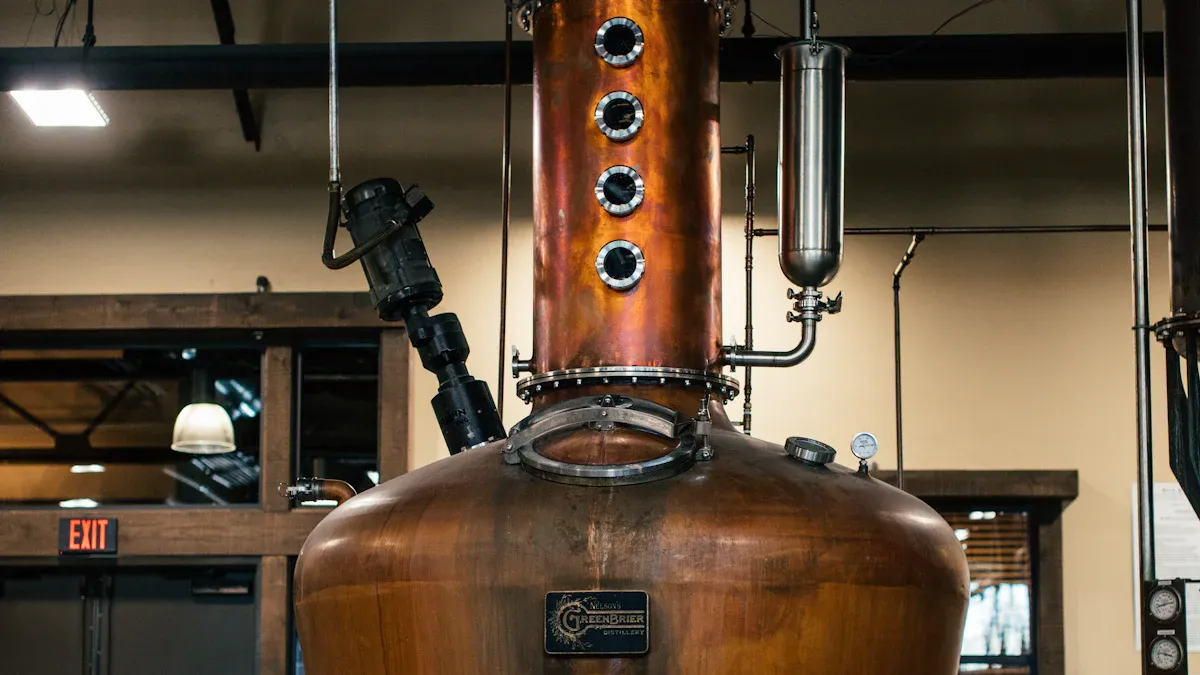
You often see pot stills in traditional rum distilleries. A pot still has a large, rounded shape, usually made from copper. You use it for batch distillation. This means you fill the pot, heat it, collect the alcohol, and then clean it before starting again.
Pot stills help you create rum with bold, rich flavors. The process keeps more of the original aroma and taste from the raw ingredients. You get a spirit that feels full-bodied and complex.
Here is a table comparing pot stills and column stills:
| Feature | Pot Stills | Column Stills |
|---|---|---|
| Design | Large pot-shaped, usually copper | Tall cylindrical column |
| Operation | Batch distillation | Continuous distillation |
| Spirit Flavor | Richer and more flavorful spirits | Cleaner, more neutral spirits |
| Efficiency | Less efficient, requires cleaning | More efficient, higher production rates |
| ABV | Tops out between 60-80% after distillation | Can reach up to 96% ABV |
You use pot stills when you want to highlight the natural flavors of your ingredients. Many craft rum makers prefer this method for its character and tradition.
Tip: Pot stills work best for small batches and specialty rums where flavor matters most.
Column stills look very different from pot stills. You see a tall, vertical column with many plates or trays inside. You use this distillation equipment for continuous operation. You feed the fermented wash in at one end, and the process runs without stopping.
Column stills help you make rum faster and more efficiently. You get a spirit that is lighter and smoother. The design removes more impurities, so the final product tastes clean and crisp.
The choice between pot stills and column stills affects your rum’s taste and strength. Pot stills give you more flavor, while column stills give you more purity and efficiency.
Note: Many large distilleries use column stills to meet high demand and keep quality consistent.
The COFF still, also known as the Coffey still, changed rum production in the 1800s. Aeneas Coffey invented this advanced distillation system. You find two interlinked columns in a COFF still: the analyzer and the rectifier. This setup lets you extract alcohol with greater purity and efficiency than older pot stills.
| Aspect | Details |
|---|---|
| Inventor | Aeneas Coffey |
| Invention Period | 1800s |
| Distillation Process | Advanced process for higher purity and efficiency |
| Impact on Rum Production | Improved rum quality and led to modern distillation techniques |
| Technical Description | Two interlinked columns (analyzer and rectifier) for better alcohol extraction |
| Purity of Spirit Produced | Up to 96% ABV, suitable for further rectification |
You use a COFF still when you want both high efficiency and high purity. This equipment lets you produce rum that is clean and strong. Many modern distilleries rely on COFF stills for their flexibility and performance.
Callout: The COFF still helped shape today’s rum industry by making large-scale, high-quality production possible.
You see how each type of distillation equipment offers different benefits. Your choice depends on the style of rum you want to create and the needs of your distillery.
You use a condenser in your distillery to turn hot alcohol vapor into liquid rum. This part of your distillation equipment sits right after the still. When vapor leaves the still, it enters the condenser. The condenser cools the vapor quickly. The vapor changes back into liquid form. You collect this liquid as your finished spirit.
A condenser works by using cold water or air to remove heat from the vapor. You find two main types of condensers in a distillery:
| Condenser Type | How It Works | Common Use in Distillery |
|---|---|---|
| Shell and Tube | Vapor cools around water-filled tubes | Large or modern distilleries |
| Worm Tub | Vapor cools inside a coiled tube in cold water | Traditional or small distilleries |
Tip: You should check your condenser often. Clean tubes and coils help you get clear, pure rum.
You control the cooling speed in your condenser. Fast cooling can keep more flavors in your rum. Slow cooling can change the taste and texture. You can adjust water flow or air speed to get the result you want.
A good condenser helps you make safe and tasty rum. It stops vapor from escaping into the air. This keeps your distillery safe and helps you follow safety rules. You also save more alcohol because less vapor is lost.
You see that the condenser is a key part of your distillation equipment. It connects the end of distillation to the start of collection. Without a good condenser, you cannot finish the rum-making process. Every distillery needs a reliable condenser to make high-quality spirits.
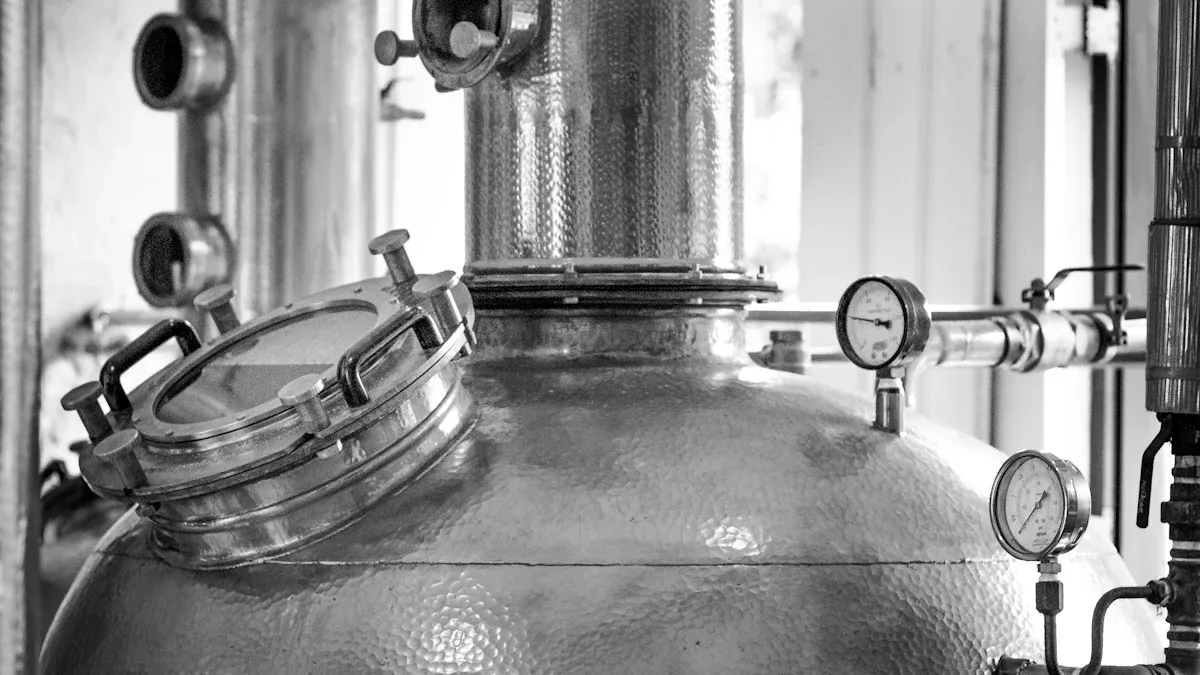
You use a heat exchanger in your distillery to cool down the hot vapor from distillation. This equipment helps you control the temperature quickly and efficiently. When you keep the temperature steady, you protect the flavor and quality of your rum. A heat exchanger also speeds up the cooling process, so you can produce more batches in less time.
Here is a table showing how different cooling methods impact production efficiency:
| Feature | Impact on Production Efficiency |
|---|---|
| Vapor extraction method | Enhances temperature control during distillation processes |
| Reflux manipulation | Allows operators to influence the proof of the finished distillate |
| Cooling before product takeoff | Increases output ABV and overall efficiency |
You can see that using the right cooling system helps you make better rum and improves your distillery’s output.
Tip: Fast cooling with a heat exchanger keeps your rum tasting fresh and clean.
Filtration systems play a big role in making your rum clear and smooth. You use these systems to remove impurities that can change the taste or look of your spirit. Activated carbon filters absorb unwanted oils and make your rum taste softer. Filter paper traps tiny particles, so your rum looks bright and clear. Depth filtration removes both large and small bits, giving you stable and high-quality rum.
You get a better product when you use the right filtration system in your distillery.
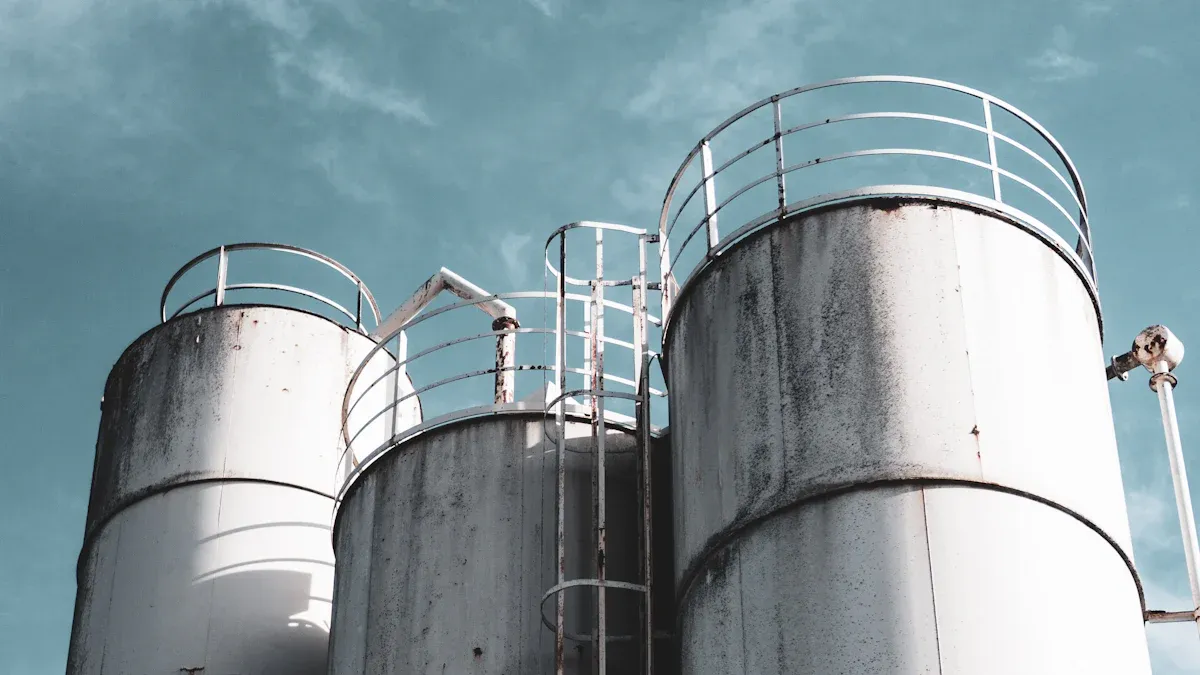
After cooling and filtering, you store your rum in tanks. These tanks come in different sizes to fit your distillery’s needs. You can choose tanks that hold 500 liters or even up to 5000 liters. Large tanks help you manage big batches and keep your rum safe until it is ready for aging or bottling.
| Capacity (L) |
|---|
| 500 |
| 1000 |
| 2000 |
| 3000 |
| 5000 |
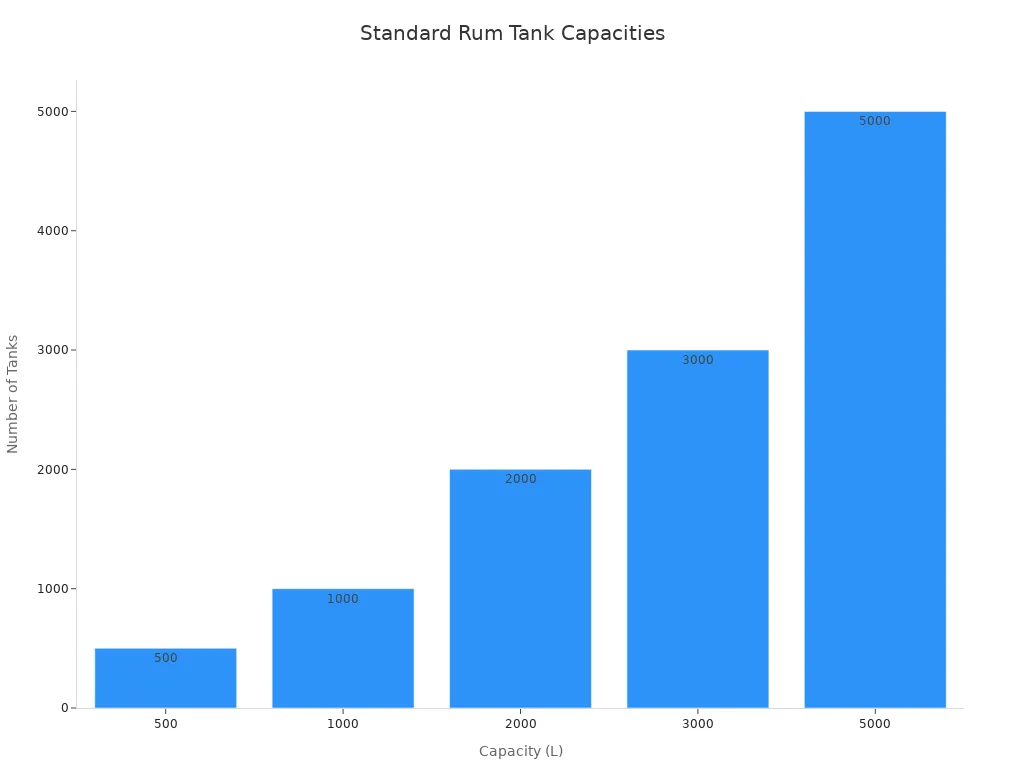
You keep your rum fresh and protected when you use proper storage tanks. This step helps you control quality and prepare your product for the next stage.
Note: Clean storage tanks regularly to prevent contamination and keep your rum tasting its best.
Aging barrels help you shape the final flavor and color of your rum. You place your distilled spirit in these barrels for months or even years. The rum interacts with the wood and air inside the barrel. This process changes the taste and aroma of your product.
You can choose from different types of barrels. Most distilleries use oak barrels. Oak adds vanilla, caramel, and spice notes to your rum. Some producers use barrels that once held bourbon, sherry, or wine. These barrels give your rum unique flavors.
Here is a table showing common barrel types and their impact on rum:
| Barrel Type | Flavor Impact | Typical Use Time |
|---|---|---|
| American Oak | Vanilla, caramel, coconut | 1-5 years |
| French Oak | Spice, dried fruit, tannins | 2-8 years |
| Ex-Bourbon Barrel | Sweet, smoky, rich | 1-6 years |
| Ex-Sherry Barrel | Nutty, raisin, dried fruit | 2-10 years |
You control the aging time to get the flavor you want. Longer aging gives you a smoother and richer rum. Short aging keeps the spirit light and fresh.
Tip: You should store barrels in a cool, dark place. This helps your rum age slowly and develop deep flavors.
You need to check your barrels often. Look for leaks and monitor the color of your rum. Sampling helps you decide when your rum is ready for bottling.
Aging barrels play a key role in rum production. You use them to create signature flavors and premium products. The right barrel choice helps you stand out in the market.
You need to keep your distillery equipment clean to make high-quality rum. CIP (Clean-In-Place) systems help you clean the inside of tanks and pipes without taking them apart. This method saves you time and helps you avoid contamination. Here are some steps you can follow for effective cleaning:
CIP systems help you maintain clean and safe equipment. You protect your product and your workers when you use these systems.
Tip: Regular cleaning with a CIP system keeps your rum tasting fresh and your distillery running smoothly.
You must watch the pressure and temperature in your distillery. Safety valves and pressure gauges help you do this. These tools prevent accidents by stopping dangerous pressure build-up and overheating. Here is a table showing how each feature works:
| Safety Feature | Purpose in Preventing Accidents |
|---|---|
| Pressure Relief Valves | Prevents excessive pressure buildup |
| Temperature Gauges | Monitors temperature to avoid overheating |
You should check these devices often. Working safety valves and gauges keep your distillery safe and help you follow safety rules.
You need good ventilation to keep the air clean in your distillery. Ventilation systems pull air from low areas where vapors can collect. This reduces the risk of fire and keeps workers safe. Proper design uses high intake and low exhaust to move air efficiently and prevent dead spots.
Fire suppression is also important. Distilleries use automatic sprinkler systems to protect against fire. These systems cover all areas, especially storage rooms where fire risks are higher. Following NFPA 30 regulations helps you meet industry standards for fire safety.
Note: Clean and safe equipment, along with proper safety systems, helps you make rum with confidence.
You can see how each piece of distillery equipment fits into the rum-making journey. Every step uses special tools to help you get the best results. Here is a simple breakdown of the process:
Tip: Each stage uses different equipment, but all the steps connect to make sure your rum tastes great.
You need to connect your distillery equipment in a way that keeps everything running smoothly. When you set up your distillery, you arrange the mash tank, fermentation tanks, stills, and storage tanks so the process flows from one step to the next. This setup saves time and helps you avoid mistakes.
Many modern distilleries use automation and digital monitoring systems. These tools help you watch temperatures, control distillation times, and track each batch. Automation makes your work easier and helps you make rum that tastes the same every time.
| Benefit of Automation | How It Helps Your Distillery |
|---|---|
| Real-time data analysis | Improves quality control and efficiency |
| Consistent product | Keeps your rum flavor steady |
| Remote monitoring | Lets you check equipment from anywhere |
Note: Good integration of equipment and smart technology helps you meet your production goals and keeps your rum quality high.
Every piece of rum distillery equipment helps you create high-quality rum. When you choose equipment, you should look at:
Regulatory rules shape how you select and use distillery equipment. Always check local and international guidelines.
You also need to think about energy use and waste management. If you understand how each part works together, you can run your distillery safely and efficiently. Remember these things to consider before purchasing distillery equipment for the best results.
You need mash tuns, fermentation tanks, stills, condensers, and storage barrels. These tools help you turn raw ingredients into rum. Each piece of equipment needed to run a distillery plays a key role in the process.
You use CIP systems, hot water, and special cleaning agents. Regular cleaning removes residue and keeps your rum safe. Clean equipment helps you avoid contamination and maintain high quality.
You choose pot stills for rich flavors and column stills for smooth spirits. Each type changes the taste and strength of your rum. Your choice depends on your production goals.
You store rum in barrels for months or years. The spirit absorbs flavors from the wood. Longer aging creates smoother and richer rum. Short aging keeps the taste light and fresh.
You use safety valves, pressure gauges, fire suppression systems, and ventilation. These tools protect you and your team. Safety equipment helps you follow rules and prevent accidents.