

COPYRIGHT © 2022 COFF International Co., ltd. ALL RIGHTS RESERVED

You rely on an oil heated brewhouse to keep your brewing temperatures steady. Thermal oil moves through heat exchangers and delivers stable heat to your vessels. This system gives you precise control, which helps you brew beer with consistent quality.
Consistent temperature control supports your brewing process and protects your final product.
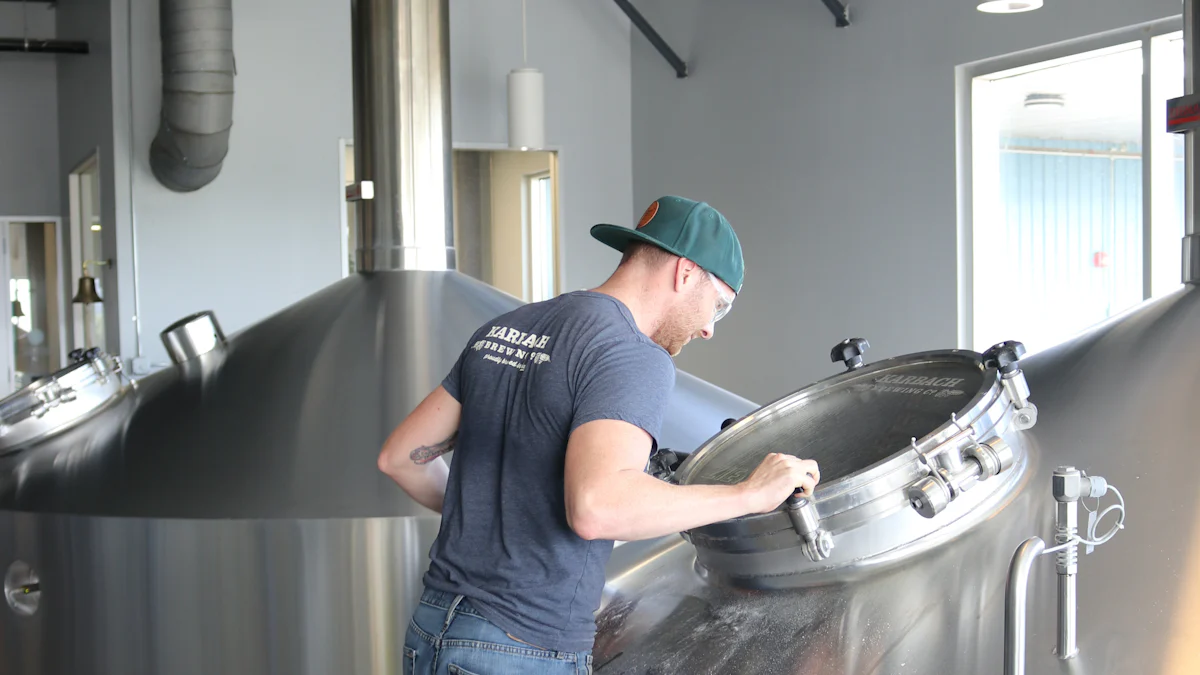
You see how an oil heated brewhouse uses thermal oil to move heat through your brewing vessels. The system pumps heated oil from a tank into special jackets and zones around your mash mixer, lauter tun, kettle, and whirlpool. The oil flows in a closed loop, so it keeps the temperature steady and prevents sudden changes. You control the flow and temperature using a control panel, which lets you adjust the heat for each stage of the brewing process.
Tip: Thermal oil does not boil or evaporate like water, so you avoid problems with condensation and pressure that happen in steam systems.
Here are the main components you find in an oil heated brewhouse:
You rely on efficient heat transfer to get the best results in your wort. The oil heated brewhouse uses forced convection and nucleate boiling to move heat quickly and evenly. This method helps you avoid hot spots and keeps the wort from burning or sticking to the vessel. Good heat transfer means you get better wort quality and fewer unwanted flavors.
A thermodynamic study in a large brewery showed that poor heat transfer can cause thermal losses and lower wort quality. You want to avoid these problems by using a system that keeps heat moving smoothly.
| Aspect | Hot Oil Heating | Traditional Steam Systems |
|---|---|---|
| Energy Consumption | Requires lower volumes of energy | Higher energy consumption |
| Condensation | Does not create condensation | Creates condensation |
| Heat Transfer Efficiency | Operates at higher temperatures | Lower heat transfer efficiency |
| Fuel Costs | Reduces fuel costs | Higher fuel costs |
| Operational Life | Longer due to reduced corrosion | Shorter due to corrosion risks |
You save money and valuable resources because the oil heated brewhouse avoids losses from steam traps and blow down, which are common in brewery boiler systems.
You want your brewing equipment to be safe and easy to use. Oil heated brewhouse systems include many safety features to protect you and your brewery.
You also benefit from high efficiency. Oil heated brewhouse systems use less energy, reduce fuel costs, and last longer because they do not suffer from corrosion like steam systems. Cleaning is easier, and you avoid off flavors from scorching. Installation is simpler, and you spend less time on maintenance.
| Feature | Oil Heated Brewhouses | Other Heating Systems |
|---|---|---|
| Capital Cost | Medium capital cost, less than steam systems | High capital cost for steam systems |
| Heating Efficiency | Large jacketed area, adjustable evaporation | Varies, often less efficient than oil |
| Cleaning | Easier cleaning, no scorching off flavors | More difficult, potential for off flavors |
| Installation Complexity | Simpler installation than steam systems | More complex, requires specialized personnel |
| Maintenance | Less frequent maintenance required | More maintenance due to boiler and water chemistry issues |
Note: You get better process control and lower operating costs with oil heated brewhouse systems. This helps you brew high-quality beer every time.
You control the temperature in your oil heated brewhouse using advanced systems. The control panel features multiple PID controllers. These controllers let you set exact temperatures for each vessel, such as the mash tun, hot liquor tank, and boil kettle. You adjust the heat for the tank bottom and jacket separately. This setup helps you manage the brewing process with accuracy. The oil tank includes temperature and level probes, which keep the system safe and efficient. You notice that precise temperature control supports consistent batches and lets you experiment with different recipes. This technology improves production efficiency and helps you avoid mistakes.
Tip: Recording mash and fermentation temperatures helps you track quality and spot problems early. Comparing batches over time makes it easier to find inconsistencies and improve reproducibility.
You achieve uniform heat distribution by circulating thermal oil through the jackets and bottoms of your brewing vessels. The oil flows smoothly, heating from all sides and the bottom. This method gives you a larger surface area for heat transfer than gas-fired systems. You avoid steam condensation, which can waste energy. Insulated vessels help keep the temperature steady throughout the brewing process. Even heat distribution is important for mashing, because it affects enzyme activity and beer quality. Uneven heat can create dead spaces, leading to poor mixing and suboptimal brewing conditions. Proper circulation and mixing ensure every part of the mash reaches the right temperature.
You benefit from smart system design and effective insulation. The heating bottom and jacket allow you to adjust the flow of thermal oil, which helps you control the temperature precisely. Both vessels use insulation to retain heat and improve efficiency. Closed cell materials work well in high humidity and prevent water intrusion. Properly sealed jackets keep water away from the piping, reducing the risk of insulation failure. Vapor barriers help maintain insulation effectiveness by blocking water vapor. You see lower energy consumption because the system uses less power and keeps heat where you need it. This design reduces the risk of scorching and helps you save on energy costs.
| Insulation Material | Benefits |
|---|---|
| Closed Cell Materials | Effective in high humidity, prevents water intrusion, boosts efficiency |
| Properly Sealed Jackets | Keeps water out, lowers risk of insulation failure |
| Vapor Barriers | Blocks water vapor, maintains insulation performance |
You want every batch of beer to taste the same. An oil heated brewhouse helps you reach this goal. You control the temperature with great accuracy. This control lets you manage the boil and evaporation rates. You avoid sudden changes that can harm the flavor. When you keep the heat steady, you protect the taste and aroma of your beer. You also lower the risk of scorching, which can give your beer unwanted flavors. With this system, you can repeat your recipes and get the same great results every time.
When you use precise temperature regulation and avoid scorching, you preserve the true flavors of your beer. This makes your product more reliable and enjoyable for your customers.
You know that burning or overheating the wort can ruin a batch. Oil heated systems spread heat evenly across the vessel. You do not get hot spots that can burn the ingredients. The oil flows smoothly and keeps the temperature stable. You can adjust the heat quickly if you need to. This design protects your beer from off-flavors and helps you avoid waste. You spend less time worrying about mistakes and more time focusing on quality.
You save time and resources with an oil heated brewhouse. Many breweries report lower energy use and fuel costs. You also use less water because you do not need steam. Here are some ways you benefit:
Hepworth Brewery chairman Andy Hepworth shared that their new system cut energy use and carbon emissions for wort boiling by up to 90 percent, while also lowering fuel costs by up to 40 percent.
Jeff from another brewery explained that the thermal oil system gives better control, uses less water, and needs fewer specialized workers for setup.
You also spend less on maintenance. The table below shows how oil heated systems compare to steam systems:
| System Type | Capital Costs | Ongoing Costs (Oil Replacement) | Maintenance Needs |
|---|---|---|---|
| Oil Heated Brewhouse | Medium | $250 to $1000 every few years | Easier cleaning, fewer elements |
| Steam System | High | Significant boiler maintenance | Requires trained personnel |
You see that oil heated systems make your brewing process more efficient and cost-effective.
You find that COFF oil heated brewhouse systems stand out for their precision and reliability. These systems give you exact temperature control, which helps you brew beer with steady quality every time. You can set and hold the right temperature for each stage of brewing. This control protects the taste and aroma of your beer.
COFF systems also help you save energy. They use less power than traditional brewery boiler systems. You spend less on installation because you need fewer heating elements. Cleaning becomes easier, so you spend less time on maintenance.
Note: COFF’s design focuses on both function and appearance, giving you equipment that works well and looks great in your brewery.
You can use COFF oil heated brewhouse products in many types of breweries. Leading brands in the brewing equipment industry trust these systems for their quality and service. You see them in microbreweries, pilot systems, and even in private or individual brewing setups.
Here is how COFF systems help both craft and commercial breweries:
| Benefit | Description |
|---|---|
| Precise Temperature Control | You manage temperatures accurately, which is key for brewing quality. |
| Energy Efficiency | You use less energy than with steam systems, which lowers your costs. |
| Strong After-Sales Support | You get help when you need it, making your brewing process smoother. |
COFF also offers the Nano Brewing System for small-batch brewers. You get modular design, automated controls, and easy cleaning. This makes your brewing process more flexible and efficient.
You achieve steady brewing temperatures with oil heated brewhouses. Advanced thermal oil systems and precise controls help you keep your process consistent. This means you can brew high-quality beer every time.
When you choose oil heated systems, you gain efficiency and repeatability. Many brewers trust this technology to support their craft and grow their business.
You use thermal oil instead of steam to heat your brewing vessels. Oil heated systems give you more precise temperature control. You avoid condensation and reduce energy loss. This method helps you keep your brewing process stable and efficient.
You work with a closed-loop system that uses stable heating oil. Modern safety features, like automatic shutoff and alarms, protect you from overheating. You can trust the system to keep your brewery safe during operation.
You can brew both small and large batches with oil heated systems. The design lets you adjust the heat for different batch sizes. Many craft brewers choose this system for its flexibility and control.
You usually replace the thermal oil every few years. The exact time depends on how much you brew and the oil quality. Regular checks help you keep your system running smoothly.
You clean the vessels and check the oil level. You inspect the system for leaks or wear. Most users find maintenance simple and less frequent than with steam systems.
Contact Info.
COPYRIGHT © 2022 COFF International Co., ltd. ALL RIGHTS RESERVED