


COPYRIGHT © 2022 COFF International Co., ltd. ALL RIGHTS RESERVED


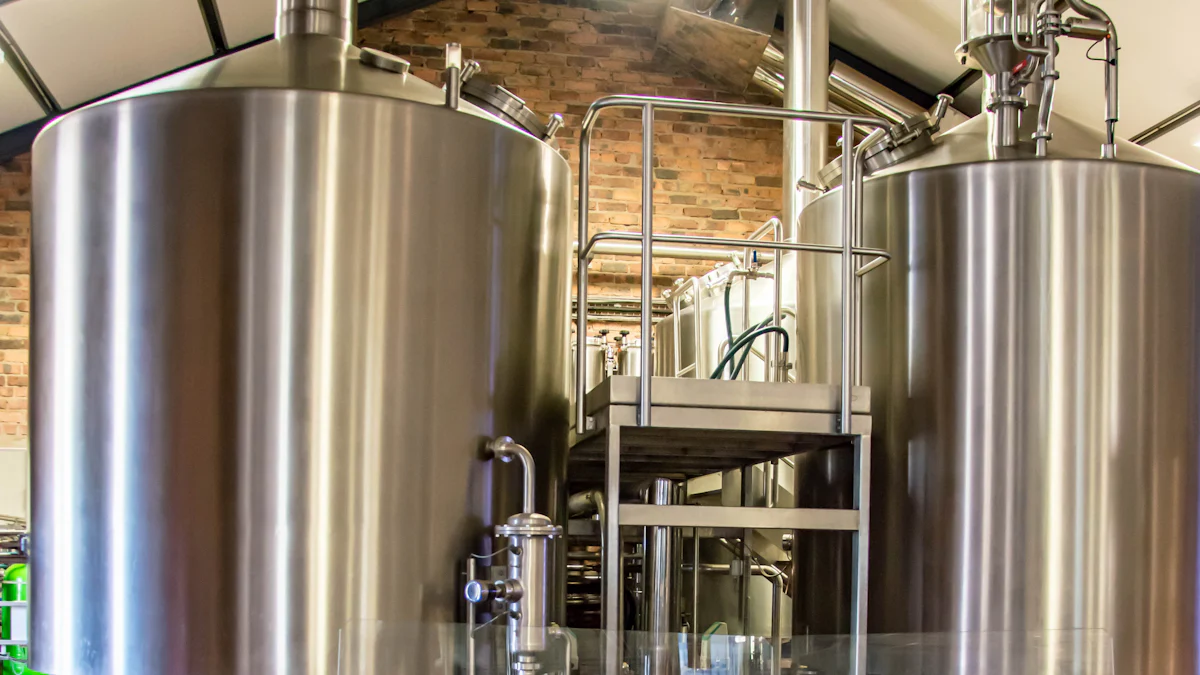
You face an important choice when selecting brewery fermentation tanks for your brewing goals. Commercial brewing equipment supports large production and gives you more control over quality. You get advanced features with commercial brewing equipment, making commercial brewing ideal for growing your brewery. Home brewing equipment lets you test recipes and manage small production runs. Home brewing works well if you want flexibility and low investment. Home brewing equipment may not match commercial brewing equipment for large-scale brewing, but home brewing makes starting easy. Your decision shapes your brewing quality and production success.
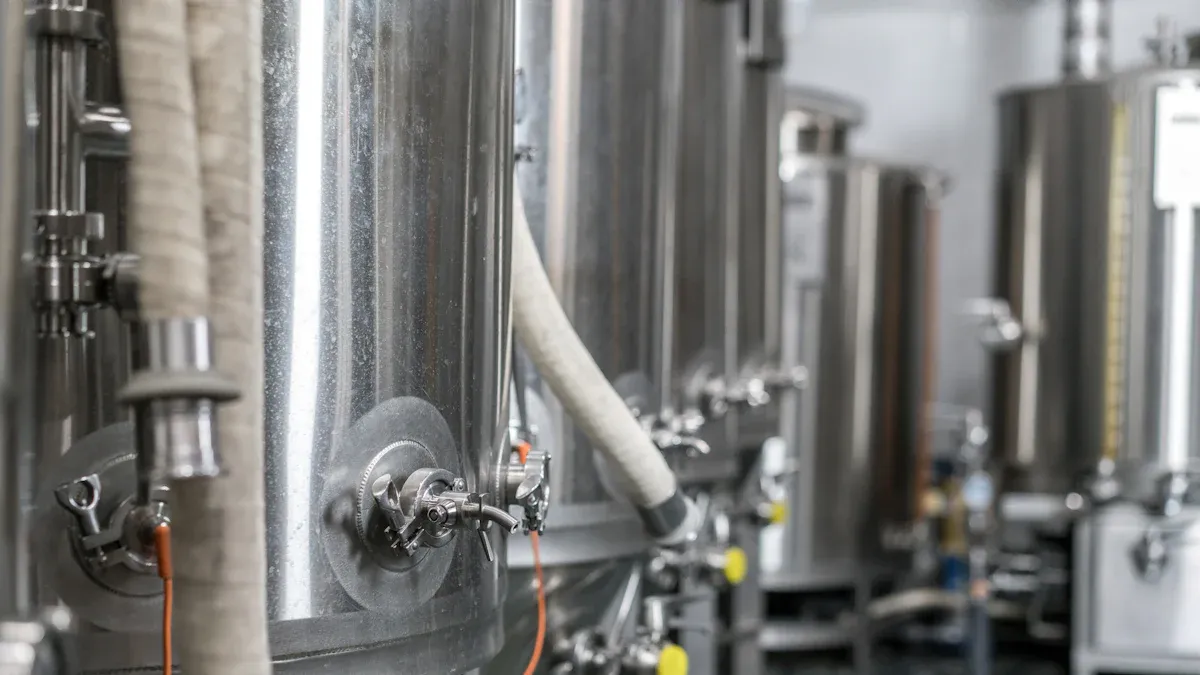
You find that commercial brewing equipment stands out for its size, durability, and advanced features. These brewery fermentation tanks use stainless steel for long life and easy cleaning. Commercial brewing fermenters often include conical fermenters, unitanks, and hybrid systems. You can see their key features and benefits in the table below:
| Tank Type | Key Features | Typical Capacity Range | Benefits for Brewing |
|---|---|---|---|
| Conical Fermenters | Sloped bottom, multi-port, sight glasses | 100L – 10,000L | Yeast harvesting, faster batch turnaround |
| Unitanks | Dual-pressure, carbonation stones, 2-in-1 design | Small to mid-range | Reduces oxygenation, faster time-to-tap |
| Hybrid Systems | Modular, digital monitoring | Variable | Customizable flavors, precision control |
Commercial brewing equipment uses automation to help you control temperature, monitor fermentation, and clean tanks. You get real-time data from sensors and automated cleaning systems. This helps you keep your brewing process consistent and efficient. Commercial brewing fermenters support large batches and let you scale up your production.
Home brewing equipment gives you flexibility and simplicity. You can choose from homebrewing fermenters made of plastic, glass, or stainless steel. Most home brewing fermenters hold 5 to 10 gallons, which is perfect for small batches. Homebrewing fermenters like the Catalyst Fermentation System offer easy cleaning and yeast harvesting. You can use dishwasher-safe parts and simple valves for bottling.
Home brewing equipment often relies on manual controls. You adjust temperatures and check fermentation by hand. Homebrewing fermenters are cost-effective and fit well in small spaces. You can experiment with recipes and learn about brewing without a big investment. Home brewing equipment lets you try new flavors and styles at home.
Tip: Homebrewing fermenters are great for learning and testing new brewing ideas before moving to commercial brewing equipment.
You benefit from commercial brewing equipment if you want to produce beer at a larger scale. Commercial brewing fermenters help you keep your beer quality consistent and meet demand. Microbreweries and craft breweries use commercial brewing fermenters to grow their business and maintain high standards.
If you enjoy experimenting or want to brew small batches, home brewing equipment is your best choice. Homebrewing fermenters let you try new recipes and learn about brewing at home. Home brewing equipment works well for hobbyists and those with limited space. You can control every step and enjoy the creative side of brewing.
When you choose a fermentation tank, size and capacity shape your brewing goals. Homebrewing vessels usually hold 5 to 20 liters. These tanks work well for hobbyists and small-batch brewing. Microbreweries often use medium-sized tanks, which range from hundreds to a few thousand liters. These tanks balance flexibility and volume. Large commercial brewing tanks start at several thousand liters and can exceed tens of thousands of liters. These tanks support high-volume production and help you meet growing demand.
Tank size affects your brewing process and scalability. Smaller tanks give you more control and let you experiment with recipes. Larger tanks help you scale up and maintain batch consistency. You can see the impact of tank size in the table below:
| Parameter | Small Vessels | Large Vessels |
|---|---|---|
| Temperature Control | Difficult due to low thermal mass | Easier to maintain stable temperatures |
| Yeast Propagation | Limited space for yeast growth | Ample space for yeast propagation |
| Oxygenation | Requires frequent monitoring | Requires less frequent monitoring |
| Fermentation Rate | Faster due to higher surface area | Slower due to larger volume |
Choosing the right size means thinking about your production scale, available space, and how much you want to grow. Larger tanks make it easier to keep your brewing consistent and efficient. Smaller tanks let you try new ideas but may limit your ability to expand.
The material of your fermentation tank affects durability, hygiene, and maintenance. Most commercial brewing fermenters use stainless steel, either grade 304 or 316. Stainless steel resists corrosion and is easy to clean. This material helps you keep your brewing process sanitary and supports long-term use. Tanks made from stainless steel can last over 20 years with proper care.
You may see some homebrewing tanks made from plastic or glass. These materials work for small batches but do not match the durability of stainless steel. Plastic tanks last about 5 to 10 years and are harder to keep clean. Stainless steel tanks have smooth, non-porous surfaces. This makes them easy to sanitize and reduces the risk of contamination.
| Material | Average Lifespan (Years) | Corrosion Resistance | Maintenance Requirements |
|---|---|---|---|
| Stainless Steel | 20+ | Excellent | Low |
| Plastic | 5-10 | Poor | High |
To keep your fermentation tank in top shape, you should clean and inspect it regularly. Many commercial brewing tanks use Clean-in-Place (CIP) systems. These systems automate cleaning and save you time. Investing in high-quality tanks reduces maintenance and supports consistent brewing quality. Some new fermentation tank designs use advanced polymers or composites for better performance and sustainability.
Tip: Always follow a strict cleaning schedule and use the right tools to extend your tank’s life and protect your brewing quality.
Temperature control is key to the brewing process. You need to keep your fermentation at the right temperature for yeast health and beer quality. Commercial brewing fermenters often use digital temperature controllers. These systems let you set and monitor temperatures with precision. Many commercial tanks connect to PLC (Programmable Logic Controller) and HMI (Human Machine Interface) systems. These features make it easy for you to control and track the brewing process.
You may use glycol chillers to keep your fermentation tank at the ideal temperature. Heat exchangers, especially plate-style, help you cool wort quickly before fermentation. Tanks with advanced temperature control features help you maintain consistency and improve product quality.
Automation in commercial brewing tanks uses PLCs to monitor and adjust temperature without manual work. These systems can switch between heating and cooling based on real-time data. Automation helps you spot problems early and make quick adjustments. Stable temperature control leads to better yeast activity, balanced flavors, and reliable batch-to-batch consistency.
When you invest in commercial brewing fermenters with automation, you improve your brewing consistency and reduce labor. Homebrewing tanks may use manual controls, but some now offer digital options for better results. Advanced temperature control supports both small and large-scale brewing, helping you achieve high-quality beer every time.
You need to keep your fermentation tanks clean to ensure high-quality brewing. Cleaning and maintenance routines differ between home brewing and commercial brewing setups. Commercial brewing tanks often use automated systems, while home brewing tanks rely on manual cleaning. Both methods follow similar steps, but commercial brewing equipment handles larger volumes and more complex systems.
Here is a standard cleaning process for commercial brewing fermentation tanks:
Safety tip: Always wear gloves, goggles, and protective clothing when handling cleaning chemicals.
Commercial brewing tanks often use Clean-In-Place (CIP) systems and spray balls. These systems circulate cleaning solutions efficiently, saving you time and reducing labor. Automated CIP systems can cut cleaning time by about 30%. This reduction in downtime helps you brew more and lowers operational costs. CIP technology also protects your equipment from corrosion, which extends the lifespan of your tanks. Smaller breweries can use scaled-down CIP systems to gain similar benefits.
Home brewing tanks use similar cleaning steps but on a smaller scale. You usually clean these tanks by hand, using hot water and food-safe cleaners. Manual cleaning takes more time and effort, but it works well for small batches. New cleaning chemistries can simplify the process, reduce water and energy use, and lower the need for deep cleaning.
Cleaning and sanitizing are critical for both home and commercial brewing. Proper cleaning keeps your beer safe and your equipment in good shape. If you skip steps or use the wrong chemicals, you risk contamination and costly repairs. Always follow a strict cleaning schedule to protect your brewing investment.
You must consider cost when choosing between home brewing and commercial brewing fermentation tanks. The price difference is significant, and your decision affects your initial setup costs, ongoing expenses, and long-term returns.
| Brewing Scale | Typical Fermentation Tank Cost Range (2025) |
|---|---|
| Homebrew Setup | $500 – $5,000 (included in small setups) |
| Commercial Tanks | $5,000 – $80,000 (depending on capacity and features) |
Home brewing tanks cost much less than commercial brewing tanks. You can start a home brewing setup for as little as $500. This makes home brewing attractive if you want to experiment or produce small batches. Commercial brewing tanks require a larger investment, with prices starting at $5,000 and reaching up to $80,000 for advanced systems. These higher costs reflect the larger capacity, better materials, and extra features found in commercial brewing equipment.
Initial setup costs for commercial brewing include not just the tanks but also automation, cooling systems, and cleaning equipment. You also need to plan for installation and space requirements. Commercial brewing investment pays off through higher production, better quality control, and lower long-term maintenance costs. Automated cleaning systems, like CIP, reduce labor and downtime, which saves money over time. These savings can offset the higher initial setup costs within a year.
Home brewing has lower initial setup costs, but you may face more frequent replacements and higher manual labor. Commercial brewing investment supports growth, efficiency, and consistent product quality. When you plan your budget, think about both the upfront costs and the long-term value of your brewing equipment.
You want your brewery to grow and adapt to changing demands. Scalability and future-proofing are key factors when choosing fermentation tanks. Commercial brewing tanks offer features that help you expand production without losing quality.
Commercial brewing tanks often have customizable capacities, ranging from hundreds to tens of thousands of liters. Built-in cooling jackets, pressure relief systems, and automated cleaning systems improve efficiency and sanitation. Stainless steel construction ensures durability and corrosion resistance, supporting long-term production increases.
When you invest in commercial brewing equipment, you support your brewery’s ability to grow and adapt. Planning for scalability helps you avoid costly replacements and ensures your brewing operation stays competitive. Always balance your initial setup costs with long-term goals and operational efficiency.
You want every batch of beer to taste the same and meet your standards. Quality control and consistency play a big role in the brewing process. The type of fermentation tank you choose has a direct impact on beer quality and the ability to produce high quality beer every time.
Commercial brewing fermentation tanks help you achieve consistency through advanced features. These tanks use stainless steel, which resists corrosion and keeps your beer safe from contamination. You get precise temperature control with automated systems. This means you can keep the fermentation process stable and repeatable. You also benefit from strict cleaning routines and automated monitoring. These features reduce human error and help you produce high quality beer with every batch.
Home brewing fermentation tanks give you more freedom to experiment. You can try new recipes and change your brewing process. However, manual controls and simpler materials make it harder to keep consistency from batch to batch. Scratches in plastic or glass tanks can lead to contamination. Manual cleaning and temperature adjustments may cause small changes in the final product. You may notice more variation in taste and quality when using home brewing equipment.
Note: Consistency in brewing helps you build trust with your customers. When your beer tastes the same every time, people know what to expect.
Here is a table that shows how commercial and home brewing fermentation tanks compare in maintaining quality and consistency:
| Aspect | Commercial Brewing Fermentation Tanks | Home Brewing Fermentation Tanks |
|---|---|---|
| Size and Material | Large tanks made primarily of stainless steel (304 or 316L) with high corrosion resistance and durability | Smaller tanks often made from food-grade plastic (polyethylene, PET) or glass, lighter but more prone to scratches |
| Temperature Control | Advanced automated systems including glycol jackets, heat exchangers, and automated monitoring for precise and consistent temperature control | Manual methods such as water baths, refrigerators with controllers, less precise and more variable temperature regulation |
| Cleaning and Sanitation | Strict, daily cleaning protocols using strong disinfectants and corrosion-resistant materials to ensure bacteria-free environment | Manual cleaning often with bleach or detergents, less rigorous sanitation, higher risk of contamination due to scratches or wear |
| Automation | High degree of automation reduces human error, supports reproducibility and consistency in beer quality | Manual processes allow experimentation but increase variability and risk of inconsistency due to human error |
| Brewing Objective | Focus on repetition and consistency to produce the same quality and flavor batch after batch | Emphasis on versatility and experimentation, accepting variability in final product quality |
In 2025, you have access to new quality control technologies that improve the brewing process. These tools help you monitor and control fermentation with greater accuracy. Automation and AI integration make it easier to keep your brewing consistent. You can use real-time monitoring to check temperature, pressure, and other key factors. These technologies help you spot problems early and keep your beer at the highest quality.
| Quality Control Technology | Description |
|---|---|
| Automation and AI Integration | Enhances process efficiency, data acquisition, and reduces human error through automated process control and AI-driven decision support. |
| Advanced Process Analytical Technologies (PAT) | Enables real-time monitoring and control to ensure product quality and consistency. |
| Single-Use Bioreactor Systems | Reduces cleaning validation requirements and cross-contamination risks, simplifying operations. |
| Continuous Fermentation Processes | Offers higher productivity and reduced operational costs compared to traditional batch processes. |
| Sustainability Innovations | Energy-efficient systems and environmentally friendly materials contribute to quality control and regulatory compliance. |
| Regulatory Compliance (GMP) | Stringent quality control standards and documentation requirements influence tank design and operation. |
You can also use smart fermentation solutions with IoT connectivity. These systems let you track every step of the brewing process. You get alerts if something changes, so you can fix problems right away. Many breweries now use cloud-based platforms to control temperature and monitor tanks from anywhere. These platforms use intelligent algorithms to keep the fermentation process stable. They help you save energy, reduce waste, and improve the impact on beer quality.
Frigid.Cloud is one example of a cloud-based control platform. It helps you manage temperature across many tanks using smart algorithms. You can access the system remotely and make changes in real time. This technology helps you avoid temperature swings and keeps your beer consistent. It also lowers energy use and reduces downtime, which improves your overall brewing quality.
You should always focus on quality and consistency in brewing. The right fermentation tank and modern control systems help you deliver high quality beer with every batch. These tools protect your brand and keep your customers coming back for more.
You need to match your fermentation tank to your brewing goals. Start by looking at your production scale. If you plan to brew at home, small tanks work best. Home brewing equipment usually holds a few liters. This size fits hobbyists or those testing new recipes. For commercial brewing, you need larger tanks. These tanks can hold thousands of liters and support higher production.
Use this table to see how breweries estimate the right batch size and tank selection:
| Parameter | Value | Explanation |
|---|---|---|
| Annual Production | 5,000 barrels | Total beer made each year |
| Ale Fermentation Time | 2 weeks | Time ales stay in fermenters |
| Lager Fermentation Time | 4 weeks | Time lagers stay in fermenters |
| Required Ale Capacity | 150 barrels | Needed for ales per cycle |
| Required Lager Capacity | 100 barrels | Needed for lagers per cycle |
| Total Fermentation Capacity | 250 barrels | Sum of all needed capacity |
You should also consider the type of beer and how long it takes to ferment. Ales and lagers need different times. This affects how many tanks you need. Plan for future growth so you do not outgrow your equipment.
Budget shapes your brewing choices. Home brewing equipment costs less. You can start with a small investment. Commercial brewing equipment costs more but supports larger production. When planning your budget, think about these points:
In 2025, equipment prices may rise due to supply chain issues. Used tanks offer savings, but always buy from trusted suppliers. Automation can reduce labor costs and improve efficiency.
Space and infrastructure matter for both home and commercial brewing. Home brewing equipment fits in small spaces. You need only basic utilities. Home setups use stainless steel, glass, or plastic tanks. Maintenance is simple.
Commercial brewing equipment needs more room. Large tanks require open areas for safe movement and cleaning. You must have strong water, power, and gas connections. Temperature control systems, like cooling jackets, are essential for commercial tanks. Install tanks in well-ventilated, temperature-controlled spaces. Safety and staff training are important for commercial production.
Tip: Always check local rules and regulations before installing commercial brewing equipment. This helps you avoid delays and extra costs.
You need to think about your long-term business goals before you choose a fermentation tank. Your goals shape the type of equipment that fits your brewery. If you want to grow your business, you need tanks that can handle more beer and offer advanced features. If you want to brew for fun or test new recipes, you might prefer smaller, flexible tanks.
Here is a table that shows how your goals match different tank types:
| Aspect | Home Brewing Fermentation Tanks | Commercial Brewing Fermentation Tanks |
|---|---|---|
| Business Goal Focus | Personal enjoyment, flexibility, small batch sizes, affordability, ease of use | Business growth, durability, scalability, automation, high performance |
| Batch Size | Small batches (5-10 gallons) | Large scale (hundreds to thousands of gallons) |
| Material | Food-grade plastic or glass | High-quality stainless steel with advanced features |
| Automation Level | Manual or semi-automatic operation | Fully automated systems with temperature control, cleaning, monitoring |
| Design Priorities | Compact size, low cost, flexibility for experimentation | Scalability, efficiency, consistency, ability to handle large volumes |
| Production Planning | Focus on experimentation and personal use | Planning for future expansion, avoiding bottlenecks, meeting strict standards |
| Equipment Examples | Small tanks with temperature control and tight sealing | Tanks with cooling jackets, automated cleaning, real-time monitoring |
Tip: If you plan to expand your brewery, choose tanks that support automation and larger batch sizes. This helps you avoid costly upgrades later.
You should match your tank choice to your vision. If you want to keep things small and flexible, home brewing tanks work well. If you want to build a brand and grow, commercial tanks give you the tools you need.
You can use this checklist to help you pick the right fermentation tank for your brewery:
📝 Note: Take your time with each step. The right choice supports your brewing success for years to come.
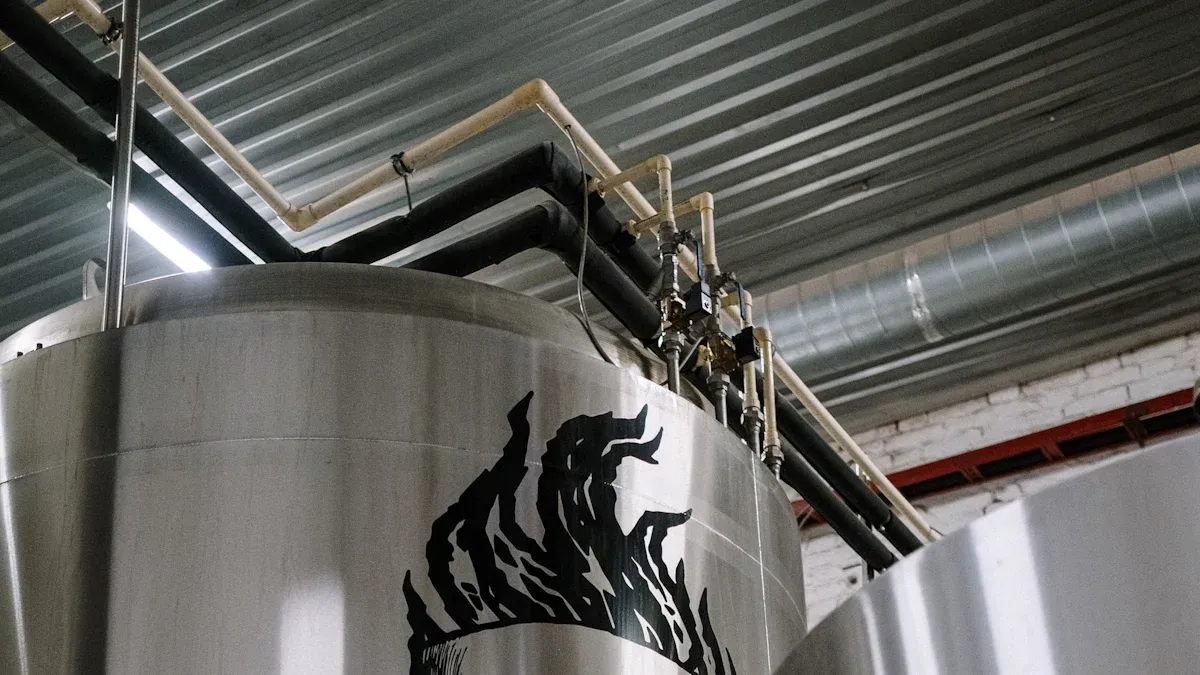
You will see big changes in brewery fermentation tanks in 2025. Smart technology now shapes how you brew beer. Many tanks use advanced materials like composite polymers and enhanced carbon steels. These materials help with heat transfer and stop corrosion. You can use smart temperature control systems to keep your fermentation steady. IoT technology lets you watch your tanks in real time and use predictive analytics. This makes your brewing process smoother and helps you save money. Some tanks, like the 3L-10L Automatic Control Double Connected Fermenter, let you run two fermentations at once. You can see what happens inside the tank and use automation to avoid mistakes. These features help both homebrewing and commercial brewers make better beer.
You care about the environment, and so do many brewers. In 2025, you will find more tanks made with sustainable materials. Companies invest in research to improve oxygen transfer in fermentation tanks. This helps you use less energy and makes your brewing process greener. Many tanks now meet green regulations and help lower carbon emissions. ESG (Environmental, Social, and Governance) rules push companies to design tanks that save energy and reduce waste. You can choose tanks that use less power and last longer. This trend affects both homebrewing and commercial brewing. You help the planet when you pick energy-efficient tanks for your brewery.
Tip: Look for tanks that use less energy and meet green standards. This helps your brewery and the environment.
You will notice new trends in what people want from brewing equipment. Many people choose homebrewing because they want to customize their beer and enjoy brewing as a hobby. Homebrewing fermenters now come in compact, easy-to-use designs. You can find homebrewing fermenters with IoT features and automation. These changes make homebrewing more fun and less work. People also want eco-friendly homebrewing equipment. At the same time, commercial breweries look for smart, flexible, and automated systems. Craft breweries lead the way in using new technology to make unique beers. Both homebrewing and commercial brewing grow because more people want craft beer and special flavors. In North America, you see a strong market for both homebrewing and commercial brewing. Asia-Pacific grows fast, offering new choices for smart and affordable brewing gear.
You want to stay ahead in brewing. COFF brings new products and smart features to help you brew better beer in 2025. You can find equipment that fits both small craft breweries and large commercial operations. COFF focuses on quality, efficiency, and modern technology.
Here are some COFF innovations you should watch:
Oil-Heated Brewhouse Systems
COFF leads with oil-heated brewhouse technology. You get precise temperature control and even heat distribution. This system helps you save energy and improve your brewing process.
Smart Fermentation Tanks
COFF offers tanks with digital controls and real-time monitoring. You can track temperature, pressure, and fermentation progress from your phone or computer. These tanks help you keep your beer consistent and high quality.
Modular Microbrewery Solutions
You can choose modular systems that grow with your business. Start small and add more tanks as you expand. This flexibility helps you manage costs and space.
Advanced Stainless Steel Construction
COFF uses high-grade stainless steel for all tanks. You get equipment that resists corrosion and lasts for years. Smooth surfaces make cleaning easy and keep your beer safe.
| Product Feature | Benefit for Your Brewery |
|---|---|
| Oil-Heated Brewhouse | Precise heat, energy savings |
| Smart Digital Controls | Easy monitoring, better consistency |
| Modular Tank Design | Scalable, fits your space |
| Premium Stainless Steel | Long life, easy cleaning |
💡 Tip: Visit COFF’s website to see the latest product releases and technical details. You can also contact their team for custom solutions that match your brewing needs.
You can trust COFF to deliver reliable, innovative brewing equipment. These new products help you brew with confidence and prepare your brewery for the future.
You now understand the key differences between commercial and home brewing fermentation tanks. Your choice should fit your production goals, budget, and future plans. Use the decision guide to help you select the best option. Stay informed about new trends in brewery fermentation tanks for 2025. The right tank helps you produce quality beer and supports your business growth.
You will notice that commercial tanks hold much larger volumes and use advanced controls. Homebrewing tanks work best for small batches and simple setups. Commercial tanks help you scale production, while homebrewing tanks let you experiment easily.
You can start with homebrewing tanks and move to commercial equipment as your brewery grows. Many brewers test recipes with homebrewing gear before investing in larger tanks. This step helps you learn and plan for future expansion.
You should clean homebrewing tanks with hot water and food-safe cleaners after each use. Scrub all surfaces and rinse well. Regular cleaning keeps your beer safe and prevents contamination. Always follow the cleaning instructions for your specific homebrewing tank.
Stainless steel lasts longer and resists scratches. You get easier cleaning and better protection against contamination. Many homebrewing fans choose stainless steel for these reasons, but plastic tanks cost less and work well for beginners.
You do not need special skills to start homebrewing. Most homebrewing kits come with clear instructions. You can learn the basics quickly. As you gain experience, you can try more advanced brewing techniques.