

COPYRIGHT © 2022 COFF International Co., ltd. ALL RIGHTS RESERVED


Vodka distillery equipment is the complete set of machinery that transforms raw ingredients into finished vodka. This guide explains the function of each piece of distillery equipment in the production line. The process involves specialized machinery for each stage of production. Proper distillation is key to purity. High-quality distillery equipment ensures a consistent and clean final spirit after a successful distillation.
The four primary equipment categories are:
- Mashing & Fermentation
- Distillation
- Filtration & Finishing
- Bottling & Packaging
The vodka production journey begins with mashing and fermentation. This initial stage uses specialized mashing and fermentation equipment to transform raw grains or other starches into a fermentable liquid called a “wash.” Each piece of distillery equipment plays a precise role in preparing the base for distillation.
A grain mill is the first piece of equipment used in the process. Its function is to crack open the outer husks of grains like wheat, rye, or corn. This action exposes the internal starches, making them accessible for the next stage. The consistency of the grind significantly impacts efficiency. A finer grind increases the surface area of the starch. This allows enzymes to convert starches into sugars more quickly.
Distillers choose between two primary types of mills: roller mills and hammer mills. Each offers different advantages.
| Feature | Roller Mills | Hammer Mills |
|---|---|---|
| Grind Consistency | Produces a uniform but coarser grind with fewer fine particles. | Creates a very fine, flour-like grist. |
| Energy Efficiency | Requires lower horsepower and generates less heat. | Consumes more energy to achieve a fine powder. |
| Best Use Case | Ideal for traditional lautering processes where husks aid filtration. | Works best when distilling “on the grain” or using a mash filter. |
The mash tun is where the magic of starch conversion happens. This large vessel holds the milled grain and hot water. The hot water gelatinizes the starches, and added enzymes break them down into fermentable sugars. Precise temperature control is critical for this enzymatic process.
High-quality mash tuns feature several key designs for efficiency:
The size of this distillery equipment varies greatly. Craft distilleries might use a 200–500 liter mash tun, while large commercial operations require tanks of 1,000–10,000 liters or more.
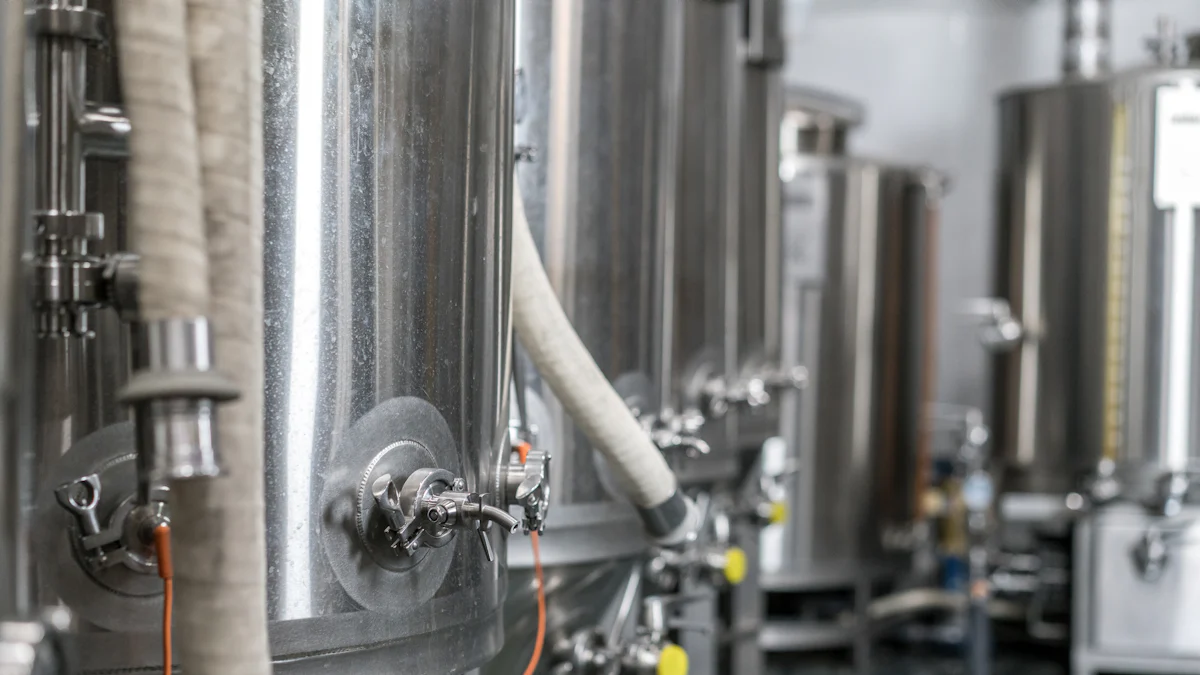
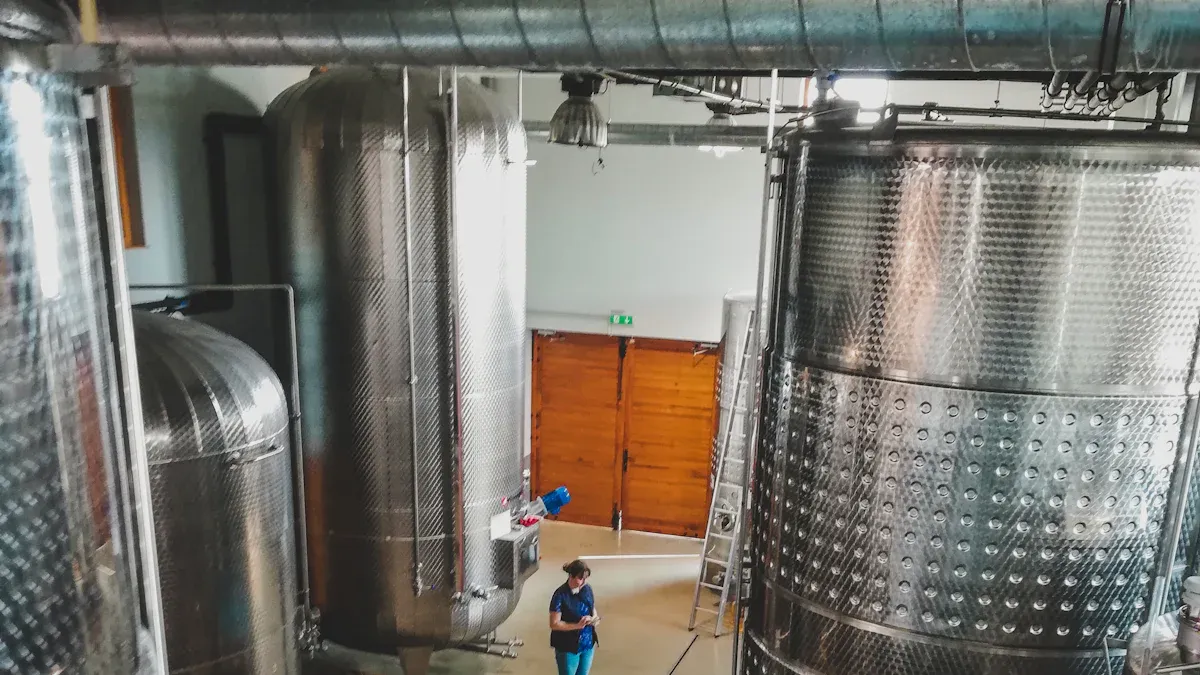
After the mash cools, it moves to a fermentation tank. Here, distillers add yeast to the sugary wash. The yeast consumes the sugars and produces alcohol and carbon dioxide. This biological process typically takes several days. The final liquid, now called a “wash” or “distiller’s beer,” contains about 8-10% alcohol.
Pro Tip: The geometric design of a fermentation tank is crucial. A cylindrical body with a conical bottom is standard. This shape promotes healthy yeast activity and makes it easy to collect sediment after fermentation is complete.
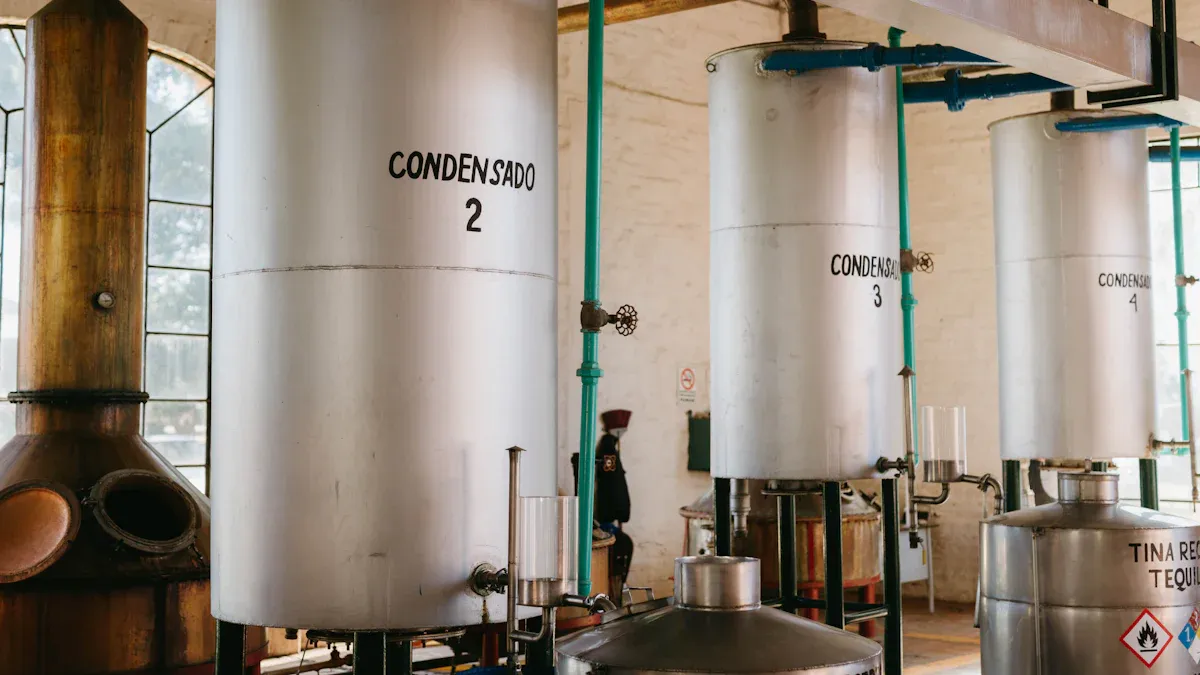
The distillation stage is the heart of vodka making. This is the most critical process for creating vodka’s signature purity. Distillation separates alcohol from water and other compounds in the fermented wash. The goal is to isolate the purest ethanol, leaving unwanted elements behind. The primary piece of liquor distillation equipment used for this task is the still.
A still is a vessel that heats the wash to vaporize the alcohol. The vapor then rises, cools, and condenses back into a liquid with a much higher alcohol concentration. The material used to construct the still significantly impacts the final spirit’s flavor. Copper and stainless steel are the two most common materials for this essential distillery equipment.
Copper is the traditional choice for a reason. It chemically reacts with sulfur compounds produced during fermentation. This reaction removes unpleasant aromas, resulting in a smoother, cleaner flavor. Stainless steel is durable and easy to clean, but it does not offer the same sulfur-removing benefits. Many modern stills use a combination, featuring a stainless steel body for longevity and copper components in the vapor path to ensure high purity and a superior flavor.
| Feature | Copper Stills | Stainless Steel Stills |
|---|---|---|
| Sulfur Removal | Excellent | Poor |
| Heat Conductivity | High | Low |
| Impact on Flavor | Enhances aromas and esters | Minimal impact |
Distillers use two main types of stills for vodka production: pot stills and column stills. Each type of distillation equipment serves a different purpose in the quest for purity.
Pot Stills Pot stills are the oldest and simplest form of still. They perform distillation in batches. The distiller fills the pot, runs the distillation, and then cleans it before starting the next batch. Pot stills are excellent for making spirits with a rich and complex flavor, like whiskey or rum. For vodka, distillers often use pot stills for an initial “stripping run.” This first pass quickly separates the alcohol from the bulk of the water and solids in the wash. However, a single run in pot stills cannot achieve the high purity required for vodka. Multiple distillations would be necessary, making the process inefficient for creating a neutral spirit.
Column Stills Column stills, also known as continuous stills, are the workhorses of modern vodka production. These tall structures contain a series of plates or trays. As the wash is heated, vapor rises through the column. It condenses and re-vaporizes on each plate. This process acts like a series of mini-distillations happening all at once. Column stills are incredibly efficient at stripping out impurities and can produce a spirit up to 96% ABV in a single, continuous run. This high level of distillation is what gives vodka its neutral flavor profile.
Many in craft distilling use hybrid stills. These combine a pot still base with a distillation column. This setup offers the flexibility to produce a wide range of spirits, from flavorful whiskeys to high-purity vodka, using a single piece of distillery equipment.
Top manufacturers like COFF specialize in high-quality, custom-fabricated stainless steel vessels for the craft distilling industry. Their products, including advanced column stills and pot stills, hold both ASME and AS1210 certificates. These certifications guarantee that the distillation equipment meets strict international standards for pressure vessels. Built by ASME-certified welders, this clean and safe equipment ensures world-class quality and operational safety. This commitment to excellence has earned COFF a strong reputation in the U.S. and Canada, where many new customers come from partner recommendations.
No matter which still is used, the distiller must separate the distilled liquid into three parts, known as “cuts.” This separation is crucial for the quality and safety of the final product.
Making precise cuts requires skill and experience. The distiller monitors the temperature and tastes the spirit as it comes off the still to decide where to separate the heads, hearts, and tails. Some modern vodka distillery equipment uses advanced sensors and automated systems to help make these cuts more consistent, improving the overall quality and efficiency of the distillation process.
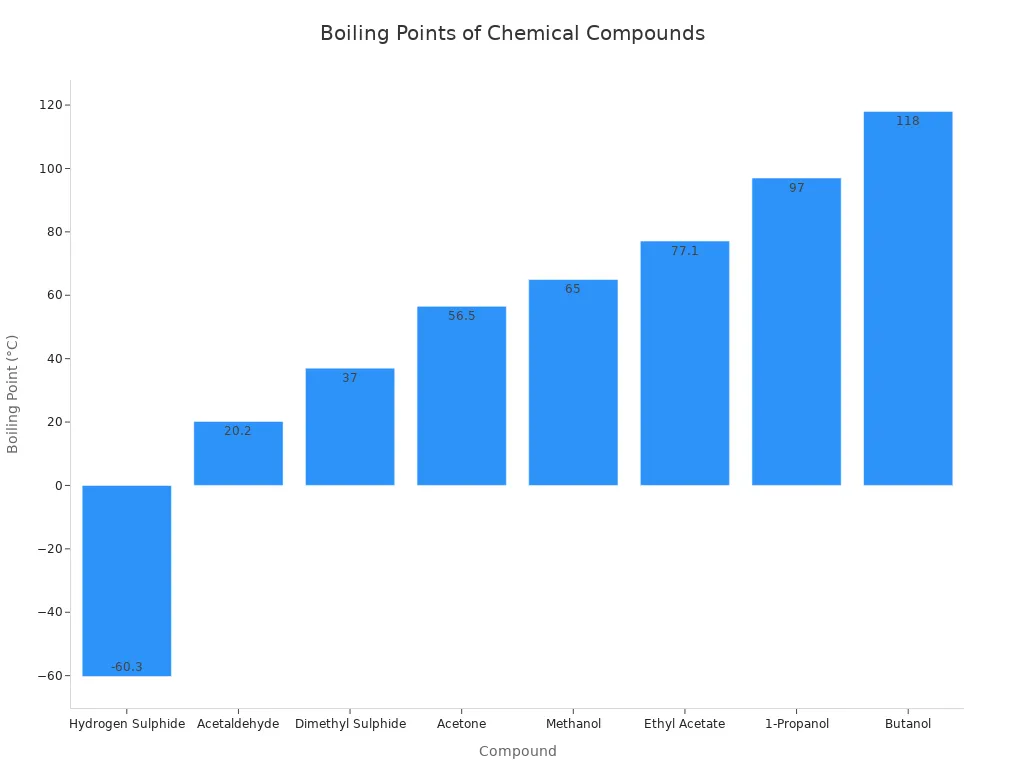
The chart above shows the different boiling points of compounds found in the heads. The distiller uses these temperature differences to separate them from the desirable ethanol during distillation. This careful separation ensures the final spirit has a clean flavor and high purity.
After distillation, the spirit moves to the final stages of production: filtration and finishing. These steps refine the vodka, ensuring its final clarity, purity, and desired alcohol content. The goal of this phase is to polish the product of the initial distillation. Successful distillation creates a high-proof spirit, but finishing makes it a commercial product.
Filtration is a key step that enhances the vodka’s smoothness and mouthfeel. The process removes any remaining microscopic impurities left after distillation. Distillers pass the spirit through a filtration system, which often contains activated carbon. This material is highly porous and effectively absorbs unwanted flavor compounds without stripping the desirable character of the spirit from distillation. The result is a cleaner, more polished vodka. This final step after distillation ensures the highest level of purity. The distillation process itself removes most impurities, but filtration provides the final polish.
Note: While some vodkas are marketed as “unfiltered” to retain a specific character from distillation, most modern vodkas undergo filtration to achieve a neutral and exceptionally smooth profile. The choice depends on the desired final product after distillation.
The blending and holding tank is a crucial piece of distillery equipment. Here, the high-proof spirit from distillation is “proofed down.” This process involves diluting the alcohol with water to reach the final bottling strength, typically 40% ABV (80 proof). The quality of the water is extremely important. Distillers use purified water, like reverse osmosis (RO) water, to prevent minerals or salts from affecting the vodka’s flavor or causing cloudiness.
The proofing process follows several precise steps:
This essential distillery equipment is made from food-grade stainless steel, usually SS304 or SS316L. These materials are durable, resist corrosion, and are easy to clean, protecting the spirit’s purity after the final distillation.
The final stage of vodka production involves preparing the spirit for the market. Finishing and packaging distillery equipment ensures the product is clean, properly bottled, and professionally presented. This machinery handles the critical last steps before the vodka reaches the consumer.
A bottle rinser is the first piece of equipment in the packaging line. This device cleans empty bottles just before they are filled. It prevents dust or foreign particles from contaminating the final product. The automatic machine typically blows water or sanitized air into each bottle. This action removes any external particles, ensuring a clean container. This step preserves the vodka’s integrity and safety.
The bottling line is where the vodka is transferred into its final container. This essential distillery equipment can range from simple manual fillers to semi-automatic systems. For craft distilleries, a semi-automatic machine can process between 300 and 1,500 bottles per hour. Distillers choose between different filler types based on their needs. Gravity-fed and vacuum-assisted fillers are two common options.
| Feature | Gravity-Fed Fillers | Vacuum-Assisted Fillers |
|---|---|---|
| Mechanism | Uses gravity to fill bottles to a specific level. | Pulls product into the bottle using a vacuum. |
| Best For | Works with most container types. | Requires rigid containers like glass. |
| Seal | Does not require an airtight seal. | Forms an airtight seal on the bottle rim. |
Pro Tip: The choice of filler impacts efficiency and consistency. Vacuum fillers are excellent for ensuring a uniform fill level in every bottle, which is important for shelf appeal.
After filling, a capper securely seals the bottle. This piece of distillery equipment can handle various cap types, including screw caps and corks. The final step is labeling. A pressure-sensitive labeler applies labels with precision. This machine ensures consistent branding and a professional appearance. It prevents common problems like bubbling and wrinkling. Advanced labelers can apply front, back, and neck labels in a single pass. This versatility helps the vodka stand out on retail shelves and communicates brand quality. The complete vodka distillery equipment system works together to deliver a polished final product.
The complete vodka distillery equipment system guides the spirit’s journey. This vodka production process relies on an integrated system. The distillation stage, using pot stills, column stills, and other distillation methods, is key. This distillation, often with column stills, follows initial distillation in pot stills. The final distillation in column stills ensures purity. Understanding the journey from mashing to the final distillation in pot stills or column stills offers a new appreciation for the science behind achieving vodka’s signature purity. The distillation process, including distillation in column stills, is central.
The still is the most critical piece of equipment. It separates alcohol from the wash and removes impurities. A column still is especially important for vodka. It achieves the high level of purity that gives vodka its signature neutral character.
Distillers use copper because it improves the vodka’s flavor. Copper reacts with and removes unwanted sulfur compounds during distillation. This chemical reaction results in a smoother and cleaner-tasting final spirit. It is a key material for high-quality production.
A mash tun is where distillers convert starches from grain into fermentable sugars using hot water. A fermenter is the tank where yeast consumes those sugars. The yeast’s activity in the fermenter creates the alcohol in the wash.
Distillers control the final alcohol percentage in a blending tank. They add a precise amount of purified water to the high-proof spirit after distillation. This process, called “proofing,” lowers the alcohol by volume (ABV) to the desired bottling strength, usually 40%.