

COPYRIGHT © 2022 COFF International Co., ltd. ALL RIGHTS RESERVED


Distilling wine takes out alcohol from water and other parts, creating a stronger drink like brandy. The process changes both the strength and flavor of the wine. Scientists have found that distillation preserves existing aromas and can even create new ones. Grape spirits may carry notes of cooked apple and toast, and certain methods—such as pervaporation—can produce even stronger floral and fruity aromas. Modern wine distiller setups often include equipment like a jacketed kettle, along with supporting vessels such as a beer tank, a stainless steel wine fermenter, or even a custom stainless steel tank, which help maintain precise heat control and improve the overall quality of the distilled product.
Distillation makes special aroma profiles.
The process turns wine into a drink with more alcohol.
Distillation & distillery equipment changes wine into spirits like brandy. This makes the alcohol stronger and the flavors better. The process uses heat to separate the alcohol from the wine. The alcohol turns into a stronger liquid with special smells. Modern tools like jacketed kettles help control the heat well. This makes the final drink better. Distillation raises the alcohol and adds new flavors and smells. This makes spirits taste and smell more interesting. The wine distillation industry helps the economy a lot. It gives people jobs and brings in tourists.
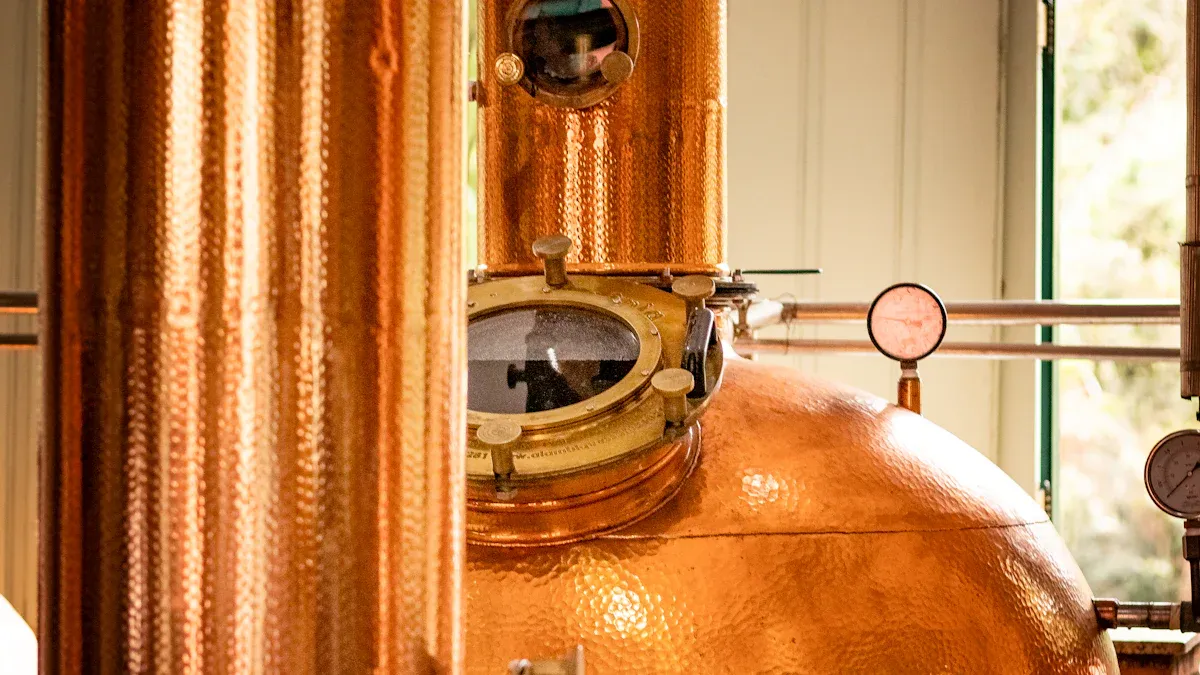
Distillation is when people heat wine to separate alcohol. Alcohol turns into vapor before water does. The vapor goes up and then cools down. It changes back into liquid with more alcohol. Distillers use special tools to control the heat. This helps them collect alcohol safely.
Many chemical changes happen during distillation:
Enzymatic oxidation happens in grape must with hydroxycinnamates and flavan-3-ols.
Non-enzymatic oxidation starts with polyphenols and makes quinones.
Hydroperoxide radicals and hydrogen peroxide form by electron transfer.
Aldehydes act as helpers, changing color and taste.
Caramelization and Maillard reactions happen when grape juice heats or ages with temperature.
Distillation does more than make wine stronger. It also changes how it tastes and smells. Some flavors get stronger, but others go away. The process can make new smells like cooked apple or toast.
Wine and spirits are different in alcohol, taste, and use. Wine comes from fermented grapes and has less alcohol. Spirits like brandy are made by distilling wine and have more alcohol.
Distillation has a long history with many changes:
Ancient Greeks and Romans used wine in their ceremonies.
Jewish people used wine for rituals since Biblical times.
Alchemists in the Islamic Golden Age made distillation better for medicine and industry.
Hieronymus Brunschwig wrote the first book about distillation in 1500.
Avicenna made the coiled cooling tube for better distillation.
Robert Stein and Aeneas Coffey made the continuous still in the 1800s.
The craft distilling movement brought back small-scale making.
Rules also affect how people make spirits from wine. The table below shows some important rules in different places:
Regulation Aspect | Description |
|---|---|
Interventionist Approach | The EU made strict rules in 1978 to manage extra wine. |
Emergency Distillation | Extra wine often becomes industrial alcohol in emergencies. |
Planting Rights | Vineyards have limits on new plants to control how much is made. |
Phasing Out Measures | People are trying to make rules simpler and use less emergency distillation. |
National Responsibilities | Each country manages its own help and money for wine. |
Distillation changes wine into spirits, making it stronger and different. The process shows many years of new ideas and rules.
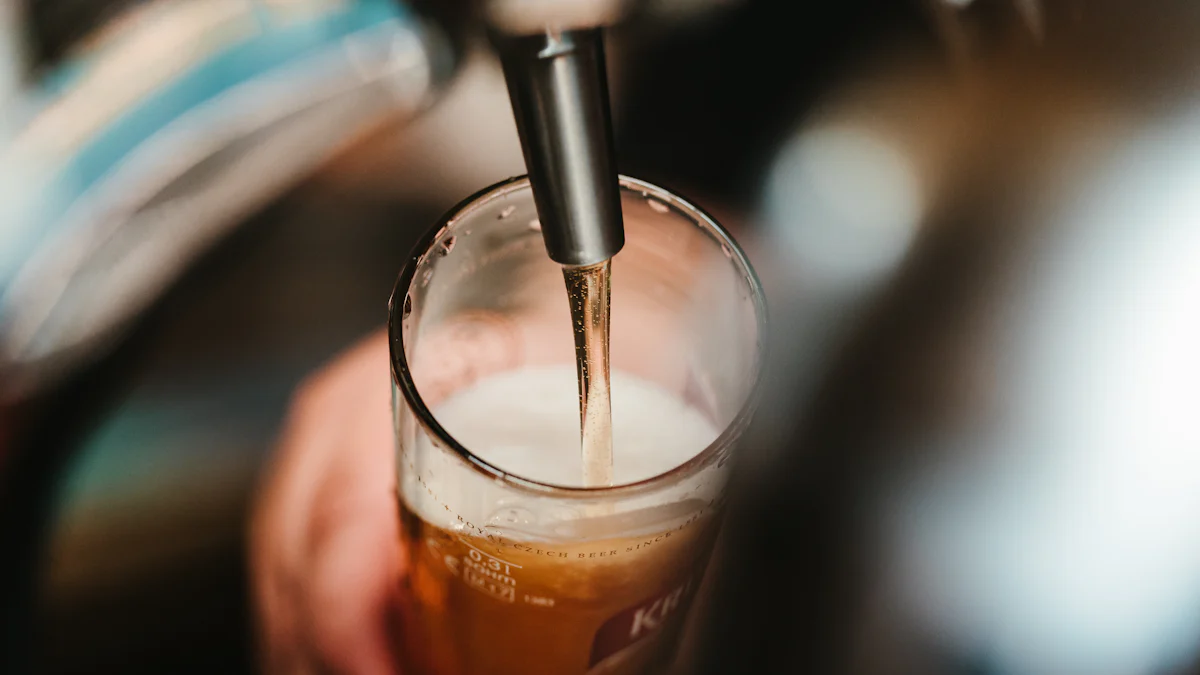
Distilling wine begins after fermentation. Yeast changes grape sugars into alcohol and makes flavors. The wine is put into a still. The distiller heats the wine. Alcohol boils before water, so it turns into vapor first. The vapor rises and cools down. It turns back into liquid. This new liquid has more alcohol than the wine.
Distillers split the liquid into parts. The first part, called the “head,” has things they do not want. The middle part, the “heart,” has the best taste and smell. The last part, the “tail,” has heavier things. Distillers watch the temperature closely. This helps them get the “heart” and skip the “head” and “tail.” This step decides how the spirit tastes and if it is safe.
The process has several steps:
Fermentation: Yeast changes sugars into alcohol.
Distilling: Heat separates alcohol from water and other things.
Polishing: Filtration takes out bad stuff.
Aging: The spirit sits in wood barrels for color and taste.
Blending and Bottling: Distillers mix and bottle the drink.
Temperature is very important. High heat makes more smells and flavors. Low heat keeps fruit taste and sourness. The table below shows how temperature changes distillation:
Aspect | Impact on Distillation |
|---|---|
Temperature Control | Helps manage fermentation and affects the final drink. |
Higher Temperatures | Makes more complex smells and flavors. |
Lower Temperatures | Keeps fruit taste and sourness. |
Chemical Compounds Formation | Changes how the drink smells and tastes. |
Today, many distillers use a jacketed kettle. This tool has two walls and uses steam for even heat. It lets distillers control the heat very well. This helps them get the best flavors. The kettle heats up fast and saves time. It also stops hot spots, so the wine heats the same everywhere.
NingBo COFF Machinery Co., ltd. makes distillery tools with jacketed kettles. Their kettles use strong materials and are easy to use. Distillers say these kettles are simple to clean and fix. Safety parts like good seals and clear gauges help control the process. The table below shows some good things about these kettles:
Feature | Benefit |
|---|---|
High-quality materials | Makes the kettle last longer and work well. |
User-friendly designs | Makes it easy to use and lowers mistakes. |
Easy to clean and maintain | Saves time and makes work easier. |
Safety features | Has good seals and clear gauges for control. |
A jacketed kettle gives more choices and works well. Distillers can change how fast they collect the spirit and try new ways. This tool is good for both small and big distilleries, so many people use it today.
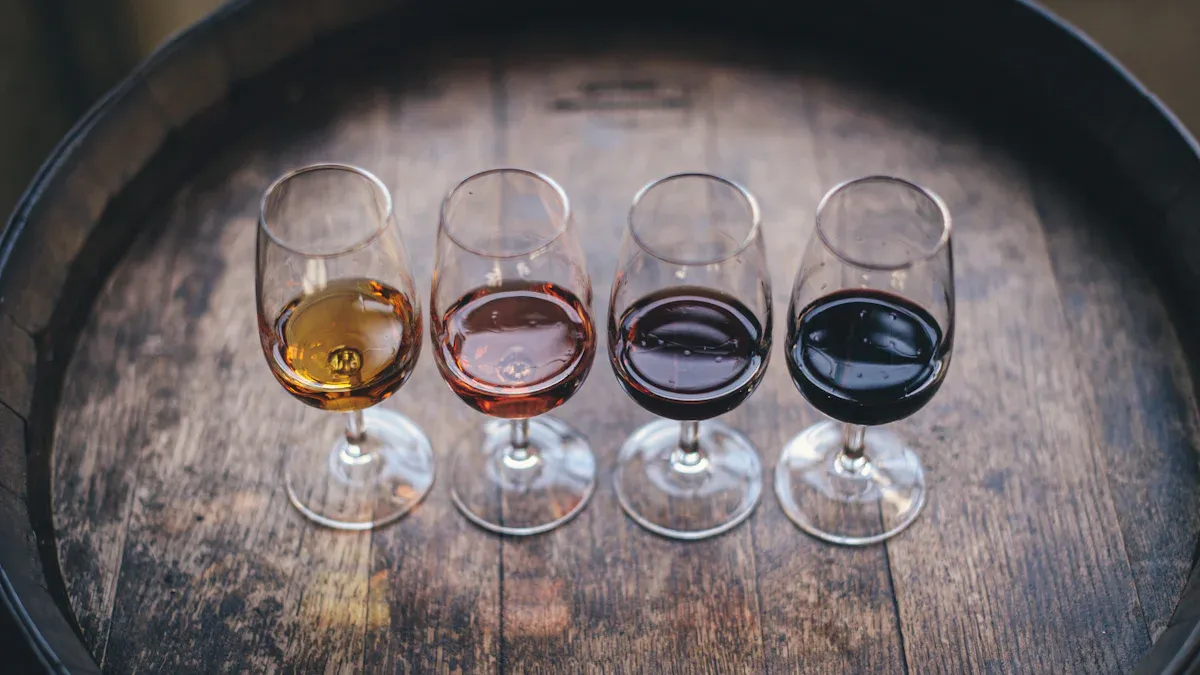
Distillation makes the alcohol level in wine go up. When a distiller heats wine, alcohol turns into vapor first. The distiller catches this vapor and cools it down. This makes a liquid with much more alcohol than wine. Brandy is made this way. It has a lot more alcohol than regular wine.
More alcohol changes how the drink feels and tastes. Spirits like brandy feel warmer and stronger than wine. The extra alcohol helps the drink last longer. Many people like spirits for their bold flavors and long finish.
Tip: More alcohol means the spirit can stay good for years. This makes it great for aging in barrels.
Distillation does more than make wine stronger. It also changes how the drink smells and tastes. Some flavors get stronger, while others fade away. The process can make new smells, like cooked fruit or toasted bread.
The aroma profiles of wine and distillates are very close. The amount of different aromas stays about the same. This means distillation does not change the main aroma much. It often keeps the original scents and flavors.
The aroma profiles of wine and distillates are very close.
The amount of different aromas stays about the same.
Distillation does not change the main aroma much.
Scientists have looked at how distillation methods change aroma and flavor. Some ways keep more of the wine’s fruity and floral notes. Other ways may lose some aromas. The table below shows how different methods affect aroma compounds and taste:
Technique | Aroma Compound Retention | Sensory Quality Impact |
|---|---|---|
Pervaporation | 30% aroma compounds retained | Moderate loss of aroma |
SCC | Greater loss of fermentative volatiles | Diminished aromatic complexity |
GOLO | Higher retention of varietal aroma compounds | Maintained fruity and floral descriptors |
The grape type also matters for flavor and aroma. For example, Gamay, Pinot-Noir, and Divico grapes have different tartaric acid and phenolic compounds. These things change the wine’s stability, color, and taste. Some grapes, like Merlot, give more tannins, making the spirit taste more astringent. Others, like Tempranillo, have less tannin and feel softer.
The amount of tannin and phenolic compounds in grape seeds matters too. Grapes with more seed weight, like Merlot and Cabernet Sauvignon, give more tannins during distillation. This changes how the spirit feels and tastes. Each grape brings its own special qualities to the spirit.
🍇 Note: The grape type can change the taste, color, and feel of the spirit. Distillers pick grapes based on the flavors they want.
Distillation turns wine into a spirit with more alcohol, new flavors, and a special aroma. The process keeps many of the wine’s original qualities, but also makes a drink that is unique.
People distill wine for a few reasons. They want to make spirits like brandy. Brandy has more alcohol and special flavors. Brandy is made from grapes, but other fruits can be used too. Cognac and Armagnac are well-known kinds from certain places. Distillers split the liquid into heads, heart, and tails. The heart part has the best smells and tastes. This part is important for how the spirit turns out.
Distillers also take out things they do not want, like too much ethanal. This makes the drink taste better. The process has two main steps. First, water and solids are removed to make low wine. Then, a jacketed kettle is used to turn low wine into brandy. Distillers focus on the heart part in this step. This way, they keep strong smells and flavors.
Brandy is a well-liked spirit made by distilling wine.
Cognac and Armagnac are special kinds of brandy.
Distillers pick the heart part for the best taste.
Distilling wine helps keep and boost flavors. It lets makers save the best parts and get rid of bad ones. Distillers work to remove bad things but keep good ones. This is important for making great spirits.
What people like changes how wine spirits are made. Many people now want drinks with new and special flavors. Gen Z and women like sparkling wines and sweeter drinks. Sparkling wines are now for any time, not just parties. Craft drinks are growing because people want old ways and new tastes.
Special flavors and careful work make more people want craft spirits.
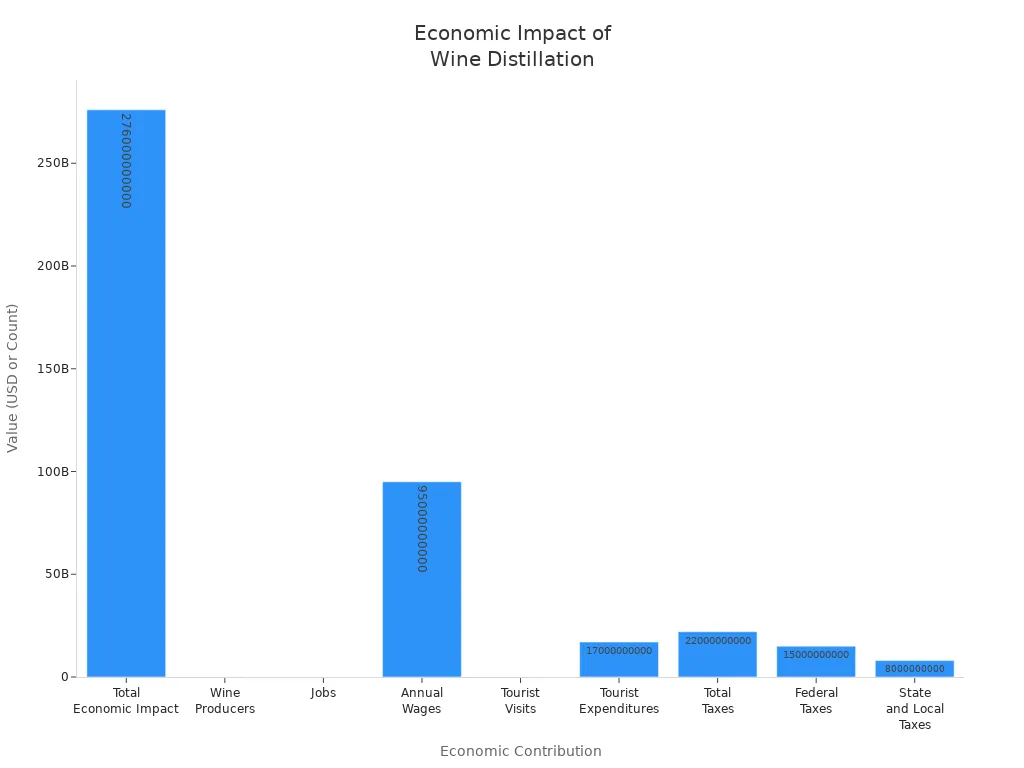
Distilling wine helps the economy in big ways. The table below shows how it gives jobs, money, and brings tourists.
Economic Contribution | Value |
|---|---|
Total Economic Impact | $276 Billion |
Wine Producers | 10,637 |
Jobs | 1.84 million |
Annual Wages | $95 billion |
Tourist Visits | 49 million |
Tourist Expenditures | $17 billion |
Total Taxes | $22 billion |
Federal Taxes | $15 billion |
State and Local Taxes | $8 billion |
Distilling wine makes spirits with strong flavors and smells. Makers use new tools and ways to match what people want and help the economy.
Distilling wine makes the alcohol level go up. It also creates new tastes and turns wine into spirits like brandy. Distillers use modern tools like jacketed kettles. These tools help them control heat and make better drinks. Scientists found that slow distillation makes more esters. Fast distillation makes more volatile acids. The table below shows these facts:
Key Aspect | Findings |
|---|---|
Distillation Techniques | Slow distillation increases esters; rapid distillation raises acids. |
Role of Yeast | Quality of fermented must is crucial for fine spirits. |
Aging Processes | Longer aging gives a mellow character. |
Efficiency and Cost | Slow distillation uses more fuel and costs more. |
Jacketed kettles let distillers control heat very well. They also save energy and cook faster. These things help small and big makers create good spirits. The table below lists their benefits:
Feature | Benefit |
|---|---|
Precise Temperature Control | Reduces burning, improves product quality. |
Electronic Controls | Ensures consistent results. |
Reduced Temperature Variation | Gives uniform cooking and better spirits. |
Energy-Saving Cook Times | Increases efficiency in production. |
Distilling wine is important. It helps makers create special drinks with great flavors. People all over the world enjoy these spirits
.
Distilling wine makes a spirit with more alcohol, like brandy. The process also changes how the drink tastes and smells. The drink becomes stronger and has more flavors.
Distillers use jacketed kettles to control heat very well. These kettles heat wine evenly. This helps keep flavors safe and makes the process safer.
Distillation keeps many flavors from the wine. Some smells get stronger, but some go away. The process can also make new smells, like toasted or fruity ones.
Distillers use safety steps to keep things safe. Modern tools, like jacketed kettles, have seals and gauges. These parts help stop accidents and make the process safe.
Distilling wine gives people jobs and brings in tourists. It makes spirits that people buy all over the world. The industry pays workers, brings visitors, and helps with taxes.