

COPYRIGHT © 2022 COFF International Co., ltd. ALL RIGHTS RESERVED


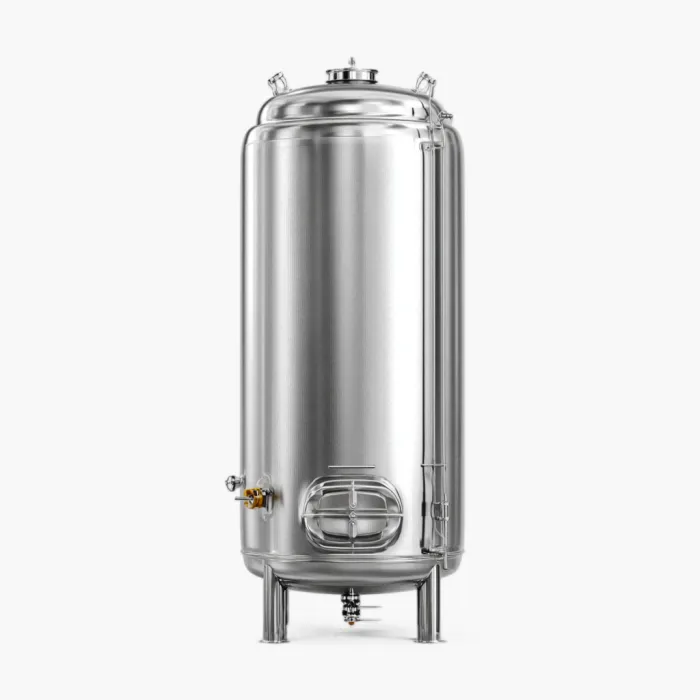
Wine tanks come in a wide range of capacities, from small vessels for home winemaking to large tanks used by commercial wineries. The right size depends mainly on batch volume, wine style, required headspace, available space, and production scale.
For small-scale winemaking, tanks around 100–200 liters (26–53 gallons) are common in the source material. Commercial wineries may use tanks from 250 to 8,000 gallons, while larger custom vessels can reach 25,000 gallons. The exact size should be matched to the amount of wine being fermented rather than selected by capacity alone.

Wine tank sizes vary considerably by the scale of production. Home winemakers generally need smaller vessels, while commercial wineries use larger tanks matched to their harvest and production volumes.
Small wine tanks are suitable for home winemakers, trial batches, and small vineyard lots. The source material identifies 100–200 L (26–53 gal) as a common range for home winemaking.
A 100 L tank can be suitable for smaller batches, while a 200 L vessel provides more capacity for larger home-production runs. Variable-capacity designs can be useful when batch volumes change between harvests.
Small commercial and boutique wineries often use multiple tanks rather than relying on one large vessel. The source material gives 1,000–2,500 L as an example range for small-batch premium red wine production, with smaller vessels of 100–500 L useful for trial lots.
Using several tanks allows wineries to keep different grape varieties, vineyard blocks, or small production batches separate.
Commercial wineries use much larger vessels when production volumes increase. The source material gives a broad commercial range of 250–8,000 gallons, with custom tanks reaching 25,000 gallons for larger facilities.
The appropriate capacity depends on the winery’s batch size and production model. Larger tanks can reduce the number of vessels needed, while multiple smaller tanks provide greater flexibility for separating batches.

Tank capacity should not be equal to the exact volume of wine or must being fermented. Some free space is needed during fermentation, particularly for red wines fermented with grape skins.
Red wine fermentation generally requires more free space because the skins and solids can form a cap that rises during fermentation. The source material gives 15–25% headspace as a planning range for red fermentation.
For example, a batch containing approximately 1,000 L of red must may require a vessel with roughly 1,200–1,300 L of total capacity, depending on the fermentation method and required working space.
White wine fermentation typically uses less headspace because the must is generally fermented without a large floating cap of grape skins. The source material gives approximately 5–10% headspace for white wine fermentation.
The actual fill level should still follow the tank manufacturer’s recommendations and the winery’s fermentation process.
Variable-capacity tanks use a floating lid that can be adjusted to the liquid level. This makes one tank suitable for different batch volumes and can reduce unnecessary headspace when a vessel is only partially filled.
This flexibility can be useful for small wineries whose batch sizes change from one harvest to another.
Capacity is only one part of wine tank selection. The production process and physical space available in the winery also influence the appropriate vessel size.
The starting point is the volume of wine or must that needs to be fermented. Red and white wines can require different fill levels, so a tank suitable for one wine style may not be ideal for another.
Production scale also matters. A winery processing large harvests may use fewer large tanks, while a boutique producer may prefer several smaller tanks for greater batch separation.
Tank capacity also needs to fit the physical layout of the winery. A taller tank with a smaller diameter can hold a similar volume to a shorter, wider vessel, but the two designs require different amounts of floor space and ceiling clearance.
Before selecting a tank, check:
This is especially important when installing larger commercial wine fermentation tanks.
Tank size can affect temperature management during active fermentation. Larger vessels can retain more fermentation heat and may therefore require an appropriate cooling system.
Jacketed tanks can provide active temperature control, but the required cooling capacity depends on the tank, wine volume, fermentation conditions, and equipment design. The source material notes that larger tanks generally require more active cooling than smaller vessels.
The most common sizing problems are choosing a tank that is too small, too large, or unsuitable for the required headspace.
An undersized tank may not leave enough room for cap expansion and fermentation activity. An oversized tank can create excessive unused capacity and may be less practical for smaller batches.
It is also important to consider future production. A winery expecting to increase batch volume may want some additional capacity rather than buying a vessel that only meets current requirements. However, future growth should be based on a realistic production plan rather than an arbitrary percentage.
Stainless steel is widely used for wine tanks because it provides a durable, non-porous surface that is suitable for food and beverage processing. The appropriate stainless steel grade depends on the wine, cleaning process, and operating environment.
A well-maintained stainless steel wine tank can provide many years of service. Actual service life depends on the stainless steel grade, fabrication quality, cleaning practices, operating conditions, and maintenance.
Most stainless steel wine tanks are designed with smooth interior surfaces and fittings that support routine cleaning. Tank design, access openings, valves, fittings, and cleaning systems can all affect how easily the vessel can be cleaned.
Yes. Wine tanks can be customized with features such as cooling jackets, different outlet configurations, sampling ports, manways, insulation, agitators, and other fittings. The available options depend on the tank manufacturer and production requirements.
A fermentation tank is designed to support the fermentation process, while a storage tank is primarily used to hold finished or partially processed wine. Fermentation vessels may require features such as temperature control and additional working space for active fermentation.