

COPYRIGHT © 2022 COFF International Co., ltd. ALL RIGHTS RESERVED


No, properly manufactured food-grade stainless steel does not alter or add unwanted flavors to wine. It is a chemically neutral wine vessel material that preserves the natural fruit, acidity, and aroma profile of grapes, rather than imparting wood-derived notes like oak barrels do. Its smooth, non-porous surface also enables precise temperature control, clean sanitation, and consistent batch-to-batch results for winemakers.
Unlike oak barrels, which intentionally release wood compounds like vanilla, toast, and smoke into wine, food-grade stainless steel is chemically inert. It does not leach flavor or aroma compounds into the wine, so the natural character of the grapes remains front and center.
This neutrality makes stainless steel especially well-suited for wines built around fresh fruit expression, bright acidity, and varietal aromas. It provides a consistent, unchanging environment from fermentation through storage and bottling, so the winemaker’s intended sensory profile stays intact.

Stainless steel tanks can be fitted with cooling jackets and integrated temperature systems, allowing winemakers to dial in exact fermentation and storage temperatures. Stable, consistent temperatures support even fermentation and reliable batch-to-batch repeatability — a critical advantage for commercial wine production.
The smooth, non-porous surface of stainless steel resists buildup of wine residue and microorganisms, and is easy to clean and sanitize between batches. Well-designed tanks feature smooth welds and sanitary fittings to eliminate hard-to-clean crevices where bacteria or spoilage organisms can grow.
Stainless steel itself does not determine oxygen levels — tank design and winemaking practices do. Sealed stainless steel tanks limit unwanted oxygen exposure during storage, while purpose-built fittings allow controlled gas exchange during fermentation. This makes stainless steel a controllable blank canvas, rather than a material that directly changes wine chemistry.
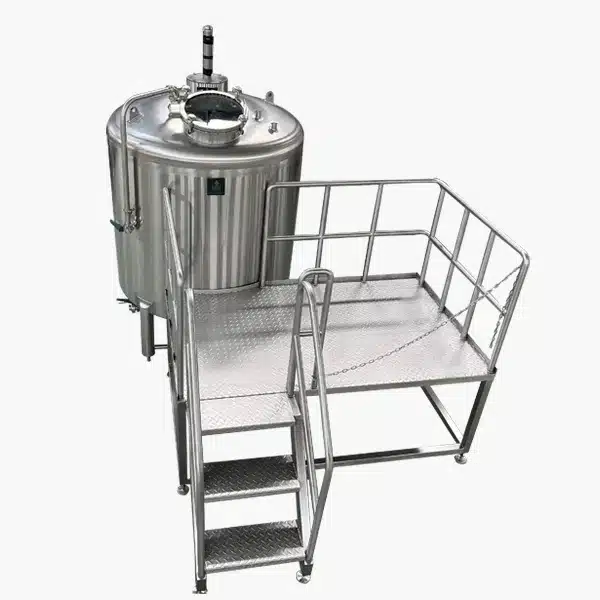
Stainless steel works for every stage of production, including fermentation, settling, blending, and bulk storage. Custom tanks can be designed with different sizes, shapes, cooling capacities, and fittings to meet specific wine production requirements.
Both grades are safe for wine production when properly manufactured; the right choice depends on operating conditions:

Steel grade is only one factor. When selecting a tank, also consider:
For commercial wineries, the most important factors are a clean, smooth interior surface, reliable temperature control, and sanitary construction — not just the steel grade number.
Yes. Stainless steel tanks are suitable for both short-term and long-term wine storage when they are properly cleaned, maintained, and operated. Their durable construction and neutral surface make them practical for repeated wine storage.
Yes. Stainless steel tanks can be used for both red and white wine. The appropriate tank configuration depends more on the winemaking process, capacity, temperature requirements, and handling method than on wine color alone.
A well-made stainless steel wine tank can provide many years of service with proper cleaning and maintenance. Actual service life depends on the stainless steel grade, fabrication quality, operating environment, cleaning chemicals, and maintenance practices.
Yes. Commercial wine tanks can be customized according to production requirements. Common options include different capacities, tank dimensions, cooling jackets, fittings, manways, valves, and other process connections.
No. 316L is not automatically required for every winemaking application. 304 stainless steel can be suitable for many standard wine-processing environments, while 316L may be selected when greater resistance to chloride-related corrosion is needed.