

COPYRIGHT © 2022 COFF International Co., ltd. ALL RIGHTS RESERVED


Brewing and winemaking represent two distinct fermentation arts that transform different raw materials into
beloved alcoholic beverages. While both processes rely on yeast fermentation to convert sugars into alcohol,
the fundamental approaches, ingredients, equipment, and techniques differ significantly. Beer production
involves extracting fermentable sugars from grains through mashing and enzymatic conversion, while
winemaking focuses on extracting and fermenting natural sugars directly from grapes. Understanding these
differences is crucial for beverage professionals, equipment manufacturers, and enthusiasts considering
entry into either industry. This comprehensive guide examines the key distinctions in ingredients,
processes, equipment requirements, fermentation management, and final product characteristics.
The most fundamental distinction between brewing and winemaking lies in their primary raw materials and how
fermentable sugars are obtained. Beer
production utilizes cereal grains, primarily malted barley, wheat, rice, and corn, which require
enzymatic conversion to release fermentable sugars. Winemaking, conversely, relies on grapes containing
naturally occurring fermentable sugars that require no conversion process.
Malted barley serves as the foundation of most beer recipes, providing not only fermentable sugars but also
enzymes necessary for starch conversion during mashing. The malting process involves controlled germination that
activates enzymes within the grain, followed by kilning to halt germination while preserving enzymatic activity.
This complex preparation distinguishes brewing from winemaking, which uses grapes in their natural state.
| Aspect | Brewing | Winemaking |
|---|---|---|
| Primary Ingredient | Malted grains (barley, wheat, rice) | Fresh grapes |
| Sugar Source | Enzymatic starch conversion | Natural grape sugars |
| Flavoring Agents | Hops, specialty grains | Grape varietals, oak, tannins |
| Processing Required | Milling, mashing, lautering | Crushing, pressing |
Hops represent another crucial brewing ingredient absent from traditional winemaking. These flowers provide
bitterness to balance malt sweetness, contribute aromatic compounds, and offer natural preservation properties.
Beer flavor
development relies heavily on hop variety selection and timing of additions during the brewing process.
Water quality significantly impacts both brewing and winemaking, though brewing places greater emphasis on water
chemistry due to its predominance in the final product. Brewing water requires specific mineral profiles that
enhance enzymatic activity during mashing and complement beer styles, while winemaking focuses more on avoiding
water contamination that could affect fermentation.
The production processes for beer and wine follow distinctly different pathways, reflecting their ingredient
differences and desired outcomes. Beer
brewing processes involve multiple steps to extract and convert starches into fermentable sugars, while
winemaking focuses on extracting existing sugars and managing their fermentation.
Beer production begins with milling grains to expose starches for enzymatic conversion. The mashing process
combines milled grains with hot water at specific temperatures that activate enzymes for starch conversion.
Lautering separates the liquid wort from spent grains, followed by boiling with hop additions for sterilization,
flavor development, and protein coagulation.
Winemaking starts with grape crushing to release juice and begins fermentation either on skins (for red wines) or
after immediate pressing (for white wines). The process emphasizes extracting desirable compounds from grape
skins while managing tannin levels and color development. Fermentation typically occurs at lower temperatures
than brewing to preserve delicate fruit flavors.
Key process differences include:
Fermentation management represents a critical distinction between brewing and winemaking, with each industry
developing specialized techniques optimized for their specific products. Fermentation vessel design reflects these
different requirements, with brewing emphasizing temperature control and yeast management, while winemaking
focuses on extraction and aging potential.
Brewing fermentation typically occurs at controlled temperatures between 45-75°F depending on yeast strain and
beer style. Ale fermentation utilizes top-fermenting yeasts at warmer temperatures (60-75°F) for shorter
periods, while lager fermentation employs bottom-fermenting yeasts at cooler temperatures (45-55°F) for extended
periods. Modern fermentation tanks
provide precise temperature control essential for consistent beer quality.
Wine fermentation temperatures generally range from 55-85°F, with white wines fermenting cooler to preserve
delicate aromatics and red wines fermenting warmer to extract color and tannins from grape skins. The
fermentation environment for wine often emphasizes minimal intervention, allowing natural processes to proceed
with careful monitoring rather than active control.
| Parameter | Beer Fermentation | Wine Fermentation |
|---|---|---|
| Temperature Range | 45-75°F (7-24°C) | 55-85°F (13-29°C) |
| Duration | 3-14 days primary | 1-4 weeks primary |
| Yeast Management | Pitch calculated amounts | Natural or selected yeasts |
| Monitoring Focus | Gravity, temperature, pH | Brix, malolactic, extraction |
Yeast selection differs significantly between the two industries. Brewing utilizes specific yeast strains
selected for flavor profile contribution, attenuation characteristics, and temperature tolerance. Wine yeast
selection focuses on enhancing grape character while ensuring complete fermentation, with many winemakers
preferring indigenous yeasts naturally present on grape skins.
Secondary fermentation practices also differ markedly. Beer may undergo secondary fermentation for conditioning
and flavor development, while wine often undergoes malolactic fermentation to reduce acidity and develop
complexity. The timing and management of these secondary processes require different approaches and equipment
considerations.

Equipment specifications for brewing and winemaking reflect their distinct process requirements and production
goals. Brewing equipment emphasizes
temperature control, pressure management, and sanitation systems optimized for rapid production cycles.
Winemaking equipment focuses on gentle handling, extraction optimization, and aging infrastructure.
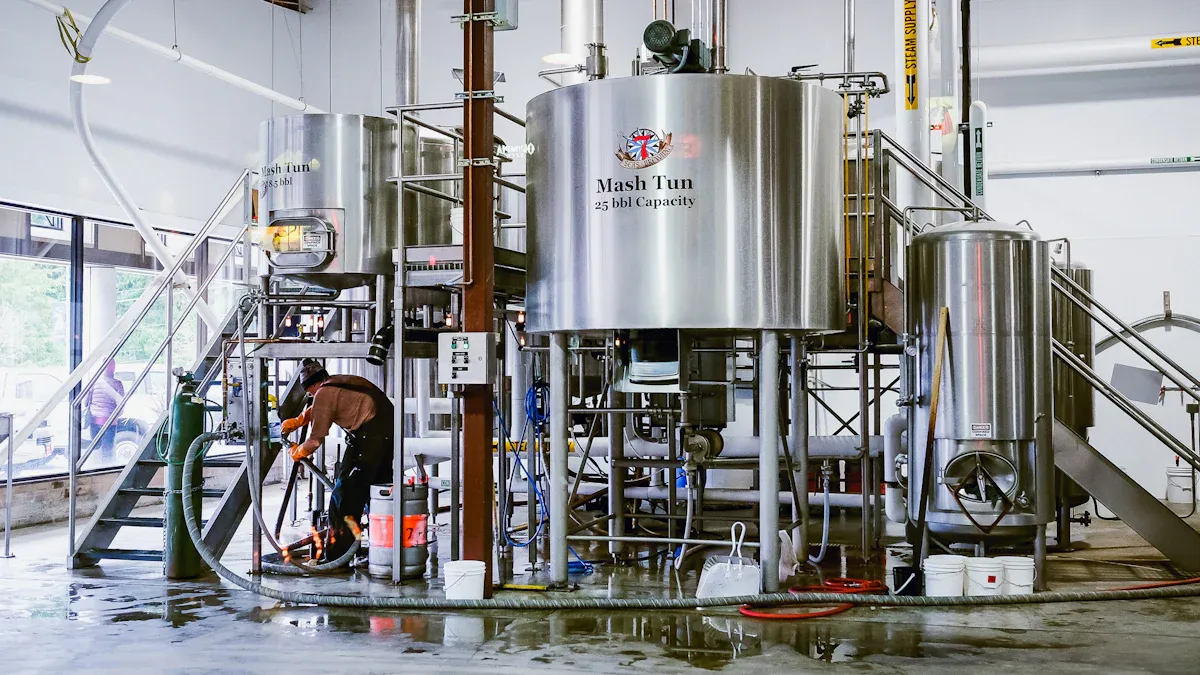
Brewing requires specialized equipment for grain handling, including mills for crushing grain to optimal particle
sizes and mash tuns with heating systems for temperature-controlled starch conversion. Microbrewery equipment typically includes
integrated systems for mashing, lautering, and boiling that optimize extraction efficiency while minimizing
labor requirements.
Winemaking equipment emphasizes gentle fruit handling to avoid extraction of undesirable compounds. Crushers and
presses designed for grapes differ significantly from grain processing equipment, focusing on releasing juice
while minimizing seed and stem damage that could contribute harsh tannins.
Vessel design requirements differ substantially between the industries:
Stainless steel construction
benefits both industries but for different reasons. Brewing values stainless steel for its sanitary properties,
resistance to cleaning chemicals, and ability to maintain precise process control. Winemaking appreciates
stainless steel’s inert nature that doesn’t influence wine flavor, though some operations still utilize
traditional materials like concrete or oak for specific applications.
Production timelines represent another fundamental difference between brewing and winemaking, with implications
for cash flow, facility utilization, and business planning. Commercial beer operations typically
complete production cycles within weeks, while winemaking often requires months or years for premium products.
Beer production timelines vary by style but generally follow predictable schedules. Ales may complete
fermentation within a week, with total production time from grain to package ranging from 2-4 weeks. Lagers
require longer conditioning periods but still complete production within 6-12 weeks for most styles.
Wine production timelines extend considerably longer, with harvest occurring once annually and fermentation
extending weeks to months. Red wines often require extended aging periods measured in months or years, while
even simple white wines benefit from several months of conditioning before release.
| Production Stage | Beer Timeline | Wine Timeline |
|---|---|---|
| Raw Material Processing | 4-8 hours | 1-3 days |
| Primary Fermentation | 3-14 days | 1-4 weeks |
| Conditioning/Aging | 1-8 weeks | 2 months – 3 years |
| Total Production Time | 2-12 weeks | 3 months – 4 years |
These timeline differences significantly impact business operations, inventory management, and cash flow
requirements. Breweries can achieve rapid inventory turnover with frequent production cycles, while wineries
must manage extended production cycles with annual harvest seasons and longer aging requirements.
Quality control methodologies reflect the different quality parameters and potential issues in brewing versus
winemaking. Commercial
brewing operations emphasize consistency and rapid quality assessment, while winemaking focuses on
complexity development and aging potential evaluation.
Brewing quality control emphasizes microbiological safety, flavor consistency, and packaging integrity. Key
parameters include original and final gravity measurements, pH control, hop utilization efficiency, and yeast
viability assessment. Modern brewing operations utilize automated systems for continuous monitoring of critical
control points throughout production.
Wine quality control focuses on sugar content (Brix), acid balance, tannin levels, and sensory evaluation. The
assessment of aging potential requires different analytical approaches than brewing quality control, with
emphasis on phenolic compound analysis and oxidative stability evaluation.
Testing frequency and methods differ significantly:
Facility design requirements reflect the distinct operational needs of brewing and winemaking operations. Brewery design emphasizes workflow
efficiency, sanitation systems, and utility distribution for frequent production cycles. Winery design focuses
on gentle product handling, aging infrastructure, and seasonal processing capabilities.
Brewing facilities require robust utility systems including steam generation, compressed air, and glycol
circulation for precise process control. The emphasis on sanitation necessitates extensive CIP systems, floor
drainage, and materials selected for chemical resistance and easy cleaning.
Winery design considerations include seasonal capacity planning, as harvest periods require significantly higher
processing capacity than year-round operations. Storage requirements differ markedly, with wineries needing
extensive barrel rooms or tank farms for long-term aging, while breweries focus on packaging and distribution
facilities.
Temperature control requirements differ substantially between the industries. Breweries require precise
temperature control during active production phases but limited long-term storage conditioning. Wineries need
consistent temperature control over extended periods, particularly for barrel aging areas that may house
products for years.
The business models for brewing and winemaking operations differ significantly due to their distinct production
characteristics, market dynamics, and consumer expectations. Microbrewery equipment investment can
provide quicker returns due to faster production cycles, while winery investments require longer payback periods
but may command premium pricing.
Market positioning strategies reflect fundamental product differences. Beer markets emphasize consistency,
availability, and style variety, with successful operations often producing multiple styles simultaneously. Wine
markets often focus on vintage quality, terroir expression, and aging potential, with production concentrated
during harvest seasons.
Seasonal considerations impact operations differently. Breweries can maintain year-round production with
predictable ingredient availability, while wineries concentrate production during harvest seasons with annual
variations in grape quality and quantity affecting business planning.
Distribution and storage requirements also differ markedly. Beer requires controlled temperature distribution but
relatively short shelf life expectations. Wine distribution may involve extended storage periods and benefits
from proper aging conditions that can actually improve product value over time.
While Coff specializes in brewery equipment manufacturing, our expertise in fermentation
technology, stainless steel fabrication, and process control systems applies to various beverage production
applications. Our 6 years of experience in beverage equipment provides valuable insights for operations
considering diversification between beer and other fermented beverages.
Our capabilities relevant to beverage production include:
For consultation on beverage production equipment:
Our vertically integrated manufacturing process ensures quality control from raw stainless steel through
final assembly and testing. All equipment features 100% stainless steel 304 construction with comprehensive
three-year warranty coverage and professional installation support.
Understanding the fundamental differences between brewing and winemaking enables beverage professionals to make
informed decisions about equipment selection, facility design, and operational planning. While both industries
share the common foundation of alcoholic fermentation, their distinct approaches to ingredient processing,
fermentation management, and product development require specialized knowledge and equipment.
Advances in brewing technology continue
evolving both industries, with innovations in automation, quality control, and process optimization benefiting
both beer and wine production. The choice between brewing and winemaking depends on factors including investment
capacity, market preferences, raw material availability, and long-term business objectives.
For operations considering entry into either industry or expansion from one to the other, careful evaluation of
these fundamental differences ensures appropriate planning and resource allocation. Success in either brewing or
winemaking requires dedication to understanding the unique characteristics and requirements of each fermentation
art, supported by appropriate equipment and operational expertise.