


COPYRIGHT © 2022 COFF International Co., ltd. ALL RIGHTS RESERVED


The best ethanol distillation equipment for you depends on your production scale, budget, and the purity you need. Pot stills and small column stills work well for home use, while advanced column stills, hybrid systems, wiped film, or short path distillation equipment fit commercial needs. Your choice of ethanol distillation equipment affects efficiency, product quality, and safety. You must follow regulations like OSHA’s Hazard Communication Standard to handle ethanol safely. Proper design and material, such as food-grade stainless steel, help ensure product quality. Equipment size should match your production volume and allow for growth. Strong technical support and after-sales service help you maintain compliance and operational safety.
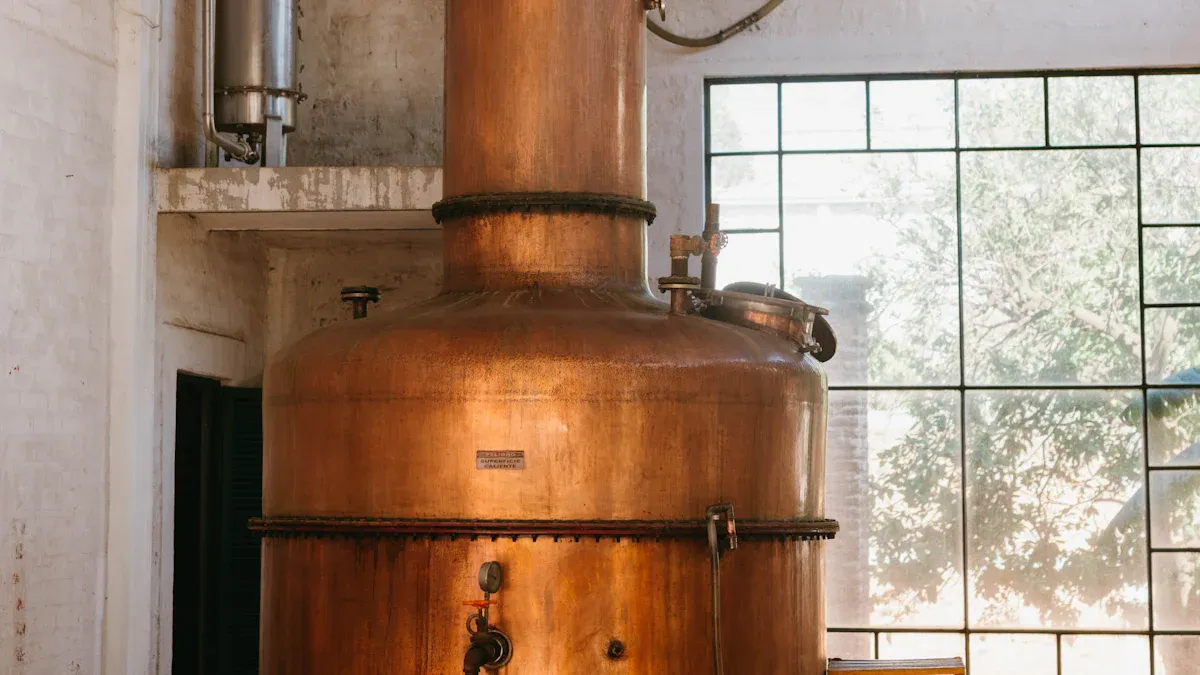
You will find pot stills as one of the oldest and most trusted types of ethanol distillation equipment. Pot stills work in batch mode, which means you process one batch of ethanol at a time. You can use pot stills for premium spirits like whisky, gin, rum, tequila, brandy, and wine spirits. Pot stills help you control the flavor and safety of your ethanol by managing volatile compounds. You can choose pot stills with capacities up to 2,700 gallons for most applications. Some manufacturers offer pot stills as large as 6,000 gallons, but sizes over 500 gallons may be too large for some uses. You can add thumpers, double retorts, or reflux columns to pot stills to improve purity and efficiency. Many craft distilleries use hybrid systems that combine pot stills with reflux columns for flexibility. Pot stills focus on quality, not just quantity, making them ideal for small-scale ethanol production and high-quality spirits.
Column stills are another popular choice for ethanol distillation equipment. You will see column stills used in continuous distillation systems, which allow for nonstop operation and higher efficiency. Column stills produce higher purity ethanol and are perfect for large-scale production. You can use column stills to make lighter, more neutral spirits like vodka. The design of column stills includes multiple plates or trays that separate ethanol from other compounds. You get consistent results with column stills, but you may notice less flavor complexity compared to pot stills. Column stills require more skill to operate, and the initial cost can be higher. You can see the main differences in the table below:
| Aspect | Column Still Advantages | Column Still Disadvantages |
|---|---|---|
| Efficiency | Continuous operation, higher efficiency | Requires more skill to operate effectively |
| Purity | Produces higher purity ethanol | May not remove all contaminants like methanol fully |
| Flavor Profile | Milder, smoother spirits | Less flavor complexity than pot stills |
| Flexibility | Consistent separation of distillate cuts | Less flexibility for flavor manipulation |
| Production Scale | Suitable for large-scale production | Higher initial cost and complexity |
You can rely on column stills for high-volume ethanol production and consistent quality.
Hybrid distillation equipment combines the best features of pot stills and column stills. You start with a pot chamber that holds the wash, just like pot stills. Vapor rises through a column with plates or packing, which increases reflux and improves separation. You get flexibility in your ethanol production because hybrid systems allow batch operation with enhanced reflux control. You can manually control cuts, such as heads, hearts, and tails, to customize flavor profiles. Hybrid distillation systems give you the batch operation and manual control of pot stills, plus the separation efficiency of column stills. You can use hybrid systems for craft spirits and specialty ethanol products. Hybrid distillation equipment helps you achieve both purity and flavor, making it a smart choice for many distillers.
Wiped film distillation equipment stands out in the world of ethanol distillation equipment. You use this thin film distillation method when you want to purify ethanol quickly and gently. The system creates a thin layer of ethanol on a heated surface. Wipers move the liquid, spreading it into a film. This design increases heat transfer and speeds up evaporation. The process happens under vacuum, so you can distill ethanol at lower temperatures. This protects heat-sensitive compounds and keeps your product quality high.
Tip: Wiped film distillation is perfect for ethanol because it reduces thermal degradation and energy use.
You get several benefits from wiped film distillation equipment:
Wiped film distillation equipment is a top choice for industrial ethanol purification. You achieve high purity, high yield, and reliable performance with this thin film distillation method.
Short path distillation equipment gives you another advanced option for ethanol distillation equipment. This thin film distillation process uses a very short distance between the heated surface and the condenser. You operate under vacuum, which lowers the boiling point of ethanol. This setup helps you distill ethanol and other heat-sensitive compounds without damaging them.
You should choose short path distillation equipment when you need:
Industries like pharmaceuticals, food, and essential oils use short path distillation for ethanol processing. The short vapor path and low pressure protect your product and give you excellent separation. You get efficient, high-quality results every time you use this thin film distillation method.
Vacuum distillation equipment helps you improve ethanol purity and yield. You use this distillation equipment to lower the pressure inside the system. This change drops the boiling point of ethanol, so you can distill at much lower temperatures. Lower temperatures mean less thermal damage to ethanol and other sensitive compounds.
With vacuum distillation equipment, you get:
Vacuum distillation equipment works well with thin film distillation and short path distillation systems. You save energy, protect your equipment, and get top-quality ethanol every time you use this advanced distillation equipment.
Steam distillation equipment gives you a unique way to extract valuable compounds during ethanol production. You use this method when you want to separate delicate flavors and aromas from plant materials. Steam distillation works by passing steam through raw materials, such as flower petals, fruit peels, or spices. The steam carries the volatile compounds away, and then you condense the vapor to collect the essential oils or aromatic extracts.
You often see steam distillation equipment in places where preserving natural aromas matters. Many distilleries use it to enhance the flavor and aroma of spirits. You can also find this equipment in essential oil production and herbal extraction labs. Steam distillation does not use high temperatures, so you protect sensitive compounds from damage.
Note: Steam distillation does not purify ethanol directly. Instead, you use it to add or extract flavors and aromas in ethanol-based products.
Here are some common uses for steam distillation equipment in ethanol production:
You benefit from steam distillation when you want to create premium spirits with complex flavors. The process lets you work with natural ingredients and maintain their quality. Many producers choose steam distillation to stand out in the market with authentic, aromatic products. If you focus on flavor and aroma, steam distillation equipment can become a valuable part of your ethanol production setup.
You use ethanol distillation equipment to separate ethanol from water and other substances. The process relies on the difference in boiling points between ethanol and water. Ethanol boils at a lower temperature than water, so you can collect ethanol vapor first. You heat the mixture in a boiling chamber. As the temperature rises, ethanol vaporizes and moves up the column. The vapor contains more ethanol than the liquid left behind. You then cool the vapor in a condenser, turning it back into liquid ethanol.
You often repeat this cycle several times to increase ethanol purity. In batch-based distillation systems, you process a fixed amount of liquid at a time. Continuous systems allow you to feed mash and collect ethanol without stopping. You can use columns with trays or packing to improve extraction efficiency. Reflux systems return some condensed ethanol to the column, helping you get higher purity. You can also use vacuum distillation to lower boiling points and protect heat-sensitive compounds during ethanol extraction.
| Principle/Concept | Explanation |
|---|---|
| Boiling Point Difference | Ethanol distillation uses the lower boiling point of ethanol for separation. |
| Vapor-Liquid Equilibrium | Ethanol vapor has higher concentration than liquid, improving extraction. |
| Repeated Cycles | Multiple cycles boost ethanol purity. |
| Reflux Systems | Recirculate condensed ethanol for better extraction efficiency. |
| Batch vs Continuous | Batch-based distillation systems process fixed volumes; continuous systems run nonstop. |
You find several key components in ethanol distillation equipment. Each part plays a role in the extraction process and affects extraction efficiency. The boiling chamber heats the mixture and keeps pressure stable. The condenser cools ethanol vapor, turning it back into liquid. The collection flask gathers purified ethanol for use or further processing. You use a thermometer to monitor temperature and control the extraction process. The heat source provides energy, which can be electric or gas-powered.
Most ethanol extraction systems include a distillation column with trays or packing. The column increases vapor-liquid contact, improving extraction efficiency. The reboiler supplies heat at the bottom, vaporizing ethanol for hydrocarbon extraction. The reflux drum stores condensed ethanol and helps control purity. Instrumentation and control systems use sensors to keep temperature and pressure stable. You also use pumps, valves, and filters to manage the flow and quality of ethanol.
Tip: You can improve extraction efficiency by using reflux systems and precise temperature control.
| Component | Role and Function |
|---|---|
| Distillation Column | Separates ethanol from heavier components using trays or packing. |
| Reboiler | Vaporizes ethanol for hydrocarbon extraction. |
| Condenser | Turns ethanol vapor into liquid for collection. |
| Reflux Control System | Returns part of condensed ethanol to the column for better extraction efficiency. |
You want ethanol distillation equipment that delivers high purity and strong product quality. Each type of distillation system offers different results. Pot stills give you lower purity and throughput, but they keep more flavor in your product. You use pot stills for small batch craft distillation and boutique liquor brands. Column stills reach high purity levels above 95% and handle large volumes. You see column stills in continuous distillation systems at big distilleries and ethanol factories. Hybrid systems combine the benefits of pot and column stills. You get flexible purity and flavor balance, which suits creative distilleries and small producers.
Advanced distillation methods like wiped film and short path distillation help you achieve very high purity. These systems work gently with heat-sensitive materials. You use wiped film distillation in pharmaceutical labs and specialty chemical production. Short path distillation suits scientific research and health wine producers. Vacuum distillation preserves aroma at low temperatures and supports premium fruit wine brands. Steam distillation focuses on extracting aromatic compounds, not ethanol purity.
Here is a table that compares achievable purity and throughput for each equipment type:
| Equipment Type | Achievable Purity and Throughput | Advantages and Use Cases | Typical Applications and Users |
|---|---|---|---|
| Pot Still | Lower purity and throughput; retains flavor | Simple batch process; excellent flavor retention; easy to use | Small batch craft distilleries; boutique liquor brands |
| Column Still | High purity (>95%) and high throughput; continuous operation | Efficient, scalable, automated control; suitable for industrial-scale production | Large-scale distilleries; ethanol factories |
| Hybrid System | Moderate throughput; flexible purity and flavor balance | Combines batch and continuous modes; precise control; multi-style production | Creative distilleries; small-scale producers |
| Wiped Film Distillation | Very high purity; lower throughput; gentle on heat-sensitive materials | Vacuum distillation with rapid evaporation; specialized and higher initial cost | Pharmaceutical labs; specialty chemical producers |
| Short Path Distillation | Very high purity; low throughput; minimal loss | Short distance evaporation-condensation; suitable for laboratory scale | Scientific research; health wine producers |
| Vacuum Distillation | Moderate throughput; preserves aroma at low temperatures | Operates at low pressure; requires more maintenance | Premium fruit wine brands; flavor labs |
| Steam Distillation | Not focused on ethanol purity or throughput; energy-intensive | Extracts ethanol and aromatic compounds from plant materials; preserves aroma | Essential oil producers; herbal extractors; distillery R&D labs |
You should choose your distillation equipment based on your need for high purity, flavor retention, and production scale. Continuous distillation systems give you consistent product quality and efficiency for large operations. Batch systems like pot stills let you control flavor and style for specialty spirits.
Tip: Advanced configurations such as dividing wall columns can reach up to 99.8% purity and save energy.
You must consider costs when selecting ethanol distillation equipment. Purchase prices vary by system size, features, and automation. Large still systems cost between $100,000 and $400,000. You pay more for hybrid systems and advanced distillation equipment with high purity capabilities. Facility buildout for large-scale distillation requires specialized hazardous class compliance. You may spend $350 to $500 per square foot for these facilities. Aging and storage infrastructure adds $150,000 to $300,000 for climate control and monitoring.
Operational expenses include raw materials, packaging, cleaning supplies, and distribution. You need to budget for licensing and legal compliance, which ranges from $5,000 to $15,000. Safety and compliance systems such as ventilation and fire safety equipment are essential. You also invest in distillery management software for production tracking and regulatory reporting.
Maintenance routines keep your distillation equipment running smoothly. Pot stills need regular cleaning to prevent clogging and residue buildup. You focus on seals and internal surfaces. Copper stills require special care, including vinegar runs and polishing to maintain product quality and desulphurisation efficiency. Column stills need frequent cleaning of packing materials to avoid residue accumulation. Advanced distillation equipment, such as electric stills, requires checks on heating elements and annual professional inspections.
General maintenance includes daily flushing, weekly cleaning of internal parts, monthly deep cleaning, and annual servicing. Preventative maintenance for solvent distillation units costs about $1,600 per year. This covers cleaning, inspection, and part replacement. You use different cleaning agents for copper and column stills. Copper cleaners or vinegar solutions work best for copper stills. Soaking and scrubbing packing materials help column stills maintain efficiency.
Here is a table that summarizes typical costs:
| Cost Category | Typical Cost Range / Description |
|---|---|
| Still Systems (purchase) | $100,000 to $400,000 depending on capacity and features (size, automation, energy efficiency, hybrid capabilities) |
| Aging and Storage Infrastructure | $150,000 to $300,000 for climate-controlled warehouses, barrel racks, filling stations, and monitoring systems |
| Licensing and Legal Compliance | $5,000 to $15,000 initially for federal, state, and local permits and licenses |
| Facility Buildout (large scale) | $350 to $500 per square foot for specialized hazardous class facilities (e.g., C1D1) |
| Preventative Maintenance | Approximately $1,600 per year for solvent distillation units (related technology) |
| Operational Expenses | Raw materials (grains, fruits, botanicals), packaging, cleaning supplies, quality control, distribution |
| Technology Investments | Distillery management software for production tracking, compliance, inventory, and financial reporting |
| Safety and Compliance Systems | Ventilation, fire safety equipment, environmental compliance, and ongoing reporting systems |
| Training and Professional Development | Costs for certifications, safety training, and business management courses |
Note: High energy consumption for heating and cooling ethanol increases operational costs. You must follow strict compliance with NFPA, OSHA, fire marshals, and environmental regulations.
You need distillation equipment that grows with your business. Modular distillation systems allow you to scale operations as demand increases. You start with small equipment for recipe development and test batches. You move to larger systems for small production and local distribution. Growing craft distilleries use 300-gallon systems. High-volume commercial output requires 500-gallon or larger equipment.
| Equipment Size | Typical Application |
|---|---|
| 50 gallons | Recipe development, test batches |
| 100 gallons | Small production, local distribution |
| 300 gallons | Growing craft distilleries |
| 500 gallons | High-volume commercial output |
Automation transforms your distillation process. You monitor temperature, pressure, and flow in real time. You adjust settings remotely and improve batch consistency. Automation supports proactive maintenance by detecting faults early. You store data for quality analysis and regulatory compliance. Modular add-ons for temperature, reflux, and vapor flow control support automation. You upgrade equipment with features like reflux controls and adjustable plates to enhance product quality and throughput.
You combine batch and continuous distillation systems to balance flexibility and volume. Automation reduces manual adjustments and increases operational efficiency. Research shows that semi-automatic control systems in solar ethanol distillation optimize process rates and yields. Advanced techniques such as bubble pump technology and nanofluid-enhanced heat pipes improve heat and mass transfer. Automation ensures safety, consistency, and traceability in your distillation operation.
Callout: Automation and modular design help you scale your distillation business and maintain high purity and product quality as you grow.
You want your ethanol distillation process to use energy wisely. Energy efficiency matters because it lowers your costs and helps the environment. Different distillation technologies use different amounts of energy. Some systems save more energy than others. You can see how energy use compares in the table below:
| Distillation Technology | Energy Consumption (Btu/gal ethanol) | Water Consumption (gal/gal ethanol) | Manufacturing Cost ($/gal ethanol) |
|---|---|---|---|
| Multieffect Distillation | 29,987 | 2.82 | 3.03 |
| Extractive Distillation | 28,199 | 2.79 | 2.88 |
Extractive distillation uses less energy and water than multieffect distillation. It also costs less to make each gallon of ethanol. You can choose extractive distillation if you want to save on energy and water.
Hybrid distillation systems give you even more savings. These systems combine traditional distillation with membrane-based separations like pervaporation or vapor permeation. You use less steam and cooling water with these hybrid systems. They help you reach high purity ethanol with lower energy use. Hybrid distillation systems work better than classical azeotropic distillation. You get high purity and lower costs at the same time.
You can also look at other ways to save energy in distillation:
Energy use in distillation can change a lot. It ranges from about 2.5 to 64 MJ of heat for each kilogram of ethanol, depending on the technology and the feed. You should pick a distillation system that matches your needs for high purity and energy savings. When you use advanced distillation equipment, you get high purity ethanol and lower your energy bills.
Tip: Hybrid and membrane-based distillation systems help you achieve high purity ethanol while using less energy and water.
You must follow strict rules when you use distillation equipment for ethanol. Safety and compliance protect you, your workers, and your property. Both home and commercial distillation setups face risks from fire, explosion, and chemical exposure. You need to know the main safety steps and legal requirements.
Commercial distillation equipment must meet federal approval and safety standards. You need to follow TTB regulations and get the right licenses. Accurate record-keeping, security, and product testing are also required. ASME-certified boilers help prevent pressure vessel failures. TTB-approved equipment lowers compliance failures by about 40%. Quality inspectors check your distillation equipment to make sure it meets safety rules.
Home distillation is often illegal or tightly controlled in many places. You should always check your local laws before starting any distillation at home. Commercial distilleries must follow rules for safety, hygiene, environmental impact, labeling, and taxes.
Note: Good compliance and safety practices keep your distillation operation running smoothly and protect everyone involved.
When you use ethanol distillation equipment at home, you gain several advantages. You control the quality, purity, and flavor of your ethanol. Pot stills and column stills let you experiment with small batches and different recipes. Many home systems use copper or stainless steel, which helps with heat transfer and durability. You find safety features like automatic shutoff valves, thermometers, and pressure gauges that make operation safer. Beginner-friendly designs and modular parts help you learn distillation quickly. Vacuum distillation systems also protect delicate flavors and reduce thermal damage.
However, you face some limitations. Many regions have strict laws about home ethanol distillation. You must check local rules before starting. Small setups have limited capacity, so you cannot produce large amounts of ethanol. Some equipment can be complex for beginners. You need to clean and maintain your system to avoid leaks, pressure buildup, or contamination. Simple pot stills may not handle complex distillation or hydrocarbon extraction tasks. Advanced systems cost more and require more knowledge.
You find home ethanol distillation equipment most useful in certain situations. If you want to create custom spirits or experiment with flavors, pot stills and column stills work well. During emergencies, you can use distillation to produce ethanol for fuel, antiseptics, or distilled water. Hybrid stills give you flexibility for making different types of ethanol. Distillation also helps you with hydrocarbon extraction and ethanol extraction for small projects. In areas with limited fresh water, you can use distillation to purify water for drinking or medical use. Always consider safety and legal requirements before starting any ethanol extraction at home.
When you choose ethanol distillation equipment for home use, look for systems that balance safety, ease of use, and extraction efficiency. Pot stills remain popular for beginners who want to make flavorful spirits. Column stills offer higher purity and better ethanol extraction for neutral spirits. Hybrid systems combine both, giving you more control over the process. Many home distillers prefer compact units made from food-grade stainless steel or copper. Features like built-in thermometers, rapid cooling, and modular parts improve extraction efficiency and safety. You should select equipment that matches your skill level and production goals. Always follow safety guidelines and local laws when using any ethanol distillation equipment at home.
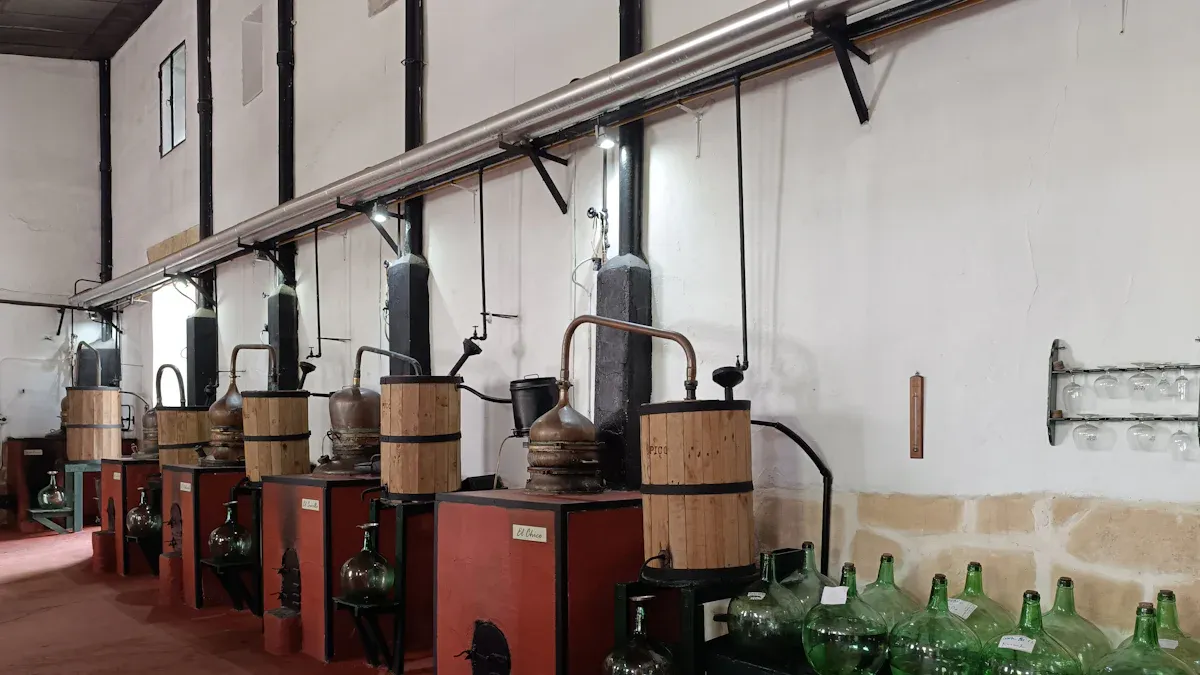
When you use commercial ethanol distillation equipment, you gain many advantages. These systems use stainless steel for durability and corrosion resistance. Copper parts help improve the flavor of your spirits. You get precise heating with direct fire, steam, or electric options. Advanced temperature controls keep your ethanol extraction process safe and efficient. Commercial equipment meets strict safety and compliance standards, which protects both operators and consumers. Energy-efficient designs help you save on operating costs and support sustainability. You can choose from many types of stills, including pot, column, and hybrid systems. This gives you options for both artisanal and large-scale ethanol extraction.
However, you must also consider some limitations. Maintaining safety and regulatory compliance can be complex. You need to select the right size and capacity for your production needs. If you choose equipment that is too large or too small, you may face cost inefficiencies. Flexibility can vary depending on your production goals.
| Aspect | Strengths | Limitations |
|---|---|---|
| Material Quality | Stainless steel for durability; copper enhances spirits flavor | N/A |
| Heating Methods | Efficient, precise heating and temperature control | N/A |
| Safety & Compliance | Meets safety standards and regulations | Complex to maintain compliance |
| Energy Efficiency | Reduces operating costs and supports sustainability | N/A |
| Equipment Types | Wide range for artisanal to large-scale ethanol extraction | Flexibility trade-offs |
| Size & Capacity | Optimizes production and cost-effectiveness | Risk of cost inefficiency if not matched to needs |
You should use commercial ethanol distillation equipment when you need to produce large volumes of ethanol or spirits. These systems work best in distilleries, ethanol extraction plants, and facilities that require high purity and consistent quality. If you want to create neutral spirits, vodka, or high-proof ethanol for industrial use, column stills and hybrid systems are ideal. When you focus on craft spirits with unique flavors, pot stills or hybrid setups give you more control. Commercial equipment also supports continuous ethanol extraction, which boosts efficiency and output. You benefit from automated controls that reduce errors and improve safety. These systems fit best in operations where you need reliability, scalability, and compliance with industry standards.
Industry experts recommend several types of commercial ethanol distillation equipment for large-scale ethanol extraction. Turnkey systems from leading manufacturers include ethanol tanks, distillation towers, pumps, and ethanol recovery concentrators. These setups handle every step of ethanol extraction, from raw material to purified ethanol. You can also find centrifuge extractors, molecular distillation systems, and crystallization reactors for advanced purification. Continuous column distillation systems with automated controls (like PLC or DCS) are highly recommended for medium to large operations. These systems use stainless steel and copper for quality and durability. Automated features help you monitor and control the ethanol extraction process, making your operation safer and more efficient. Regular maintenance and monitoring keep your equipment running smoothly and ensure you meet all safety and quality standards.
Tip: Choose ethanol distillation equipment that matches your production scale, desired purity, and compliance needs. This helps you achieve the best results in your ethanol extraction business.
When you plan your distillation setup, your budget shapes every decision. You need to think about more than just the price tag. The total cost includes buying the equipment, installing it, running it, and keeping it in good shape. Your budget also affects the size and type of equipment you can buy.
| Factor | Influence on Equipment Selection |
|---|---|
| Production Scale | Small output favors small-sized equipment; large output requires high-capacity, efficient equipment. |
| Cost Budget | Includes procurement, installation, operation, and maintenance costs; select equipment with high cost performance. |
| Equipment Material | Budget affects choice between stainless steel (durability) and copper (flavor enhancement). |
| Energy Efficiency | Energy-efficient equipment reduces long-term costs; budget limits ability to invest in advanced technologies. |
You need to balance your financial limits with your production goals when you decide how to choose the right system.
Space is a big factor in your distillery plan. The amount of room you need depends on your equipment and your goals.
Modern distillation systems often use 304 stainless steel for safety and easy cleaning. You can also combine brewing and distilling equipment to save space and resources.
Keeping your equipment clean and working well is key to making good ethanol. You face different challenges with each part of your system.
| Maintenance Aspect | Challenges | Recommended Practices |
|---|---|---|
| Initial and regular cleaning of stills | Residual pollutants from construction; sulfuric acid deposits from fermented mash | Clean before first use; clean after each batch or when switching spirits; use warm/hot water and appropriate cleaners |
| Copper still maintenance | Oxidation causes discoloration and tarnish; affects sulfur compound removal | Regular washing, polishing, or use of safe cleaners like vinegar or salt solutions |
| Stainless steel still maintenance | Shows dirt and smudges easily; requires periodic washing | Simple wiping and washing to maintain cleanliness |
| Cleaning fermentation equipment | High dirt and microbe content from grain handling | Separate cleaning and sanitizing; remove grime and kill bacteria |
| Copper mesh cleaning | Affects sulfur compound removal and distillate quality | Regular cleaning after use |
You should also check for buildup in pipes, heat exchangers, and cooling systems. Regular inspections help you spot problems early. Using a maintenance management system can help you track cleaning and repairs. Good support from your equipment provider makes it easier to keep your system running smoothly.
When you operate ethanol distillation equipment, you must follow strict legal and safety rules. These rules protect you, your team, and your facility. Laws can change depending on where you live, but most places require you to get permits before you start distilling. You need to know about federal spill prevention laws, state hazardous waste rules, and fire codes. Many regions also require your equipment to have safety certifications from organizations like UL. These certifications show that your equipment meets standards for handling flammable liquids like ethanol.
You must treat ethanol with care because it is both flammable and toxic. Never use open flames or spark-producing tools near your distillation area. Always post clear safety signs and make sure everyone knows the emergency action plan. You should train all employees to handle ethanol safely and respond to emergencies.
| Requirement Category | Key Legal and Safety Requirements |
|---|---|
| OSHA Hazard Communication | Label hazardous chemicals; train employees on ethanol vapor dangers and safe handling. |
| Process Safety Management | Inspect equipment regularly; follow maintenance schedules; train for emergency shutdowns. |
| Lockout/Tagout (LOTO) | De-energize equipment before maintenance; use locks and tags; train employees. |
| Confined Space Entry | Test air quality; ventilate spaces; train workers; have rescue plans. |
| Personal Protective Equipment | Wear flame-resistant clothing, gloves, goggles, and ear protection. |
| Combustible Dust Management | Analyze dust hazards; clean regularly; use explosion-proof systems; ground equipment. |
| Electrical Safety | Use explosion-proof equipment; ground and bond systems; inspect regularly; train employees. |
| Fall Protection | Install guardrails and safety nets; inspect equipment; train employees. |
| Machine Guarding | Use safety guards; ventilate fumes; audit regularly. |
| Emergency Preparedness | Keep fire safety equipment ready; have emergency plans; train for fire response. |
To keep your operation safe and legal, follow these steps:
Safety and legal compliance are not just rules—they keep you, your team, and your business protected every day.
Choosing the right ethanol distillation equipment shapes your results. You should match your equipment to your production goals, whether you want small-batch craft spirits or large-scale ethanol output. The table below shows the main differences between home and commercial setups:
| Feature | Home Use | Commercial Use |
|---|---|---|
| Operation | Manual or semi-automatic | Automatic, high output |
| Price | Low to medium | Medium to high |
| Focus | Flexibility, customization | Efficiency, consistency, scalability |
Experts recommend you start by knowing your ethanol goals, desired purity, and batch size. Pick equipment that fits your space, budget, and safety needs. Always consider material quality and ease of cleaning. Remember, the best ethanol distillation equipment helps you reach your goals and keeps your operation safe.
Pot stills work best for small batches and keep more flavor in your spirits. Column stills produce higher purity ethanol and handle larger volumes. You choose pot stills for craft spirits and column stills for industrial production.
You clean your equipment after each use. Use warm water and a safe cleaner. For copper parts, try vinegar or salt solutions. Stainless steel needs simple washing. Regular cleaning keeps your spirits pure and your equipment safe.
You must check local laws before starting home distillation. Many places restrict or ban home ethanol production. Always follow safety rules and get permits if needed. Legal compliance protects you and your property.
You wear flame-resistant clothing, gloves, and goggles. Keep fire extinguishers nearby. Good ventilation helps prevent vapor buildup. Safety gear protects you from burns, spills, and fumes.
Stainless steel offers durability and easy cleaning. Copper improves flavor in spirits. You choose stainless steel for long-lasting use and copper for craft spirits. Both materials help you make high-quality ethanol.