


COPYRIGHT © 2022 COFF International Co., ltd. ALL RIGHTS RESERVED


Modern breweries rely on a commercial automated brewing system to deliver consistent, high-quality results. Leading options include the COFF automated brewing system, Blichmann Engineering BrewHouse, Brewmation Automated Brewing System, Ss Brewtech Brewhouse Automation, Alpha Brewing Operations Automated System, and SmartBrew. Each system supports efficient brew cycles, advanced control, and seamless scalability. COFF stands out for its innovative approach to all-in-one brewing systems, while Brewmation and Ss Brewtech offer robust automation. These best automated brewing systems help breweries optimize every brew and scale production with precision.
Professional brewers evaluate automated brewing equipment based on efficiency, stability, and consistency. Automated brewing systems deliver precise control over temperature, timing, and ingredient measurements. This control reduces human error and ensures each batch meets quality standards. Advanced features, such as oil-heated brewhouse technology, enhance temperature accuracy and speed up the brewing process. Real-time monitoring and batch tracking allow breweries to optimize the brewing process and maintain high output. Automated cleaning-in-place systems help maintain hygiene and reduce downtime, supporting continuous production.
Tip: Consistent batch quality and efficient operation are essential for breweries aiming to scale production and maintain brand reputation.
The automation level of a system determines how much manual intervention is required during the brewing process. Top-rated automated brewing equipment offers fully automatic operation with advanced software. Brewers can control every step, from ingredient addition to fermentation, using touchscreens or app integration. Integration with inventory management systems streamlines production and supports recipe customization. Automated brewing systems often include tight temperature control, CIP cleaning, and remote access features. These capabilities reduce labor needs and improve operational efficiency.
Scalability is a critical factor for growing breweries. Automated brewing equipment must accommodate increased production volume without sacrificing consistency. Modular systems allow breweries to start small and expand as demand grows. Smart sensors and IO-Link technology enable more measurement points, supporting process optimization. Recipe and batch management systems help maintain beer quality across different production volumes. Display controllers with intuitive interfaces make scaling easy, even for users without specialized training. Automated brewing systems support expansion by allowing new vessels and equipment to integrate seamlessly into existing control systems.
| Criteria Category | Key Considerations |
|---|---|
| Production Volume | Estimate current and future output; consider daily output and seasonal variations |
| Variety of Beers | Different beer styles require specific brewing methods and equipment |
| Space Considerations | Floor plan layout, ceiling height for tall equipment, and future expansion plans |
| Utility Requirements | Water quality and supply, electrical power capacity, waste management, and sustainability practices |
| Budget Considerations | Balance initial investment with long-term savings; explore financing options |
| Equipment Features | Temperature control, timing automation, ingredient addition, fermentation control, packaging automation |
Modern automated brewing equipment focuses on making the brewing process simple and accessible. User-friendly interfaces allow operators to monitor and manage each system with ease. Most systems use intuitive graphical user interfaces (GUIs) that display real-time operational status. Operators can access vital process variables, such as temperature, pressure, and tank levels, from a centralized dashboard.
| Feature/Aspect | Description |
|---|---|
| User Interface (UI) | Intuitive GUIs for real-time monitoring and control |
| Recipe Management | Modify recipes and track batch data for consistency |
| Customizability | Interfaces are easy to learn and operate |
| User Skill Level | Designed for users with limited automation experience |
| Scalability | Single software platform supports breweries of all sizes |
Automated brewing equipment uses industrial PLC and HMI hardware, along with modular software templates. This combination helps brewers of any skill level operate the system efficiently and ensures a smooth brewing process.
Support and service play a key role in the success of automated brewing equipment. Leading manufacturers offer a range of support packages to keep each system running at peak performance.
Manufacturers also provide after-sales service, preventive maintenance schedules, and calibration services for all critical components. They offer commissioning, training, warranties, and maintenance contracts. Daily inspections and cleanliness checks help maintain system reliability. Documentation of maintenance activities ensures transparency and accountability. Some companies, like Rockwell Automation, deliver consulting services, software solutions, and unified control systems that cover the entire brewing process from raw material receipt to packaging.
The cost of automated brewing equipment varies by brand, capacity, and features. While the initial investment may seem high, these systems deliver strong long-term value. High-quality automated brewing systems reduce operational expenses by lowering labor needs and minimizing contamination risks. This leads to fewer repairs, lower maintenance costs, and higher yields. Automation also helps breweries scale production to meet demand without sacrificing quality.
| Brand Name | Capacity | Price Range (USD) |
|---|---|---|
| BrewTech | 300L | $20,000 – $25,000 |
| AutoBrewMaster | 500L | $28,000 – $34,000 |
| ProBrewer Systems | 1000L | $40,000 – $50,000 |
| MegaBrew | 2000L | $55,000 – $65,000 |
| EliteBrew Solutions | 5000L | $75,000 – $90,000 |
Automated brewing equipment improves efficiency, ensures consistent product quality, and supports brewery growth. Financing options and after-sales support make these systems more accessible. Over time, breweries benefit from reduced maintenance, improved operational efficiency, and increased profitability.
COFF has established itself as a leader in the commercial automated brewing system market. The company’s innovative oil-heated brewhouse technology delivers precise temperature control and even heat distribution. This feature plays a vital role in producing consistent brew quality. Advanced temperature control systems help maintain ideal fermentation conditions, which improves the final product.
COFF designs its system with modularity in mind. Brewers can expand their setup as their business grows, without replacing existing equipment. The use of premium stainless steel ensures durability and long-term performance. Conical fermenters make yeast removal and beer clarification easy, supporting efficient brewing cycles.
Operators benefit from user-friendly controls and automated temperature management. Cleaning becomes simple due to easy-to-clean components. COFF also stands out for its responsive customer support and quick access to replacement parts. Many breweries value the combination of high-quality engineering, artistic design, and reliable service.
Key Features of COFF Automated Brewing System:
Note: COFF’s focus on innovation and customer satisfaction makes it a top choice for breweries seeking a reliable and scalable brewing solution.
Blichmann Engineering has earned a strong reputation in the brewing community. Many breweries choose this system for its precision and dependable performance. Industry rankings often place Blichmann among the top brewhouse manufacturers, with reliability as a key highlight.
The system features precision engineering, which ensures consistent results for every brew. Temperature-controlled fermentation and all-in-one brewing setups simplify the brewing process. Durable stainless steel construction provides long-lasting equipment. Blichmann also offers beginner-friendly options, making it easier for new brewers to learn.
Space-saving designs allow the system to fit well in smaller brewery spaces. Many brewers have used Blichmann equipment to produce award-winning beers, which demonstrates its effectiveness. The brand’s trusted reputation adds further value.
Advantages of Blichmann Engineering BrewHouse System:
Tip: Blichmann’s higher price reflects its quality and innovation. Some users may face a learning curve with advanced features, but the system’s reliability and performance make it a solid investment.
Brewmation has become popular among breweries that want full automation and reliable performance. Users report that the system works well for commercial pilot batches and for homebrewers who want to automate their process. Many brewers appreciate the consistent brewhouse efficiency, with mash temperature control staying within a tight range.
The system allows for frequent brewing with less labor. Automated cleanup routines do not require vessel removal, which saves time. Brewmation’s software lets users customize features, such as adding a mashout step or adjusting mash recirculation. This flexibility supports a wide range of brewing styles.
Brewers have noted that Brewmation’s customer support is responsive and helpful. Minor technical issues, such as a blown fuse or a loose probe wire, have been resolved quickly by the company’s support team. This level of service builds trust and confidence in the system.
Highlights of Brewmation Automated Brewing System:
Note: Brewmation’s focus on automation and reliability helps breweries increase production while reducing manual labor.
Ss Brewtech Brewhouse Automation stands out in the commercial automated brewing system market for its strong focus on installation speed and operational efficiency. The Uni-Frame construction gives the system a stable foundation, which helps prevent leaks caused by torsion stress. Most two-vessel systems arrive fully assembled, so brewers only need to connect utilities on site. Many breweries can start their first brew within 24 hours of delivery.
The patented Valve Tree uses laser-etched stainless steel butterfly valves. Brewers control flow from the main panel, which reduces the need to move around during brewing. This design improves operational efficiency and safety. The Dual Pump Architecture offers flexibility not found in single pump systems. Brewers gain better control over the brewing process, which leads to more consistent results.
A mash rake with automatic grain out makes spent grain removal easy. The remote control box adds safety and convenience. Brewers do not need to perform heavy manual labor during grain out. The UL 508a certified panel shop ensures that all electrical control systems meet high safety and quality standards.
Ss Brewtech’s design features allow for quick installation and streamlined operation. Brewers save time and effort, which helps them focus on producing high-quality beer.
Some users have mentioned dissatisfaction with the specifications of the FTSs Touch controller. Others have replaced their controllers with different systems for more features. General problems in nano brewing systems include temperature fluctuations, contamination, and equipment failure. These issues do not specifically reference Ss Brewtech Brewhouse Automation.
Key Features of Ss Brewtech Brewhouse Automation:
Alpha Brewing Operations Automated System provides breweries with a reliable solution for scaling production. The system uses advanced automation to control every step of the brew process. Brewers can manage temperature, timing, and ingredient addition from a central control panel. This setup helps maintain consistency across batches.
Alpha Brewing Operations builds its system with high-grade stainless steel. The tanks and vessels resist corrosion and wear, which ensures long-term durability. The modular design allows breweries to expand their setup as demand grows. Brewers can add new tanks or upgrade controls without replacing the entire system.
The system includes automated cleaning-in-place routines. Brewers save time and reduce labor costs by automating cleaning tasks. The intuitive user interface makes it easy for operators to monitor and adjust brewing parameters. Alpha Brewing Operations offers strong technical support and training, which helps breweries get the most out of their equipment.
| Feature | Benefit |
|---|---|
| Modular Design | Easy expansion |
| Stainless Steel Build | Long-lasting durability |
| Automated Cleaning | Reduced labor and downtime |
| Central Control Panel | Consistent brew management |
| Technical Support | Reliable operation and training |
Alpha Brewing Operations Automated System supports breweries as they grow. The system’s automation and scalability make it a popular choice for both small and large operations.
SmartBrew Commercial Brewing System offers breweries a modern approach to automated brewing. The system uses cloud-based technology to manage recipes, monitor brewing progress, and track inventory. Brewers can access the system from any device with an internet connection. This flexibility helps breweries respond quickly to changes in production needs.
SmartBrew’s system automates ingredient dosing, temperature control, and fermentation management. Brewers receive alerts and updates in real time, which helps prevent errors and maintain quality. The system supports a wide range of beer styles, so breweries can experiment with new recipes and flavors.
The system’s modular design allows for easy expansion. Brewers can add new vessels or upgrade software features as their business grows. SmartBrew provides ongoing support and software updates, which keeps the system running smoothly.
SmartBrew Commercial Brewing System combines automation with cloud technology. Brewers gain control and flexibility, which helps them produce consistent, high-quality beer.
Modern breweries continue to explore new automated brewing systems that offer advanced features and innovative technology. Several companies have launched products or formed partnerships that impact the brewing industry.
| Company / System | Development / Product Launch | Impact / Significance |
|---|---|---|
| Core Equipment | Strategic partnership with Bucher Denwel (Oct 2024) to bring advanced cold block technologies | Makes high-end filtration, pasteurization, carbonation, and yeast management accessible to craft breweries |
| Ziemann Holvrieka | Acquisition of Künzel Maschinenbau GmbH (Nov 2023) | Strengthens end-to-end brewery solutions from malt handling to final product |
| Alfa Laval & Rhea Group | Partnership (Jan 2023) delivering integrated brewing solutions tailored for craft beer | Modular, energy-efficient systems improving yield, sustainability, and quality for small/mid-sized breweries |
| SABCO BrewMagic | Launch of BrewMagic Presto (Nov 2022), a compact electric brewing system for home brewers | Affordable, professional-grade system with touchscreen and RIMS control, democratizing advanced brewing tech |
These developments show how each system brings new capabilities to the market. Core Equipment’s partnership with Bucher Denwel introduces cold block technology, which improves filtration and carbonation. Ziemann Holvrieka expands its reach by acquiring Künzel Maschinenbau, offering breweries a complete solution from malt handling to packaging. Alfa Laval and Rhea Group deliver modular brewing systems that help small and mid-sized breweries increase yield and quality. SABCO BrewMagic Presto makes professional brewing technology available to home brewers through a compact electric system.
Brewing technology continues to evolve. Several other systems have gained popularity by meeting the needs of both commercial and home brewers:
Brewers often compare systems based on control, capacity, and price. The table below highlights strengths and considerations for three popular brewing systems:
| Brewing System | Strengths | Weaknesses / Considerations | Ideal User Profile |
|---|---|---|---|
| Grainfather G30 | Precise digital temperature control; mobile app connectivity; robust design | Higher price point; suited for smaller batches (~6 gallons) | Brewers valuing control and convenience |
| Robobrew | Affordable; built-in pump for even heat distribution; user-friendly interface | Limited grain capacity (recommended max 18 lbs); less advanced features | Beginners and budget-conscious brewers |
| Ss Brewtech SVBS | Powerful heating element; precision controls; compact design | Premium price; more complex for novices | Experienced brewers seeking versatility and experimentation |
Electric brewing systems offer precise temperature control and enhanced safety. Many brewers prefer electric systems for indoor use because they do not require open flames. These systems use programmable digital controllers and often connect to smartphones, making the brewing process easier to manage. However, electric systems may limit batch size unless equipped with higher voltage setups. Gas brewing systems provide more power and faster boiling, which benefits large batch brewing. Gas systems require careful handling due to safety risks and less precise temperature control.
Brewers select a system based on their experience, budget, and production goals. Some choose electric systems for automation and safety. Others prefer gas systems for speed and traditional brewing methods. The right brewing system helps breweries produce consistent, high-quality beer and supports growth in a competitive market.
Tip: When choosing an automated brewing system, brewers should consider control features, scalability, and ease of use. Each system offers unique advantages that can help breweries achieve their production targets.
Selecting the right automated brewing system depends on several factors. Breweries must consider production scale, automation level, and cost. The table below highlights how different systems serve various brewery sizes and needs:
| System Type | Description | Production Scale / Capacity |
|---|---|---|
| Brewpub System | Compact system for bars/restaurants | Small scale, on-tap serving |
| Microbrewery System | Small installation with more features | Local market craft beer production |
| Craft Beer System | Medium-sized equipment for regional distribution | Larger quantities, retains craft beer essence |
| Industrial Brewery | Large-scale, high production capacity | Millions of barrels annually |
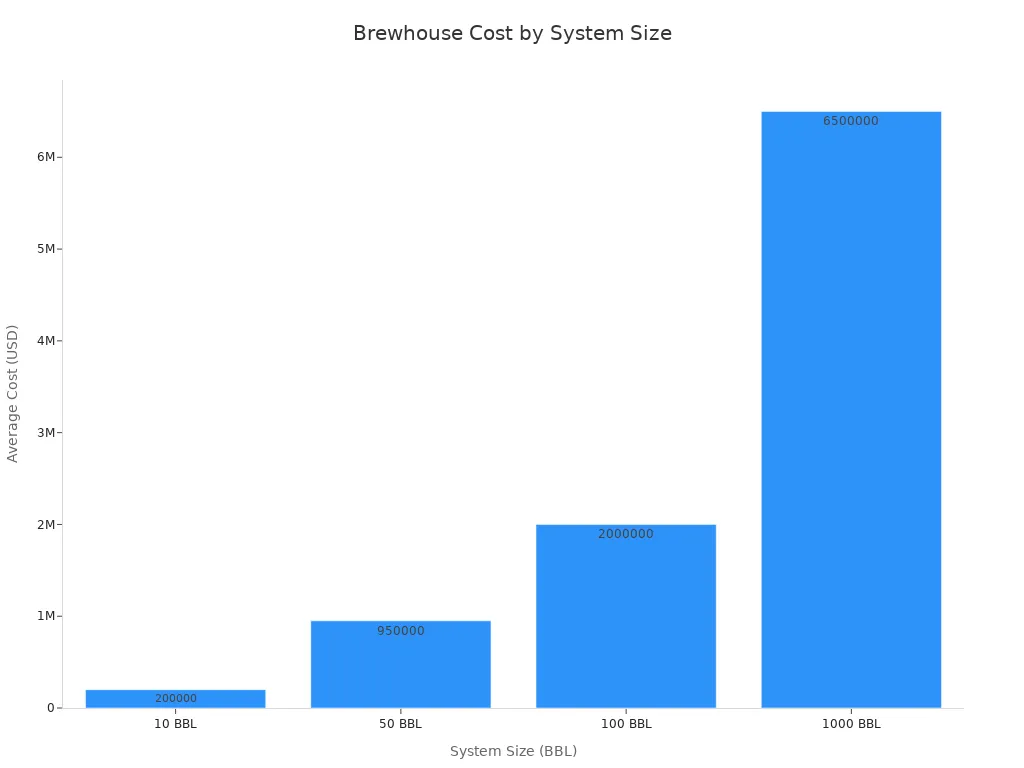
Cost and automation level also play a major role in system selection. The following table outlines how these aspects vary:
| Aspect | Details |
|---|---|
| Cost Range | Small systems: Tens of thousands USD; Large brewhouses: Millions USD |
| Automation Level | Manual to fully automated; semi-automated systems balance flexibility and efficiency |
| Scalability | Modular designs allow capacity expansion and control |
Automated brewing systems differ most in technical specifications such as equipment size, automation sophistication, and modularity. Large breweries often use fully automatic PLC control, while smaller operations may choose semi-automatic systems for more manual control. Modularity allows breweries to expand their system as demand grows. The complexity of integrated components—like milling, fermentation, filtration, and packaging—also varies, affecting efficiency and quality control.
Despite these differences, leading systems share important similarities. Most use high-grade stainless steel for durability and hygiene. Automation features such as temperature control, pumps, and sensors improve consistency and reduce labor. Modular designs support future expansion. All systems require proper utilities and regular cleaning routines to maintain performance. Supplier support, certifications, and energy efficiency remain standard across the best commercial brewing systems.
Tip: Breweries should match their system choice to their production goals, budget, and desired automation level for the best results.
Startups and small breweries benefit most from automated brewing systems that offer flexibility, scalability, and cost-effectiveness. Many new breweries choose modular systems that integrate with existing infrastructure. These systems allow brewers to adjust recipes and processes independently, which supports innovation and growth. McEnery Automation’s case study highlights a 15-barrel brewery using Rockwell Automation’s ControlLogix controllers and FactoryTalk software. This setup improved recipe management and reduced downtime, making it practical for small operations.
Industry trends show that over 70% of new microbreweries will adopt smart control panels and automation by 2026. Modular equipment with food-grade stainless steel, temperature control, and CIP systems ensures consistent batch quality. Suppliers like Micet Group provide customizable 500L brewery systems with automated or semi-automated controls. Turnkey solutions include design, installation, and training, helping startups focus on brewing rather than technical challenges.
| Packaging System Type | Approximate Entry Cost | Production Speed | Market Trend |
|---|---|---|---|
| Basic Kegging System | $2,000 – $5,000 | Manual to semi-automated | Recommended for startups initially |
| Mobile Canning | $20,000 rental | 30-40 cans/min | Growing rapidly, good interim solution |
| Basic Bottling | $15,000 – $30,000 | 20-30 bottles/min | Declining market share |
| Advanced Canning | $75,000 – $200,000 | 60-100+ cans/min | Industry standard for larger scale |
Tip: Startups should select a system with strong supplier support, warranty terms, and references from similar breweries. Modular systems help small breweries brew great tasting beer while controlling costs and preparing for future expansion.
Mid-size breweries require systems that balance efficiency, scalability, and cost. These breweries often produce between 500 and 5,000 liters per batch. The best systems for this category include modular brewhouse units with mash and lauter tuns, steam-heated kettles, and whirlpool tanks. Steam heating provides precise temperature control, which supports consistent brewing cycles. Modular layouts allow breweries to customize their setup and expand as production grows.
| Feature | Mid-Size Breweries (500-5,000 liters) |
|---|---|
| Capacity | Suitable for production volumes between 500-5,000 liters |
| Space Requirements | Moderate space needed, requiring dedicated areas |
| Design | Modular and scalable design to fit medium brewery needs |
| Layout | Flexible modular layouts allowing customization |
| Customization | Moderate customization options to adapt to specific brewing processes |
Mid-size breweries should focus on systems that deliver precision in temperature, pH, and ingredient ratios. Automation helps maintain batch-to-batch quality and reduces manual labor. Efficient systems save time and reduce errors, while data logging supports recipe refinement. Maintenance features such as sensor calibration and software updates keep operations running smoothly.
Breweries should define their brewing needs, set a realistic budget, and evaluate essential features like programmability and upgradeability. Supplier reputation and after-sales support play a key role in reliable operation.
Large-scale breweries need automated brewing systems that deliver high throughput, advanced control, and robust reliability. These breweries often produce millions of barrels annually. The best systems feature fully automated PLC control, integrated milling, fermentation, filtration, and packaging. Industrial-grade stainless steel construction ensures durability and hygiene. Automation supports consistent production of quality beer at scale.
Large breweries select systems with modular expansion options, allowing them to add new vessels and equipment as demand increases. Advanced temperature control, ingredient dosing, and CIP routines maintain product consistency and safety. Supplier support, certifications, and energy efficiency remain essential for long-term success.
Large breweries rely on advanced automated brewing systems to maintain efficiency and quality. These systems help breweries brew great tasting beer and meet market demand with confidence.
Modern breweries seek brewing systems that adapt to changing market demands and support future growth. Commercial automated brewing systems offer a wide range of customization and expansion options. These features help breweries diversify their product lines and improve operational efficiency.
Breweries can modify their systems to produce seltzer and ready-to-drink (RTD) beverages. Specialized equipment supports fermentation, carbonation, mixing, and inline flavor dosing. This ensures consistent quality and scalable production. Many breweries expand into coffee programs by using steeping and extraction systems. These systems leverage existing liquid processing capabilities and create new revenue streams.
Automation plays a key role in improving fermentation stability and batch consistency. Automated systems reduce manual labor and support efficient production. Breweries often partner with food service equipment providers to enhance taproom offerings. Access to high-speed ovens, pizza ovens, and frying solutions increases customer engagement and supports business growth.
The table below highlights common customization and expansion options:
| Option | Benefit |
|---|---|
| Seltzer/RTD Integration | Diversifies product portfolio |
| Coffee Program Expansion | Adds new revenue streams |
| Advanced Automation | Improves consistency and reduces labor |
| Food Service Partnerships | Enhances taproom experience |
| Specialized Brewing Equipment | Supports niche and experimental brewing |
| Energy-Efficient Technology | Meets sustainability goals |
| AI and IoT Integration | Optimizes production and quality control |
Breweries also select equipment tailored to unique brewing techniques and production requirements. The market continues to see rising demand for solutions that support small-batch production and experimental beer styles. Energy-efficient and environmentally friendly systems help breweries meet sustainability targets. Advanced technologies, such as AI and IoT, optimize production and maintain high quality.
Tip: Breweries should evaluate customization and expansion options based on current needs and future growth plans. Flexible systems allow breweries to respond quickly to market trends and consumer preferences.
Modern breweries have many strong options for automated brewing systems. COFF, Blichmann Engineering, Brewmation, Ss Brewtech, Alpha Brewing Operations, and SmartBrew each offer unique strengths. Small breweries often choose modular and scalable systems. Mid-size breweries benefit from flexible automation. Large-scale breweries need high-capacity, fully automated solutions.
For the best results, brewery owners should match system features to their production goals and growth plans.
An automated brewing system uses technology to control the brewing process. It manages temperature, timing, and ingredient addition. This system helps breweries produce consistent beer with less manual work.
An electric home brewing system suits small batches and home use. Commercial systems handle larger volumes and offer advanced automation. Home systems focus on simplicity, while commercial systems provide more control and scalability.
Many automated brewing systems feature modular designs. Breweries can add new tanks or upgrade controls. This flexibility supports business growth and changing production needs.
Automated brewing systems need regular cleaning, sensor checks, and software updates. Proper maintenance ensures reliable operation and high-quality beer. Most systems include automated cleaning features to save time.
An electric home brewing system offers user-friendly controls and clear instructions. Beginners can learn brewing basics with these systems. They provide a simple way to start brewing at home.