


COPYRIGHT © 2022 COFF International Co., ltd. ALL RIGHTS RESERVED


A brewery system comprises numerous interconnected components that work together to transform raw ingredients into high-quality beer. From the initial mashing process in the brewhouse to final packaging, each component plays a crucial role in beer production. This comprehensive guide explores the essential elements of modern brewery systems, including fermentation vessels, bright beer tanks, heat exchangers, CIP systems, and auxiliary equipment. Whether you’re planning a microbrewery startup or upgrading existing equipment, understanding these components will help you make informed decisions for your brewing operation.
The brewhouse represents the foundation of any brewery system, where the brewing process begins with mashing and continues through lautering, boiling, and whirlpooling. A complete brewhouse system typically consists of several key vessels, each designed for specific stages of the brewing process.
The mash tun serves as the primary vessel where ground malt meets hot water to extract fermentable sugars. Modern microbrewery equipment often features advanced temperature control systems that maintain precise mashing temperatures throughout the process. The lauter tun separates the liquid wort from spent grains through a sophisticated false bottom system that allows clear wort to flow while retaining grain particles.
| Brewhouse Component | Primary Function | Key Features |
|---|---|---|
| Mash Tun | Sugar extraction from malt | Temperature control, agitation system |
| Lauter Tun | Wort separation | False bottom, spray bars |
| Kettle/Whirlpool | Boiling and hop addition | Heating system, whirlpool cone |
| Hot Liquor Tank (HLT) | Hot water storage | Insulation, heating elements |
The kettle, also known as the copper, serves dual purposes in the brewing process. During the boiling phase, it sterilizes the wort while allowing hop additions at precise intervals. The integrated whirlpool function separates trub and hop debris through centrifugal force, ensuring clean wort transfer to fermentation. Oil-heated brewing systems have gained popularity for their precise temperature control and energy efficiency compared to traditional steam heating methods.
Hot Liquor Tanks (HLT) and Cold Liquor Tanks (CLT) provide essential water storage for various brewing operations. These vessels maintain water at specific temperatures for mashing, sparging, and cleaning procedures. Quality manufacturers like Coff utilize 100% stainless steel 304 construction with 2B finish to ensure optimal hygiene and durability throughout the brewing process.
The fermentation system transforms sweet wort into alcoholic beer through the action of carefully selected yeast strains. Fermentation vessels come in various configurations, each designed to optimize specific aspects of the fermentation process while maintaining sterile conditions throughout.
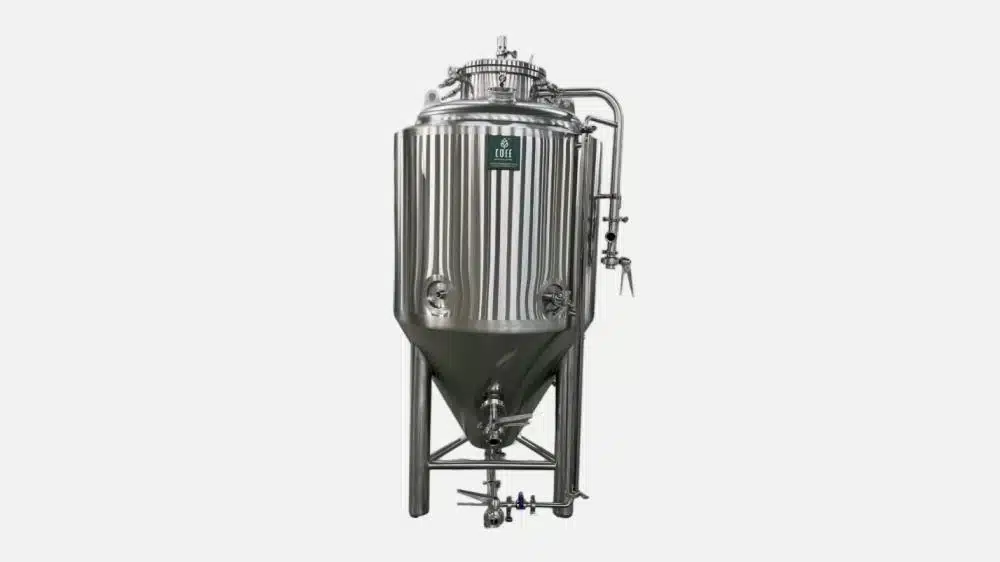
Conical fermenters have become the industry standard due to their versatility and efficiency. The conical bottom design facilitates yeast harvesting and removal of sediment without disturbing the beer above. These vessels typically feature cooling jackets or coils for precise temperature control during fermentation, which directly impacts flavor development and yeast health.
Modern fermentation tanks incorporate advanced features such as sample ports, pressure relief valves, and CIP spray balls for thorough cleaning. The sizing of fermentation vessels depends on production capacity, with craft breweries often utilizing multiple smaller tanks to allow for batch flexibility and risk management.
| Vessel Type | Capacity Range | Best Applications |
|---|---|---|
| Conical Fermenters | 5-200 BBL | Primary fermentation, yeast harvesting |
| Unitanks | 10-100 BBL | Fermentation and conditioning |
| Open Fermenters | 5-50 BBL | Traditional ale fermentation |
Temperature control systems represent critical components of the fermentation infrastructure. Glycol chillers circulate cooling medium through jacketed vessels, maintaining optimal fermentation temperatures that can range from 45°F for lagers to 70°F for ales. Precise temperature control prevents off-flavor development and ensures consistent beer quality batch after batch.

After primary fermentation, beer requires conditioning and storage before packaging. Bright beer tanks serve as the final vessels in the brewing process, where beer undergoes clarification, carbonation, and final quality adjustments before packaging.
Bright tanks, also known as serving tanks or brite tanks, provide several critical functions in the brewing process. They allow for beer clarification through settling and optional filtration, precise carbonation control, and serve as a buffer between production and packaging operations. Understanding the purpose of brewery bright tanks helps brewers optimize their conditioning processes for consistent product quality.
The design of bright tanks differs from fermentation vessels in several key aspects. They typically feature flat or dished bottoms rather than conical shapes, as sediment removal is less critical at this stage. Bright tanks often include carbonation stones for CO2 injection and may incorporate sampling valves for quality testing before packaging.
Comparing brite tanks versus unitanks reveals important considerations for brewery design. While unitanks can serve dual purposes for fermentation and conditioning, dedicated bright tanks offer greater flexibility and allow for continuous production cycles.
Clean-in-Place (CIP) systems represent essential components of modern brewery operations, ensuring thorough sanitation without vessel disassembly. These automated cleaning systems circulate cleaning solutions through all brewery vessels and piping, maintaining the sterile conditions necessary for quality beer production.
A complete CIP system includes specialized tanks for caustic, acid, and sanitizing solutions, along with pumps, heat exchangers, and automated controls. The system follows predetermined cleaning cycles that include pre-rinse, caustic wash, intermediate rinse, acid wash, and final sanitizing rinse. This automated approach ensures consistent cleaning results while reducing labor requirements and chemical usage.
CIP spray balls and rotating spray heads provide comprehensive coverage within vessels, ensuring all surfaces receive adequate cleaning action. The design and placement of these components directly impact cleaning effectiveness, making proper specification crucial for brewery sanitation programs.
Beyond the primary brewing vessels, numerous auxiliary components support brewery operations. Heat exchangers, including plate and tube-in-tube designs, rapidly cool wort from boiling temperatures to fermentation temperatures while conserving energy through heat recovery.
Pumps facilitate liquid transfer throughout the brewery, with different types serving specific applications. Centrifugal pumps handle high-volume transfers, while positive displacement pumps provide precise flow control for chemical dosing and CIP operations. Stainless steel brewing equipment construction ensures compatibility with brewing chemicals and provides long-term durability.
Grist hoppers store and meter milled grain into the mashing system, while hop backs provide additional hop contact time during wort cooling. Mills crush malted barley to optimal particle sizes that facilitate efficient sugar extraction while maintaining adequate filtration characteristics.
| Equipment Category | Key Components | Primary Functions |
|---|---|---|
| Heat Exchange | Plate heat exchangers, tube-in-tube | Wort cooling, heat recovery |
| Grain Handling | Mills, grist hoppers, conveyors | Grain preparation and transport |
| Liquid Transfer | Centrifugal pumps, positive displacement | Product and utility transfers |

Modern brewery systems incorporate sophisticated automation and control systems that monitor and control all aspects of the brewing process. These systems ensure consistent product quality while reducing labor requirements and minimizing the potential for human error.
Process control systems monitor critical parameters such as temperature, pressure, flow rates, and liquid levels throughout the brewery. Automated valves and pumps respond to control signals, maintaining optimal conditions during each stage of production. Recipe management software stores brewing parameters for different beer styles, ensuring batch-to-batch consistency.
Latest advancements in brewing technology include enhanced sensor capabilities, improved automation algorithms, and integration with brewery management systems. These developments enable real-time quality monitoring and predictive maintenance capabilities that optimize brewery operations.
Selecting appropriate brewery equipment requires careful consideration of production capacity, beer styles, budget constraints, and future expansion plans. Small-scale brewing equipment offers craft breweries the flexibility to produce diverse beer styles while maintaining quality standards.
Production capacity represents the primary factor in equipment sizing decisions. Brewhouses typically operate at 80-90% capacity to allow for cleaning cycles and maintenance, while fermentation capacity should exceed brewhouse capacity by 2-3 times to accommodate fermentation schedules and beer conditioning requirements.
Quality considerations extend beyond vessel construction to include design features that impact beer quality. Proper sanitary design principles, effective cleaning capabilities, and precise process control all contribute to consistent beer production. Coff’s vertically integrated manufacturing processes ensure quality control from raw materials through final assembly, providing breweries with reliable equipment that meets international standards.
When evaluating microbrewery equipment brands, breweries should consider factors such as manufacturing quality, technical support, spare parts availability, and warranty coverage. Established manufacturers with proven track records provide greater assurance of long-term equipment performance and support.
Proper maintenance ensures optimal brewery system performance and extends equipment lifespan. Maintaining brewing equipment requires systematic approaches that address both preventive and corrective maintenance needs.
Preventive maintenance programs include regular inspections, component replacement schedules, and performance monitoring. Critical components such as pumps, valves, and heat exchangers require periodic servicing to maintain optimal performance. Gasket and seal replacement prevents product contamination and maintains system integrity.
Essential tips for maintaining brewery fermenters include proper CIP procedures, regular pressure testing, and inspection of cooling systems. Fermentation vessels experience significant thermal and pressure cycling, making regular maintenance crucial for safe and reliable operation.
Documentation of maintenance activities provides valuable data for optimizing maintenance schedules and identifying recurring issues. Modern brewery management systems can track maintenance activities and alert operators to upcoming service requirements, ensuring proactive maintenance approaches.
With over 6 years of experience in brewery equipment manufacturing, Coff provides comprehensive solutions for breweries of all sizes. Our facility in Ningbo, China, features modern manufacturing capabilities and strict quality control systems following ISO9001 standards.
For expert guidance on brewery system design and equipment selection, contact our team:
We offer comprehensive services including custom design, manufacturing, installation support, and a three-year quality warranty. Our products are backed by rigorous testing including pressure testing at twice operating pressure and full Factory Acceptance Testing (FAT) capabilities.
Understanding the essential components of brewery systems enables informed decision-making for both new brewery startups and existing operations considering equipment upgrades. Each component plays a vital role in the brewing process, from initial wort production through final beer conditioning and packaging. Quality equipment, proper system integration, and effective maintenance programs contribute to consistent beer production and long-term operational success.
The investment in professional brewery equipment pays dividends through improved product quality, operational efficiency, and reduced maintenance costs. By partnering with experienced manufacturers like Coff, breweries gain access to proven technology, comprehensive support, and the expertise necessary to optimize their brewing operations for sustainable growth and success.