


COPYRIGHT © 2022 COFF International Co., ltd. ALL RIGHTS RESERVED


Yes, food-grade stainless steel is one of the safest, most widely trusted materials for commercial and home fermentation. It creates a non-reactive, easy-to-sanitize surface that supports healthy microbial activity while preventing contamination and off-flavors.
For most fermentation applications — including beer, wine, cider and kombucha — standard 304 stainless steel delivers reliable, long-lasting performance. For high-salt foods, highly acidic products, or extended brine fermentation, 316 stainless steel is the better choice, as its added molybdenum provides superior corrosion resistance and prevents metal leaching.
This guide breaks down the safety properties of stainless steel, compares the two most common food-grade grades, and shares best practices to keep fermentation equipment safe and sanitary long-term.

Stainless steel is the global industry standard for commercial food and beverage fermentation, with two core properties that make it inherently safe.
All food-grade stainless steel contains a minimum of 16% chromium. When exposed to oxygen, chromium forms a thin, self-healing passive oxide layer on the metal surface. This layer acts as an impermeable barrier:
Sealed stainless steel vessels also provide full protection from oxygen and light — two major causes of spoilage and flavor degradation in fermented beverages. This airtight, light-blocking design preserves delicate fruit aromas in wine, maintains crispness in beer, and supports consistent batch-to-batch quality.
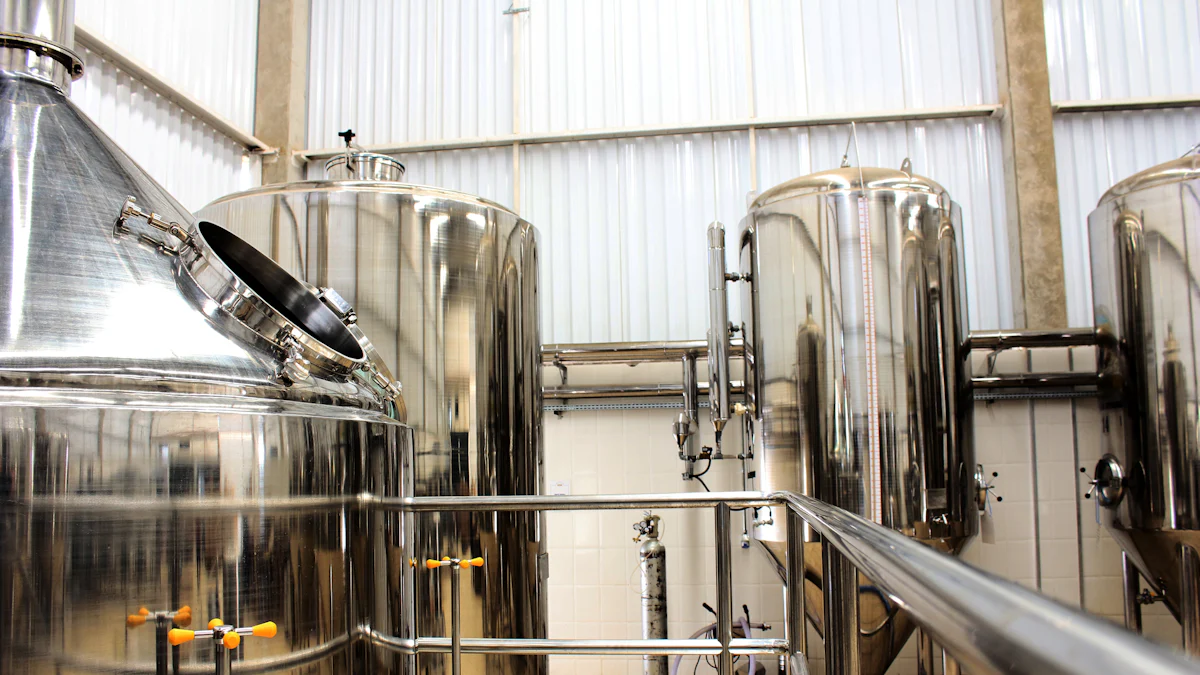
Smooth, polished interior surfaces are critical for fermentation safety, as pits and scratches can harbor wild yeast, bacteria and spoilage organisms.
Sanitary fermentation tanks are manufactured to strict surface finish standards:
| Standard / Finish Specification | Maximum Surface Roughness (Ra) | Sanitary Benefit |
|---|---|---|
| 3-A Sanitary Standards | 0.8 µm (32 µin) | Prevents bacterial adhesion; eliminates pits and scratches |
| EHEDG Hygienic Criteria | ≤ 0.8 µm | Ensures reliable cleanability across large contact surfaces |
| ASME BPE SF4 Electropolished | 15 µin (≈ 0.38 µm) | Maximizes cleanliness for high-purity processing |
| Electropolished Finish | ≤ 0.4 µm | Provides excellent resistance to microbial colonization |
Reputable manufacturers design fermentation vessels to meet ASME, AS1210 and other regional pressure vessel standards, with mandatory testing for wall thickness, weld integrity and pressure safety before shipment.
304 and 316 are the two most common food-grade stainless steel grades. Their difference in corrosion resistance comes down to chemical composition.
| Element | 304 (wt %) | 316 (wt %) |
|---|---|---|
| Chromium | 18–20 | 16–18 |
| Nickel | 8–10.5 | 10–14 |
| Molybdenum | 0 | 2–3 |
| Carbon (max) | 0.08 | 0.08 |
Corrosion resistance is often compared using the Pitting Resistance Equivalent Number (PREN). Grade 304 has a PREN of 17.5–20.8, while grade 316 reaches 23.1–28.5, indicating significantly better resistance to chloride-induced pitting.
Note: PREN is used for relative ranking of grades, not to predict suitability for a specific application.
304 stainless steel is the industry workhorse for most standard fermentation applications. It is the most cost-effective choice and performs reliably for:
316 stainless steel’s molybdenum addition makes it far more resistant to salt-induced corrosion and strong acids. It is the correct choice for:

Proper maintenance preserves the passive oxide layer, prevents corrosion, and maintains sanitary performance over decades of use.
Over time, exposure to harsh cleaners and product residues can deplete surface chromium and reduce corrosion resistance. Periodic passivation restores the protective oxide layer.
Automated CIP (clean-in-place) systems with rotating spray balls are the standard for commercial tanks, delivering consistent, thorough cleaning without scratching surfaces.
Low-quality, uncertified stainless steel carries serious food safety risks, including heavy metal leaching into acidic products. Always verify material compliance:
| Standard / Authority | Regulatory Scope and Requirement | Compliance Impact |
|---|---|---|
| FDA Food Code §4-101.11 | Requires durable, nonabsorbent, smooth, cleanable food contact surfaces | Prevents metal leaching into beverages and food |
| NSF/ANSI 51 and NSF/ANSI 2 | Sets material, design and construction criteria for food equipment | Validates equipment for commercial food operations |
| 3-A Sanitary Standards | Governs hygienic equipment design with third-party verification | Ensures cleanability for dairy and food contact gear |
| EU Regulation (EC) No 1935/2004 | Prohibits material transfer that endangers human health | Regulates food contact materials for the European market |
| EU Regulation (EC) No 2023/2006 | Mandates quality control and good manufacturing practice | Ensures full manufacturing traceability |
Simple on-site tests, such as stainless steel grade identification solution, can verify material authenticity. Quality 304 steel should also pass a 48-hour salt spray test without rust formation.
The two most common causes of premature stainless steel failure are abrasive tools and corrosive chemicals:
| Category | Damaging Agents | Surface Impact |
|---|---|---|
| Abrasive Tools | Steel wool, abrasive scouring pads | Scratches the surface, creates bacterial harborage points, initiates pitting and rust |
| Corrosive Chemicals | Bleach, sodium hypochlorite, high-chlorine solutions | Attacks welds, breaches the passivation layer, causes cracking and pitting corrosion |
Damaged surfaces are far harder to sanitize and put batches at risk of spoilage. Sticking to gentle, approved cleaning methods is the most cost-effective way to extend equipment life and maintain food safety.
Yes, food-grade stainless steel is universally recognized as safe for fermentation. Its non-reactive passive oxide layer prevents heavy metal leaching, and its smooth surface supports thorough sanitization to control spoilage organisms.
Stainless steel provides airtight, light-proof storage that preserves delicate fruit aromas and prevents oxidation. It is also fully non-reactive, so it does not impart any additional flavors — allowing the wine’s natural fruit character to remain front and center.
Absolutely. 304 stainless steel is an excellent choice for homebrewing. It is durable, easy to clean, and handles the mild acids of beer fermentation without any risk of off-flavors or metal pickup.
316 stainless steel is the correct choice for high-salt brines, pickles, hot sauce and highly acidic fruit wines. Its added molybdenum provides superior resistance to chloride pitting and acid corrosion compared to 304.
Food-grade stainless steel is one of the safest, most reliable materials for fermentation of all kinds. Its non-reactive surface, sanitary design and long service life make it the global standard for commercial breweries, wineries and food production facilities.
The key to long-term safety is selecting the right grade for your product — 304 for most general use cases, 316 for high-salt and high-acid applications — paired with proper cleaning and periodic passivation. When sourced from compliant manufacturers and maintained correctly, stainless steel fermentation equipment can deliver decades of safe, consistent performance.