

COPYRIGHT © 2022 COFF International Co., ltd. ALL RIGHTS RESERVED


The craft brewing industry has experienced unprecedented growth over the past decade, with thousands of new breweries opening worldwide. Behind every successful brewery lies a carefully selected set of equipment that transforms raw ingredients into the beloved beverage we know as beer. Understanding the components of beer brewery equipment is essential for anyone looking to enter the brewing industry or optimize their current operations.
From small-scale home microbrewery systems to large commercial operations, the fundamental components remain consistent, though they vary in size, complexity, and automation level. This guide will walk you through the essential elements that make up a complete brewing system.
Beer brewery equipment encompasses all the machinery, vessels, and systems required to produce beer from raw ingredients. This includes everything from grain handling equipment to packaging machinery. The equipment must be designed to handle the various stages of beer production: milling, mashing, lautering, boiling, cooling, fermentation, conditioning, and packaging.
Modern stainless steel brewing equipment is built to meet strict sanitary standards while providing durability and efficiency. The choice of equipment directly impacts the quality, consistency, and cost-effectiveness of beer production.
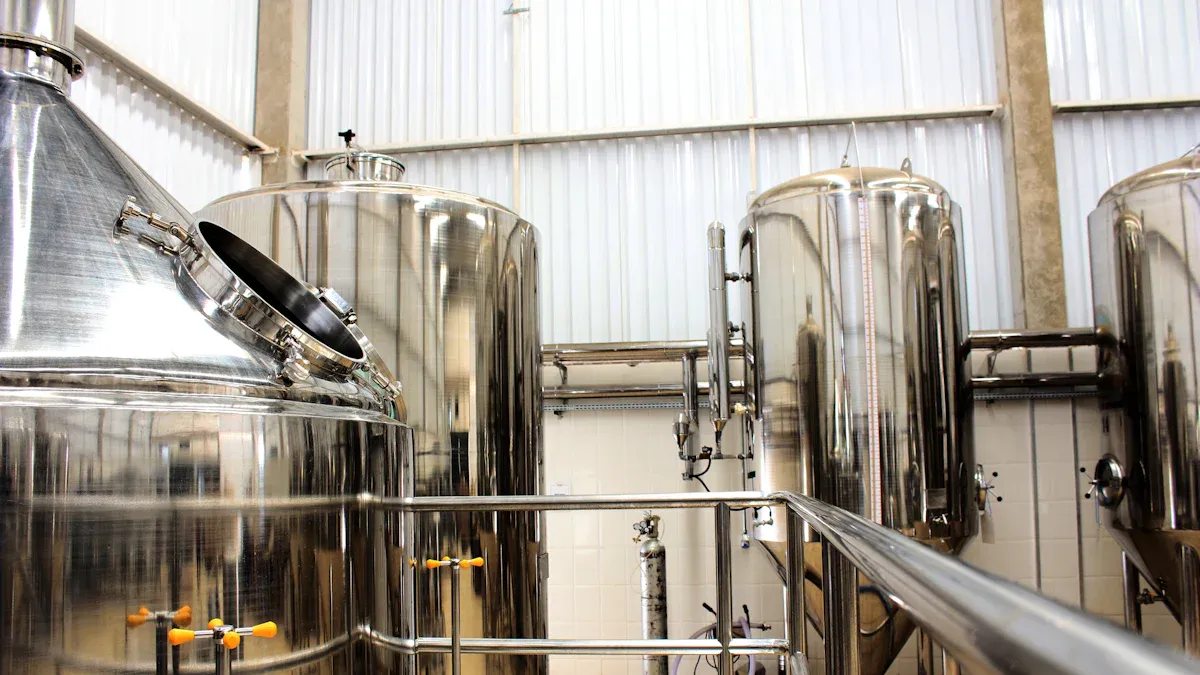
The brewing kettle, also known as the brew kettle or wort kettle, is where the magic of brewing begins. This vessel is where water and malt are combined to create wort, the sweet liquid that will eventually become beer. Modern brewing kettles are typically made from stainless steel and feature precise temperature control systems.
Key features of quality brewing kettles include:
| Kettle Size | Typical Batch Size | Ideal For | Heating Method |
|---|---|---|---|
| 1-3 BBL | 31-93 gallons | Nano breweries, pilot systems | Electric/Steam |
| 7-10 BBL | 217-310 gallons | Small craft breweries | Steam/Gas |
| 15-30 BBL | 465-930 gallons | Regional breweries | Steam |
| 50+ BBL | 1,550+ gallons | Commercial operations | Steam |
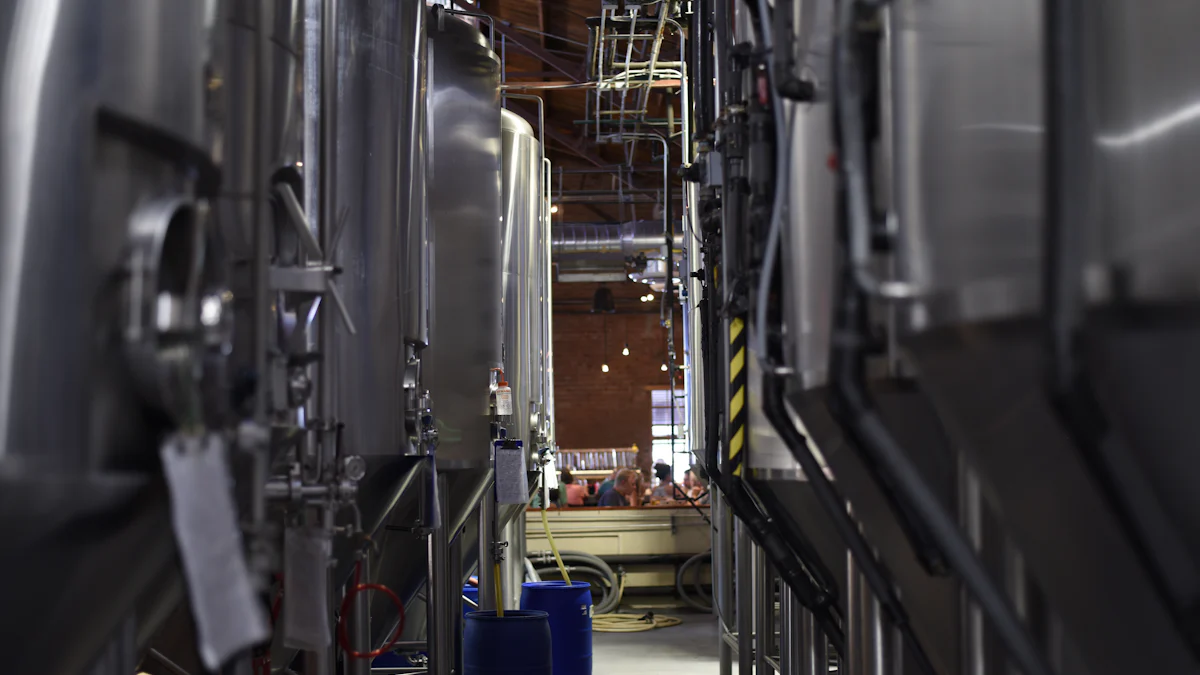
Fermentation tanks are arguably the most critical component in any brewery setup. These vessels house the yeast that converts sugars in the wort into alcohol and carbon dioxide. The design and quality of fermentation tanks directly impact beer quality and production efficiency.
Essential features include:
At Ningbo Coff Machinery, we specialize in manufacturing stainless steel fermentation tanks with advanced cooling systems and precise temperature control. Our tanks feature dual-zone cooling jackets that provide superior temperature management throughout the fermentation process.
The mash tun is where the mashing process occurs – the conversion of starches in malted grains into fermentable sugars. This vessel must maintain precise temperatures throughout the mashing process, typically between 145-158°F (63-70°C).
Modern mash tuns feature:
After boiling, wort must be rapidly cooled to fermentation temperature to prevent contamination and off-flavors. Wort chillers accomplish this critical task efficiently and safely.
Types of wort chillers include:
Pumps are essential for moving liquids throughout the brewing process. From transferring wort between vessels to circulating cleaning solutions, pumps must be sanitary, efficient, and reliable.
Common pump types in breweries:
Proper cleaning and sanitation are crucial for producing quality beer. CIP (Clean-in-Place) systems automate the cleaning process, ensuring consistent and thorough sanitization of all brewing equipment.
A complete CIP system includes:
Modern breweries rely on sophisticated control panels to monitor and automate brewing processes. These systems ensure consistency, reduce labor costs, and provide detailed production data.
Advanced control panels offer:
Microbreweries typically produce less than 15,000 barrels annually and focus on quality over quantity. Microbrewery equipment is designed for flexibility and ease of operation, allowing brewers to experiment with different beer styles.
Typical microbrewery equipment includes:
Brewpubs combine beer production with on-site consumption, requiring equipment that can produce fresh beer while maintaining an attractive appearance for customers. The equipment is often visible to patrons, making aesthetics important alongside functionality.
Commercial breweries focus on high-volume production and distribution. Their commercial brewing equipment emphasizes efficiency, automation, and scalability.
Key features include:
For enthusiasts looking to brew at home, homebrewing equipment offers an entry point into the craft. Modern homebrewing systems can produce professional-quality beer on a small scale.
The first consideration when selecting brewery equipment is determining your target production capacity. This decision impacts every aspect of your operation, from initial investment to ongoing operational costs.
Consider these factors:
The material and construction quality of brewery equipment directly impact durability, performance, and beer quality. Stainless steel 304 is the industry standard for its corrosion resistance and sanitary properties.
Key construction considerations:
Efficient heating and cooling systems are crucial for energy management and product quality. Options include steam, electric, gas heating, and various cooling technologies.
Ningbo Coff Machinery offers innovative oil-heated brewhouse systems that provide superior temperature control and energy efficiency compared to traditional steam systems.
The level of automation affects labor costs, consistency, and data collection capabilities. Modern brewing systems offer various automation levels, from manual operation to fully automated production.
Equipment costs represent a significant investment for any brewery. Consider not only the initial purchase price but also installation, training, maintenance, and operational costs.
| Equipment Category | Initial Cost Range | Annual Maintenance | Expected Lifespan |
|---|---|---|---|
| Brewing System (7 BBL) | $150,000-$300,000 | 3-5% of purchase price | 15-20 years |
| Fermentation Tanks | $15,000-$30,000 each | 2-3% of purchase price | 20-25 years |
| Packaging Equipment | $50,000-$200,000 | 5-8% of purchase price | 10-15 years |
| CIP System | $25,000-$75,000 | 3-4% of purchase price | 15-20 years |
Before purchasing equipment, develop a comprehensive business plan that includes market analysis, financial projections, and operational strategies. Obtain necessary licenses and permits from local, state, and federal authorities.
Choose a location that accommodates your equipment, allows for future expansion, and meets zoning requirements. Consider factors such as utilities, drainage, and accessibility for equipment delivery and maintenance.
Work with reputable equipment suppliers who understand your specific needs and can provide ongoing support. Ningbo Coff Machinery offers comprehensive craft brewery equipment solutions tailored to small and medium-sized operations.
Professional installation ensures equipment operates safely and efficiently. This includes proper electrical connections, plumbing, ventilation, and integration of control systems.
Implement safety procedures and ensure compliance with all applicable codes and regulations. This includes fire safety, chemical handling, and worker safety protocols.
Recruit qualified personnel and provide comprehensive training on equipment operation, safety procedures, and quality control measures.
Develop marketing strategies to promote your brewery and establish your brand in the market. This includes building relationships with distributors, retailers, and consumers.
Preventive maintenance is essential for equipment longevity and product quality. Establish regular inspection schedules and maintain detailed maintenance records.
Key maintenance activities include:
Proper cleaning and sanitation prevent contamination and ensure product quality. Follow established cleaning procedures and use appropriate chemicals and temperatures.
Understanding common equipment problems and their solutions minimizes downtime and maintains production efficiency. Keep detailed logs of issues and resolutions for future reference.

As demand grows, breweries need to increase production capacity. This can be achieved through additional fermentation tanks, larger brewing systems, or improved efficiency measures.
Stay current with technological advances that can improve efficiency, quality, or capabilities. This might include advanced control systems, new packaging technologies, or improved cleaning systems.
Equipment modifications may be necessary to support new distribution channels, such as canning lines for retail distribution or kegging systems for restaurant sales.
Implement water and energy conservation measures to reduce environmental impact and operational costs. This includes heat recovery systems, water recycling, and energy-efficient equipment.
Develop comprehensive waste management programs that minimize environmental impact while potentially creating additional revenue streams through by-product sales.
Consider sustainable packaging options that reduce environmental impact while maintaining product quality and appeal.
Internet of Things (IoT) technology is revolutionizing brewery operations through real-time monitoring, predictive maintenance, and remote control capabilities.
Compact, portable brewing systems are enabling new business models and allowing brewers to produce beer in non-traditional locations.
Combining traditional brewing methods with modern technology creates opportunities for unique flavors and improved efficiency.
The future of brewery equipment will likely focus on increased automation, sustainability, and flexibility. Artificial intelligence and machine learning will play larger roles in quality control and process optimization. Equipment designs will continue to evolve to support new beer styles and production methods while maintaining the craft brewing tradition.
Understanding the components of beer brewery equipment is essential for anyone involved in the brewing industry. From the basic brewing kettle to sophisticated control systems, each component plays a crucial role in producing quality beer efficiently and safely.
Whether you’re planning a new brewery or upgrading existing equipment, careful consideration of your specific needs, budget, and growth plans will guide you toward the right equipment choices. Working with experienced equipment suppliers like Ningbo Coff Machinery ensures you receive not only quality equipment but also the ongoing support necessary for long-term success.
The brewing industry continues to evolve, driven by consumer demands for quality, sustainability, and innovation. By staying informed about equipment trends and best practices, brewers can position themselves for success in this dynamic and rewarding industry.
A 3.5 BBL brewhouse is ideal for nano breweries and brewpubs focusing on local distribution. This size allows for experimentation with different beer styles while maintaining manageable production volumes. Consider your target market, distribution goals, and available space when evaluating this capacity.
Yes, beginners can successfully operate a 3 BBL fermenter with proper training and support. The key is understanding fermentation principles, temperature control, and sanitation procedures. Start with simpler beer styles and gradually work toward more complex recipes as experience grows.
For expert guidance on selecting the right brewery equipment for your operation, contact Ningbo Coff Machinery Co., Ltd. Our experienced team provides comprehensive solutions from design to installation.
Established in Ningbo, China, Coff is a leading manufacturer specializing in beverage equipment with 6 years of tailor-made experience and a 3,000m² production facility.
Address: No. 12, Meilin Road, Yuyao, Ningbo City, Zhejiang Province.
Phone: +86 13819801855
Email: sxn@nbcoff.com
Website: https://nbcoff.com/
Our fermentation systems incorporate advanced yeast management technologies, including temperature-controlled environments and automated harvesting systems for optimal yeast health and beer quality.
We offer complete brewing systems from 1 BBL to full-scale commercial operations, featuring innovative oil-heated technology and superior temperature control.
Our automated control systems provide precise monitoring and control of all brewing parameters, ensuring consistent quality and operational efficiency.
All tanks are constructed from premium SS304 stainless steel with advanced dimple jacket cooling systems and comprehensive CIP capabilities.
Our CIP systems ensure thorough cleaning and sanitation of all brewing equipment, maintaining the highest hygiene standards throughout production.
We manufacture high-quality stainless steel storage tanks for various applications, featuring superior construction and long-lasting durability.
Our specialized equipment for hop and malt handling ensures optimal ingredient utilization and flavor extraction throughout the brewing process.