

COPYRIGHT © 2022 COFF International Co., ltd. ALL RIGHTS RESERVED

5 gallons of beer usually needs 1-2 weeks to ferment. The time for beer fermentation can change because of different things. Ales are done faster than lagers. For professional brewing equipment, NBCOFF is a reputable stainless steel tank manufacturer. We produce high-quality fermentation and storage vessels, including custom beer tank solutions for breweries of all sizes.The table below shows how long each type takes:
Beer Type | Fermentation Time |
|---|---|
Ales | 2-5 days |
Lagers | 2-3 weeks |
Ales ferment in warmer places. Lagers need cooler places to ferment. This changes how long it takes to make beer. Using a fermentation beer tank helps keep the temperature right. This also changes how long it takes to make beer. Watching the fermentation time and checking the beer before drinking keeps it safe and good.
5 gallons of beer usually ferments in 1 to 2 weeks. Ales need about 2 to 5 days. Lagers take 2 to 3 weeks.
It is important to control the temperature. Ales do best at 68 to 75°F. Lagers like 45 to 55°F for good fermentation.
A good fermentation tank keeps the environment right. This stops spoilage and makes the flavor better.
Watch for signs of fermentation like bubbles in the airlock. Check the specific gravity to make sure it is working.
You need to be patient. Give time for conditioning and carbonation. This helps your beer taste and look its best.
Beer styles affect how long 5 gallons of beer ferments. Each style has its own time. Ales and lagers need different times because of their ingredients and brewing ways. The table below shows how long common beer styles take to ferment:
Beer Style | Fermentation Time |
|---|---|
Ales (IPAs, Stouts) | 5-7 days |
Lagers (Pilsners) | 7-10 days |
Ales like IPAs and stouts finish faster. Their yeast works better in warmer places. Lagers such as pilsners take longer. Their yeast likes cooler places. Brewers pick the style based on how fast they want to finish and what flavors they want.
Tip: Always look at the recommended fermentation time for your beer style. This helps you get the best taste and proper fermentation.
Yeast and temperature are very important for beer fermentation. Different yeast strains work at different speeds and temperatures. Some yeast strains grow quickly and start fermentation fast. Others work slower and need more time.
Yeast strains grow at different rates. This changes how fast fermentation starts and goes.
Yeast strains have different attenuation levels. This affects how fast sugars turn into alcohol and carbon dioxide.
The best fermentation temperature for each strain can change how long and how well fermentation works.
Keeping the temperature steady is important for good fermentation. Ales ferment best at 68-75°F. Lagers do better at 45-55°F. Warmer temperatures make yeast more active, so fermentation is faster. High temperatures can cause bad flavors. Low temperatures slow or stop fermentation.
Temperature is important for controlling fermentation.
Warmer temperatures make yeast work faster and speed up fermentation.
High temperatures can make bad flavors.
Low temperatures slow down or stop fermentation.
Brewers use equipment like a beer fermentation tank with temperature control. This keeps yeast in the best range. It helps yeast work well and makes better beer.
Many homebrewers ask if making more beer changes how long fermentation takes. Experts say that making 1 gallon or 5 gallons does not change fermentation time much. When the tank fills with carbon dioxide, both small and big batches act the same.
Scientists found that feeding strategies in bigger, fed-batch fermentations help sugar delivery and increase ethanol production by about 20%. The table below shows what studies found:
Evidence Description | Findings |
|---|---|
Adapted feeding strategies in fed-batch fermentation improve sugar delivery and ethanol productivity | Big improvements in ethanol productivity (about 20% more) compared to fixed pulsed feeding strategies. |
The feeding strategy is a key factor in fed-batch fermentation | It can be planned based on nutrients, cell growth, or other things that affect metabolism and the final product. |
Evolved gas flow rate from ethanol fermentation | This can help decide pulsed feeding operations in ethanol production by S. cerevisiae. |
For most homebrewers, keeping yeast healthy and temperature steady is more important than batch size. Using a good beer fermentation tank helps keep the best conditions for any batch size.
Note: Pay attention to temperature and yeast health for the best beer, no matter how much you make.
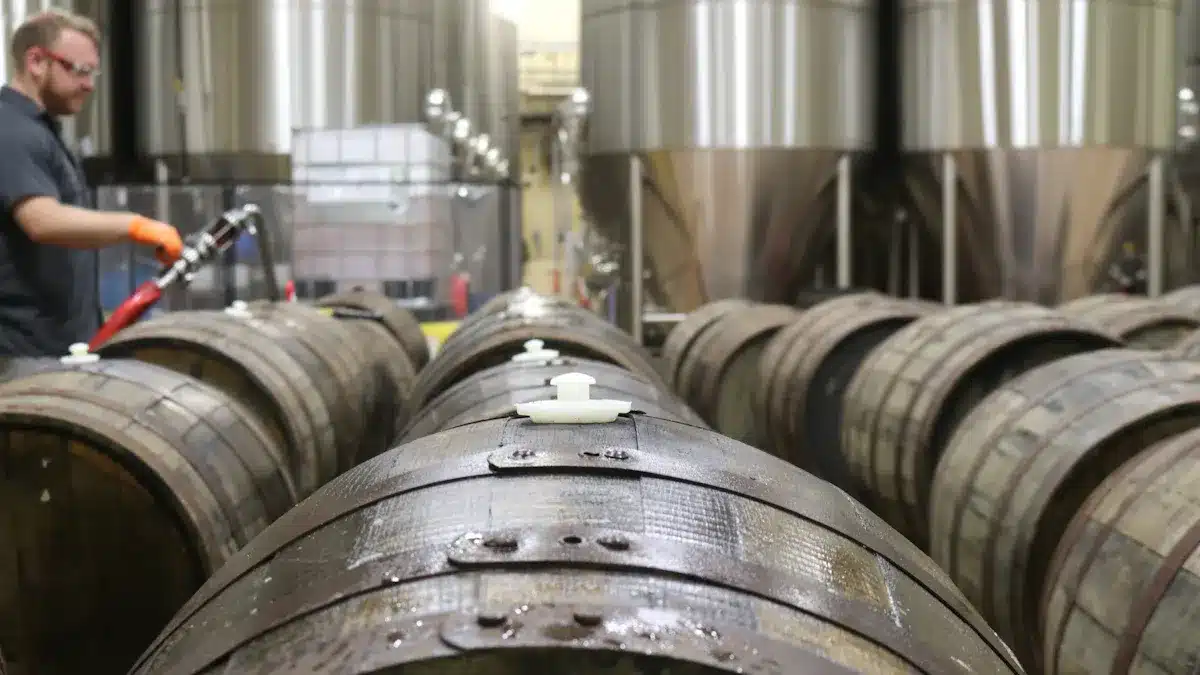
A beer fermentation tank is very important for making good beer. New tanks, like the COFF fermentation tank, use stainless steel to keep beer safe from oxygen. This stops bad flavors and keeps the beer tasting fresh. Stainless steel tanks are sealed tight, so oxygen cannot get in. This keeps the beer’s flavors and smells safe. These tanks also stop wild yeast and bacteria from getting inside. This lowers the chance of the beer getting spoiled. The smooth stainless steel is easy to clean. It helps stop germs from sticking to the tank.
Stainless steel tanks block oxygen and keep beer tasting good.
Sealed tanks help keep the smell and taste fresh.
Easy cleaning means less chance of germs.
A good beer fermentation tank helps yeast do its job better. Conical tanks let yeast and sediment fall to the bottom. This makes the beer look clearer. Tanks with good temperature and pressure control help yeast make alcohol and carbon dioxide. Both are needed for beer.
Temperature control is one of the most important things in a beer fermentation tank. The COFF fermentation tank has special cooling systems and sensors to keep the temperature right. This helps yeast stay healthy and active. The table below shows why temperature control is helpful:
Benefit | Explanation |
|---|---|
Improved Yeast Activity | Yeast works best at certain temperatures, making better beer and fewer off-flavors. |
Enhanced Flavor Profiles | Good temperature control helps create balanced flavors and aromas. |
Regulated Fermentation Speed | Keeping the right temperature makes fermentation steady and predictable. |
Product Consistency | Every batch tastes the same when the temperature stays steady. |
Safety | Right temperatures help stop germs and keep the tank strong. |
Temperature changes how beer tastes. Ales ferment in warmer places and have bold flavors. Lagers ferment in cooler places and taste clean and crisp. Good temperature control in a beer fermentation tank helps brewers make the beer they want every time.
Picking the right beer fermentation tank depends on a few things. Brewers should think about their budget, how much they brew, and how much space they have. Stainless steel tanks, like the COFF fermentation tank, last a long time and are easy to clean. They cost more than plastic or glass tanks. But they protect beer better and do not break or scratch easily.
Make sure the tank is the right size for your batch.
Stainless steel is strong and keeps out germs.
Conical tanks help make beer clear.
Think about space and how easy the tank is to use.
A good fermentation tank, like a COFF fermentation tank, helps brewers control the environment. This lets them make safe, tasty, and clear beer.
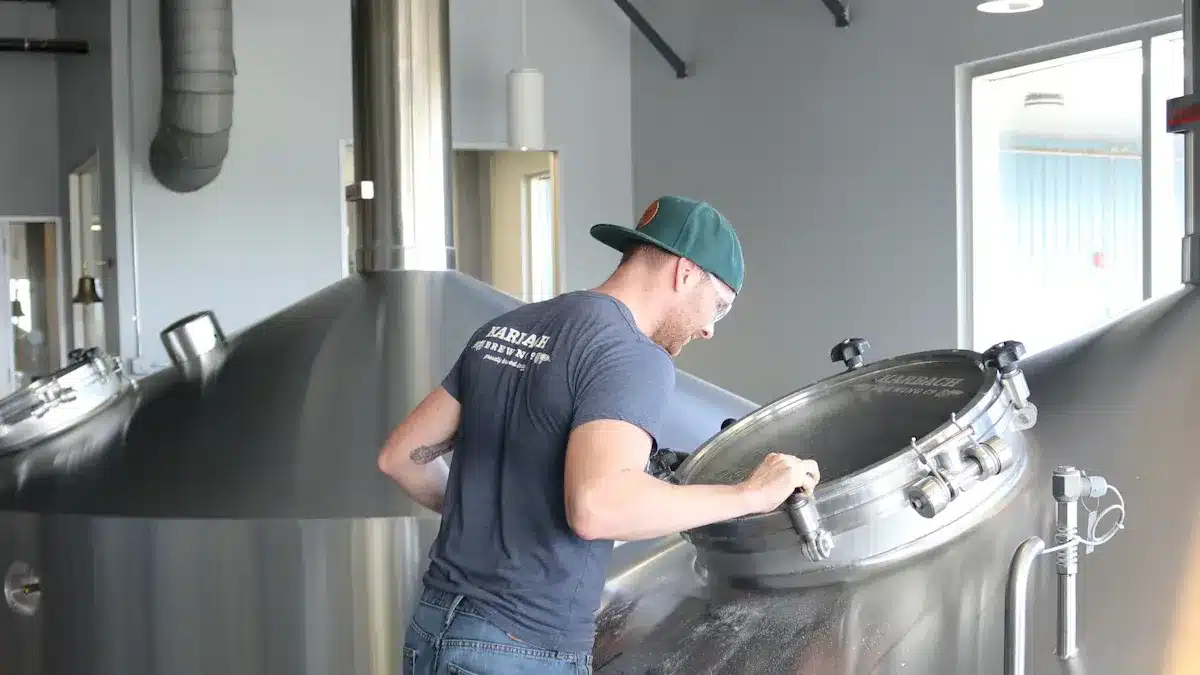
When fermentation starts, yeast begins working. Brewers look for bubbles in the airlock. These bubbles show up every few seconds. They happen most in the first two days. Foam forms on top of the beer. The liquid inside the tank moves around. Brewers check specific gravity to see if sugars are changing to alcohol. If bubbles keep going after 14 days at room temperature, fermentation is still happening. Most activity lasts about a week. The first three days are the busiest. After that, things slow down.
Common signs of active fermentation:
Airlock bubbles every few seconds
Foam or krausen on the beer’s surface
Movement inside the tank
Drop in specific gravity
Brewers use final gravity readings to see if fermentation is done. They use a hydrometer to measure sugar left in the beer. Experts say to check the hydrometer with distilled water first. A hydrometer that reads from 0.990 to 1.120 works for most beers. Brewers take a sample with clean tools and put it in a test jar. They spin the hydrometer gently and read the number at the right temperature. If two readings a day apart are the same, fermentation is finished.
Time Period | Specific Gravity | Status |
|---|---|---|
Day 0 | 1.018 | Initial Measurement |
Day 3 | 1.018 | Stable, fermentation complete |
Day 10 | 1.018 | Yeast cleanup ongoing |
Other signs are bubbles slowing down and gravity staying the same for three days. If gravity is close to the expected value, the beer is ready for the next step.
Mistakes during fermentation can make beer taste bad. Using unhealthy yeast can stop fermentation. This makes beer flat. Fermenting at the wrong temperature can cause bad flavors. Not enough oxygen makes yeast weak. This leads to poor fermentation. Dirty tanks can cause germs and spoil the beer.
Mistake | Effect on Final Product |
|---|---|
Using Unhealthy Yeast | Can prevent fermentation from starting, leading to flat or unfermented beer. |
Fermenting at the Wrong Temperature | Can result in off-flavors or incomplete fermentation, affecting taste and quality. |
Having Insufficient Oxygen | Without enough oxygen, yeast may struggle to ferment, leading to poor fermentation. |
Fermenting in Unsanitary Tanks | Increases risk of contamination, which can lead to unexpected flavors and spoilage. |
To stop bad flavors, brewers keep the temperature right for the yeast. They use wet towels, ice baths, or chillers to control heat. Cleaning all equipment helps stop germs. Boiling the wort for an hour removes chemicals that cause bad tastes. Raising the temperature near the end helps remove unwanted flavors.
Conditioning and maturation are important steps after fermentation. When primary fermentation ends, beer needs more time to taste its best. Brewers let beer sit in the fermentation tank for days or weeks. How long this takes depends on the beer style and flavors wanted. Lagers stay in the tank longer to get crisp and clean flavors.
Beer conditioning can last a few days or several weeks.
The time depends on the beer type and flavor wanted.
Lagers need more time to taste better.
During conditioning, flavors mix and become smoother. Bad tastes go away, and the beer gets richer. Yeast and proteins sink to the bottom, making the beer look clearer. This step helps the beer taste and look its best. Brewers notice smoother flavors and clearer beer after this.
Tip: Give enough time for conditioning so the beer is smooth and clear.
Carbonation is another key part of brewing beer. Brewers use different ways to carbonate beer, and each way changes how it tastes and feels. Some beers need lots of bubbles, while others need less. Natural carbonation happens in bottles or tanks. Forced carbonation uses CO₂ to make bubbles faster.
Carbonation Method | Beer Styles | Impact on Taste and Mouthfeel |
|---|---|---|
High Carbonation | Saisons, Belgian Ales, Lagers | Makes beer crisp and fresh, and brightens the smell. |
Low Carbonation | Stouts, Porters, Cask Ales | Makes beer smooth and creamy, and softens flavors. |
Natural Carbonation | Bottle-conditioned, Krausened | Makes bubbles naturally, giving a softer feel. |
Forced Carbonation | Modern breweries | Gives exact control over bubbles and keeps beer the same every time. |
Brewers watch the beer closely during carbonation. They check the bubbles and change methods to fit the beer style.
Knowing when to bottle or keg is very important. Brewers use a hydrometer to see if fermentation is done. They check the reading every day or two at the end. If the number does not change for a few days, the beer is ready. Most homebrews finish between 1.010 and 1.020. The beer gets clearer as yeast falls down, and airlock bubbles slow to five or six per minute.
Use a hydrometer to see if fermentation is done.
Check the hydrometer every 1-2 days near the end.
Make sure the reading stays the same for a few days.
Most homebrews finish between 1.010 and 1.020.
The beer gets clearer as yeast drops to the bottom.
There should be only a few bubbles in the airlock, about 5 or 6 each minute.
Do not just watch the airlock to know if fermentation is done.
Yeast keeps working even after bubbles stop, which helps clean up bad flavors.
Bottling or kegging too soon can hurt beer quality and safety. Bottled beer uses natural carbonation and stays good for up to a year, but it tastes best in the first six months. Kegged beer uses forced carbonation and stays fresh for weeks, often longer than bottles.
Method | Carbonation | Freshness | Storage Longevity |
|---|---|---|---|
Bottling | Natural | Good, but fades after 6 months | Up to 1 year |
Kegging | Forced (CO₂) | Stays fresh for weeks | Longer than bottles |
Brewers should always follow these steps to make safe and tasty beer.
Ales and lagers take different times to ferment. The table below shows how long each type usually needs:
Type | Fermentation Time | Notes |
|---|---|---|
Ales | 2-4 weeks | You can drink these sooner. |
Lagers | 4-8 weeks or more | These need more time in the cold. |
A good beer fermentation tank with temperature control helps yeast do its job. It also keeps the beer tasting fresh and clean. Brewers should check fermentation with a hydrometer. They also need to wait for conditioning. Being patient during these steps makes beer clear, tasty, and safe to drink.
They can look for bubbles in the airlock and foam on top of the beer. These signs show that beer fermentation has begun. The liquid may move inside the tank. The smell will also change as yeast works.
Temperature affects how yeast works during beer fermentation. Warm temperatures speed up the process. Cold temperatures slow it down. Keeping the right temperature helps yeast make good flavors and prevents off-tastes in the beer.
If beer fermentation stops early, the beer may taste sweet or unfinished. Yeast may not turn all the sugar into alcohol. Checking gravity readings helps brewers know if beer fermentation is complete.
Yes, they can reuse yeast after beer fermentation. Brewers collect yeast from the bottom of the tank. They clean and store it for the next batch. This practice saves money and keeps beer fermentation consistent.
The type of tank changes beer fermentation results. Stainless steel tanks, like COFF tanks, keep out oxygen and germs. They help control temperature. This control leads to better beer fermentation and improved flavor.