


COPYRIGHT © 2022 COFF International Co., ltd. ALL RIGHTS RESERVED


A ミキシングタンク utilizes a rotating agitator to generate controlled fluid motion, uniformly blending liquids, powders, and semi-solid materials. By combining shear, diffusion, and convection mixing mechanisms, industrial mixing tanks deliver consistent batch quality and efficient processing across food, beverage, pharmaceutical, cosmetic, and chemical industries. Understanding how mixing tanks work helps manufacturers select suitable equipment for stable, repeatable production results.
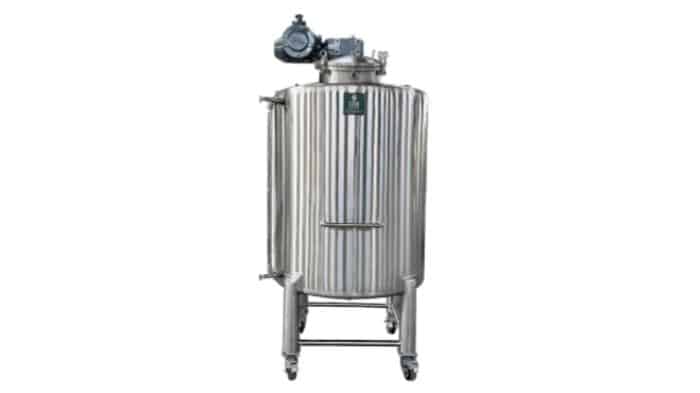
All industrial mixing tanks operate on the same fundamental principle: the agitator converts mechanical rotation energy into controlled fluid movement. This fluid motion generates three complementary mixing forces that eliminate uneven blending, particle settling, and material stratification.
Shear force creates relative sliding motion between fluid layers, breaking down solid agglomerates, dispersing fine particles, and emulsifying immiscible materials.
Diffusion enables microscopic particle random movement, evenly distributing minor ingredients, additives, and powders throughout the liquid base.
Convection drives large-scale fluid circulation across the entire tank volume, eliminating mixing dead zones and ensuring full-vessel homogeneity.
Agitator speed directly defines flow characteristics. Low rotation speeds produce laminar flow for gentle mixing of high-viscosity creams and pastes, while high speeds generate turbulent flow for fast blending of low-viscosity liquids.
Different material viscosities and process goals require matched agitator designs.
| 攪拌機タイプ | 最適 |
|---|---|
| Paddle | Gentle mixing of low- to medium-viscosity liquids |
| Anchor | High-viscosity products such as creams, pastes, and adhesives |
| Turbine | Emulsification, reaction mixing, and gas dispersion |
| Propeller | High-flow rapid mixing of low-viscosity liquids |
Agitators are also categorized by installation position to fit different tank layouts and processes:
| Mounting Type | 代表的なアプリケーション |
|---|---|
| Top-Entry | General-purpose industrial mixing for most standard tanks |
| Side-Entry | Large-volume storage tanks and low-shear continuous mixing |
| Bottom-Entry | Fermentation, high-viscosity processing, and fully draining systems |
ほとんどの場合 industrial mixing tanks feature jacketed walls or internal coils for precise heating and cooling. Accurate temperature regulation is critical for fermentation, emulsification, powder dissolution, and chemical reactions.
Tank heating can adopt steam, hot water, or thermal oil systems, while circulating cooling water stabilizes product temperature, prevents deterioration, and maintains consistent batch quality.
Beyond standard agitator mixing, we offer advanced solutions for complex production needs:
Four key factors determine final mixing results:
COFF provides all these specialized mixing configurations and custom-engineered tank designs to perfectly match your specific process requirements.
Stainless steel is the standard material for hygienic industrial mixing tanks due to its smooth surface, corrosion resistance, and easy cleaning performance.
SUS304 Stainless Steel: Ideal for general food, beverage, and cosmetic production.
SUS316L Stainless Steel: Provides superior corrosion resistance for chemical processing and high-purity pharmaceutical manufacturing.
Modern sanitary mixing tanks are equipped with CIP (Clean-in-Place) systems. Automatic circulating cleaning removes residues without tank disassembly, improving sanitation standards and cutting labor and downtime costs.
Advanced industrial mixing tanks support full-process intelligent control:
These upgrades ensure repeatable batch parameters and higher production consistency.
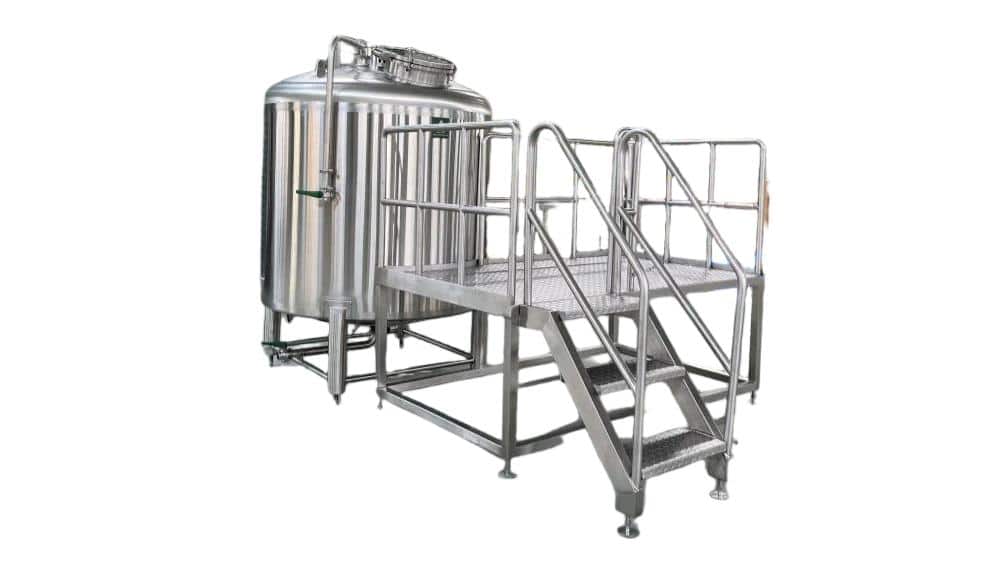
As a professional manufacturer of sanitary stainless steel processing equipment, COFF designs and produces high-performance mixing tanks for food, beverage, pharmaceutical, cosmetic, and chemical industries.
Our mixing tank advantages include:
Every COFF mixing tank is built for stable mixing performance, high sanitary standards, and long service life for complex industrial production environments.
Mixing tanks are core equipment for consistent, high-quality production across food, pharmaceutical and chemical industries. By delivering precise shear, diffusion and convection mixing, they ensure uniform blending and process efficiency.
At COFF, we build custom stainless steel mixing tanks tailored to your needs, with industry-leading hygiene, reliability and automation features. Contact our team today to find the right mixing solution for your production line.
Industrial mixing tanks are mainly constructed of food-grade SUS304 or corrosion-resistant SUS316L stainless steel, ensuring hygienic production and long-term durability.
Modern mixing tanks adopt CIP automatic cleaning systems. Cleaning and sanitizing solutions circulate fully inside the tank to remove residues without manual disassembly.
Agitator selection depends on material viscosity, batch volume, and mixing goals. Low-viscosity fluids match propeller or turbine agitators, while high-viscosity products require paddle or anchor designs.
Yes. Jacketed or coil heating/cooling structures support precise temperature adjustment throughout mixing, meeting fermentation, reaction, and emulsification process needs.
Mixing tanks are widely used in food & beverage, pharmaceutical, cosmetic, and chemical manufacturing for blending, dissolving, emulsifying, and homogenizing processes.