
COPYRIGHT © 2022 COFF International Co., ltd. ALL RIGHTS RESERVED


A ビール発酵タンク is the core production vessel of every craft and commercial brewery, designed to transform sweet hopped wort into finished beer through controlled yeast activity. Built as sealed, pressure-rated stainless steel enclosures, these tanks deliver precise temperature regulation, yeast management, and natural carbonation — all while isolating the brew from external contamination.

Each component of a commercial beer fermentation tank is designed to support controlled fermentation, sanitary processing, efficient cleaning, and safe pressure management.
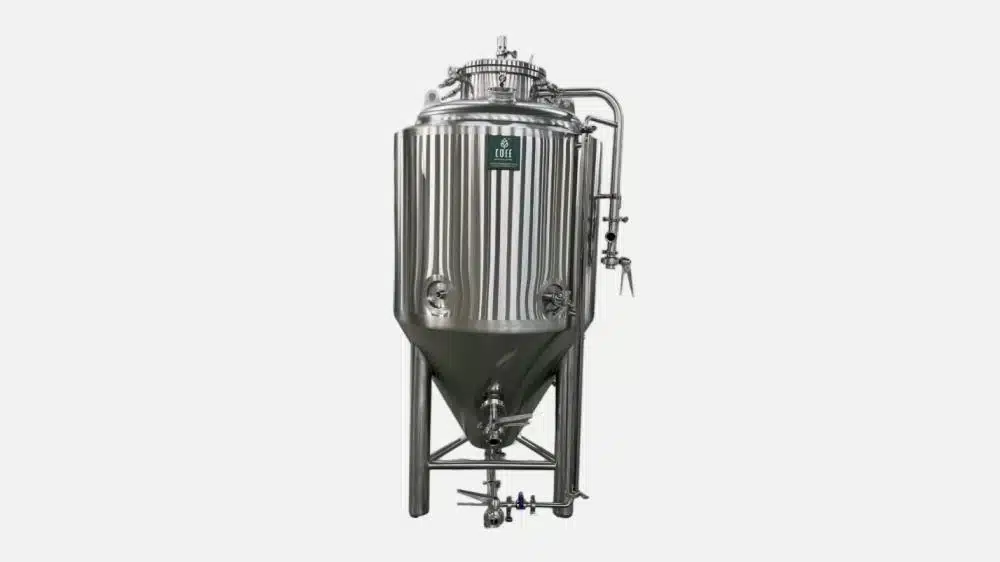
The tank vessel is typically made from food-grade 304 stainless steel, with a smooth internal surface that helps reduce residue buildup and simplifies cleaning. Sanitary TIG welding provides strong, hygienic joints and supports long-term durability.
Dimpled glycol cooling jackets surround the vessel and circulate chilled glycol to control fermentation temperature. External insulation helps minimize heat transfer and improve cooling efficiency.
Adequate headspace above the working volume allows room for krausen, foam, and fermentation expansion, reducing the risk of product loss or interference with tank fittings.
A steep conical bottom directs yeast and other settled solids toward the lowest point of the tank. This makes sediment removal, beer clarification, and yeast harvesting easier without draining the main beer volume.
Sanitary valves maintain a closed, hygienic processing path for liquid, gas, and sampling operations. Common connections include:
For tanks designed to operate under pressure, the vessel must have an appropriate working-pressure rating and safety system for its intended application. Depending on the equipment design, market, and local regulations, applicable pressure-vessel standards may include ASME Section VIII or AS 1210.
Typical safety components include pressure relief valves, pressure gauges or transmitters, and controlled gas connections. Manufacturers also perform pressure or leak testing according to the applicable design and inspection requirements before shipment.
Together, these components create a sanitary and controlled environment for fermentation while supporting reliable cleaning, cooling, and pressure management.

A fermentation tank provides a controlled environment for converting wort into beer. The main stages include wort transfer and yeast pitching, temperature-controlled fermentation, yeast settling and harvesting, and pressure management.
The process starts when cooled wort is transferred into the fermentation tank. Wort may be aerated during transfer to provide the oxygen needed for healthy yeast growth, after which brewers pitch an appropriate yeast strain based on the beer style and batch size.
| 酵母の種類 | Typical Pitch Rate |
|---|---|
| Ale strains | 50–80 g/hL |
| Lager strains | 80–120 g/hL |
Once pitched, yeast consumes fermentable sugars and produces alcohol, CO₂, and heat. The enclosed tank provides a controlled and sanitary environment for this process.
Because fermentation produces heat, maintaining a stable temperature is essential for controlling yeast activity and developing the intended beer profile. The appropriate range depends on the yeast strain and beer style.
| ビールのスタイル | Typical Fermentation Range | Typical Flavor Profile |
|---|---|---|
| アメリカン・エール | 65–72°F (18–22°C) | Relatively neutral |
| イングリッシュ・エール | 65–70°F (18–21°C) | Moderate, style-specific esters |
| ベルギー・エール | 68–78°F (20–26°C) | Distinctive ester and phenol character |
| ヘーフェヴァイツェン | 62–68°F (17–20°C) | Banana and clove character |
The cooling jackets remove excess fermentation heat, while temperature sensors and control valves regulate glycol flow to keep the beer within the target range.
As fermentation slows, yeast begins to flocculate and settle into the conical bottom. The concentrated yeast slurry can then be removed through the lower discharge valve.
For suitable yeast strains and brewing programs, brewers may collect and reuse healthy yeast in subsequent batches. Sanitary valves and closed transfer paths help reduce contamination risks during harvesting.
As yeast produces CO₂, pressure inside the sealed tank can rise. Pressure-control equipment allows brewers to manage this pressure within the tank’s rated operating range.
| Valve Type | 主要機能 | Role in Carbonation |
|---|---|---|
| Pressure Relief Valve (PRV) | Protects the tank from excessive pressure | Safety only |
| Spunding Valve | Maintains a controlled fermentation pressure | Retains CO₂ for natural carbonation |
Near the end of fermentation, a spunding valve can maintain a selected pressure while yeast activity decreases. This allows some of the generated CO₂ to remain dissolved in the beer, supporting natural carbonation.
The appropriate pressure setting depends on the tank rating, yeast activity, beer style, and brewing process. Combined with temperature and yeast management, controlled pressure helps create more consistent fermentation results from batch to batch.
Even well-designed systems can develop performance issues. These are the most frequent problems and root causes:
A beer fermentation tank is far more than a simple holding vessel — it is a precision process tool where every design choice directly impacts beer flavor, consistency, and production efficiency. From stainless steel construction and glycol temperature control to conical yeast management and automated CIP hygiene, each component works in tandem to create a controlled, repeatable fermentation environment.
Understanding how these systems work together helps brewers optimize operation, troubleshoot issues, and make informed decisions when selecting or scaling their 醸造設備.
Nearly all commercial beer fermentation tanks are constructed from food-grade SUS304 stainless steel, chosen for its corrosion resistance, sanitary smooth surface, and durability. Higher-spec 316L stainless steel may be used for highly acidic products or harsh water conditions.
A 60° conical bottom funnels flocculated yeast into a dense, concentrated layer at the tank’s lowest point. This allows brewers to harvest or remove yeast cleanly through the bottom valve without wasting clear beer, and speeds up natural beer clarification.
Commercial fermentation tanks are designed with at least 20% headspace above the maximum liquid fill line. This volume safely contains krausen and foam during vigorous early fermentation, preventing overflow and keeping gas valves clean and functional.
Glycol cooling jackets circulate chilled propylene glycol solution through dimple channels welded to the tank exterior. Digital temperature sensors monitor beer temperature in real time, and automated valves adjust glycol flow to remove excess fermentation heat, maintaining setpoints within ±0.5°F (±0.3°C).
Most ales complete primary fermentation in 7–10 days, followed by 2–3 days of diacetyl rest and cold crashing. Lagers typically require 2–4 weeks of total tank time including cold conditioning. Exact duration varies by beer style, yeast strain, and target flavor profile.