


COPYRIGHT © 2022 COFF International Co., ltd. ALL RIGHTS RESERVED


The most reliable, widely used method to measure milk in a bulk tank is a clean, tank-specific calibrated dipstick paired with an official conversion chart. The operator lowers the gauge rod into the tank, reads the liquid level in inches and fractional increments, and matches the reading to the chart to calculate total volume. Other common methods include sight gauges, automated sensors, scales and flow meters, selected based on farm size, workflow and local regulatory requirements.
Accurate bulk tank milk measurement depends on three core basics: a level tank, clean calibrated equipment, and consistent technique. Reliable readings support milk pickup verification, quality tracking, regulatory compliance and herd health monitoring.

Four standard tools are used across dairy operations, each suited to different farm sizes and use cases.
| Method | How It Works | Best For |
|---|---|---|
| Calibrated dipstick | Marked gauge rod lowered into the tank, reading converted to volume via a tank-specific chart | Small farms, backup verification for all operation sizes |
| Sight/float gauge | Clear side tube or floating pointer shows level directly, converted with the same chart | Mid-size operations wanting fast, no-open checks |
| Weigh scales | Tank placed on a platform scale; mass converted to volume using milk’s specific gravity | Farms that already move tanks onto weighing platforms |
| Flow meter | Tracks volume of milk as it flows into the tank | Large operations with automated pickup and logging systems |
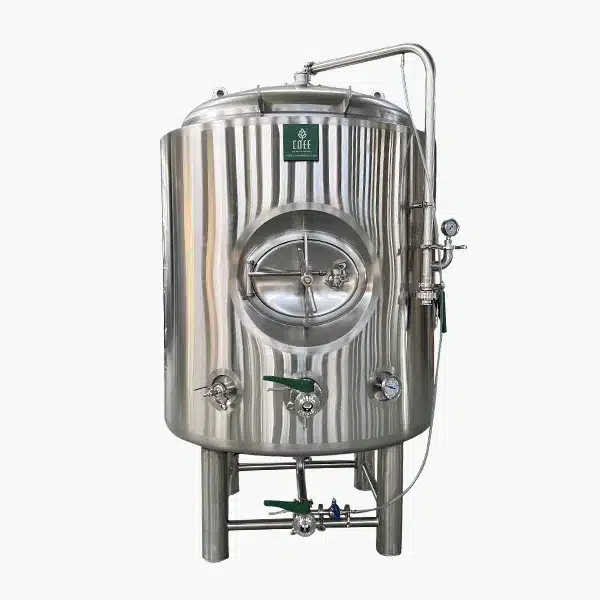
For large silo-style tanks, hydrostatic pressure sensors are also standard. Raw milk has a specific gravity of roughly 1.03, so a sensor at the tank base converts liquid head height to volume with high reliability. Many commercial stainless steel milk tanks — such as COFF units ranging from 200L to 20,000L — include built-in level indicators to serve as a quick reference alongside other measurement methods.
Base your selection on herd size, daily workflow, and local inspector requirements. Dipsticks have the lowest upfront cost and are nearly universally accepted for regulatory purposes. Automated systems add convenience and continuous logging but carry higher upfront cost. Most farms use a hybrid approach: an automated system for daily records, plus periodic dipstick checks to verify accuracy.

The dipstick remains the gold standard for reliable, audit-ready volume readings. Follow this consistent process for repeatable results.
Match the inch reading to your milk tank’s official conversion chart to get the final volume in gallons. Always confirm the chart number matches your specific tank model — a chart from a different unit will produce wrong results.
Consistent technique is the most important factor for accuracy. The same operator, same vertical dip angle, and same chart will produce repeatable readings day after day.
For faster, more frequent readings, many operations add permanent gauges or automated sensors.
A sight gauge uses a clear vertical tube on the side of the tank to show milk level at a glance, no tank opening required. Float gauges use a sealed buoy on the milk surface that moves a pointer or sends an electronic signal as levels change.
Both designs are convenient for quick spot checks, but require regular verification. Floats can stick, and sight tubes can cloud over time. Compare gauge readings to a dipstick measurement periodically to keep readings accurate.
Automated sensor systems track milk level continuously, with timestamped logs stored in farm management software. Many also integrate with pickup records to create a full audit trail of every load leaving the property. The software can flag sudden volume drops that may signal leaks or cooling system issues.
Even with full automation, periodic dipstick cross-checks are considered best practice to catch sensor drift or stuck floats before they cause billing or compliance errors.
Four common mistakes cause most inaccurate readings. Addressing them will drastically improve the reliability of your measurements.
Recalibrate after any time the tank is moved, repaired or re-leveled, and do a full annual verification to catch gradual drift. To calibrate, add water to the tank in 10-gallon increments and mark each level on the rod.
Each chart is custom calculated for one specific tank model, accounting for its exact shape, end caps and internal fittings. A chart from a different tank will give incorrect volume results, even if the tanks look similar.
Yes. Temperature changes the density of milk, so the same mass of milk will show a slightly different level at different temperatures. Record temperature with every reading, and apply any correction factor listed on your tank’s conversion chart.
While automation delivers continuous, convenient logging, sensors can drift or stick over time. Periodic dipstick cross-checks catch these issues early, so it is best practice to verify automated readings manually on a regular schedule.
Log the final calculated volume, milk temperature, and dipstick calibration status for every reading. These records support pickup reconciliation, regulatory audits and quality trend tracking.