


COPYRIGHT © 2022 COFF International Co., ltd. ALL RIGHTS RESERVED


Fermentation tank stainless steel sets the benchmark for wine and beer production. Industry experts trust this material because it prevents contamination, supports precise temperature control, and maintains the true taste of wine. Stainless steel brewing equipment offers easy cleaning and resists corrosion from acidic grape juice. These tanks create an airtight environment, allowing the natural acidity and freshness of wine to shine. COFF, a global leader in stainless steel brewing equipment, delivers unmatched quality for every winemaker and brewer.
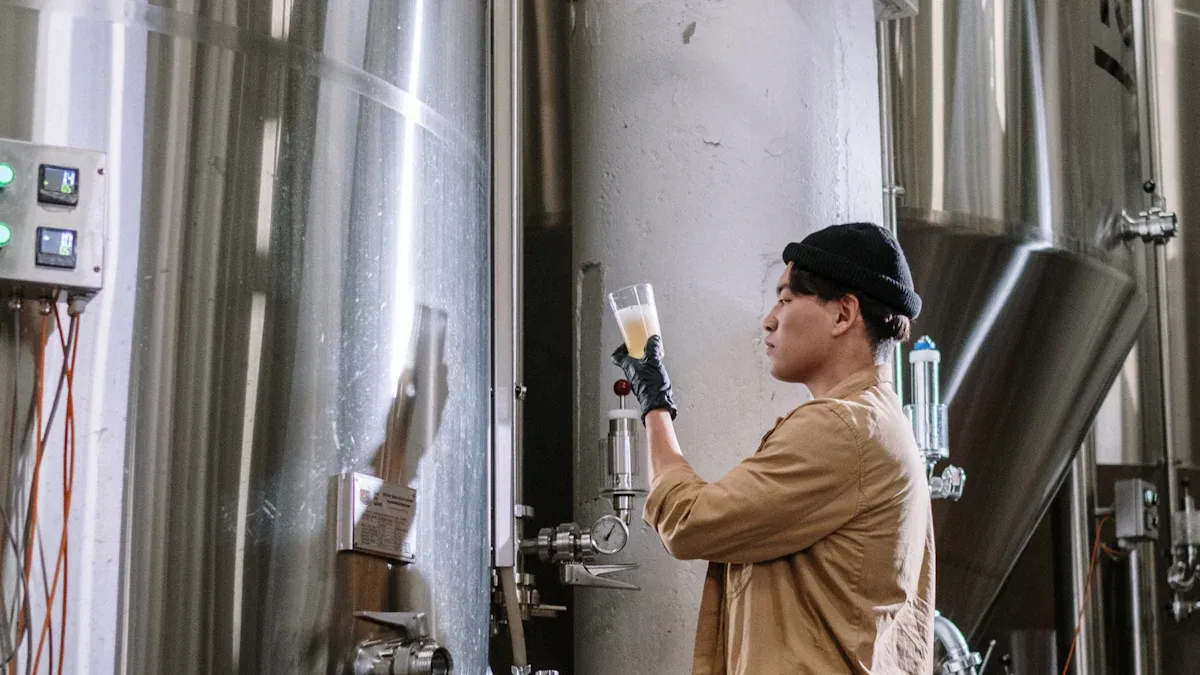
Stainless steel fermentation tanks offer a non-porous surface that blocks the buildup of bacteria and prevents contamination. The smooth, seamless walls of stainless steel tanks do not allow microbes to hide or penetrate. This feature stands out when compared to porous materials like wood or concrete, which can trap residues and make cleaning difficult.
| Material Type | Surface Characteristic | Impact on Microbial Contamination | Cleaning Implications |
|---|---|---|---|
| Stainless Steel | Non-porous, smooth | Prevents bacterial growth | Easier and more effective cleaning |
| Oak Barrels | Porous | Can harbor microbes | Cleaning is more difficult |
| Concrete Tanks | Porous | Can harbor microbes | Cleaning is more difficult |
Stainless steel fermentation tanks keep the brewing process contamination risk low. The non-porous surface also supports effective sanitizing and cleaning, which are essential for sanitation and cleanliness in every batch.
Cleaning stainless steel tanks is simple and effective. The tanks withstand hot water, caustic detergents, and strong sanitizing agents. This process removes almost all harmful bacteria, including biofilms that can cause contamination. Enzymatic cleaning agents can eliminate up to 99% of biofilms on stainless steel surfaces.
Scientific studies confirm that grades 304 and 316 stainless steel tanks release very low amounts of metal, keeping food and beverages safe. Stainless steel tanks meet strict international hygiene certifications, such as ISO9001 and FDA standards. COFF designs stainless steel fermentation tanks with these hygiene benefits in mind, ensuring every brewer and winemaker can trust their equipment for safe, clean production.
Stainless steel fermentation tanks protect wine and beer from contamination. Manufacturers use 304 stainless steel and 316l stainless steel because these alloys resist corrosion and do not react with acidic liquids. These materials keep the product hygienic and safe. They also withstand repeated sanitizing without breaking down or leaching harmful substances.
Several regulations require food-grade materials in fermentation tanks:
304 stainless steel and 316l stainless steel meet these strict requirements. They help brewers and winemakers maintain safety and purity in every batch. COFF uses only certified food-grade stainless steel in its tanks, supporting both product quality and regulatory compliance.
Certifications prove that stainless steel fermentation tanks meet industry standards for safety and quality. Most commercial tanks carry several important certifications:
COFF’s tanks hold these certifications, showing a commitment to safety and compliance. These certifications assure brewers and winemakers that their equipment supports sanitizing, prevents contamination, and meets global standards. Tanks made from 304 stainless steel and 316l stainless steel provide reliable performance batch after batch.
Stainless steel tanks show outstanding durability in wine and beer production. SUS304 stainless steel, used in most tanks, meets international standards for corrosion resistance properties. These tanks resist acidic components found in grape juice and beer wort. This resistance protects the tank from rust and damage, even in humid or acidic environments. Stainless steel tanks keep their structure strong and safe, which helps preserve the quality of wine and beer during long-term storage. Unlike wooden barrels, stainless steel tanks do not absorb flavors or moisture. They require less maintenance and provide consistent performance over time.
COFF designs stainless steel tanks to deliver high durability and reliable performance for every batch.
Stainless steel tanks offer a long service life, making them a smart investment for breweries and wineries. The average lifespan of stainless steel tanks ranges from 20 to 30 years. This long-lasting performance means fewer replacements and lower costs over time. The table below compares the average lifespan and durability of different fermentation tank materials:
| Tank Material | Average Lifespan | Durability | Notes on Maintenance and Flavor Impact |
|---|---|---|---|
| Stainless Steel | 20 to 30 years | High | Requires regular cleaning and maintenance; corrosion resistant; no flavor impact |
| Oak (Wood) Barrels | 3 to 5 years | Medium | Needs more care and cleaning; adds flavor complexity (vanilla, spice, tannins) |
| Concrete | Long-lasting | Medium to High | Requires regular cleaning; stable temperature; minimal flavor impact |
| Plastic (HDPE) | Short lifespan | Low | Lightweight, affordable; scratches easily; no flavor impact |
Stainless steel tanks stand out for their durability and longevity. They deliver long-lasting performance and protect the taste of wine and beer. COFF’s stainless steel tanks help producers achieve consistent results and reduce long-term costs. Their tanks support breweries and wineries with reliable performance year after year.
Stainless steel fermentation tanks give winemakers and brewers precise control over temperature. These tanks often feature jacketed designs. Coolant or hot water flows through these jackets, keeping the tank at the desired temperature. Insulation layers, such as polyurethane or rock wool, help reduce heat loss and improve energy efficiency. Stainless steel tanks also include automatic degassing valves, temperature sensors, and pressure gauges. These features allow for automated and safe temperature adjustments. The use of 316L stainless steel ensures corrosion resistance and easy cleaning, which supports consistent fermentation conditions and reliable performance.
These design elements work together to deliver efficient temperature regulation. Brewers and winemakers can respond quickly to changes, protecting the quality of every batch. Stainless steel tanks help maintain the ideal environment for yeast and enzymes, which leads to better fermentation performance.
Temperature consistency is critical for producing high-quality wine and beer. Stainless steel tanks make it possible to keep fermentation within tight temperature ranges. This control affects the speed of fermentation and the flavors that develop. For example, ales ferment best at 15°C-24°C, while lagers need cooler temperatures between 7°C-13°C. Red wines require 20°C-30°C, and white wines do best at 10°C-15°C. Stainless steel tanks allow producers to match these needs exactly.
Stainless steel tanks help winemakers preserve delicate aromas in white wines and manage maceration in reds. Brewers can avoid harsh alcohols and achieve the right carbonation. This level of control ensures every batch meets high standards for flavor, aroma, and overall performance.
Stainless steel fermentation tanks protect the true taste of wine and beer. The non-reactive surface does not absorb odors or release unwanted flavors. This material keeps the chemical composition of wine stable during fermentation. Stainless steel does not react with acids or other ingredients. As a result, the original aroma and taste remain unchanged.
Scientific research shows that stainless steel tanks slow chemical changes and preserve fresh, fruity wine characteristics. Oak barrels allow oxygen in and add flavors like vanilla or spice. Concrete tanks let in some oxygen but do not add wood flavors. Plastic tanks can absorb and release flavors, which lowers wine quality.
| Tank Material | Key Characteristics and Effects on Flavor Purity |
|---|---|
| Stainless Steel | Non-breathable and non-reactive; isolates oxygen to prevent oxidation; easy to clean; equipped with temperature control; does not impart any additional flavors; preserves fresh, fruity, and pure grape characteristics. Ideal for refreshing white and fruity red wines. |
| Oak Barrels | Porous, allows micro-oxygenation; imparts complex flavors and aromas (vanilla, spices, caramel, etc.); softens tannins; requires maintenance; adds flavor complexity but alters original flavor purity. |
| Concrete Tanks | Semi-permeable, allows micro-oxygenation similar to oak but without wood flavors; imparts mineral notes; produces balanced and rounded wines; preserves grape flavor more purely than oak. |
| Plastic Tanks | Lightweight and inexpensive; prone to scratches and bacterial contamination; can absorb wine color and taste over time; unsuitable for long-term aging or high-end wines; shorter service life. |
Stainless steel supports optimal wine aging in stainless steel tanks. The wine keeps its natural fruit notes and freshness.
Stainless steel tanks create an airtight seal. This feature blocks oxygen from entering during fermentation. Oxygen can cause wine to lose its fresh taste and develop off-flavors. By keeping air out, stainless steel tanks help preserve the clean, crisp character of wine.
Winemakers use stainless steel tanks to keep wine flavors stable. The airtight environment is key for making high-quality white and fruity red wines. This method helps winemakers deliver the same taste and aroma every time.
Stainless steel fermentation tanks offer breweries and wineries a practical solution for easy maintenance and cleaning. The smooth surface resists stains and buildup, making cleaning fast and thorough. Workers can use hot water, steam, or automated systems to sanitize tanks after each batch. Stainless steel does not absorb odors or flavors, so cleaning removes all residues. This process helps prevent contamination and keeps every batch consistent.
Many producers choose stainless steel because it reduces labor and supply costs. Tanks require less frequent attention compared to wood or plastic. Oak barrels need regular conditioning and deep cleaning, while plastic tanks often develop scratches that trap bacteria. Stainless steel tanks maintain their quality with simple cleaning routines. COFF designs tanks with rounded corners and welded seams, which support easy maintenance and sanitation.
Tip: Automated cleaning systems in stainless steel tanks save time and lower operating costs for breweries and wineries.
The table below compares maintenance and replacement costs over a 10-year period:
| Material Type | Typical Lifespan (Years) | Maintenance & Replacement Costs Over 10 Years |
|---|---|---|
| Stainless Steel | 20-30+ | Low due to corrosion resistance, ease of cleaning, and infrequent replacements |
| Oak Barrels | 3-5 | High due to frequent replacements and conditioning needs |
| Concrete Tanks | ~10 | Moderate to high due to wear and maintenance requirements |
| Plastic Tanks | 2-5 | High due to short lifespan and frequent replacements |
Stainless steel fermentation tanks deliver strong long-term value for wine and beer producers. Although the initial investment is higher, the tanks last over 20 years with minimal replacement needs. Stainless steel resists corrosion and damage, so cleaning remains easy throughout the tank’s life. Producers save money by avoiding frequent replacements and reducing product loss.
The return on investment for stainless steel tanks surpasses other materials. Oak barrels require replacement every few years, and plastic tanks often fail early. Concrete tanks need regular maintenance. Stainless steel tanks, especially those from COFF, provide reliable performance and high resale value. The table below highlights the long-term cost impact:
| Material | Initial Cost Range (USD) | Lifespan / Replacement Frequency | Long-Term Cost Impact |
|---|---|---|---|
| Stainless Steel | Highest upfront cost | Minimal replacements needed | Lower total cost due to longevity and operational savings |
| Oak Barrels | Moderate to high | Frequent replacements (every few years) | Higher cumulative cost due to replacements and labor |
| Concrete Tanks | Moderate | Long-lasting but requires maintenance | Moderate long-term cost |
| Plastic Tanks | Lowest upfront cost | Short lifespan, quality issues possible | Higher replacement and quality loss costs |
Stainless steel tanks help producers control costs and maintain product quality. COFF’s tanks support easy maintenance and cleaning, making them a smart investment for breweries and wineries seeking long-term savings.
Stainless steel fermentation tanks offer unmatched versatility and adaptability for wine and beer production. Producers use these tanks for controlled fermentation of red, white, and sparkling wine. Brewers rely on stainless steel tanks for beer fermentation and maturation. The tanks provide a clean environment, which is critical for yeast fermentation. Temperature control helps achieve the desired flavor profile in wine and beer. Stainless steel fermentation tanks support multiple stages, including fermentation, aging, and storage. They prevent unwanted flavor interactions and maintain product purity.
Producers benefit from tanks that come in various sizes and configurations. Stainless steel fermentation tanks fit small craft breweries and large wineries. They adapt to different production needs. Features like temperature control, pressure relief valves, and agitation systems make these tanks suitable for wine, beer, cider, and kombucha. The tanks’ hygienic properties and durability ensure consistent results across batches.
Tip: Stainless steel fermentation tanks help winemakers and brewers maintain high standards for every batch.
Stainless steel tanks support scalability for both small and large producers. Small craft breweries use multiple smaller fermentation tanks, while large wineries deploy clusters of tanks for continuous production. Manufacturers customize stainless steel tanks to fit production scales from 50 liters to over 100 tons. Automation and sensor systems enhance consistency and efficiency.
| Tank Size | Approximate Volume | Suitable For |
|---|---|---|
| 50L | ~13 gallons | Home use / small craft breweries |
| 100L | ~26 gallons | Small wineries / craft breweries |
| 200L | ~53 gallons | Medium wineries / mid-sized breweries |
| 300L | ~79 gallons | Large wineries / commercial production |
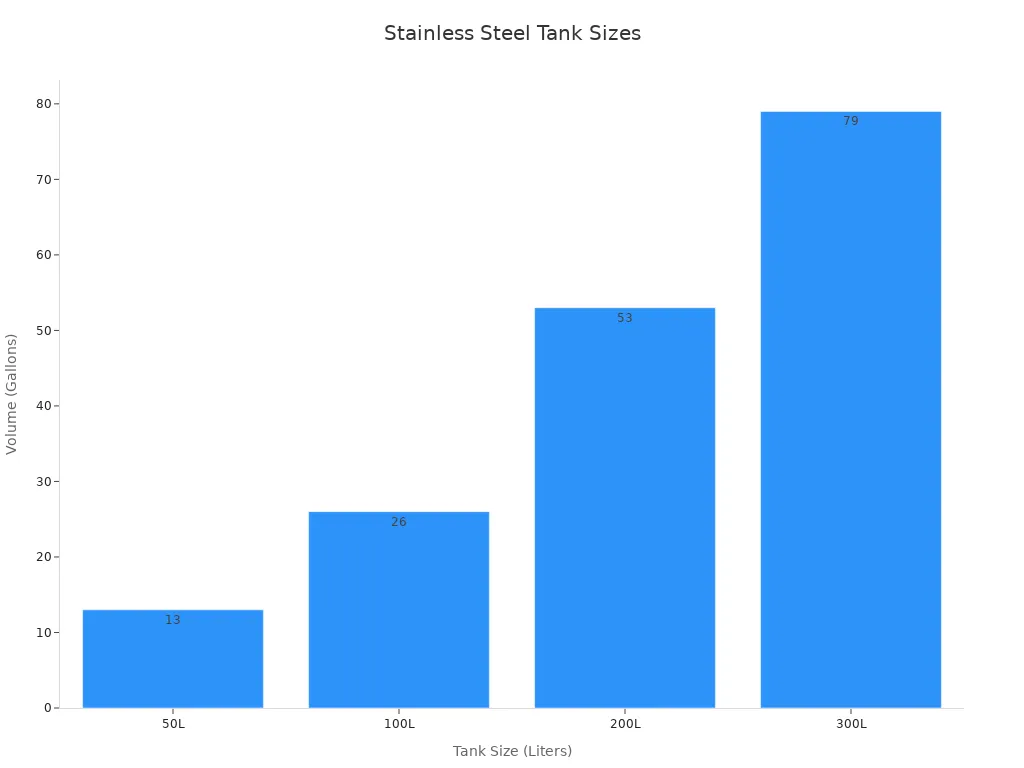
Stainless steel fermentation tanks resist corrosion and high pressure. Built-in temperature control systems maintain ideal conditions for wine and beer. Easy cleaning and maintenance reduce downtime. Features like conical bottoms and sampling ports support process control and quality monitoring. Stainless steel tanks adapt to various fermentation types, making them a reliable choice for producers seeking versatility and adaptability.
COFF uses advanced methods to create stainless steel brewing equipment that meets the highest standards. The company selects certified 304 stainless steel and 316l stainless steel for every tank. These materials ensure both hygiene and durability. Skilled workers use 100% TIG welded joints. This process creates strong, sanitary seams that do not trap bacteria.
COFF integrates Siemens automation platforms into their systems. These platforms allow precise control over temperature and brewing steps. Over twenty automated features are available, such as tilting hop infusers and UL listed control panels. Smart device apps let users monitor and adjust settings remotely. Tanks include high-efficiency polyurethane insulation to keep temperatures stable. Spray balls for Clean-In-Place (CIP) systems make cleaning fast and thorough. Safety features like gas detection controls and intrinsically safe options protect both workers and products.
Note: COFF’s focus on automation and hygiene helps brewers and winemakers achieve consistent, high-quality results with every batch.
COFF has earned a strong reputation worldwide for its stainless steel brewing equipment. The company uses premium-grade 304 stainless steel and 316l stainless steel, which resist corrosion and prevent metallic leaching. This protects the flavor of wine and beer. Their equipment stands up to high temperatures and pressure, so tanks last for many years without cracking or degrading.
COFF designs tanks with a non-porous surface. This makes cleaning easy and keeps every batch safe from contamination. Brewers and winemakers trust COFF because their equipment reduces replacement costs and supports consistent product quality. The company’s smart designs and customer service help both new and experienced producers.
COFF’s dedication to innovation and customer satisfaction sets it apart as a top choice for breweries and wineries around the world.
Plastic tanks appear in some small-scale wine and beer operations. They cost less at first, but they do not last as long as fermentation tank stainless steel. Plastic scratches easily, which makes cleaning harder and increases the risk of bacteria. Over time, plastic tanks can absorb odors and flavors from wine. This absorption changes the taste and lowers product quality. Plastic tanks do not support precise temperature control, which affects fermentation results. Stainless steel tanks provide a non-porous surface, easy cleaning, and neutral flavor impact. The table below shows key differences:
| Feature | Fermentation Tank Stainless Steel | Plastic Tanks |
|---|---|---|
| Hygiene | Non-porous, easy to clean | Scratches, absorbs odors |
| Durability | Lasts decades | Short lifespan |
| Flavor Impact | Neutral, preserves wine taste | Can leach flavors |
| Temperature Control | Precise, supports wine fermentation | Limited |
| Longevity | 10–20 years or more | Limited |
Winemakers and brewers choose stainless steel for better hygiene, durability, and flavor purity.
Wood barrels have a long history in wine production. They add flavors like vanilla and spice, but they require much more work. Wood is porous, so it can trap microbes and increase spoilage risk. Cleaning wood barrels takes more time and effort than cleaning fermentation tank stainless steel. Wood barrels also need close temperature monitoring because they retain heat. The sensory influence from wood lasts only a few years, while stainless steel keeps wine flavor consistent. Stainless steel tanks offer easy cleaning, better temperature control, and lower contamination risk. The advantages of stainless steel wine tanks include cost-effectiveness and suitability for clean fermentations. COFF designs tanks for easy maintenance and reliable results.
| Aspect | Wood Barrels Drawbacks | Stainless Steel Tank Advantages |
|---|---|---|
| Cleaning & Maintenance | Labor-intensive, time-consuming | Easy, less labor |
| Microbial Contamination | High risk due to porous surface | Negligible risk |
| Temperature Control | Requires close monitoring | Consistent, precise |
| Durability & Cost | Expensive, needs frequent upkeep | Cost-effective, long-lasting |
| Flavor Consistency | Changes over time | Consistent product quality |
Concrete tanks appear in some wineries. They usually give wine a neutral flavor, but sometimes add a mineral taste. Concrete tanks may allow some oxygen in, which changes fermentation and maturation. Stainless steel tanks do not add any flavors and block oxygen, keeping wine fresh. Stainless steel tanks have smooth surfaces, which makes cleaning easier and reduces contamination. They resist corrosion from acidic wine, so they protect taste and safety. Stainless steel tanks also provide better temperature control, which helps winemakers manage yeast activity and preserve wine quality.
Winemakers and brewers prefer fermentation tank stainless steel for its hygiene, durability, and ability to preserve wine flavor. COFF’s stainless steel tanks help producers achieve consistent, high-quality results.
COFF stands out as a leader in stainless steel beer brewing equipment. The company brings years of experience to every project. Skilled engineers and designers work together to create tanks that meet the highest standards. COFF uses only high-grade stainless steel, which ensures both safety and durability. Each tank receives ASME or AS1210 certification. These certifications show that COFF tanks meet strict safety and quality rules. Customers can trust that every tank is built for reliable performance. COFF’s team understands the needs of both large breweries and small wineries. They help clients with choosing the best wine stainless steel tanks for their production goals. The company’s focus on innovation and quality makes it a trusted partner for producers around the world.
COFF values strong relationships with its customers. Over 90% of clients return for more equipment, showing high satisfaction. Many customers praise the tanks for easy cleaning, durability, and consistent results. COFF offers support before and after the sale. The team answers questions, helps with installation, and provides training. Customers receive guidance on scaling up production or maintaining their tanks. COFF’s global service network reaches clients in the U.S., Canada, the UK, Australia, and other regions. The company’s support team responds quickly to any concerns. This commitment to service helps producers avoid downtime and keep operations running smoothly.
Note: COFF’s dedication to quality and customer care sets it apart from other manufacturers. Producers who choose COFF benefit from expert advice, certified equipment, and reliable support.
Stainless steel fermentation tanks give wine producers clear advantages.
For the best results in wine production, contact COFF or visit their facility to see how their tanks can improve your process.
Stainless steel resists corrosion and does not absorb flavors. It keeps wine and beer pure. Cleaning is easy. Tanks last for many years. COFF uses high-quality stainless steel to help producers achieve safe and consistent results.
The non-porous surface blocks bacteria and mold. Cleaning removes all residue. Stainless steel tanks from COFF meet strict food safety standards. Producers can trust the tanks to keep every batch clean.
Yes. Stainless steel tanks allow precise temperature control. Built-in jackets and insulation help keep the right temperature for fermentation. COFF tanks include advanced features for easy temperature management.
No. Stainless steel does not react with wine or beer. It keeps the original taste and aroma. COFF tanks protect flavor purity in every batch.
COFF offers expert design, certified materials, and strong customer support. Their tanks last long and work well for both small and large producers. Many customers trust COFF for reliable, high-quality brewing equipment.