

COPYRIGHT © 2022 COFF International Co., ltd. ALL RIGHTS RESERVED


If you’re serious about brewing, the north american craft brewery equipment you choose can make or break your success. Whether you’re crafting beer at home or running a commercial brewery, the right tools help you meet production goals and keep up with market trends. In North America, the beer market is growing rapidly, with craft and specialty beers leading the charge. The region’s beer market is expected to jump from USD 188.1 billion in 2024 to USD 277.8 billion by 2033. With over 9,700 breweries now competing, selecting the right north american brewing equipment is more important than ever.
COFF, one of the leading craft brewing equipment manufacturers, can provide various brewing equipment solutions.
When it comes to north american brewing equipment, you’ll find a wide variety of options tailored to meet different needs. The equipment is typically categorized by product type, such as fermentation units, brewhouse units, filtration systems, and maturation units. Each plays a unique role in the brewing process, from preparing the wort to fermenting and packaging the final product.
Materials like stainless steel, brass, copper, and aluminum are commonly used, with stainless steel being the most popular due to its durability and resistance to corrosion. You’ll also notice that brewing equipment in North America comes in different modes of operation—manual, semi-automatic, and fully automatic. This flexibility allows you to choose equipment that matches your production scale and budget.
Consumer demand for craft beer has driven innovation in brewing equipment. Today’s systems are designed to handle processes like milling, fermentation, storing, and refrigeration with greater efficiency. Whether you’re running a microbrewery or a large-scale operation, the equipment you choose should align with your production goals and the beer styles you want to create.
Homebrewing and commercial brewing equipment differ significantly in size, complexity, and functionality. Homebrewing systems are smaller and more straightforward, making them ideal for hobbyists or small-scale production. They often include basic components like a brew kettle, fermenter, and bottling tools. These systems are designed for ease of use and affordability.
Commercial brewing equipment, on the other hand, is built for large-scale production. It includes advanced features like automated controls, larger fermentation tanks, and specialized filtration systems. For example, commercial systems often come pre-assembled and tested, ensuring they meet strict quality standards. Unlike homebrewing setups, they require more space and professional installation.
Another key difference lies in customization. Commercial brewing equipment can be tailored to specific needs, such as producing unique beer styles or meeting sustainability goals. This level of customization is rarely available in homebrewing systems. If you’re planning to scale up your operations, investing in high-quality commercial equipment from a trusted supplier like COFF can make all the difference.
Before you dive into purchasing brewing equipment, it’s essential to define your goals. Whether you’re starting small or planning for large-scale production, understanding your needs will help you make smarter decisions.
Your production scale determines the type of brewing equipment you’ll need. Are you brewing for personal enjoyment, running a craft brewery, or aiming for industrial-scale production? Each scale comes with unique requirements.
Here’s a quick breakdown to help you decide:
| Production Scale | Key Characteristics |
|---|---|
| Industrial | High efficiency, large batches, fully automated systems, and advanced filtration. |
| Craft | Flexible systems, independent temperature controls, and semi-automatic bottling. |
| Home/Small Commercial | Compact designs, modular setups, and user-friendly controls for smaller operations. |
If you’re just starting out, a home or small commercial setup might be perfect. But if you’re running a craft brewery, you’ll need more advanced features like temperature-controlled fermenters. For industrial-scale brewing, automation and efficiency become critical. COFF offers equipment tailored to all these scales, ensuring you get exactly what you need.
The type of beer you want to brew plays a big role in choosing your equipment. Different beer styles require specific processes and tools. For example, lagers need precise temperature control during fermentation, while ales are more forgiving. If you’re planning to brew a variety of styles, versatility in your equipment is key.
The craft beer market is booming, with equipment demand expected to grow from $6.58 billion in 2023 to $15 billion by 2035. This growth reflects the increasing popularity of diverse beer styles. Breweries are investing in advanced systems to meet these demands. Features like versatile fermentation tanks and high-quality filtration systems can help you cater to changing consumer preferences.
Tip: Investing in equipment that supports multiple beer styles can future-proof your brewery. COFF’s customizable brewing systems are designed to handle a wide range of styles, giving you the flexibility to experiment and grow.
Thinking ahead is crucial when buying brewing equipment. Even if you’re starting small, you’ll want to plan for expansion. Many breweries face challenges like cash flow issues or inefficient operations because they didn’t plan for growth.
Here’s how you can avoid these pitfalls:
For example, breweries that replaced outdated systems with modern, integrated solutions saw better resource allocation and reduced operational conflicts. COFF’s brewing equipment is designed with scalability in mind, making it easier for you to adapt as your business grows.
Note: Proper planning not only saves money but also ensures smoother operations. With COFF’s expertise, you can build a brewery that’s ready for the future.
When you’re investing in brewing equipment, there are several factors to consider to ensure your setup meets your needs. From material quality to space requirements and automation options, each decision plays a role in your brewing success. Let’s dive into the key considerations.
The quality of your brewing system directly impacts the taste, consistency, and safety of your beer. High-quality materials and manufacturing standards ensure your equipment lasts longer and performs better. Here’s what you should look for:
Tip: COFF’s brewing systems are crafted with precision using top-grade stainless steel. Their attention to detail ensures you get equipment that meets the highest industry standards.
The size of your brewing equipment should align with your production goals and the space available in your facility. Efficient use of space can improve workflow and reduce operating costs. Here’s a quick comparison of space requirements based on brewery type:
| Brewery Type | Key Features |
|---|---|
| Microbreweries | Compact Equipment, Multi-Use Areas, Customer Integration |
| Mid-Sized | Flexible Layout, Efficient Use of Space, Dedicated Areas for Brewing |
| Large-Scale | Extensive Equipment, Specialized Zones, High Production Capacity |
When planning your layout, keep these points in mind:
Note: COFF offers brewing equipment in various sizes, making it easier to find a system that fits your space while maximizing productivity.
Automation can simplify your brewing process and improve consistency. Whether you’re a small craft brewery or a large-scale operation, automation options can save time and reduce labor costs. Here’s how automation and scalability can benefit you:
Callout: COFF’s brewing systems come with advanced automation features and scalable designs. Whether you’re starting small or planning for growth, their equipment adapts to your needs.
By focusing on these key equipment selection considerations, you’ll set your brewery up for success. High-quality materials, efficient use of space, and automation options are the foundation of a reliable brewing system.
When it comes to brewing, energy efficiency and sustainability aren’t just buzzwords—they’re essential for reducing costs and minimizing your environmental footprint. Whether you’re running a small craft brewery or a large-scale operation, focusing on these areas can make your brewing system more profitable and eco-friendly.
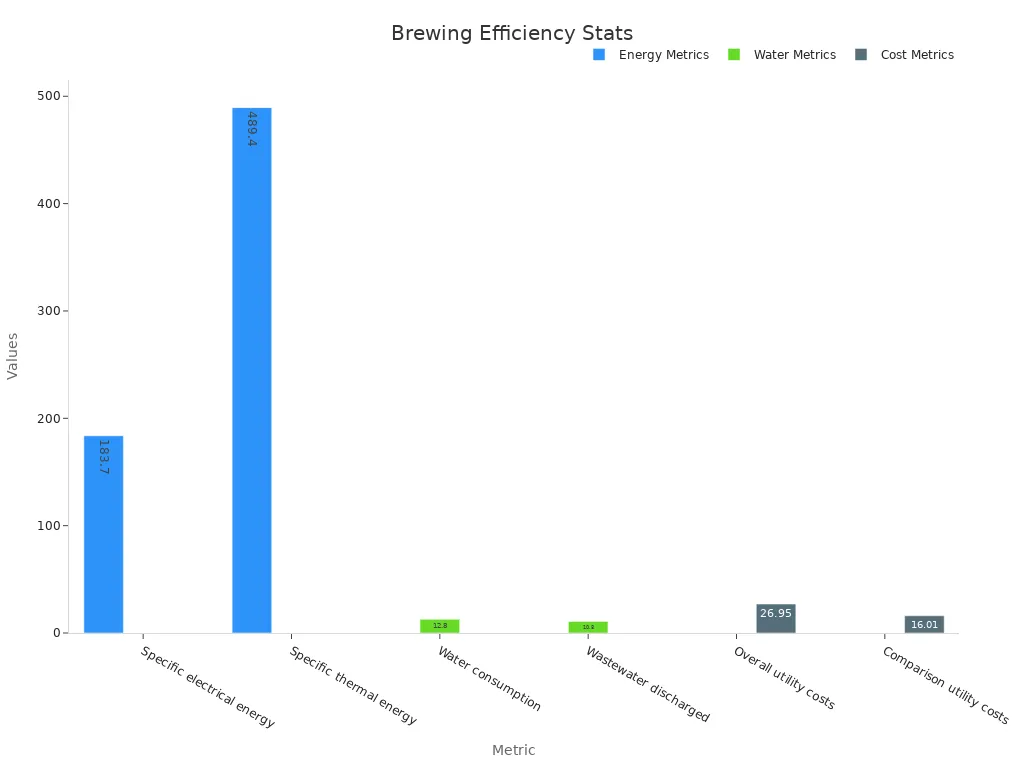
Brewing is an energy-intensive process. From heating water to cooling wort, every step consumes electricity and thermal energy. Inefficient systems can drive up utility costs and hurt your bottom line. For example, the average brewery uses 183.7 MJ of electrical energy and 489.4 MJ of thermal energy per beer barrel. That’s a lot of energy, especially if you’re producing at scale.
Efficient brewing equipment can help you cut these numbers down. Modern systems come with features like heat recovery units, insulated tanks, and energy-efficient pumps. These upgrades reduce energy waste and improve overall performance. By choosing equipment designed with efficiency in mind, you’ll save money and reduce your carbon footprint.
Sustainability goes hand in hand with energy efficiency. Breweries consume a significant amount of water—about 12.8 barrels of water for every barrel of beer produced. On top of that, they discharge 10.8 barrels of wastewater per barrel of beer. Managing these resources responsibly is crucial for long-term success.
Here’s how you can make your brewing system more sustainable:
Tip: COFF’s brewing equipment includes energy-efficient designs and sustainable features. Their systems help you reduce water usage and optimize energy consumption, making it easier to meet your sustainability goals.
To give you a clearer picture, here’s a breakdown of energy, water, and cost metrics in brewing:
| Metric | Value |
|---|---|
| Specific electrical energy | 183.7 MJ per US beer barrel (1.6 MJ/L) |
| Specific thermal energy | 489.4 MJ/bbl (4.2 MJ/L) |
| Water consumption | 12.8 bbl consumed/bbl (12.8 L/L) |
| Wastewater discharged | 10.8 bbl discharged/bbl (10.8 L/L) |
| Overall utility costs | $26.95 per bbl packaged |
| Comparison utility costs | $16.01 for similar-sized breweries |
These numbers highlight the importance of choosing efficient brewing equipment. By upgrading to a modern brewing system, you can significantly lower your utility costs and environmental impact.
COFF’s brewing systems are designed with energy efficiency and sustainability in mind. Their advanced heat exchange technology reduces thermal energy waste, while their water-saving features help you cut down on consumption. Plus, COFF’s commitment to high-quality materials ensures your equipment lasts longer, reducing the need for frequent replacements.
By investing in COFF’s brewing equipment, you’re not just improving your brewery’s efficiency—you’re also contributing to a more sustainable future. Whether you’re just starting out or scaling up, COFF has the solutions you need to brew smarter and greener.
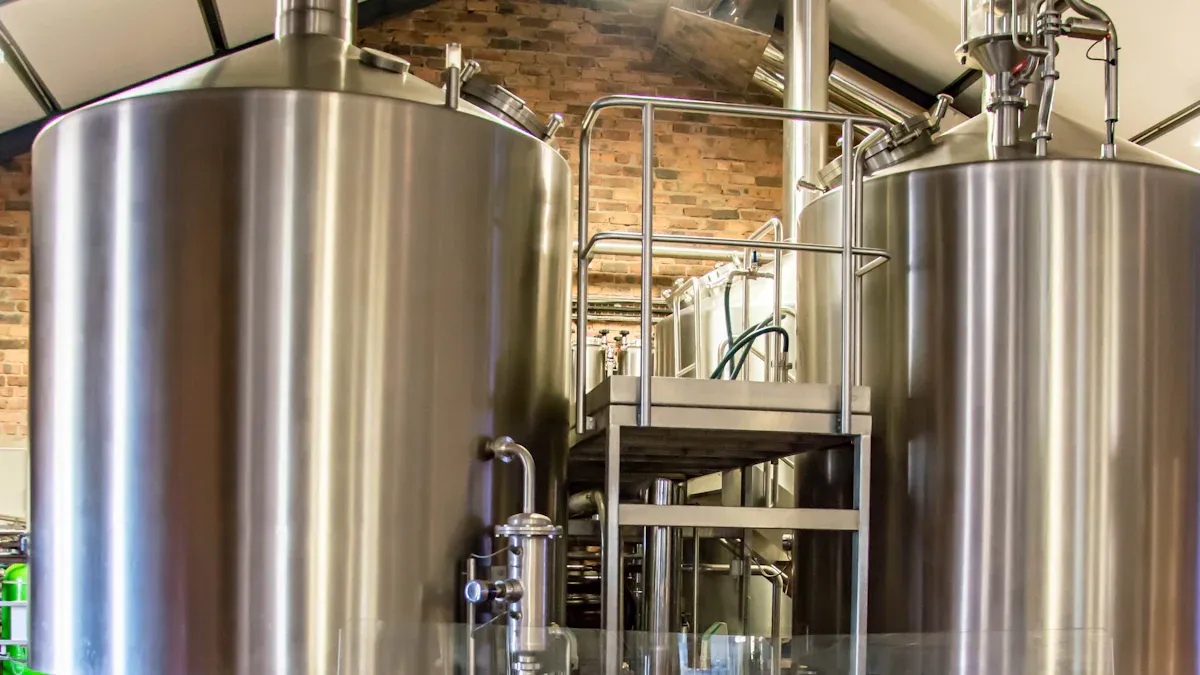
When it comes to commercial brewing equipment, understanding the key components can help you make smarter decisions for your brewery. Let’s break down three essential pieces of brewhouse equipment and their roles in the brewing process.
The brew kettle is the heart of your brewhouse equipment. It’s where the magic of boiling happens, transforming your wort into the foundation of great beer. But what exactly does a brew kettle do? Here’s a quick rundown:
Modern brew kettles, like those offered by COFF, come with advanced features like precise temperature controls and energy-efficient designs. These upgrades not only enhance your brewing process but also save time and resources.
Fermenters are where your wort becomes beer. This is where yeast works its magic, converting sugars into alcohol and carbon dioxide. Fermenters come in various shapes and sizes, but their primary role remains the same: to provide a controlled environment for fermentation.
Key features to look for in fermenters include:
COFF’s fermenters are built with high-quality stainless steel, ensuring durability and hygiene. They’re also customizable, so you can choose the features that best suit your brewing goals.
Once fermentation is complete, the beer moves to a brite tank. This piece of commercial brewery equipment is used for carbonation, clarification, and storage. It’s the final stop before packaging, ensuring your beer is ready for the market.
Here’s what makes brite tanks indispensable:
COFF’s brite tanks are designed for efficiency and ease of use. Whether you’re running a microbrewery or a large-scale operation, their tanks help you deliver high-quality beer every time.
Tip: Investing in the right brewing equipment types, like COFF’s brew kettles, fermenters, and brite tanks, ensures your brewery operates smoothly and produces exceptional beer.
When it comes to brewing, supporting equipment plays a vital role in keeping your brewhouse equipment running smoothly. Pumps, chillers, and filtration systems might not be the stars of the show, but they’re the unsung heroes that ensure efficiency and consistency in your brewing process.
Pumps are essential for moving liquids like wort, water, and cleaning solutions throughout your system. They save you time and effort by automating transfers between tanks. With the right pump, you can minimize losses during transfers and maintain consistent flow rates. This consistency is key to producing high-quality beer batch after batch. Plus, pumps with CIP (Clean-In-Place) capabilities make cleaning your commercial brewing equipment a breeze.
Temperature control is critical in brewing, especially during wort cooling and fermentation. Chillers, like plate heat exchangers, are designed to cool wort quickly and efficiently. Faster cooling not only saves energy but also reduces the risk of contamination. Compared to older methods like immersion chillers, modern chillers can handle larger volumes with ease. This makes them a must-have for any serious brewer.
Filtration systems help you achieve that crystal-clear beer your customers love. They remove unwanted particles, ensuring your beer looks and tastes its best. Advanced systems can even help you recover yeast for re-pitching, reducing waste and saving money. Whether you’re filtering during fermentation or before packaging, having a reliable system in place is crucial.
Tip: Investing in high-quality supporting equipment not only improves efficiency but also enhances the overall performance of your brewhouse equipment. COFF offers a range of customizable solutions to meet your specific needs.
By choosing the right pumps, chillers, and filtration systems, you’ll set your brewery up for success. These tools work behind the scenes to keep your operations running smoothly, allowing you to focus on crafting exceptional beer.
When buying brewing equipment, balancing cost and quality is key to making a smart investment. You don’t want to overspend, but cutting corners can lead to equipment that doesn’t perform well or breaks down too soon. High-quality brewing systems might cost more upfront, but they save you money in the long run by reducing maintenance and improving efficiency.
Here’s a quick look at typical costs for brewing equipment:
| Equipment Type | Cost Range |
|---|---|
| New and Efficient Equipment | $35,000 – $60,000 |
| Top-Tier Equipment | $100,000 – $150,000 |
| Basic Small-Scale Brewing System | $50,000 – $100,000 |
| Advanced Brewing System | $100,000+ |
| Kegging Line | $10,000 – $20,000 |
| Bottling Line | $20,000 – $40,000 |
| High-Quality Fermenters | $5,000 – $20,000 each |
| Commercial-Grade Walk-in Cooler | $10,000 – $30,000 |
| Quality Draught System | $5,000 – $15,000 |
| Grain Mill | $2,000 – $5,000 |
| Customer Experience Enhancements | $5,000 – $20,000 |
If you’re unsure where to start, consider investing in equipment that offers the best value for your production scale. COFF’s brewing systems are designed to deliver top-tier quality at competitive prices, ensuring you get the most out of your budget.
Financing and leasing options can make buying brewing equipment more affordable. Leasing is a popular choice because it offers predictable monthly payments, helping you manage your budget without large upfront costs. Plus, many leasing agreements allow you to own the equipment at the end of the term.
Here are some financing options to consider:
Southern Tier Brewing’s case study shows how strategic financing can support growth. They used a mix of leasing and loans to expand their operations while maintaining financial stability. By exploring similar options, you can find a solution that fits your needs.
Hidden costs can sneak up on you when buying brewing equipment. Shipping, installation, and maintenance are often overlooked but can significantly impact your budget. For example, transporting large tanks or fermenters requires specialized logistics, which can add thousands to your total cost.
Here’s how to prepare for these expenses:
By accounting for these hidden costs, you’ll avoid surprises and keep your budget on track. COFF’s team provides comprehensive support, from shipping to installation, ensuring a smooth setup process for your brewery.
Choosing the right supplier for your brewing equipment is a big decision. You want someone you can trust, especially when it comes to quality and reliability. A supplier’s reputation often reflects their ability to deliver on promises. Look for independent reviews, certifications, and industry recognition to gauge their credibility.
In North America, supplier diversity initiatives are gaining traction. Many Fortune 500 companies prioritize working with diverse suppliers, showing their commitment to inclusivity and quality. Here’s a quick snapshot of supplier reputation trends:
| Statistic | Value | Industry Context |
|---|---|---|
| Fortune 500 Companies with Supplier Diversity Initiatives | 85% | Indicates strong commitment to diverse suppliers |
| Average Diverse Spend Across All Industries | 3.6% | Varies significantly by sector, e.g., energy (9%), high-tech (8%) |
| Diverse Suppliers Meeting Buyers’ Expectations | 76% | Suggests low risk in supplier diversity initiatives |
Certifications also matter. Look for suppliers with industry-standard certifications like ASME or AS1210, which ensure their equipment meets safety and quality benchmarks. COFF, for example, holds these certifications, giving you peace of mind that their commercial brewing equipment is built to last.
Every brewery is unique, and your equipment should reflect that. Customization allows you to tailor your brewing system to match your production goals, beer styles, and space requirements. Whether you need specialized fermenters or energy-efficient brew kettles, a good supplier will work with you to create the perfect setup.
Support is equally important. You’ll want a supplier who offers guidance during installation and provides ongoing maintenance tips. COFF excels in this area. Their team of experienced engineers collaborates with you to design equipment that fits your needs. Plus, their customer service ensures you’re never left in the dark when questions arise.
Tip: Ask suppliers about their customization options and post-purchase support. A reliable partner will prioritize your success and help you adapt as your brewery grows.
COFF stands out as a trusted name in the brewing industry. Their commercial brewing equipment combines high-quality craftsmanship with innovative features. With certifications like ASME and AS1210, COFF ensures their products meet the highest standards.
What sets COFF apart is their focus on customer-oriented solutions. They offer customizable brewing systems that cater to breweries of all sizes. Whether you’re running a microbrewery or scaling up to industrial production, COFF’s equipment adapts to your needs. Their team of engineers, with over 15 years of experience, helps you design systems that maximize efficiency and sustainability.
COFF’s reputation speaks for itself. With a strong presence in North America and beyond, they’ve earned the trust of breweries worldwide. Over 90% of their customers build long-term partnerships with them, thanks to their reliable products and exceptional service.
Callout: Partnering with COFF means investing in brewing equipment that’s built for success. Their commitment to quality and innovation ensures your brewery stays ahead of the curve.
Getting your brewing equipment professionally installed is one of the smartest decisions you can make. Proper installation ensures your system operates efficiently and minimizes the risk of costly breakdowns. When experts handle the setup, they align every component perfectly, so you don’t have to worry about errors that could disrupt your brewing process.
Here’s a quick look at why professional installation matters:
| Aspect | Importance |
|---|---|
| Installation | Ensures correct setup and operation of equipment |
| Efficiency | Proper installation enhances operational efficiency |
| Reliability | Reduces the risk of equipment failure |
COFF offers professional installation services to make sure your brewing system is set up for success. Their experienced team ensures every detail is handled with precision, so you can focus on brewing great beer.
Keeping your brewing equipment clean isn’t just about hygiene—it’s about the quality of your beer. A well-cleaned system prevents bacterial growth, off-flavors, and contamination. Following a simple cleaning routine can make all the difference.
Here’s a proven four-step cleaning process you can follow:
Did you know sanitizing food-contact surfaces can reduce contamination by 99.999% in just 30 seconds? That’s why it’s so important to stick to these steps. COFF’s brewing systems are designed for easy cleaning, with features like smooth stainless steel surfaces that resist scratches and dents, making sanitization a breeze.
Tip: Regularly inspect and swab test your equipment to ensure your cleaning routine is effective. This small step can save you from big problems down the line.
Taking care of your brewing equipment doesn’t just keep it running—it extends its lifespan. Regular maintenance helps you avoid unexpected breakdowns and ensures your beer stays consistent.
Here are some real-world examples of how maintenance pays off:
COFF’s equipment is built to last, but even the best systems need a little TLC. By following a maintenance schedule and addressing small issues early, you’ll save money and keep your brewery running smoothly for years to come.
Note: Investing in high-quality equipment from COFF means fewer maintenance headaches. Their durable designs and expert support make upkeep simple and stress-free.
When it comes to brewing, safety isn’t just a nice-to-have—it’s a must. North America has strict health and safety standards to protect both you and your customers. These rules cover everything from the materials used in your equipment to how you operate your brewery.
For example, your brewing equipment must use food-grade materials like stainless steel to prevent contamination. You’ll also need to follow guidelines for proper ventilation, temperature control, and sanitation. Ignoring these standards can lead to fines or even shutdowns.
Tip: Always check local health department requirements. They often have specific rules for breweries in your area.
By choosing equipment from a trusted supplier like COFF, you can rest easy knowing it meets these safety standards. Their systems are designed with hygiene and safety in mind, helping you stay compliant.
Certifications are like a stamp of approval for your brewing equipment. They show that your system meets industry standards for quality and safety. In North America, certifications like ASME (American Society of Mechanical Engineers) and UL (Underwriters Laboratories) are highly respected.
Why do these matter? Certified equipment performs better and lasts longer. It also gives your customers confidence in your product. Plus, some states require certified equipment to get your brewery licensed.
Here’s a quick list of certifications to look for:
COFF’s brewing systems come with these certifications, so you know you’re getting top-quality equipment.
Starting a brewery isn’t just about great beer—you’ll also need the right permits. In North America, breweries must comply with federal, state, and local regulations. This includes getting licenses for alcohol production, distribution, and even wastewater disposal.
Here’s how to get started:
Note: The process can take months, so start early. COFF’s team can guide you through equipment-related permits, making the process smoother.
By staying on top of these requirements, you’ll avoid delays and keep your brewery running smoothly.
When you’re planning for the future of your brewery, scalability should be at the top of your list. Starting small is fine, but your equipment needs to grow with your business. Scalable brewing systems let you expand production without replacing your entire setup. This saves you money and time in the long run.
Here’s what to look for in scalable equipment:
COFF specializes in scalable brewing systems. Their modular designs and customizable features make it easy to expand your operations when the time comes. With COFF, you’re not just buying equipment—you’re investing in your brewery’s future.
Tip: Think about your five-year plan. Choose equipment that can handle double your current production capacity to avoid growing pains later.
The beer market is always changing. Staying ahead means keeping an eye on trends and adapting your offerings. For example, craft beer drinkers love unique flavors and sustainable practices. If you can meet these demands, you’ll stand out in a crowded market.
Here’s how to stay on top of trends:
COFF’s brewing systems are designed with flexibility in mind. Whether you’re brewing IPAs, stouts, or lagers, their equipment adapts to your needs. Plus, their energy-efficient designs help you meet sustainability goals while cutting costs.
Callout: Did you know breweries using sustainable practices see higher customer loyalty? COFF’s systems make it easy to brew responsibly.
Choosing the right supplier isn’t just about the equipment—it’s about the relationship. A strong partnership with a trusted supplier like COFF can set your brewery up for long-term success. COFF doesn’t just sell brewing systems; they provide ongoing support to help your business thrive.
Here’s why partnering with COFF makes sense:
By partnering with COFF, you’re not just buying equipment—you’re gaining a trusted ally in your brewing journey. Their commitment to quality and innovation ensures your brewery stays competitive for years to come.
Note: Ready to take your brewery to the next level? COFF’s team is here to help you plan for growth and success.
Choosing the right brewing equipment in North America is all about understanding your needs. Think about your production goals, available space, and budget. High-quality, scalable systems are key to long-term success.
Tip: Partnering with a trusted supplier like COFF can make the process easier. Their reliable, customizable brewing equipment ensures you’re set up for success from day one.
Take the time to plan wisely. The right decisions today will help your brewery thrive tomorrow. Ready to get started? COFF is here to help!
It depends on your production goals. For homebrewing, small systems work best. If you’re opening a craft brewery, consider mid-sized setups. Planning for growth? Go for scalable equipment. COFF offers customizable systems that fit any scale, ensuring you’re ready for expansion.
Regular cleaning and sanitization are key. Rinse, clean, rinse again, and sanitize after every use. Schedule routine maintenance to check for wear and tear. COFF’s equipment is designed for easy cleaning and long-term durability, saving you time and effort.
Absolutely! Customization helps you brew unique beer styles. For example, lagers need precise temperature control, while ales are more forgiving. COFF specializes in tailored brewing systems, so you can create equipment that matches your brewing needs perfectly.
Look for certifications like ASME and NSF. These ensure your equipment meets safety and quality standards. COFF’s brewing systems come with industry-leading certifications, giving you peace of mind and helping you meet regulatory requirements.
COFF offers high-quality, customizable brewing systems backed by expert support. With over 15 years of experience, they design scalable equipment that grows with your business. Their reputation for reliability and innovation makes them a trusted partner for breweries worldwide.