


COPYRIGHT © 2022 COFF International Co., ltd. ALL RIGHTS RESERVED


If you’re just starting out in the craft distillery world, picking the right micro distillery bottling equipment can seem overwhelming. The craft distilling industry is booming, with the global craft spirits market expected to reach nearly $170 billion by 2031. You want equipment that matches your needs, budget, and space. Many beginners ask about production volume, bottle types, and how much to invest. It helps to know that micro distillery bottling equipment comes in many forms, so you can find a setup that fits your unique goals.
When you start looking at bottling equipment, the first thing you need to think about is how much spirit you plan to bottle at a time. Your production volume and batch size will shape almost every decision you make. If you only bottle about 100 liters per batch, you can use smaller, less expensive machines. If you plan to bottle 500 liters or more, you will need bigger equipment that costs more but can handle the extra work. For large operations, equipment must be high-capacity and efficient.
Here’s a quick look at how production volume affects your equipment choices:
| Production Volume Category | Equipment Scale and Cost Impact |
|---|---|
| Small Craft (approx. 100L) | Requires smaller, less expensive equipment suitable for low volume production. |
| Mid-Scale (approx. 500L) | Needs medium-sized equipment with moderate cost, balancing capacity and investment. |
| Large Production (2000L+) | Demands large, high-capacity, and more costly equipment to handle high output efficiently. |
💡 Tip: Experts recommend buying equipment that is a little bigger than what you need right now. This helps you grow your business without having to replace your machines too soon. Try mapping out your workflow and thinking about how many bottles you want to fill each day. This will help you pick the right size for your micro distillery bottling equipment.
Not all spirits are the same, and each one can change what kind of bottling equipment you need. Whiskey, gin, and vodka each have their own special needs. For example, whiskey often needs equipment that can handle sediment from aging. Gin may need special filters to keep the flavors from botanicals fresh. Vodka usually needs very fine filtration to keep it clear and pure.
Here’s a table to help you see how spirit type affects your equipment:
| Spirit Type | Distillation Method | Key Equipment Features | Impact on Bottling Equipment Requirements |
|---|---|---|---|
| Whiskey | Pot still or pot-tower combination | Copper pot stills, fermentation tanks, aging barrels | Requires bottling equipment that can handle aged spirits, possibly with considerations for sediment and stability due to maturation |
| Gin | Pot still with vegetable basket | Pot still, fermentation tank, botanical infusion | Bottling line may need to accommodate flavor retention and filtration for botanical elements |
| Vodka | Column still | Distillation tower, fermentation tank, fine filtration system | Bottling equipment must support fine filtration and purity standards, ensuring clarity and stability |
You also need to think about packaging. Micro distilleries often want packaging that is flexible and cost-effective. You might want to change your bottle design often or use special labels to stand out. This means you need equipment that can handle small batches and switch between different packaging styles quickly.
| Packaging Requirement / Challenge | Equipment Type | Equipment Features and Impact on Choice |
|---|---|---|
| Prevent contamination and maintain hygiene | Sanitary Overflow Fillers | Quick breakdown for cleaning, bacteria prevention, consistent fill levels |
| Handle low-viscosity spirits | Sanitary & Tabletop Fillers | Designed for water-thin liquids, suitable for spirits and wines |
| Space constraints and flexibility | Tabletop Overflow Fillers | Portable, compact, quick changeovers, adaptable to small production lines |
| Consistency and product quality | Both Fillers | Provide accurate fill levels, reduce product waste and contamination |
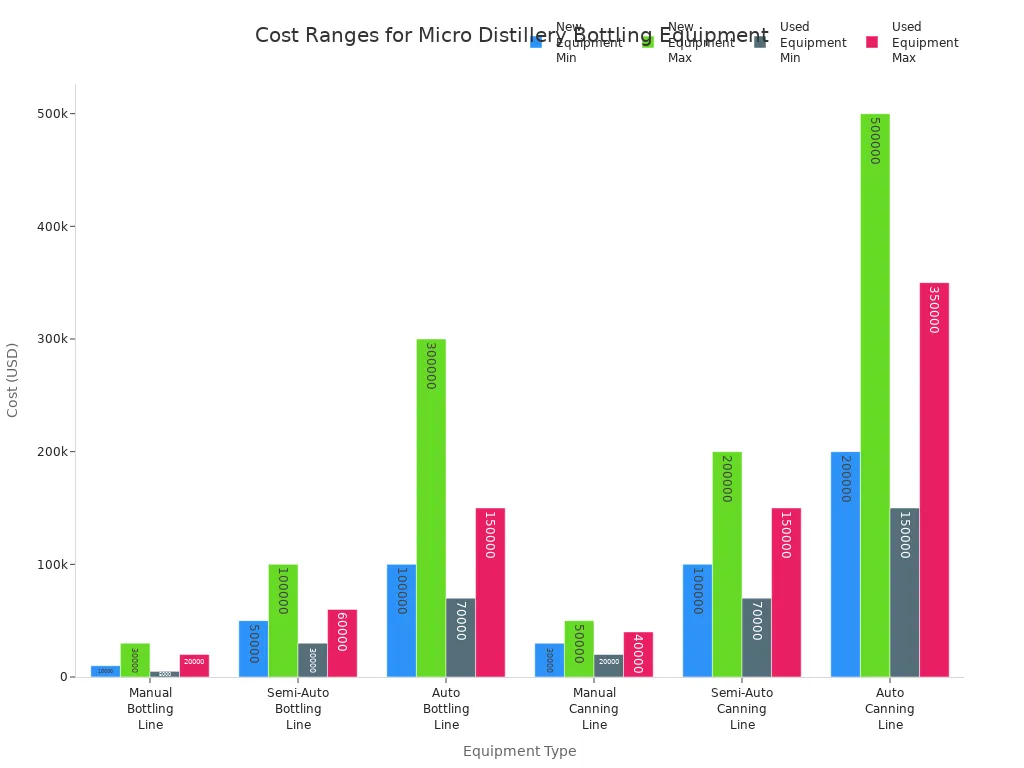
Your budget will play a big role in what equipment you choose. Manual bottling lines cost less, but you need more people to run them. Semi-automatic and automatic lines cost more, but they save time and reduce mistakes. Used equipment can save you money, but you need to check it carefully before buying.
Here’s a table to show you the average price ranges for different types of bottling equipment:
| Equipment Type | New Equipment Cost Range (USD) | Used Equipment Cost Range (USD) |
|---|---|---|
| Manual Bottling Line | $10,000 – $30,000 | $5,000 – $20,000 |
| Semi-Automatic Bottling Line | $50,000 – $100,000 | $30,000 – $60,000 |
| Automatic Bottling Line | $100,000 – $300,000 | $70,000 – $150,000 |
| Manual Canning Line | $30,000 – $50,000 | $20,000 – $40,000 |
| Semi-Automatic Canning Line | $100,000 – $200,000 | $70,000 – $150,000 |
| Automatic Canning Line | $200,000 – $500,000+ | $150,000 – $350,000+ |
You also need to plan for ongoing costs. These include maintenance, utilities, salaries, and insurance. Here’s a quick overview:
| Operational Cost Category | Description | Estimated Cost Range | Notes |
|---|---|---|---|
| Maintenance & Repair | Upkeep and repair of production equipment, including bottling machinery | $5,000 – $20,000 | Ongoing expense essential for equipment functionality |
| Utilities | Electricity, water, heating, waste disposal necessary for daily operations | $5,000 – $15,000 | Costs vary with production scale and season |
| Salaries & Wages | Compensation for skilled staff including bottlers, payroll taxes, benefits | $50,000 – $200,000 | Depends on team size, skill level, and benefits |
| Insurance | Coverage for liabilities, property, and equipment including bottling equipment | $3,000 – $10,000 | Protects distillery assets |
📝 Note: Always include these ongoing costs in your business plan. This helps you avoid surprises and keeps your production process running smoothly.
When you set up your micro distillery, space planning matters more than you might think. You want your workflow to feel smooth and safe. You also want to make sure you have enough room for every step, from milling to bottling. Here’s what you should keep in mind:
Here’s a quick table to help you organize your facility:
| Consideration | Description |
|---|---|
| Smooth Process Flow | Place equipment in order of production. This reduces backtracking and handling. |
| Dry-Wet Zoning | Keep wet areas (like mashing) separate from dry zones (like packaging) to prevent contamination. |
| Reserved Space for Upgrades | Leave extra space for future equipment or storage needs. |
| Safety and Maintenance | Make sure you can reach valves and controls. Mark exits and keep the area well-lit and ventilated. |
| Packaging Area Positioning | Put bottling after fermentation and maturation. Keep it clean for hygienic filling. |
| Finished Goods Storage | Store finished products near packaging. Include docks for shipping and receiving. |
🛠️ Tip: Always design your space with future changes in mind. It’s easier to grow if you plan ahead.
You might start small, but you probably want to grow. Planning for expansion from the beginning saves you time and money later. Here’s how you can set yourself up for success:
🚀 Note: Many successful distilleries design their micro distillery bottling equipment and facility layout to support growth right from the start. This way, you can expand your business without major disruptions.
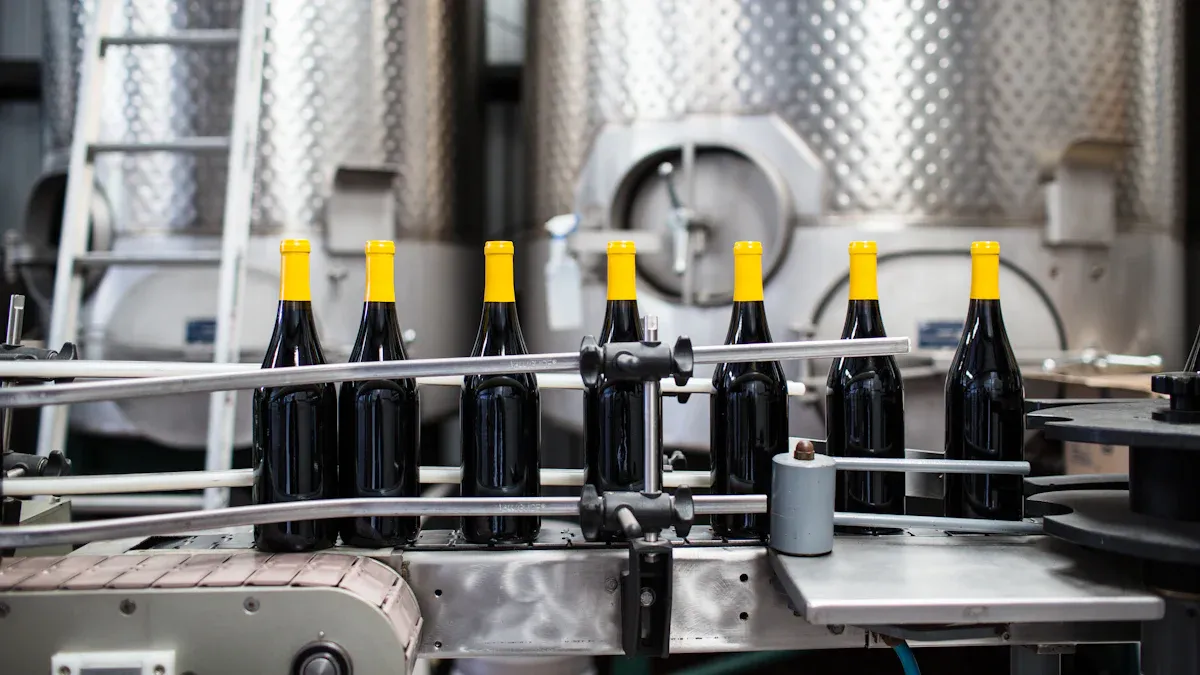
When you reach the bottling stage, you are almost ready to share your spirits with the world. The bottling process starts after your spirit has aged in barrels, sometimes for years. Once the spirit reaches the right flavor, you proof it down to the alcohol level you want. This step helps keep the taste and complexity you worked so hard to create.
You will follow a few main steps to get your spirit into bottles:
🥃 Tip: Take your time with each step. Careful work here protects your product and your reputation.
Running a small distillery brings unique challenges. You might notice that recipes from bars do not always work in bottles. You need to adjust them for cost and shelf life. Fresh juices and some ingredients can spoil or settle, so you may use distilled flavors or essences instead.
Here are some common challenges you might face:
💡 Note: Many small distilleries use nitrogen dosing to help reduce oxidation and keep spirits fresh longer.
When you look at bottling options for your micro distillery, you’ll find three main categories. Each one fits a different stage of business growth and production needs. Let’s break them down so you can see which distillery equipment matches your goals.
Manual bottling lines work best for small distilleries or those just starting out. You control each step by hand, which gives you flexibility and keeps costs low. Here’s what you get with manual bottling equipment:
Manual bottling usually lets you fill 50 to 150 bottles per hour if you work steadily. This method works well for short runs or when you want to keep things simple. Many craft distilleries use this bottle filling solution when they first launch.
Semi-automatic machines give you a nice balance between speed and control. You still do some steps by hand, but the machine handles the rest. This type of distillery equipment fits businesses that want to grow but aren’t ready for full automation.
| Equipment Type | Advantages | Disadvantages |
|---|---|---|
| Semi-Automatic Machines | Faster than manual filling; improved accuracy; moderate cost; suitable for moderate production volumes. | Requires more space than manual machines; needs some manual input, implying a trade-off between automation and labor. |
You can expect to fill 400 to 800 bottles per hour with semi-automatic lines. The price sits between manual and automatic options, making it a smart step up for local distribution.
| Equipment Type | Capacity (cans/hour) | Price Range (USD) | Typical Use Case |
|---|---|---|---|
| Manual Bottling | 100-200 | $15,000 – $30,000 | Taproom sales |
| Semi-Automatic | 400-800 | $75,000 – $150,000 | Local distribution |
| Fully Automatic | 1,200-2,500 | $250,000 – $500,000 | Regional distribution |
| High-Speed Automatic | 3,000+ | $600,000+ | National brands |
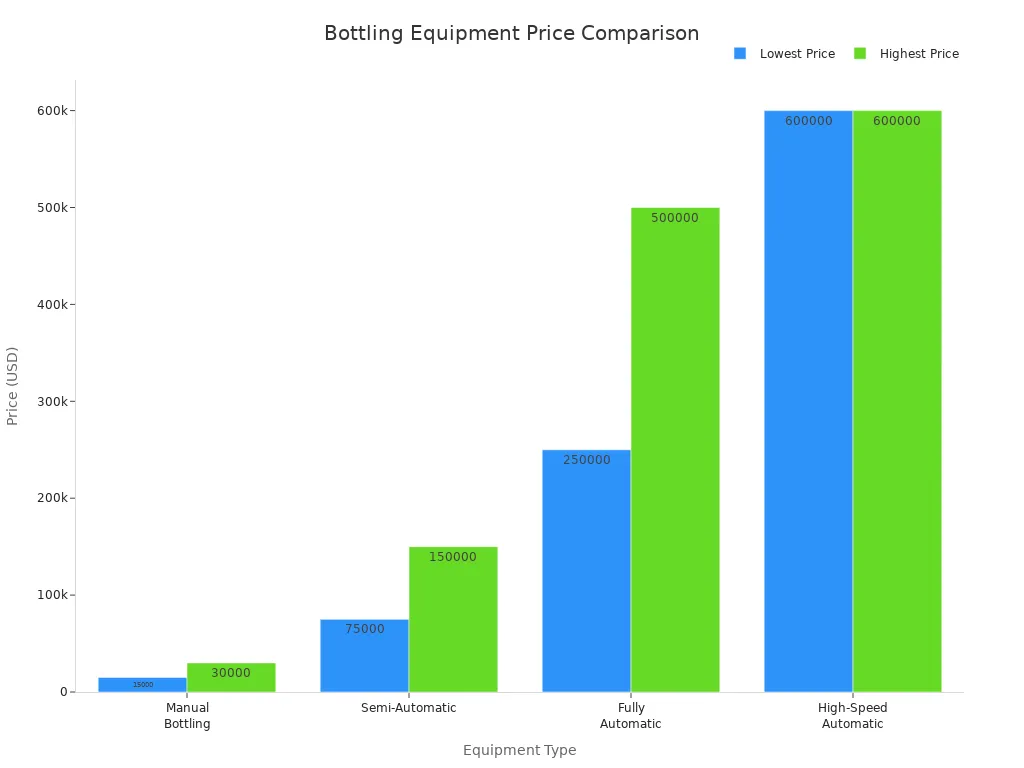
Automatic bottling equipment takes your production to the next level. You get speed, accuracy, and less manual work. This type of distillery equipment fits businesses aiming for regional or national sales.
Automatic lines often combine bottle feeding, rinsing, filling, and capping in one compact machine. You control everything from a touchscreen, making the process smooth and efficient.
Choosing the right bottling setup can feel like a big decision. Each type of equipment has its own strengths and weaknesses. Here’s a quick table to help you compare:
| Bottling Equipment Type | Pros | Cons |
|---|---|---|
| Manual (Hand) Bottling | – Great for small batches – Keeps you close to your community – Lower upfront cost – Flexible for small runs | – Takes a lot of time and effort – Speed and quality can change – Hard to grow your business – You need people to help run it |
| Automated Bottling Lines | – Fast and efficient – Every bottle looks the same – Fewer mistakes – Good for bigger markets – Runs for long hours | – Costs more at the start – Needs some technical know-how – Less personal touch |
🏆 Tip: If you want to keep things simple and connect with your customers, manual bottling works well. If you dream of growing fast and reaching more people, automated lines make life easier.
You want your distillery equipment to fit your goals now and in the future. Here are some things to think about:
When you match your equipment to your production scale, you set yourself up for smooth growth. Automated systems can boost your efficiency, but manual options give you more control when you’re just starting out.
Before you buy any equipment, you need to figure out what fits your distillery best. Start by thinking about your goals. What kind of spirits do you want to bottle? How many bottles do you plan to fill each day? These answers help you pick the right size and type of equipment.
Here are some important things to consider:
You also need to check local rules. Make sure your equipment meets safety and building codes. Plan your layout so you have room for raw materials, finished bottles, and a smooth workflow. If you feel unsure, talk to a distillery engineer for advice.
Not all bottling equipment is the same. Many machines come with special features or can be customized for your needs. Some let you switch bottle sizes quickly. Others have variable speed controls or tool-less changeovers for fast adjustments.
Here’s a quick look at some options:
| Equipment Type | Customization Options |
|---|---|
| Distilling Products | Choose copper or stainless steel, different sizes, heating methods, and built-in cleaning systems |
| Turnkey Skid Systems | Mix and match stills, fermenters, and mash houses to fit your space and workflow |
| SpiritRinser | Fits many bottle shapes and sizes, easy to clean, and compact for small spaces |
Look for user-friendly controls and strong materials like stainless steel. These features make your work easier and keep your spirits tasting great.
Automation can make your life much easier. Automated systems help you control temperature, flow, and cleaning cycles with the push of a button. They also reduce mistakes and keep your spirits consistent.
Some benefits of automation and upgradability:
If you want to save time, reduce waste, and grow your business, automation is a smart choice. When you pick micro distillery bottling equipment that can upgrade over time, you set yourself up for long-term success.
Working with the right equipment supplier can make your journey much smoother. You want a partner who understands your needs and helps you grow. Here are some tips to help you get the most out of your relationship with suppliers like COFF:
🛠️ Tip: Good communication with your supplier makes everything easier. Ask questions and share your plans so they can help you succeed.
You have many choices when it comes to bottling equipment. Take your time and think about what matters most for your business. Look at your budget, your space, and your future goals. Talk with suppliers like COFF and ask for advice. Try to visit other distilleries if you can. Seeing equipment in action helps you picture what will work best for you.
Make a list of your must-haves and nice-to-haves. Compare features, prices, and support. Trust your research and your gut. When you feel ready, make your choice and get started. The right equipment will help you share your spirits with the world and grow your brand.
Choosing micro distillery bottling equipment can feel like a big step, but you’ve got this! Here’s what you should remember:
Ready to get started? Make a list of your must-haves, set your budget, and reach out to experts like COFF. You’re on your way to building a successful distillery!
You should start with manual or semi-automatic bottling equipment. These options cost less and let you learn the process. As your business grows, you can upgrade to automatic systems.
Most small bottling setups fit in a space as small as 100 square feet. Make sure you have room to move around, store bottles, and keep everything clean.
Yes, you can use the same bottling line for whiskey, gin, or vodka. Just clean the equipment well between batches to keep flavors pure.
You should clean your equipment after every use. This keeps your spirits safe and tasting great. Regular cleaning also helps your machines last longer.
Look for suppliers who offer good support, clear instructions, and flexible equipment. COFF, for example, helps you choose the right setup and provides helpful guides for beginners.