


COPYRIGHT © 2022 COFF International Co., ltd. ALL RIGHTS RESERVED


A ミキシングタンク is a core piece of industrial process equipment designed to blend, dissolve, emulsify or homogenize liquids, solids and slurries into a uniform product. It is widely used across food & beverage, pharmaceutical, chemical and water treatment industries. The internal structure and component design directly determine mixing efficiency, batch consistency and long-term operational reliability. COFF is a professional manufacturer of custom mixing tanks, with configurable structures and materials to match precise process requirements across industries.
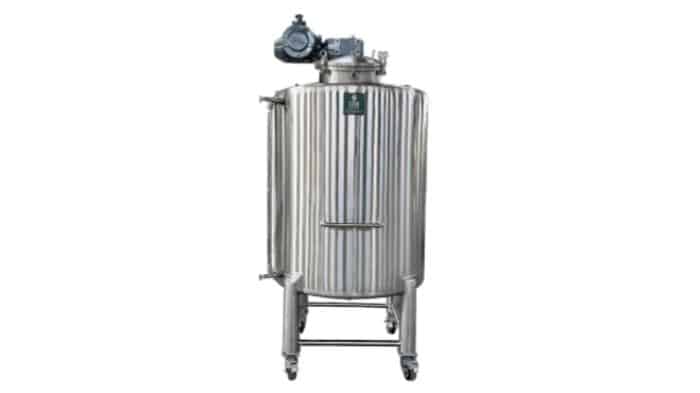
The tank body is the primary vessel that holds process materials. For nearly all mixing applications, the industry standard is a vertical cylindrical design, as it creates the most uniform flow patterns with no built-in dead zones. Square or rectangular tanks are rarely used for active mixing, as they create stagnant corners and poor fluid circulation; they are only suitable for static storage.
Engineers specify a height-to-diameter ratio based on material viscosity and mixing goals, with most liquid mixing tanks using a 1:1 to 1.5:1 ratio for optimal performance.
The top cover protects contents from external contamination and maintains internal pressure. Options include fully open tops for easy access, and closed tops with manways, feed ports and vent ports for sealed processes.
Tank material is selected based on chemical compatibility and hygiene requirements:
| 素材 | 主な利点 | Primary Applications |
|---|---|---|
| ステンレス鋼(304/316L) | Hygienic, corrosion-resistant, easy to clean, high mechanical strength | Food & beverage, pharmaceuticals, cosmetics, most general chemical processes |
| ガラス張り | Excellent chemical inertness, resistant to strong acids | Highly corrosive chemical reactions, specialty industrial processes |
| 炭素鋼 | Low cost, high structural strength | Non-corrosive materials, general industrial mixing, water treatment |
| Plastic (HDPE/PP) | Superior corrosion resistance, lightweight | Highly corrosive chemicals, low-temperature atmospheric processes |
COFF mixing tanks are most commonly built with food-grade 304 or 316L stainless steel, with polished internal surfaces to prevent material buildup and support easy cleaning.
These internal parts directly determine mixing performance.
Impellers are the active mixing elements mounted on the agitator shaft. Different blade designs are matched to different process needs:
Baffles are vertical flat plates mounted to the inner tank wall. Their core function is to disrupt the circular swirling flow created by the rotating impeller. Without baffles, liquid spins in a vortex with minimal vertical movement, leaving stagnant dead zones near the tank walls and bottom. Baffles redirect flow to create a three-dimensional mixing pattern for full, uniform blending.
The drive system delivers rotational power to the impeller. It includes:
Oversized motors waste energy and increase operating costs, while undersized motors cause slow, uneven mixing. COFF sizes drive systems precisely for each application to balance performance and efficiency.
The shaft seal closes the gap where the agitator shaft enters the tank, preventing leaks, contamination and pressure loss. Seal type is selected based on hygiene, pressure and hazard level requirements:
| Seal Type | 主な特徴 | 理想的なアプリケーション |
|---|---|---|
| Packing Seal | Low cost, simple maintenance, allows minimal leakage | General chemical mixing, atmospheric pressure, non-hazardous materials |
| Mechanical Seal | Tight leak prevention, pressure-resistant, wide temperature range | Pharmaceutical, food & beverage, pressurized processes, volatile or toxic materials |
| Magnetic Drive Seal | Zero contact, zero leakage, fully hygienic | High-purity pharmaceuticals, sterile processes, highly corrosive or dangerous materials |
The support structure (legs, frame and motor bracket) holds the tank stable during operation, minimizing vibration and reducing mechanical stress on the vessel.
Inlet and outlet ports are positioned to optimize material flow and discharge efficiency. Most tanks also include auxiliary ports for temperature sensors, sampling valves, pressure gauges and CIP (clean-in-place) spray nozzles, based on process needs.
When operating, the impeller drives fluid movement from the center of the tank outward. Baffles break up circular vortex flow and redirect liquid upward and downward, creating a full three-dimensional flow pattern that reaches every part of the tank.
Impeller mounting height is also calibrated — typically positioned one-third of the liquid height from the tank bottom — to prevent solids from settling and eliminate bottom dead zones. When matched with the correct tank aspect ratio and baffle design, this combination delivers fast, uniform mixing with consistent results batch after batch.
| 特徴 | Vertical Mixing Tanks | Horizontal Mixing Tanks |
|---|---|---|
| 構造 | Vertical cylindrical vessel with top-mounted agitator | Horizontal trough with side-mounted shaft and paddles/ribbons |
| 最適 | Most liquid, slurry and solid-liquid mixing processes | High-viscosity pastes, dry powders and thick paste blending |
| Scale Range | Lab-scale to large-volume industrial production | Medium to large batches for specialty materials |
| フットプリント | Compact, minimal floor space | Larger footprint, more installation space required |
| メンテナンス | Simple, easy component access | More complex mechanics, higher maintenance cost |
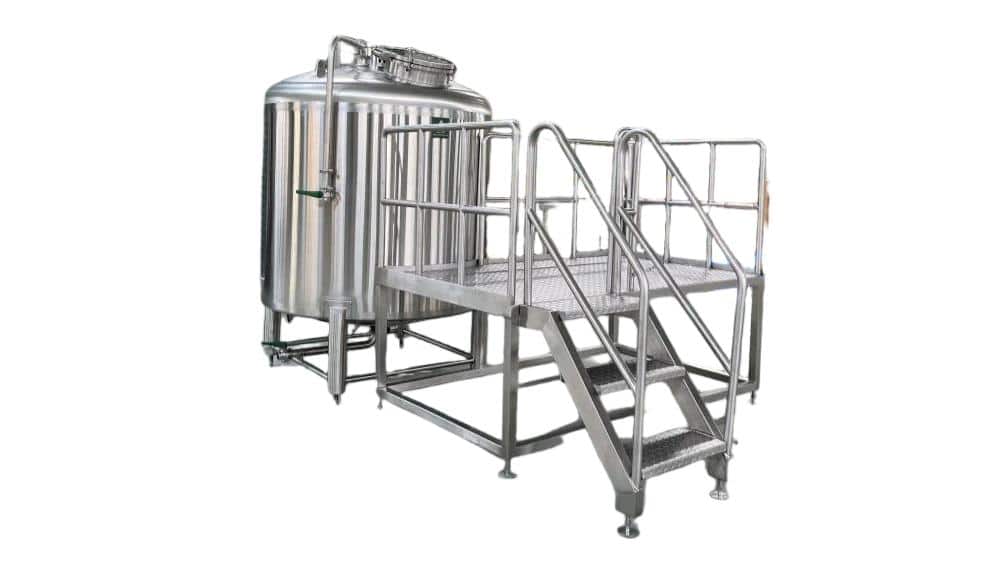
縦型タンク are the industry default for most processes. COFF manufactures both vertical and horizontal designs, configured to match each customer’s material and production needs.
Jacketed tanks have an outer shell surrounding the main vessel, through which heating or cooling media (steam, hot water, chilled fluid) circulates. This allows precise temperature control during mixing.
COFF offers single-layer, double-jacketed and half-pipe jacketed tank designs, with optimized heat transfer for efficient temperature control.
COFF designs and builds application-specific mixing tanks for a wide range of industrial sectors:
The internal structure of a mixing tank is the foundation of reliable, consistent mixing performance. Every component — from the tank body and impeller to the seal and jacket — must be matched to the material properties and process goals to deliver efficient, safe and long-lasting operation.
For facilities of all sizes, selecting a purpose-built mixing tank reduces downtime, improves product consistency and lowers long-term operating costs. COFF’s custom-engineered mixing tanks are designed to meet precise industry and process requirements, delivering dependable performance for food, pharmaceutical, chemical and water treatment applications.
Mixing tanks are used across food & beverage (sauces, beverages), pharmaceuticals (drug formulations), chemicals (adhesives, resins), water treatment (chemical dosing), cosmetics (creams, lotions) and many other process industries.
Most industrial mixing tanks support Clean-in-Place (CIP) systems, which spray cleaning solution through internal nozzles without disassembly. Stainless steel tanks with polished interiors are especially easy to clean, making them the standard for hygienic industries. Regular scheduled cleaning prevents cross-contamination and extends tank service life.
Baffles disrupt the circular swirling flow created by the rotating impeller. Without baffles, liquid spins in a vortex with minimal vertical mixing, leaving stagnant dead zones near the tank walls and bottom. Baffles redirect flow to create a three-dimensional mixing pattern, ensuring uniform blending throughout the entire tank.
A jacketed mixing tank has an outer layer that circulates heating or cooling media to precisely control the temperature of the tank contents. This is critical for processes that require consistent temperature — such as emulsification, chemical reactions and food pasteurization — and ensures uniform batch quality.
With proper maintenance and compatible operating conditions, a stainless steel mixing tank typically lasts 15 to 30 years. Service life varies based on material grade, operating temperature, chemical exposure and cleaning frequency. Well-maintained tanks in non-corrosive applications can last even longer.