

COPYRIGHT © 2022 COFF International Co., ltd. ALL RIGHTS RESERVED


正しい選択 ワインタンク is essential for maintaining fermentation quality, improving sanitation, and reducing long-term operating costs. While stainless steel tanks are the industry standard, the best choice depends on material grade, sanitary design, capacity, temperature control, and production requirements.

The stainless steel grade is the foundation of wine tank durability, hygiene, and service life. Most wineries choose between AISI 304 and AISI 316L stainless steel.
| グレード | Key Alloy Additives | ベストアプリケーション |
|---|---|---|
| AISI 304 | 18–20% chromium, 8–10% nickel | General winemaking, inland wineries, standard fermentation and storage |
| AISI 316L | 16–18% chromium, 10–14% nickel, 2–3% molybdenum | Coastal facilities, high-acid wines, and operations with demanding cleaning conditions |
The molybdenum content in 316L improves resistance to pitting corrosion, especially around weld areas and in environments exposed to salt or aggressive cleaning chemicals.
When purchasing from a professional ワインタンク・メーカー, verify fabrication standards, pressure ratings, and quality control procedures to ensure long-term reliability.
When comparing different vessel materials, consider oxygen exposure, flavor influence, sanitation requirements, and long-term maintenance costs.
| 船舶タイプ | 酸素暴露 | 風味への影響 | メンテナンス要件 |
|---|---|---|---|
| ステンレスタンク | Minimal when properly sealed | Neutral; preserves pure fruit character | Low maintenance; CIP compatible and easy to sanitize |
| オーク樽 | Slow, controlled oxygen transfer | Adds vanilla, toast, and spice characteristics | High maintenance; requires regular cleaning and replacement |
| コンクリートタンク | Low oxygen exchange | Mostly neutral with potential mineral texture influence | Requires careful sanitation due to porous surfaces |
| Clay Amphorae | Moderate oxygen exposure | Adds earthy, traditional character | Difficult to clean and maintain |
For most commercial and boutique wineries, ステンレス製ワインタンク remain the preferred choice because they provide precise temperature control, reliable sanitation, and consistent wine quality without adding unwanted flavors.
Sanitation should be a top priority when choosing a wine tank, as tank design directly affects contamination control, cleaning efficiency, and long-term operating costs. When comparing different tanks, focus on interior finish, weld quality, drainage design, and CIP compatibility.
Choose stainless steel wine tanks with a polished interior surface and a roughness value of Ra ≤ 0.4 μm. A smoother surface reduces microbial attachment, prevents residue buildup, and improves cleaning efficiency.
Key sanitary features to look for include:
For commercial wineries, selecting a CIP-compatible tank can significantly reduce labor requirements and improve cleaning consistency.
Look for features such as:
A properly designed sanitary wine tank reduces spoilage risk and helps maintain consistent wine quality batch after batch.

Choosing the right wine tank size and geometry is essential for efficient fermentation, storage flexibility, and oxygen control. The ideal capacity should match your typical batch volume while minimizing unused headspace.
Avoid oversized tanks for small batches, as excessive headspace increases oxidation risk. Choose a capacity range that fits your production scale:
| Winery Scale | Recommended Capacity |
|---|---|
| Boutique / Small Batch | 1–5 KL (60–264 gallons) |
| Commercial Winery | 5–20 KL (1,320–5,280 gallons) |
| Large Production Facility | 20+ KL (5,280+ gallons) |
Tank geometry affects fermentation behavior, sediment management, and workflow efficiency. Consider the following when selecting a tank design:
| デザイン | メリット | 一般的な用途 |
|---|---|---|
| 円錐底タンク | Faster lees removal, improved drainage, easier clarification | Red wine fermentation, storage, clarification |
| Flat Bottom Tank | Simple structure, lower cost, suitable for stable storage | Finished wine storage, blending |
Variable-capacity tanks use a floating lid with an inflatable gasket to eliminate oxygen-filled headspace as wine volume changes.
They are ideal for:
Temperature control capability should be a key consideration when selecting a stainless steel wine tank, as it directly influences yeast performance, fermentation speed, and aroma preservation.
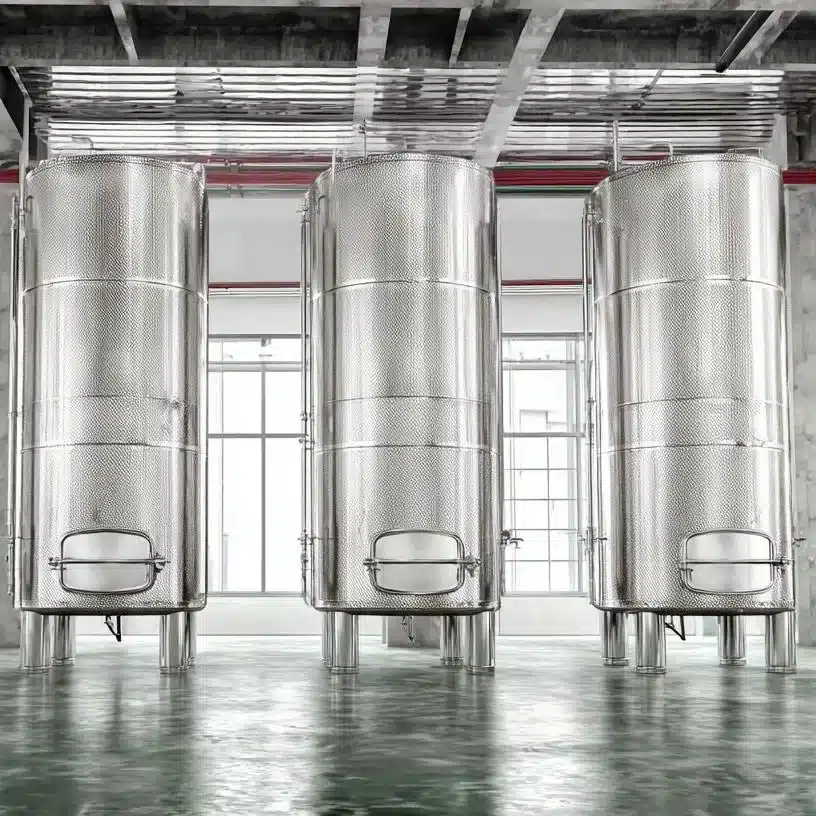
When comparing wine tanks, look for efficient cooling systems such as dimple cooling jackets that provide stable glycol circulation and accurate temperature management throughout fermentation.
Key features to evaluate include:
For aromatic white wines, tanks with reliable low-temperature control support fermentation at 12–16°C to preserve delicate floral and citrus aromas, while red wine production may require higher temperature ranges for improved color and tannin extraction.
Beyond initial purchase price, the long-term maintenance requirements of a wine tank have a major impact on operating costs and production efficiency.
When choosing a wine tank, prioritize designs that simplify cleaning, reduce downtime, and extend service life.
Important factors include:
Selecting a professional wine tank manufacturer with proven fabrication standards and quality control helps ensure long-term reliability, lower maintenance costs, and better return on investment.
AISI 304 stainless steel is suitable for most standard winemaking applications. AISI 316L contains molybdenum, providing better resistance to corrosion from salt, acids, and aggressive cleaning environments.
Floating lid tanks reduce oxygen exposure by lowering the lid as wine volume decreases, eliminating unnecessary headspace above the wine surface.
A polished low-Ra surface reduces microbial buildup, improves cleaning efficiency, and helps maintain hygienic wine production conditions.
Small wineries typically use tanks between 1–5 KL depending on batch size, production goals, and available cellar space.
The best wine tank should match your winery’s production scale, wine style, and operational needs. For most wineries, a food-grade 304 or 316L stainless steel tank with a polished sanitary interior, efficient cooling jacket, and CIP compatibility provides the best combination of durability, hygiene, and long-term value.