


COPYRIGHT © 2022 COFF International Co., ltd. ALL RIGHTS RESERVED


Rapidly cooling milk after milking is one of the most critical quality control steps in the entire dairy supply chain. Cooling milk tanks use insulated walls and integrated refrigeration systems to quickly lower raw milk to 4°C (39°F) or below, slowing bacterial growth, preserving flavor and nutrition, and extending shelf life. Even a one-hour delay in cooling can cause bacterial counts to climb significantly, raising spoilage risk and reducing product value.

Raw milk leaves the udder at approximately 101–102°F — a temperature near the optimal growth range for many bacteria. Combined with abundant nutrients, neutral pH, and dissolved oxygen, this environment allows spoilage and pathogenic organisms to multiply quickly, with counts potentially doubling every 20 minutes.
Rapid chilling removes this growth advantage. Industry best practice requires raw milk to reach 35–40°F within one hour of milking to minimize bacterial reproduction. A 2017 PubMed study (Christiansson) confirms that the interval before cooling begins is the most critical factor for controlling psychrotrophic bacteria, and that cooling from 30°C to 10°C within 2 hours minimizes growth. The cooling rate below 10°C has surprisingly little impact on bacterial levels, though storage temperature directly determines shelf life:
| 保存温度 | Time to reach spoilage threshold (1,000,000 cfu/mL) |
|---|---|
| 3°C | 68 days |
| 6°C | 19 days |
| 10°C | 10 days |
| Above 15°C | Within days |
Without fast cooling, pathogens such as 黄色ブドウ球菌 can multiply and produce heat-stable toxins that survive pasteurization. Spoilage bacteria generate off-flavors and sourness, and heat-stable enzymes break down fat and protein to shorten finished product shelf life. Proper cooling blocks all of these degradation pathways.
Fast chilling to ~4°C stops bacterial activity that causes spoilage and quality loss. Steady cold storage prevents temperature cycling, keeping milk close to its natural clean, creamy flavor profile.
Vitamins, proteins, and minerals also remain better preserved when bacterial activity is kept low. High-quality, low-bacteria milk commands price premiums from processors, and reliable cooling enables access to long-distance, higher-value markets where product must travel far and still arrive fresh. In short, effective cooling protects both the product and the revenue it generates.
Two metrics define proper milk cooling:
A common misconception is that final storage temperature matters most. In reality, the speed of the initial temperature drop has a far larger effect on bacterial load than the exact holding temperature. Delaying the start of cooling by even 30 minutes causes measurable bacterial growth that no amount of later cold storage can reverse.
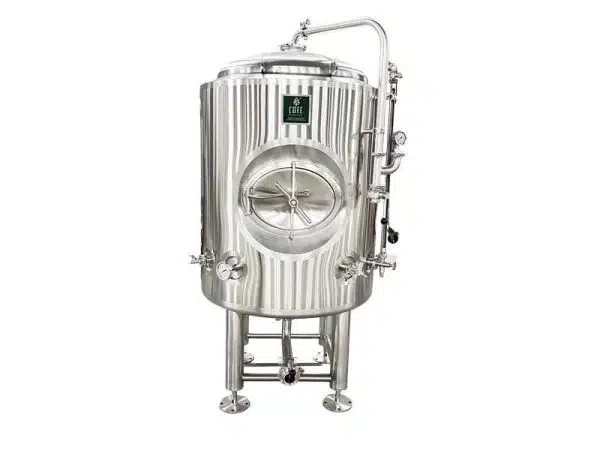
No single design works for every operation. The best fit depends on herd size, energy costs, product type, and available space. A milk tank manufacturer can help dairy operators evaluate these factors and select the most suitable system. Three systems dominate commercial dairy use:
In this design, refrigerant circulates through coils in direct contact with the milk. These systems cool quickly and are the simplest, most common choice for small to mid-size farms with stable grid power. They are low-upfront-cost and reliable for steady, routine milking schedules.
Ice bank systems build up a reserve of ice during off-peak electricity hours, then use that stored cooling capacity to chill milk during peak demand periods. This design shifts electrical load away from high-rate peak hours, drastically reducing demand charges and overall energy costs. It is also well-suited for locations with unreliable power supply.
Plate heat exchangers use thin, closely spaced stainless steel plates to transfer heat between milk and a coolant. They achieve thermal efficiencies of 85–95% — roughly 15–20% higher than tubular systems — and require up to 30% less cooling energy for the same duty.
When installed upstream of a bulk tank, a plate exchanger pre-cools milk by 30°F or more before it enters storage. This cuts compressor run time from 30–45 minutes down to 10–15 minutes, reducing electrical costs by nearly 50%. For medium and large operations, in-line pre-cooling paired with a bulk storage tank is the industry standard for efficiency.
Energy is often the largest ongoing cost of milk cooling. These proven measures reduce consumption while maintaining or improving cooling performance:
Milk leaves the cow at ~101–102°F and must drop below 40°F within one hour to control bacterial growth. The first 60 minutes are the most critical window — even a short delay allows measurable spoilage bacteria to multiply.
The target storage range is 36–38°F for maximum shelf life and premium quality. Well-insulated tanks with gentle agitation hold this steady range between pickups. Colder temperatures do not meaningfully improve quality and waste energy.
Yes. In-line plate heat exchanger pre-cooling can cut refrigeration electricity use by nearly 50%. Ice bank systems shift load to lower-cost off-peak hours. Matching the system to your farm size and utility rates makes a large difference in ongoing expenses.
Scale drives the right design. Small farms typically work well with a single bulk tank plus pre-cooling. Mid-size operations often add an ice bank or plate exchanger. Large plants require multistage plate cooling systems with heat recovery and integrated utility loops. Tanks from 200L to 20,000L cover nearly all farm and plant needs.
Most fluctuations come from dirty condensers, blocked airflow, fouled heat exchanger plates, degraded insulation, or insufficient agitation. Real-time temperature monitoring catches issues early. Regular cleaning and maintenance prevent the vast majority of cooling performance problems.