


COPYRIGHT © 2022 COFF International Co., ltd. ALL RIGHTS RESERVED

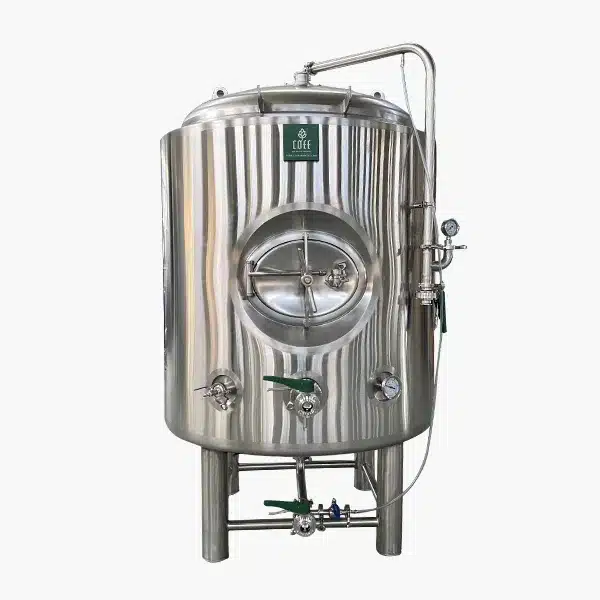
ブライトタンク (also called ブライト・ビール・タンク) are standard equipment in most commercial breweries, but many brewers — especially small batch operators and homebrewers — wonder if they are a required part of the setup. The answer depends on your production volume, beer styles, and efficiency goals. For breweries prioritizing crystal clear beer, fast turnaround, and consistent carbonation, a brite tank is a high-impact investment. For smaller operations focused on hazy or unfiltered styles, you may be able to brew without one.
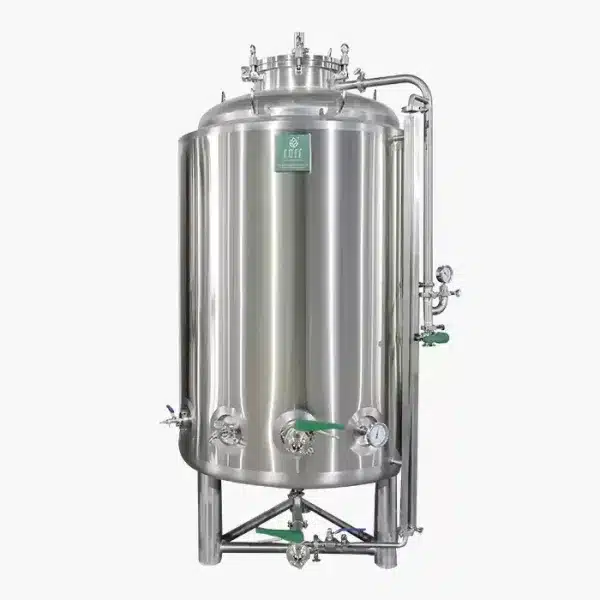
Brite tanks are used after primary fermentation is complete, for the final steps of beer preparation before packaging or serving. They serve three core functions:
Once beer is transferred from the fermenter, the brite tank holds it at near-freezing temperatures in a process called cold crashing. Low temperatures cause leftover yeast, protein, and sediment to settle to the flat bottom of the tank, leaving the beer clear and bright.
This natural settling reduces or eliminates the need for mechanical filtration, which preserves the beer’s full flavor and mouthfeel. It also removes off-flavors caused by leftover yeast sitting in contact with finished beer. Most clear beer styles reach target clarity in 2–5 days of cold conditioning in a brite tank.
Brite tanks are built to hold pressure, which allows brewers to use forced carbonation: injecting CO₂ directly into the beer to reach exact carbonation levels. This method is much faster than natural carbonation, and delivers perfectly consistent fizz batch after batch.
The tank also holds beer under pressure long-term, so carbonation stays stable until packaging or serving.
Brite tanks act as a buffer for finished beer. During the cleaning of 発酵タンク and the refilling of new batches, the clear beer tanks maintain its temperature, pressure, and freshness. This makes packaging and draft beer supply more reliable.
Standard brite tanks are made from food-grade stainless steel, include cooling jackets for temperature control, sampling valves for quality checks, and CIP (clean-in-place) systems for fast, thorough cleaning.
For clear beer styles, a brite tank delivers far more reliable clarity than conditioning in a fermenter. The flat bottom and dedicated cold conditioning space allow yeast and haze particles to settle fully, resulting in bright, clean beer every batch.
This visual consistency is a big factor in customer perception — clear, polished beer is often associated with higher quality and professionalism.
This is the biggest operational benefit for growing breweries. By moving finished beer out of fermenters and into a brite tank, you free up fermenters to start new batches immediately.
Over time, this means you can produce more beer with the same number of fermenters, without expanding your core equipment footprint. For breweries struggling to keep up with demand, a brite tank is often a more cost-effective upgrade than adding another fermenter.
Beer held at steady pressure and temperature in a brite tank packages much more consistently. Carbonation stays even, sediment stays out of the packaging line, and waste drops significantly. For draft service, brite tanks also act as serving tanks, for stable, consistent pour quality.
A brite tank is a smart investment if any of these apply to your operation:
For medium and large commercial breweries, brite tanks are considered standard equipment for efficiency and quality control.
You do not need a dedicated brite tank if:
Many small breweries start with unitanks only, and add a brite tank once their volume grows enough to justify the cost.
Quick Reference by Beer Style
- Clear lagers/pilsners: Highest benefit from brite tank conditioning
- Hazy IPAs/wheat beers: Minimal benefit; can condition in fermenter
- Dark/heavy beers: Moderate benefit; shorter conditioning time needed
A brite tank is not strictly necessary for every brewery — but it is a very valuable tool for the right operation.
For homebrewers and tiny nanobreweries making mostly hazy or unfiltered beer, you can easily get by with unitanks and skip the dedicated brite tank. For commercial breweries making clear beer styles and looking to speed up production, a brite tank is one of the most impactful equipment upgrades you can make for both quality and efficiency.
The best way to decide is to look at your beer styles, production volume, and growth goals — if clarity and turnaround are priorities, a brite tank will quickly pay for itself.
The main purpose of a brite tank is to clarify, carbonate, and store finished beer after fermentation, before it is packaged or served. It gives brewers precise control over clarity and carbonation, while freeing up fermenters for new batches.
Most homebrewers do not need a dedicated brite tank. Pressure-capable fermenters and unitanks can handle cold crashing and carbonation for small batches. Homebrewers making very clear beer styles may benefit from a small brite tank, but it is not a requirement.
Brite tanks hold beer at near-freezing temperatures (cold crashing), which causes yeast, protein, and haze particles to settle to the flat bottom of the tank. This natural settling removes sediment and produces bright, clear beer without filtration.
No. Clear styles like lagers and pilsners benefit the most from brite tank conditioning. Hazy IPAs, wheat beers, and intentionally unfiltered styles do not need a brite tank, and many brewers choose to condition them directly in the fermenter.
Yes, for most small operations. Unitanks can ferment, condition, and carbonate beer all in one vessel. The tradeoff is that you cannot start a new batch while conditioning the old one, so production turnover is slower. For high-volume breweries, separate fermenters and brite tanks are more efficient.