

COPYRIGHT © 2022 COFF International Co., ltd. ALL RIGHTS RESERVED


Ummantelte Mischbehälter are essential for cosmetics manufacturing because they deliver precise, uniform temperature control across every stage of production — heating, emulsification, and cooling all happen in a single vessel, eliminating product transfer and keeping formulas consistent. This steady thermal control protects emulsion stability, preserves heat-sensitive ingredients like fragrances and essential oils, and ensures consistent texture, viscosity, and shelf life across every batch.
Standard mixing vessels only stir ingredients — they cannot manage targeted heat transfer. Jacketed tanks solve this by enabling precise thermal control through every production step, which directly impacts three core product attributes.
Emulsions (the base of creams, lotions, and serums) require specific temperature ranges to form and remain stable:
| Emulsion Type | Optimaler Temperaturbereich |
|---|---|
| Oil-in-water (O/W) medium emulsions | 25–40°C |
| Water-in-oil (W/O) rich emulsions | 40–60°C |
Ingredient melting points add further constraints: beeswax melts near 63°C, cocoa butter at 34–38°C, and lanolin near 38°C. Even small temperature deviations can cause phase separation, breaking the emulsion structure permanently.
Research on cooling profiles confirms this: holding creams at 35°C midway through cooling creates more stable final products than faster cooling to 25°C, where the product drops below its glass transition temperature and shear breaks down the emulsion microstructure.
Heat directly changes product flow behavior: most formulas thin as temperature rises, and thicken as they cool. Uncontrolled heating or cooling can create uneven viscosity that disrupts downstream filling equipment, or result in a final product that thins permanently over shelf life.
Stability testing standard requires strict thermal control: long-term storage testing runs at 25°C ± 2°C for 12 months, while accelerated testing runs at 40°C ± 2°C for 6 months. Jacketed tanks hold batches to repeatable temperature profiles to meet these requirements consistently.

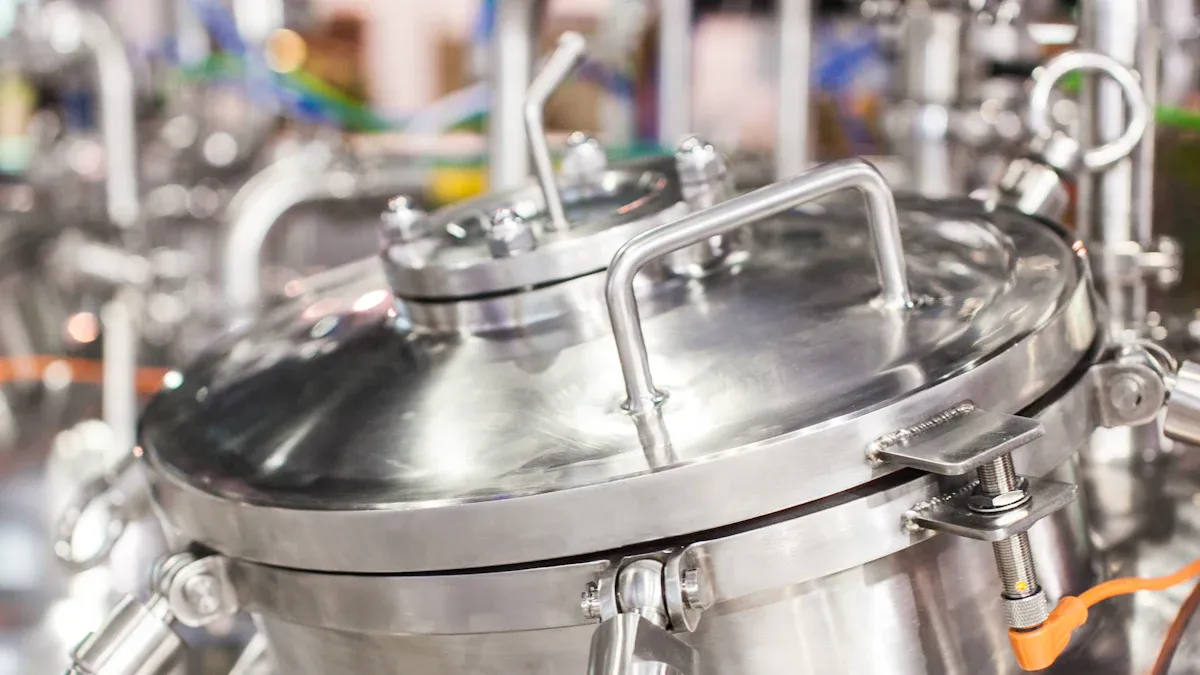
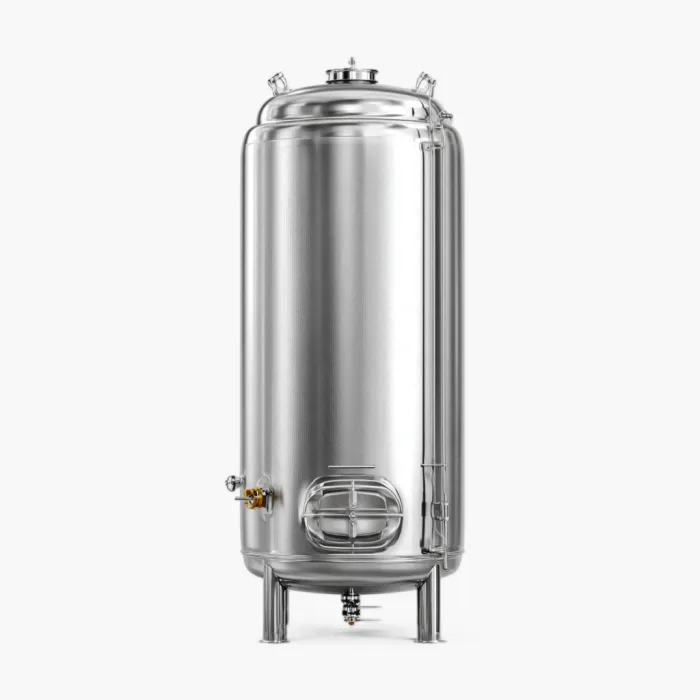
A jacketed mixing tank is a double-walled stainless steel vessel: an inner chamber holds the product batch, while an outer jacket circulates heating or cooling fluid (water, steam, or thermal oil) that never touches the product itself. Heat transfers gradually through the inner tank wall for even, controlled temperature change. An internal agitator moves the batch to ensure uniform heat distribution throughout the volume.
| Heizmethode | Merkmale | Best For Cosmetics Use |
|---|---|---|
| Dampf | Fast, strong heat transfer; requires on-site steam supply | Industrial high-volume production requiring rapid heating |
| Hot water | Gentler than steam; supports precise moderate temperatures | Creams, lotions, serums, and syrups |
| Thermal oil | Stable high-temperature heat transfer | Special chemical heating duties, high-melting-point formulas |
| Elektrisch | Compact; no external boiler required | Small tanks, pilot batches, and low-volume production |
Cooling works in reverse: chilled water pumped through the jacket draws heat out of the batch gradually and evenly. External chiller units can be connected for faster cooling or lower target temperatures. Controlled cooling rates are critical: too-fast cooling causes uneven viscosity increases that disrupt downstream filling.

The jacket circulates thermal fluid evenly across the entire vessel surface, eliminating hot spots that can burn sensitive ingredients or cause uneven blending. Combined with an agitator to spread heat through the batch, this creates a steady thermal environment that delivers identical viscosity, texture, and stability batch after batch.
Double-walled jacketed designs cut energy waste by up to 30% compared to traditional single-use heating systems. Even heat transfer over the full vessel surface eliminates localized overheating and wasted energy.
The design also scales seamlessly: small pilot batches and full production runs can use the same thermal profile. One case study found that switching to jacketed high-shear vessels cut batch times by 45% for a growing cosmetics manufacturer, while also lowering energy use.
Ummantelte Tanks are used across a wide range of personal care products, with the design matched to the product’s requirements:
| Produktkategorie | Key Jacketed Tank Functions |
|---|---|
| Medium lotions & serums | Phase preparation, homogenizing, temperature control, deaeration |
| Thick creams & moisturizers | Emulsification, wall-scraping agitation, controlled slow cooling, vacuum processing |
| Gels & facial masks | Controlled heating/cooling to maintain consistent thickness and flow; high-shear mixing for stable gel structure |
| Shampoos & fragrances | Precise temperature control to protect heat-sensitive fragrances and essential oils |
Rich, structured creams benefit most from slow, controlled cooling and wall-scraping agitation to maintain their thickness. Thinner, simpler blends can run in standard vessels, but jacketed tanks deliver superior consistency for any product where thermal behavior defines the final result.
The jacket is an outer shell that circulates hot water, steam, chilled water, or thermal oil around the inner product chamber. The fluid never touches the product — heat transfers only through the inner tank wall. This allows one tank to heat, hold, and cool a batch without transferring product between vessels.
Double-jacketed designs deliver steady, precise temperature control throughout emulsification. The agitator keeps product moving for even heat distribution. This control protects phase stability, viscosity, and texture, and keeps heat-sensitive fragrances and essential oils within their safe operating range.
Creams, lotions, serums, facial masks, shampoos, and fragrances all benefit from controlled thermal processing. Rich creams require slow controlled cooling; medium emulsions need even mixing and deaeration. Any product where heating and cooling define the final result will perform better in a jacketed tank.
Yes. Precise thermal control can cut blend time by 25–40% and prevent ingredient breakdown. Multifunctional jacketed tanks also cut energy waste by up to 30% compared to traditional single-use systems, and can reduce batch times by 40% or more.