


COPYRIGHT © 2022 COFF International Co., ltd. ALL RIGHTS RESERVED


Die Auswahl des richtigen industrial mixing vessel is critical to consistent product quality, operational efficiency, and long-term cost control across food, beverage, pharmaceutical, and chemical processing. A properly specified Mischtank reduces cycle times, eliminates cross-contamination risks, and cuts energy and maintenance expenses. Conversely, poorly suited equipment can lead to ruined batches, unplanned downtime, wasted energy, and non-compliance with industry standards.

The main reason to choose a Mixing Tank carefully is to achieve consistent mixing throughout the entire batch. Tank geometry, agitator type, and operating conditions all affect how effectively materials circulate inside the vessel.
Different products require different mixing patterns:
Choosing an agitator based on viscosity and shear sensitivity helps avoid under-mixing, excessive shear, and unnecessary energy consumption.
An unsuitable tank or agitator can create stagnant areas where ingredients remain poorly mixed. This can lead to inconsistent concentration, texture, temperature, or product quality.
A properly designed Mixing Tank promotes more uniform circulation, helping manufacturers achieve repeatable results from batch to batch.
Mixing equipment affects more than product quality. Proper tank capacity, heating and cooling performance, and process integration can also influence cycle times and overall production throughput.
Tank capacity should match the actual batch size and production schedule. An oversized tank can increase energy use and reduce mixing efficiency at low fill levels, while an undersized tank may limit output or require more frequent batches.
Selecting the appropriate working volume gives manufacturers a better balance between production capacity, mixing performance, and future expansion.
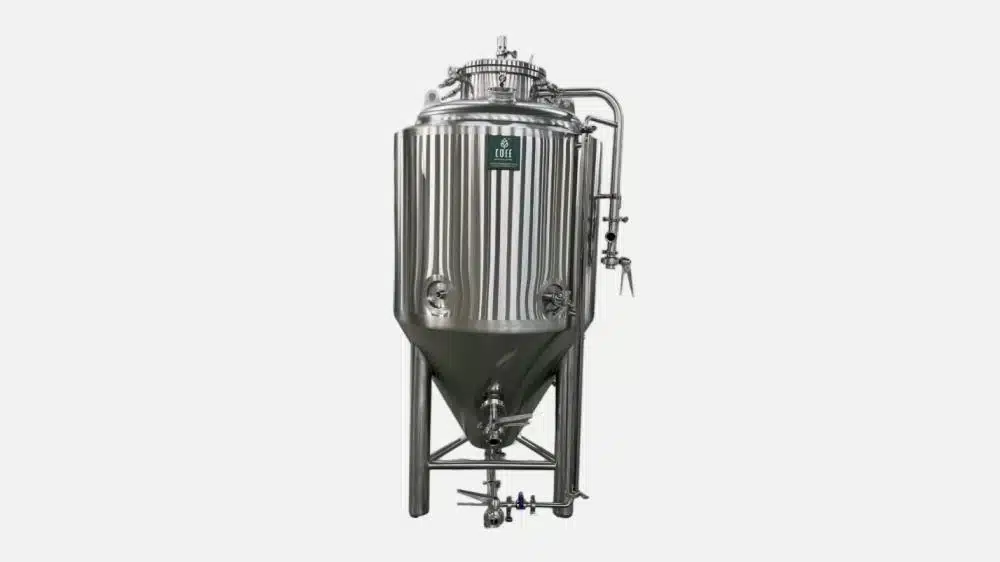
Many products require controlled heating or cooling during mixing. Jacketed Mixing Tanks can circulate steam, thermal oil, or glycol around the vessel to maintain the required processing temperature.
Reliable temperature control helps prevent overheating, under-processing, and temperature-related batch variation while improving overall process consistency.
For food, beverage, pharmaceutical, and cosmetic applications, sanitary design is an important part of Mixing Tank selection. The equipment must be easy to clean while minimizing areas where product residue or microorganisms can accumulate.
304 and 316L stainless steel are widely used for sanitary Mixing Tanks because of their corrosion resistance, durability, and cleanability. The appropriate grade depends on the product, cleaning chemicals, and operating environment.
Smooth internal surfaces and sanitary welds further reduce residue buildup and make routine cleaning easier.
Clean-in-place (CIP) capability allows manufacturers to clean the tank interior without extensive disassembly. Spray devices, self-draining designs, sanitary valves, and accessible connections can all improve cleaning efficiency.
A Mixing Tank designed around the cleaning process can reduce manual labor, shorten changeover times, and lower cross-contamination risks.

The lowest purchase price does not always result in the lowest operating cost. Mixing efficiency, energy consumption, maintenance requirements, and downtime all contribute to the total cost of ownership.
A properly sized tank and correctly matched agitator can deliver the required mixing performance without excessive motor power. Efficient heating and cooling systems can further reduce utility consumption.
Better mixing also reduces rejected or reworked batches, helping manufacturers avoid unnecessary material waste.
Poorly matched equipment can cause premature wear, difficult cleaning, frequent repairs, and unexpected production interruptions. A Mixing Tank designed for the actual process can provide easier access to service components and more reliable operation.
Durable construction and appropriate automation can also reduce routine maintenance while supporting consistent production as demand increases.
Most sanitary mixing tanks are constructed from 304 or 316L food-grade stainless steel. This material offers excellent corrosion resistance, a smooth easy-to-clean surface, and compliance with global food and pharmaceutical safety standards.
Double-jacketed mixing tanks have an outer secondary wall that creates a cavity for circulating heating or cooling media (steam, thermal oil, or glycol). This design allows precise, uniform temperature control of the product inside, without direct contact between the utility fluid and the process material.
Anchor and paddle agitators are the best choice for high-viscosity and semi-solid materials. These blades run close to the tank wall and continuously scrape interior surfaces, preventing product buildup, eliminating burnt spots, and ensuring even heat distribution throughout thick batches.
Clean-in-Place (CIP) systems use internal spray balls to circulate cleaning and sanitizing solutions across all interior tank surfaces, without requiring disassembly. Combined with smooth welds, polished surfaces, and self-draining design, CIP eliminates bacterial harborage points and delivers consistent, repeatable sanitation between batches.
Choosing the right Mixing Tank means matching the equipment to the product, batch size, temperature requirements, sanitation needs, and production workflow. The right configuration can improve mixing consistency, simplify cleaning, reduce energy and material waste, and minimize downtime.
Working with an experienced fabricator to tailor vessel design to your specific production needs ensures your mixing system supports both current output and future growth.