


COPYRIGHT © 2022 COFF International Co., ltd. ALL RIGHTS RESERVED

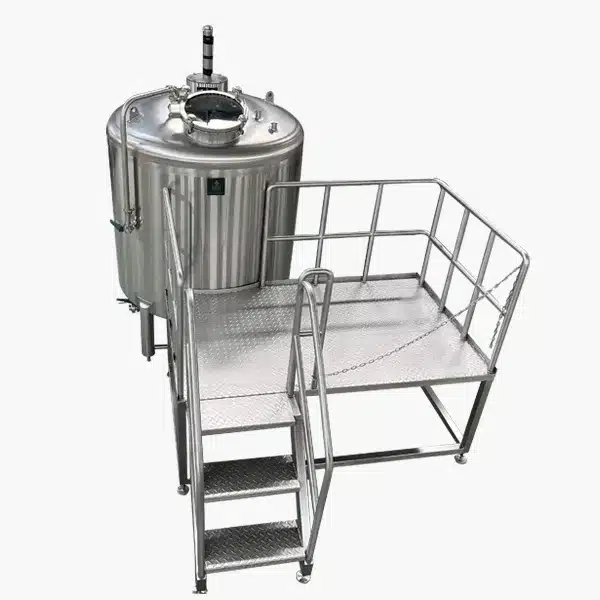
Getting the right proportions between the tank, liquid height, impeller, and baffles is one of the most important factors in efficient mixing performance. Even small design mistakes can create dead zones, uneven blending, excessive foaming, and unnecessary energy consumption.
Unter industrial mixing systems, standardized tank ratios are used to improve flow patterns, increase mixing efficiency, and ensure consistent batch quality across different applications. Typical design ratios involve the relationship between tank diameter, liquid height, impeller diameter, and baffle width.
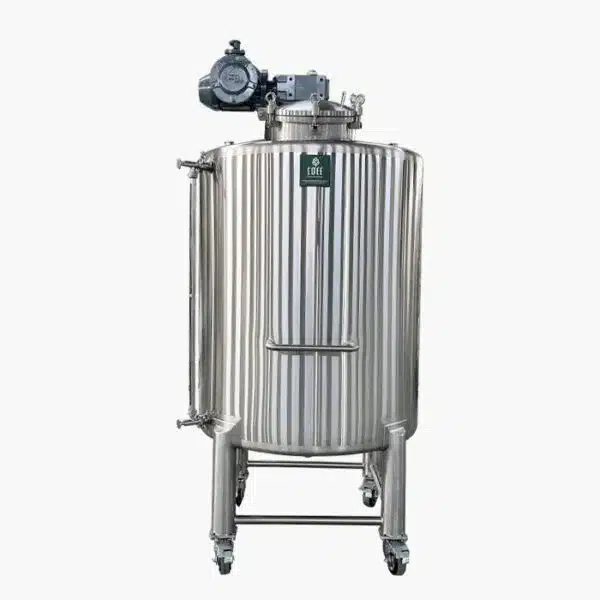
These proven ratios are derived from decades of fluid dynamics research and real-world industrial experience. They apply to most mixing applications, including brewing, chemical processing, pharmaceuticals, and food production.
The impeller is the rotating blade that drives fluid movement. The most critical ratio in any mixing system is impeller diameter to tank diameter = 1:3.
Zum Beispiel:
This ratio creates the ideal balance between flow velocity and energy efficiency:
Baffles are vertical strips mounted inside the tank that break up circular flow (vortexing) and promote vertical mixing. The standard ratio is baffle width to tank diameter = 1:12.
Zum Beispiel:
Most tanks use 4 equally spaced baffles. Without proper baffles, the liquid will spin in a circle, creating a central vortex and leaving large areas unmixed.
The height of the liquid in the tank significantly affects mixing performance. The optimal ratio is liquid level to tank diameter = 0.8:1.
Zum Beispiel:
Experts recommend never going below a 0.6:1 ratio, as this will create dead spots at the bottom of the tank. For tall tanks, multiple impellers may be required to ensure uniform mixing.
| Ratio Description | Standard Value | Berechnungsbeispiel |
|---|---|---|
| Impeller Diameter / Tank Diameter | 1/3 | 30 cm impeller for 90 cm tank |
| Baffle Width / Tank Diameter | 1/12 | 10 cm baffle for 120 cm tank |
| Tank Height / Tank Diameter | 1:1 | 100 cm height for 100 cm tank |
| Liquid Level / Tank Diameter | 0.8 (common) | 80 cm liquid for 100 cm tank |
| Impeller Height from Bottom | 1/3 tank diameter | 30 cm height for 90 cm tank |
The right ratios ensure that every drop of liquid in the tank is moving and mixing. Incorrect proportions create dead zones where material settles or remains unmixed, leading to:
According to the International Society of Pharmaceutical Engineers, poor mixing ratios cause 40% of all batch quality issues in process industries.
Using the correct impeller-to-tank ratio reduces energy consumption by up to 30%. An oversized impeller wastes power by creating unnecessary turbulence, while an undersized impeller has to run faster to achieve the same mixing effect.
Standardized ratios ensure that your mixing process produces the same results every time, regardless of tank size or operator. This is critical for industries where product consistency is regulated, such as food, beverage, and pharmaceuticals.
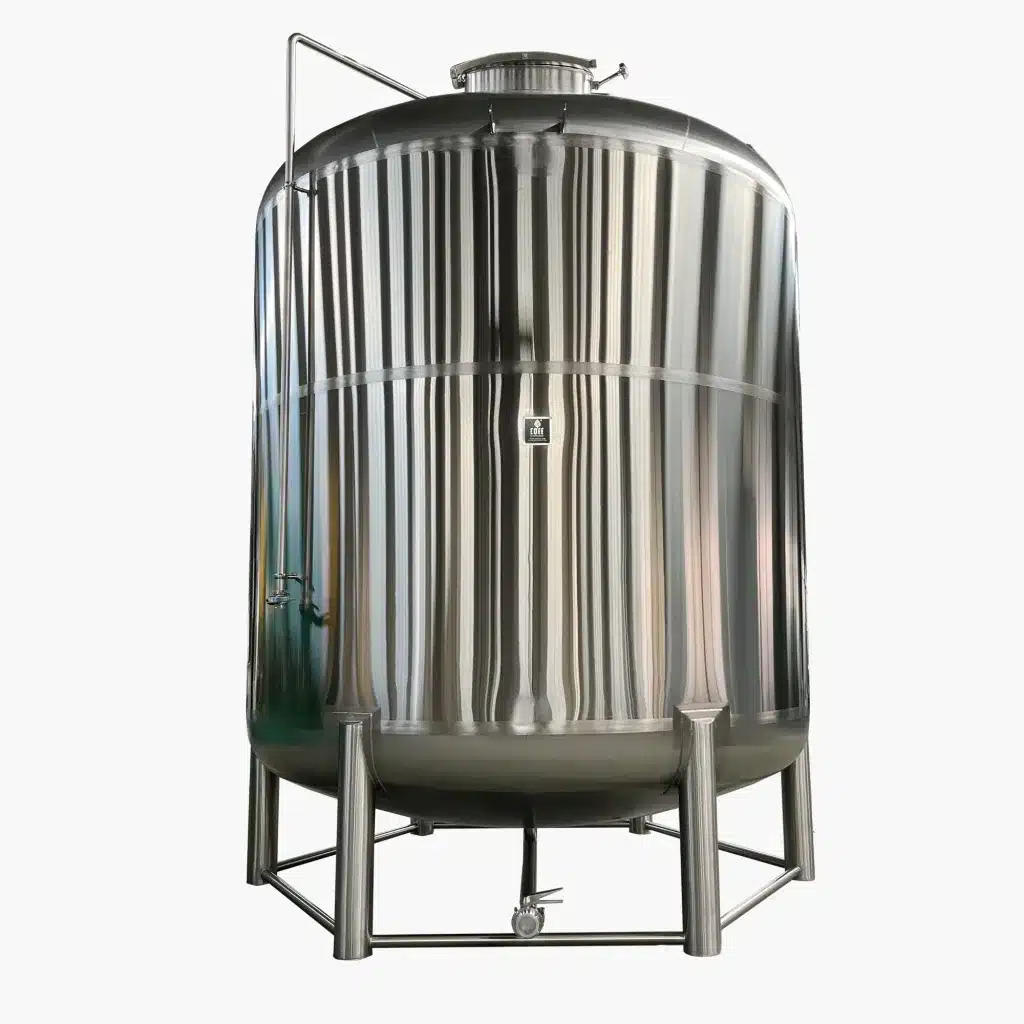
While the standard ratios work for most applications, you may need to adjust them based on your specific process requirements:
The viscosity of the liquid has a major impact on impeller size and mixing performance.
Different mixing processes require different flow patterns and impeller configurations.
Temperature, pressure, and tank size can also influence ratio selection and overall mixer design.
| Irrtum | Auswirkungen | How to Prevent |
|---|---|---|
| Overfilled or underfilled tanks | 24.2% of mixing quality issues | Always fill to 0.8–1.0 times tank diameter |
| Incorrectly sized impeller | Poor mixing, high energy use | Follow 1:3 diameter ratio |
| Missing or undersized baffles | Vortexing, dead spots | Install 4 baffles with 1:12 width ratio |
| Impeller installed too high or low | Uneven mixing | Position 1/3 tank diameter from bottom |
| Using the same ratio for all fluids | Schlechte Leistung | Adjust ratio based on viscosity |
The standard ratios for mixing tanks are:
Following these proven proportions will improve mixing efficiency, reduce energy costs, and ensure consistent batch quality. The COFF Oil Heated Brewhouse is engineered to these exact standards, providing brewers with reliable, repeatable results every time.
For help designing a mixing system tailored to your specific application, contact the COFF technical team today. We offer custom solutions for breweries, distilleries, and process industries of all sizes.
The impeller-to-tank diameter ratio is the most critical. The industry standard is 1:3, which provides the best balance of mixing performance and energy efficiency.
The COFF Oil Heated Brewhouse features a built-in control panel that automatically monitors and adjusts mixing speed, temperature, and liquid level to maintain optimal ratios for every recipe.
Yes. You may need to adjust the ratio slightly for very thick or thin fluids, or for different mixing purposes. The COFF system allows you to save custom ratio profiles for each recipe.
Baffles break up circular flow and promote vertical mixing, preventing vortexing and dead spots. The standard baffle width is 1/12 the tank diameter.
Incorrect ratios can lead to poor mixing, inconsistent batches, longer processing times, and higher energy costs. In severe cases, it can cause equipment damage or product loss.