


COPYRIGHT © 2022 COFF International Co., ltd. ALL RIGHTS RESERVED


A beer fermenting vessel is the container used to turn wort into beer through fermentation. Brewers commonly refer to it by several names, including fermenter, fermentation vessel (FV), and Gärtank. These terms all describe the same essential piece of brewing equipment that provides a controlled environment for yeast to convert sugars into alcohol and carbon dioxide.

Brewers use several interchangeable terms for these vessels:
| Term | Full Name | Commonly Used By |
|---|---|---|
| Fermenter | Fermenter | Homebrewers & professionals |
| Gärgefäß | Fermentation Vessel (FV) | Professional breweries |
| Gärbehälter | Gärbehälter | Commercial breweries |
| Fermentor | Fermentor | Some technical contexts |
All these names refer to the same equipment used during the fermentation stage of brewing.
A fermenter provides a sealed environment where yeast can safely ferment the sugars in wort. Modern fermenters usually include several important features:
These features help brewers maintain consistent fermentation and produce high-quality beer.
Brewers choose different types of fermenting vessels depending on their scale and brewing goals.
Commonly used by homebrewers, these are simple and affordable options:

Conical fermenters have a cone-shaped bottom that allows yeast and sediment to settle at the bottom. This design offers several advantages:
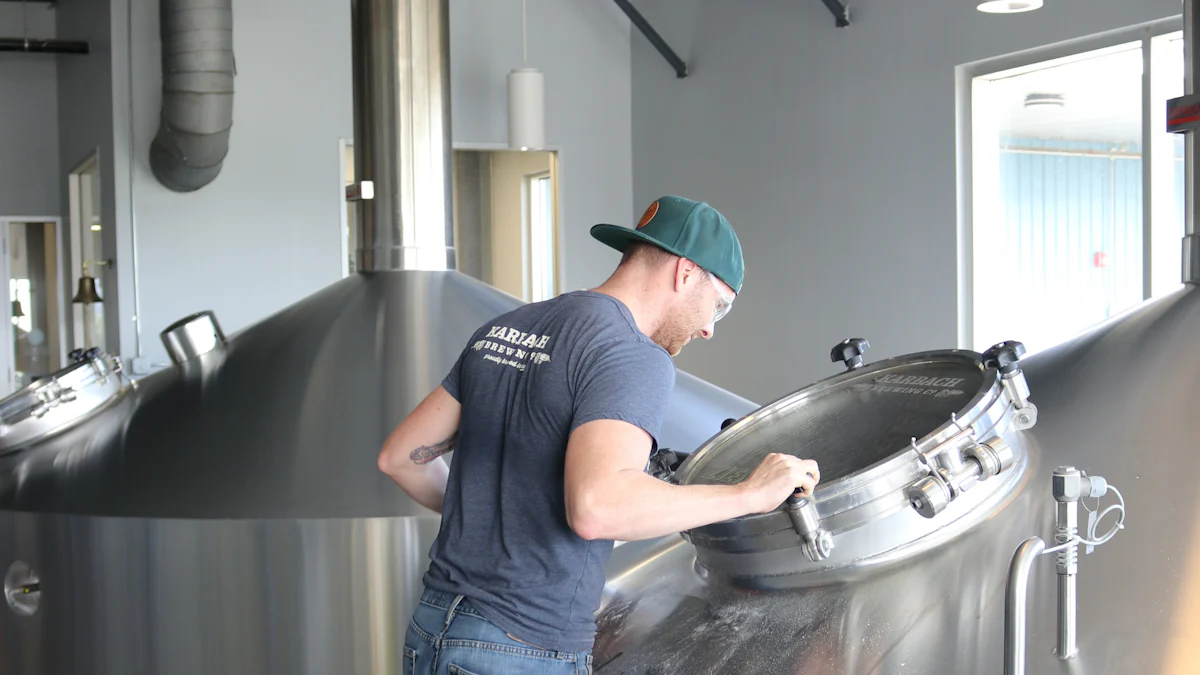
Most commercial breweries use Gärtanks aus rostfreiem Stahl. These tanks are favored for their:
Stainless steel tanks are suitable for both primary and secondary fermentation and are available in a wide range of sizes.
Commercial breweries overwhelmingly choose stainless steel fermenting vessels for several practical reasons:
| Vorteil | Beschreibung |
|---|---|
| Hygiene | Smooth, non-porous surface resists bacteria and is easy to clean |
| Temperaturkontrolle | Built-in cooling jackets allow precise fermentation temperature management |
| Dauerhaftigkeit | Resistant to corrosion, impacts, and harsh cleaning chemicals |
| Langlebigkeit | Typically lasts 20–30 years with proper maintenance |
| Geschmacksneutralität | Does not impart unwanted flavors to the beer |
These benefits make stainless steel tanks the standard in professional brewing environments.
When selecting a beer fermenting vessel, consider the following factors:
Tipp: Always choose a vessel slightly larger than your batch size to allow for krausen (foam) during active fermentation.
It is most commonly called a fermenter, fermentation vessel, or fermentation tank.
The primary fermenter is used for the initial, most active stage of fermentation. The secondary fermenter is used afterward to clarify the beer and allow flavors to mature.
Stainless steel offers superior hygiene, durability, temperature control, and ease of cleaning compared to plastic or glass.
Yes. Conical fermenters and many stainless steel tanks are designed to handle both stages in one vessel.
Very important. Stable temperature helps yeast perform consistently and greatly affects the final flavor and quality of the beer.