

COPYRIGHT © 2022 COFF International Co., ltd. ALL RIGHTS RESERVED


Beer typically stays in a Brittank for 1–5 days, with most commercial breweries targeting 24–48 hours for final clarification and carbonation before packaging. Exact residence time depends on beer style, clarity goals, carbonation method, and tank size. For traditional lagers, extended cold conditioning (lagering) can stretch to weeks or even months.
On average, the full brewing-to-market timeline runs roughly 16–18 days total, with 1–2 days of that time spent in the brite tank for most styles.

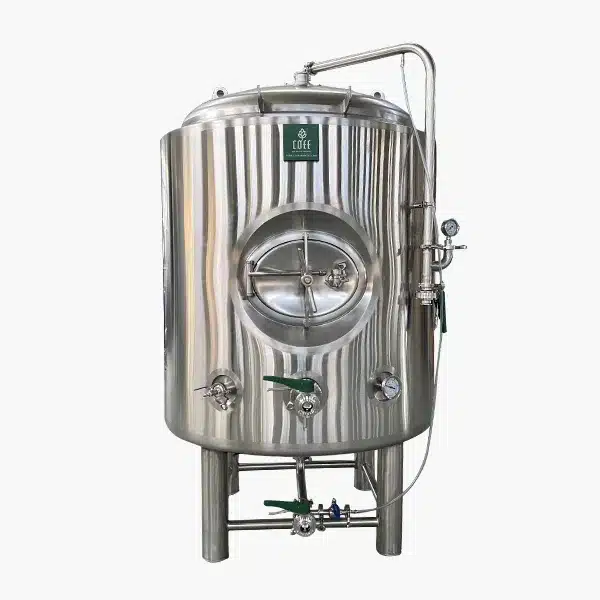
A brite tank is the final conditioning vessel in the brewing process, the last stop before packaging. It serves two core functions:
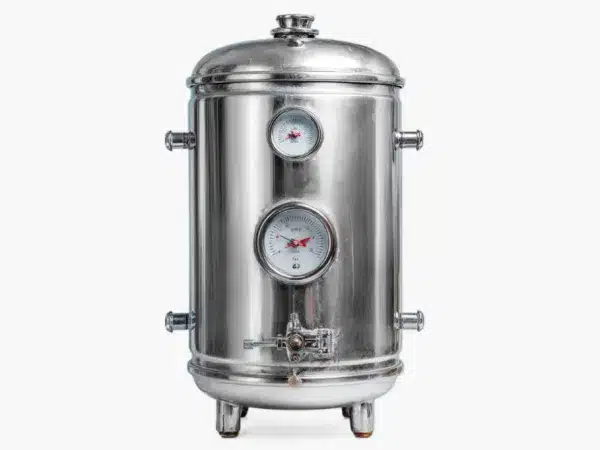
Unlike cone-bottomed fermenters built for active yeast activity, brite tanks are designed for physical settling and conditioning. They also free up fermenters to start the next batch, boosting overall brewery throughput. Manufacturers like COFF produce brite tanks in 1BBL to 200BBL sizes, built from food-grade SUS304 stainless steel for safe, clean production.

There is no universal hold time. Brewers adjust timing based on three core factors:
Style is the biggest driver of conditioning time:
Clarity targets also shape timing: a hazy IPA will move to packaging much faster than a crystal-clear Vienna lager. Short conditioning stays can soften harsh flavors, while longer stays build smoothness and roundness.
Carbonation approach has a huge impact on turnaround:
Larger tanks (200BBL) take longer to reach uniform temperature and pressure across the full volume, often requiring slightly longer holds for consistency. Smaller craft brewery tanks reach equilibrium faster, enabling quicker batch turnaround.
For traditional German-style lagers, extended cold conditioning in the brite tank (lagering) is intentional and beneficial. Stored at near-freezing temperatures for weeks to months, the beer develops a clean, crisp, smooth flavor.
Extended stays beyond 5–7 days carry measurable risks for most beer styles:
For most beer styles, the 24–48 hour window is the sweet spot that balances quality and production efficiency.
Brewers do not rely on fixed schedules. Instead, they use objective quality checks to confirm readiness:
Beer moves to packaging when it meets clarity, flavor, and carbonation specs — not when a set number of hours passes.
Lighter, clearer styles like lagers and pilsners need 2–5 days for proper settling and carbonation. Heavier ales and stouts tolerate more haze and typically move to packaging in 1–2 days. Traditional lagers may lager for weeks to months.
Yes. Forced carbonation via recirculating carb stone systems can finish in roughly 2 hours, enabling most breweries to package within 24–48 hours.
Stays beyond 5–7 days increase risk of oxidation (cardboard/papery off-flavors), stale hop/malt character, and microbial contamination if sanitation is compromised. Most styles are packaged within the first few days.
Brewers check clarity via sight glasses, monitor tank pressure for carbonation consistency, and conduct trained sensory taste testing. Beer is packaged when it meets brand standards for clarity, flavor, and fizz, not by a fixed clock.
Yes. Larger brite tanks take longer to reach uniform temperature and pressure, often requiring slightly longer holds for consistency. Smaller tanks reach equilibrium faster, enabling faster batch turnaround.